Skip to content
Sell Rental Property Garland TX Without Tenant Stress or Delays
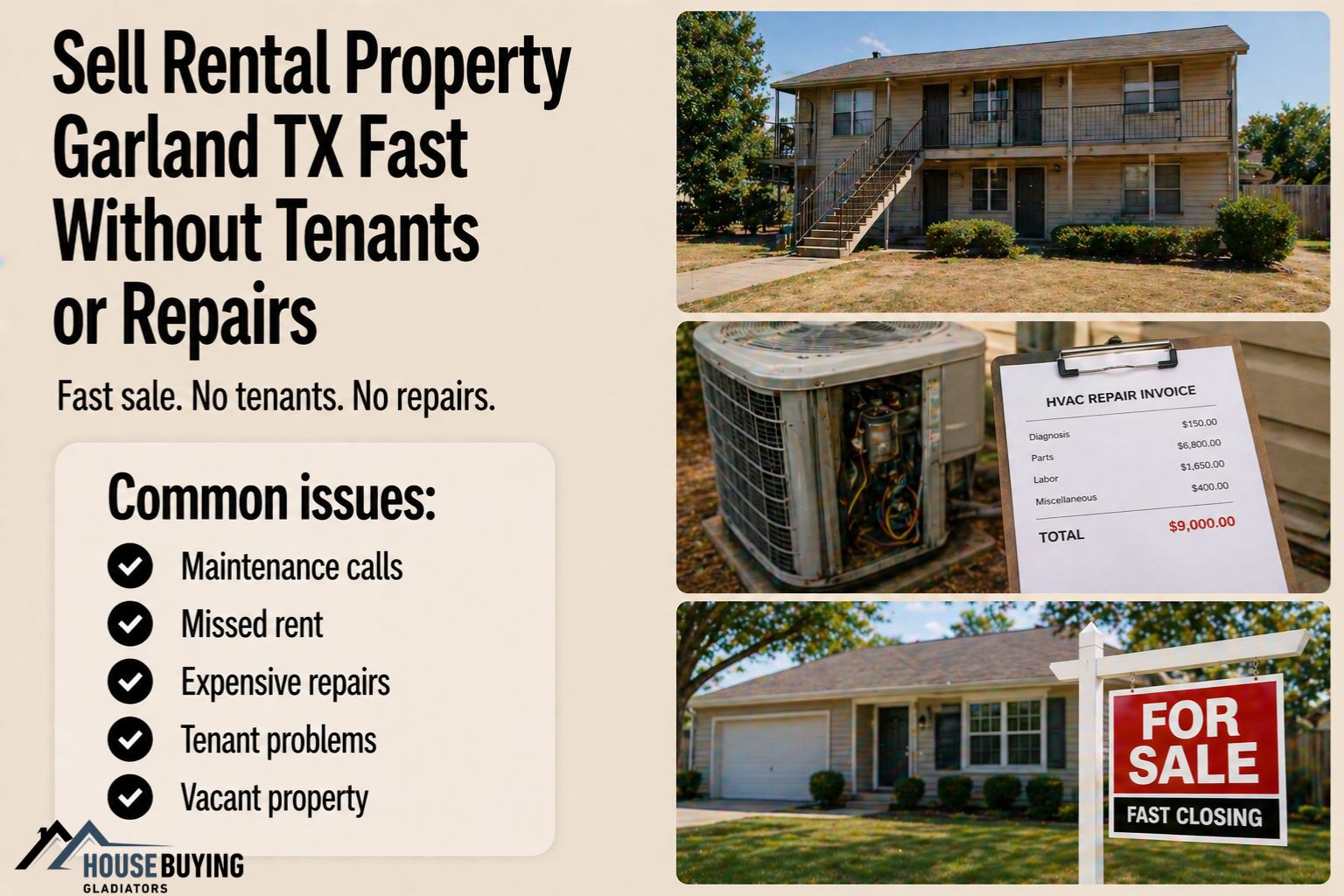
Sell rental property Garland TX becomes urgent the moment your “investment” starts costing more time, money, and energy than it returns.
A Garland landlord planned to hold their rental for another 5 years.
However, after back-to-back maintenance calls, a missed rent payment, and a $9,000 HVAC repair, the plan changed overnight.
Because of this, the focus shifted:
- from long-term profit
- to immediate relief
If you’re here, you’re likely in that exact position:
- managing problems instead of collecting income
- dealing with tenants, repairs, or vacancies
- wondering if holding on still makes sense
Sell Rental Property Garland TX: When the Investment Stops Working
Rental properties rarely fail all at once.
Instead, pressure builds gradually.
For example:
- A landlord relocates for work and struggles to manage remotely
- Meanwhile, tenant issues increase and maintenance requests stack up
- As a result, the property becomes harder to manage than expected
Because of this, what once felt passive becomes:
- active stress
- ongoing cost
- constant decision-making
Tenant Challenges That Change the Equation
Tenants are often the biggest unknown variable.
Even in stable situations, issues arise:
- delayed or missed rent payments
- property wear or hidden damage
- access limitations for showings
- lease restrictions and legal constraints
For instance, one Garland owner tried listing with tenants still inside.
However, limited showing availability reduced buyer interest and the property sat on the market for over 60 days.
Selling Rental Property Garland TX: With Tenants vs Vacant

Selling With Tenants in Place
- faster start (no waiting for lease end)
- continued rental income (in some cases)
- limited buyer pool
- coordination challenges
Best when speed matters more than flexibility
Waiting for Vacancy Before Selling
- easier showings and access
- stronger buyer demand
- delayed timeline
- ongoing holding costs
Best when maximizing price is the priority
Why Traditional Sales Slow Down Rental Exits
Selling a rental is rarely “simple.”
It often includes:
- scheduling around tenants
- preparing the property condition
- negotiating repairs after inspections
- waiting on buyer financing
- handling deal fall-through risk
For example, a Garland landlord accepted an offer However, the buyer’s financing failed after inspection repairs were requested.
As a result:
- the process restarted
- costs continued
- stress increased
Costs That Quietly Reduce Your Return
Many landlords focus on sale price.
However, the real outcome depends on:
Net Proceeds
Common costs include:
- repairs before listing
- agent commissions
- closing costs
- vacancy losses
- ongoing maintenance
- property taxes and insurance
Because of this:
holding longer often reduces what you actually keep
A Simpler Way to Sell Rental Property Garland TX
When landlords shift from maximizing price → minimizing friction, the strategy changes.
A more direct approach can:
- allow selling with tenants in place
- eliminate repair requirements
- reduce showings and coordination
- avoid financing delays
- shorten the timeline
In situations like this, some landlords also explore options through Renters Warehouse, which provides services and insights around managing and transitioning rental properties, including situations where owners want to exit without extended delays or tenant-related complications.
For example, one owner dealing with out-of-state tenants chose a direct sale.
As a result:
- no showings were required
- no repairs were completed
- the sale closed in under 2 weeks
When Selling Becomes the Smart Decision

Selling becomes the right move when:
- tenant management feels exhausting
- repair costs keep increasing
- the property is no longer profitable
- distance makes management difficult
- vacancies disrupt income
At that point:
Holding the property creates more problems than value.
FAQs – Sell Rental Property Garland TX
Yes. You can sell with tenants in place. In most cases, the lease transfers to the new owner, although it may reduce buyer flexibility.
No. However, vacant properties are easier to show and may attract more buyers. Selling with tenants can speed up timing but limit options.
Yes. Limited access, scheduling conflicts, and property condition can slow down the process and reduce buyer interest.
No. Many landlords sell as-is. This avoids repair costs, tenant coordination, and delays.
Yes. Many landlords complete the process remotely using title companies and digital closings.
The lease usually transfers to the new owner. This means tenants remain under the same agreement unless otherwise negotiated.
Condition affects both price and timeline. Deferred maintenance or structural issues can reduce offers and extend negotiations.
Costs include repairs, commissions, closing fees, taxes, and holding expenses. These directly affect your net proceeds.
Selling as-is with fewer steps is usually the fastest option. It avoids repairs, tenant coordination, and financing delays.
It depends. Selling with tenants saves time, but waiting may increase buyer interest and price.
Compare rental income, expenses, stress, and long-term goals. In many cases, declining returns signal it’s time to exit.
Yes. Maintenance, vacancies, taxes, and repairs continue over time. This can reduce your total return significantly.
Yes. Poor maintenance, damage, or limited access can reduce buyer demand and property value.
Delaying decisions, over-investing in repairs, and underestimating tenant impact are the most common mistakes.
FINAL DECISION MOMENT
Selling a rental property isn’t just a financial decision.
It’s a control decision.
Because at some point:
- the property stops working for you
- and you start working for the property
The real question is:
how long do you want that to continue?
If it helps to see your options clearly, you can Get Your Cash Offer and compare what moving forward could look like on your timeline, without added pressure.