Skip to content
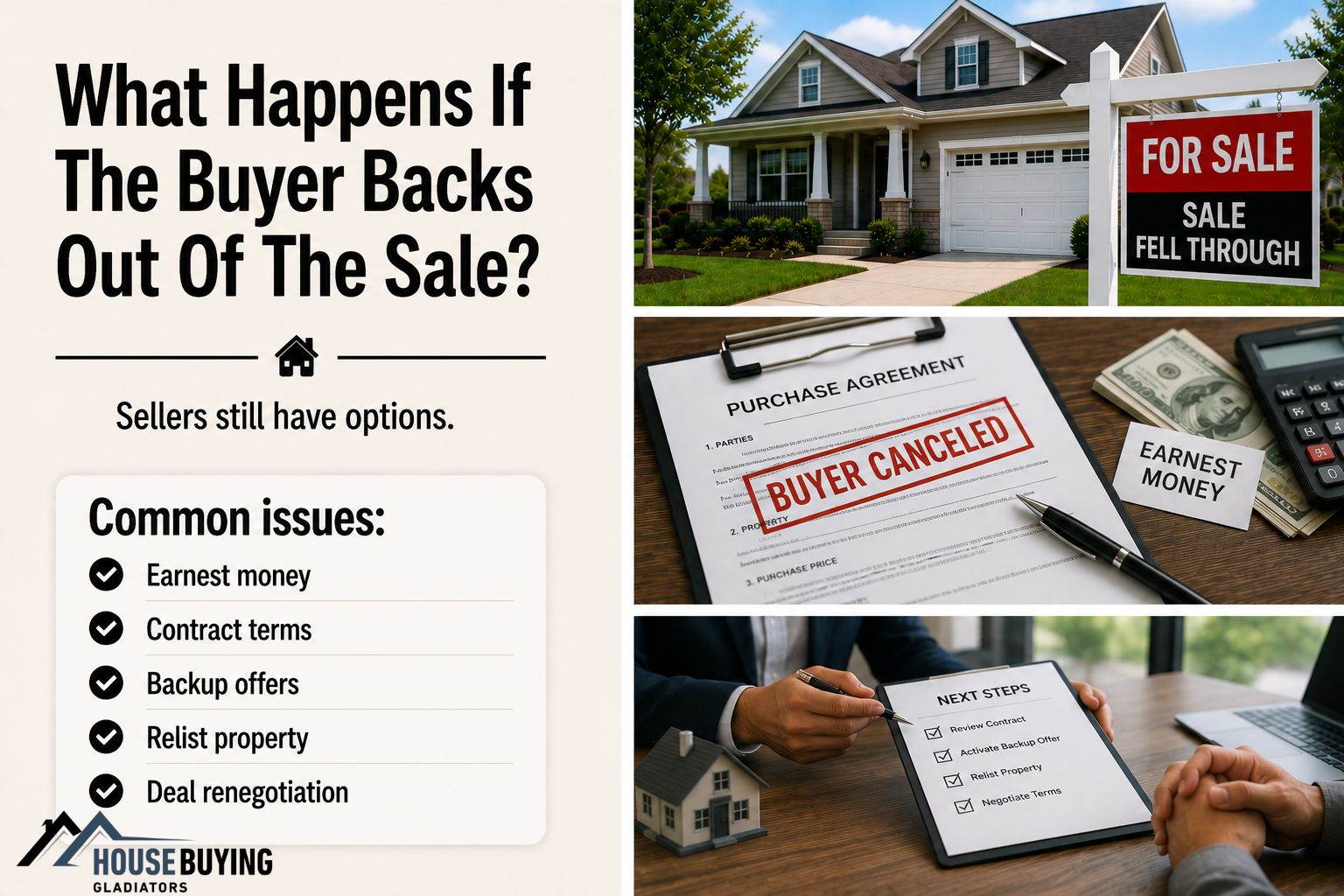
If you are wondering what happens if the buyer backs out of the sale, the short answer is that sellers still have options. The outcome often depends on the purchase agreement, contingency clauses, and how far the transaction has progressed.
A canceled deal does not automatically mean you have to start over or lose months of progress.
In many situations, sellers can keep the earnest money deposit, activate a backup offer, renegotiate terms, or quickly relist the property.
The key is understanding your rights before delays, carrying costs, and uncertainty begin to affect your final proceeds.
This guide explains what happens if the buyer backs out of the sale, when buyers can legally cancel a contract, what happens to earnest money, and the steps sellers can take to keep the transaction moving forward.
Buyer Default & Escrow Loss Calculator
Buyer Default & Escrow Loss Calculator
When Can Buyers Legally Back Out Of A Home Sale?
Buyers can legally back out of a home sale when a contingency in the purchase agreement gives them the right to cancel the transaction without significant financial consequences.
Financing, inspection, and appraisal contingencies are some of the most common protections buyers use during a home sale.
Without a valid contractual reason, buyers may risk losing their earnest money deposit and creating delays for both parties.
Offer Accepted ➔ Contingency Review ➔ Buyer Decision ➔ Contract Outcome
| Situation | Buyer May Cancel? |
|---|---|
| Financing contingency | ✅ Often yes |
| Inspection contingency | ✅ Often yes |
| Appraisal contingency | ✅ Often yes |
| Buyer simply changes their mind | ❌ Usually no |
The purchase agreement controls the transaction from offer acceptance to closing, which is why sellers should carefully review contingency clauses before signing. Reviewing how contingency clauses work in a real estate contract can help sellers better understand the situations that may allow buyers to legally cancel a transaction.
If you recently accepted an offer, what is earnest money when selling a house explains how deposits can help protect sellers when buyers cancel unexpectedly.
What Happens To Earnest Money If The Buyer Backs Out Of The Sale?
The purchase agreement determines what happens to the earnest money deposit after a buyer backs out of the sale. Sellers do not automatically receive the funds, and buyers do not automatically get a refund.
Everything depends on the contract terms and whether a valid contingency applies.
Buyers often recover their deposit when financing, inspection, or appraisal contingencies allow them to cancel the transaction.
However, sellers may keep the earnest money if buyers walk away without a valid contractual reason.
Buyer Cancels ➔ Contract Reviewed ➔ Contingencies Verified ➔ Deposit Decision
| Situation | What Usually Happens? |
|---|---|
| Financing contingency applies | Buyer often receives a refund |
| Inspection contingency applies | Buyer often receives a refund |
| Appraisal contingency applies | Buyer often receives a refund |
| Buyer backs out without a valid reason | Seller may keep the deposit |
Do not assume the deposit automatically goes to either party. Review the purchase agreement first because it ultimately controls how the funds are distributed.
If you are preparing for the final stage of the transaction, what happens at closing when selling a house explains what sellers can expect before ownership officially transfers.
What Happens If The Buyer Backs Out Of The Sale Before Closing?
If a buyer backs out before closing, sellers do not always have to restart the entire process. Many homeowners can quickly recover by reviewing the contract, contacting backup buyers, or relisting the property.
The faster sellers act, the easier it becomes to reduce delays, protect their proceeds, and maintain selling momentum.
Buyer Cancels ➔ Review Contract ➔ Evaluate Options ➔ Re-Enter The Market ➔ Continue The Sale
| Option | Why It May Help |
|---|---|
| Relist the property | Attract new qualified buyers |
| Contact backup buyers | Save time and maintain momentum |
| Review contract terms | Protect your rights |
| Adjust your strategy | Strengthen future offers |
Do not treat a canceled transaction as a failed sale. Many homeowners successfully recover by acting quickly, reviewing their options, and adjusting their next steps. Reviewing what sellers can do when a home sale falls through can also help homeowners minimize delays, regain momentum, and keep the selling process moving forward.
If you are concerned about delays after restarting the process, how long does it take to sell a house explains the typical selling timeline and the factors that can affect it.
Can Sellers Relist Their House If The Buyer Backs Out Of The Sale?
Often, yes. Sellers can usually relist their house after both parties officially terminate the purchase agreement and complete all required cancellation paperwork.
Do not rush to put the property back on the market before confirming the contract has fully ended.
Relisting too early can create legal complications and confusion for future buyers.
Contract Terminated ➔ Cancellation Confirmed ➔ Selling Strategy Reviewed ➔ Property Relisted
Before relisting, identify why the previous transaction failed. Financing issues, unrealistic timelines, and weak buyer qualifications are common causes of canceled deals.
Small adjustments now can help create a stronger transaction with the next buyer.
If your property has experienced multiple delays, what happens if my house doesn’t sell explains how homeowners can adjust their strategy and regain buyer interest.
How Can Sellers Reduce The Risk If The Buyer Backs Out Of The Sale?
Sellers cannot eliminate every cancellation risk, but they can significantly reduce it by choosing the right buyer before accepting an offer.
The strongest offer is not always the highest offer.
Buyer qualifications, financing strength, contingency terms, and closing certainty often determine whether a transaction successfully reaches closing.
Evaluate Buyer ➔ Verify Financing ➔ Review Contingencies ➔ Strengthen The Agreement ➔ Reduce Cancellation Risk
| Action | Why It Helps |
|---|---|
| Verify financing | Reduces loan approval issues |
| Review contingencies | Limits unexpected cancellations |
| Evaluate earnest money | Shows buyer commitment |
| Compare closing timelines | Identifies realistic deadlines |
| Consider backup offers | Creates a safety net |
Many canceled transactions happen because sellers prioritize price over buyer reliability.
Instead, focus on choosing buyers who can realistically complete the purchase and meet contractual deadlines.
If you are preparing for a future transaction, what documents do I need to sell my house explains the paperwork homeowners should organize before moving forward with a buyer..
FAQs: What Happens If The Buyer Backs Out Of The Sale?
The outcome depends on the purchase agreement, contingency clauses, and the stage of the transaction. Sellers may relist the property, keep earnest money in some situations, or move forward with a backup buyer.
Sometimes. Buyers can often cancel the transaction if a financing, inspection, or appraisal contingency allows them to do so without significant financial consequences.
No. Sellers do not automatically receive the deposit. The purchase agreement and the reason for cancellation determine who ultimately receives the funds.
Sometimes. Sellers may have legal remedies if buyers violate the contract, but the outcome depends on state laws, contract terms, and the circumstances surrounding the cancellation.
Often, yes. Sellers can usually relist after officially terminating the contract and completing all cancellation paperwork with the buyer.
Not necessarily. Many homes successfully sell after a previous transaction falls through, especially when sellers quickly adjust their strategy.
Financing problems, inspection concerns, and low appraisals are some of the most common reasons buyers cancel a transaction.
Yes. Backup offers can reduce delays because sellers already have another qualified buyer available if the first transaction fails.
Sellers can verify financing, review contingencies, evaluate earnest money deposits, and prioritize buyer strength instead of focusing only on the highest offer.
Often, yes. Cash buyers eliminate many financing delays, but sellers should still verify proof of funds and review all contract terms before moving forward.
Conclusion: What Happens If The Buyer Backs Out Of The Sale And What Should Sellers Do Next?
A buyer backing out of a sale can be frustrating, but it does not automatically mean your home sale has failed.
In many situations, sellers can quickly recover by reviewing the purchase agreement, understanding contingency clauses, and taking immediate action to keep the transaction moving forward.
The key is responding strategically instead of reacting emotionally.
Buyer Cancels ➔ Review Contract ➔ Evaluate Options ➔ Reposition The Sale ➔ Successful Closing
Do not focus only on the setback. Focus on protecting your timeline, reducing additional expenses, and creating a stronger path forward with the next buyer.
Ready to move forward? Use the strategies in this guide to confidently navigate a canceled transaction and keep your home sale on track.