Skip to content
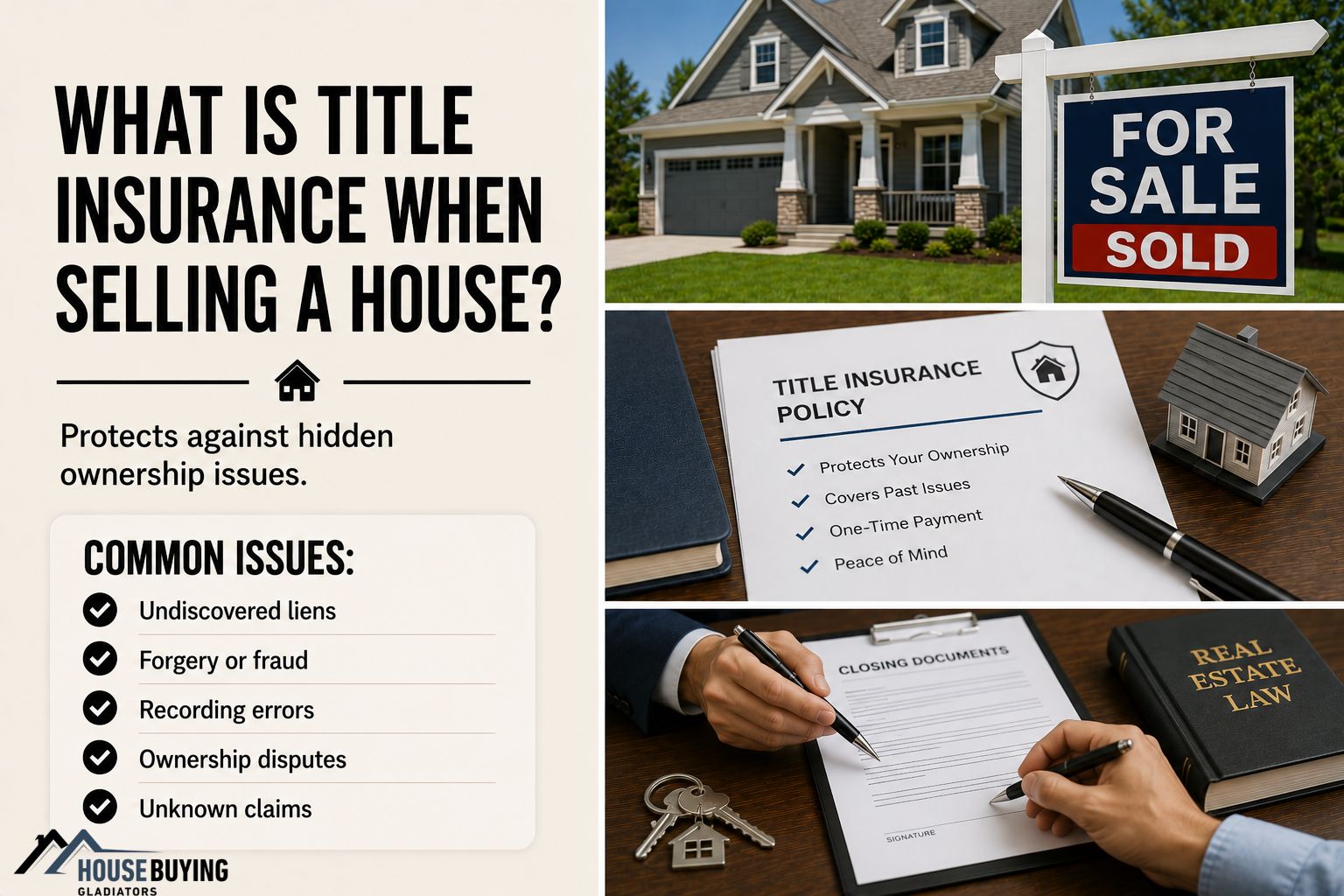
If you’re wondering what is title insurance when selling a house, it protects buyers and lenders against certain covered ownership problems that existed before closing but escaped detection during the title search. It helps protect property ownership from hidden legal issues, including undiscovered liens, recording errors, forged documents, and competing ownership claims.
Most homeowners focus on the purchase price, inspections, and moving deadlines not the property’s legal history. Yet a hidden title defect can create unexpected legal and financial challenges long after the sale closes.
Unlike homeowners insurance, which protects against future damage to the property, title insurance protects ownership rights against certain risks from the property’s past. It gives buyers greater confidence, helps lenders safeguard their financial interest, and supports a smoother transfer of ownership throughout the closing process.
In this guide, you’ll learn how title insurance works, what it covers, when buyers and lenders commonly use it, how it differs from a title search, and why it remains one of the most important safeguards in a real estate transaction.
Title Insurance Premium Cost Estimator
Title Insurance Premium Cost Estimator
Adjust the parameters to estimate policy costs and allocation defaults.
Why Does Title Insurance Exist?
Instead of asking what title insurance is, a better question is:
Why does it exist in the first place?
Every property has a legal history. Over the years, ownership changes, mortgages are recorded, liens are filed, deeds are transferred, and public records are updated. While most of these transactions are accurate, mistakes and undiscovered legal issues can remain hidden for years.
A title search reviews public records to identify many of these problems before closing. However, no search can guarantee that every ownership issue will be discovered.
That’s where title insurance becomes valuable.
Rather than preventing title problems, it helps protect against certain covered ownership issues that weren’t identified before the property changed hands.
Accepted Offer ➔ Title Search Completed ➔ Title Insurance Issued ➔ Ownership Transfers
| Why Title Insurance Exists | Why It Matters |
|---|---|
| Protects legal ownership | Helps safeguard against certain covered ownership claims |
| Reduces financial risk | May provide protection from covered losses caused by title defects |
| Supports lender requirements | Most mortgage lenders require title insurance before funding a loan |
| Increases confidence at closing | Helps buyers, sellers, and lenders complete the transaction with greater certainty |
The value of title insurance isn’t measured by how often it’s used. Reviewing how title insurance legally protects homeowners can help buyers and sellers understand why coverage remains important even after a title search is completed.
It’s measured by the financial protection it can provide if a covered title problem appears after closing.
How Does Title Insurance Work When Selling A House?
A common misconception is that title insurance works like auto or homeowners insurance.
It doesn’t.
Most insurance policies protect against future events.
Title insurance protects against certain past events that continue to affect the property’s ownership after closing.
Before issuing a policy, the title company performs a title search by reviewing deeds, mortgages, court filings, tax records, and other public documents. Reviewing how a title search works before closing can help homeowners better understand how ownership records are verified before title insurance is issued.
Some problems, however, remain hidden despite a careful review of public records.
If a covered issue later affects ownership, the title insurance policy may provide legal defense and financial protection according to the terms of the policy.
Think Of It Like This
A title search investigates the property’s legal history.
Title insurance helps manage the remaining risk that no investigation can completely eliminate.
Together, they create a stronger and more secure real estate transaction.
If you’d like to understand how ownership records are reviewed before a policy is issued, what is a title search when selling a house explains how title companies examine public records to identify potential ownership issues before closing.
What Does Title Insurance Cover When Selling A House?
Not every legal issue qualifies for coverage, but title insurance commonly protects against certain ownership problems that existed before the policy became effective and weren’t discovered during the title search.
Common Covered Risks
| Covered Risk | Why It Can Matter |
|---|---|
| Undiscovered liens | May create unexpected financial obligations tied to the property |
| Ownership claims | Can challenge the buyer’s legal ownership rights |
| Forged signatures or deeds | May affect the validity of previous ownership transfers |
| Recording mistakes | Errors in public records can create ownership disputes |
| Unknown heirs | Previously undiscovered heirs may later assert ownership rights |
| Errors in legal descriptions | Can affect property boundaries or ownership records |
It’s equally important to understand what title insurance doesn’t protect.
For example, it generally doesn’t cover future liens created after closing, property damage, or issues the buyer knowingly accepted before purchasing the home.
Understanding both the protections and the limitations helps homeowners make informed decisions before closing instead of assuming every ownership issue is automatically covered.
Owner’s Title Insurance vs. Lender’s Title Insurance
One of the biggest sources of confusion during closing is that there isn’t just one title insurance policy.
Depending on the transaction, you may see two different policies on the settlement statement. Although both relate to the same property, they protect different parties and serve different purposes.
| Owner’s Title Insurance | Lender’s Title Insurance |
|---|---|
| Protects the buyer’s ownership interest | Protects the mortgage lender’s financial interest |
| Usually lasts as long as the owner has an eligible ownership interest | Generally remains in effect until the loan is paid off or refinanced |
| Optional in some transactions | Usually required for financed purchases |
| May help protect against covered ownership claims | Helps protect the lender if a covered title issue affects its loan security |
For sellers, understanding this distinction makes it easier to review closing costs, negotiate offers, and understand why different title insurance premiums may appear on the settlement statement.
If you’re reviewing who typically pays each policy, who pays title insurance when selling a house explains how buyers and sellers commonly divide this closing cost.
When Is Title Insurance Most Important During A Home Sale?
Most home sales close without any ownership disputes.
The situations where title insurance becomes valuable are often the ones no one expects.
Ownership problems don’t always appear immediately after closing. Some remain hidden for months or even years before someone discovers them during a refinance, resale, inheritance, or legal review.
Situations Where Title Insurance Provides The Greatest Value
- A previously undiscovered lien appears after closing.
- A forged signature affects an earlier deed.
- An unknown heir claims an ownership interest.
- A recording mistake creates conflicting ownership records.
- A legal description error affects the property’s boundaries.
- An earlier mortgage wasn’t properly released from public records.
These situations are uncommon, but resolving them without protection can involve legal fees, court proceedings, and significant financial expense.
Title insurance helps reduce that uncertainty by providing protection for certain covered title defects that existed before the policy became effective.
Do You Need Title Insurance When Selling A House?
Technically, yes. Whether that’s practical is a different question.
Cash purchases sometimes close without title insurance because no lender requires coverage. However, many buyers still choose to purchase an owner’s policy because they want protection against hidden ownership issues that could affect the property after closing.
Financed purchases work differently.
Most mortgage lenders require a lender’s title insurance policy before releasing loan funds because the property serves as collateral for the mortgage.
Before Deciding To Skip Title Insurance, Consider:
- How well documented is the property’s ownership history?
- Has the property changed hands several times?
- Was the home inherited through probate?
- Could an ownership dispute create significant financial hardship?
- Does the buyer’s lender require coverage?
Choosing not to purchase title insurance may reduce an upfront closing expense, but it also transfers the financial risk of certain covered ownership problems to the property owner.
Understanding that trade-off helps buyers and sellers make more informed decisions before closing.
Common Misconceptions About Title Insurance When Selling A House
Many misconceptions about title insurance come from confusing it with other types of insurance or misunderstanding what the policy actually protects.
Mistake #1: Thinking It Protects The Home
Title insurance doesn’t protect the structure, roof, plumbing, or other physical parts of the property.
It protects the legal ownership of the property against certain covered title defects.
Mistake #2: Assuming A Title Search Eliminates Every Risk
A title search significantly reduces risk by reviewing public records.
It cannot guarantee that every hidden ownership issue, recording error, or fraudulent document will be discovered before closing.
Mistake #3: Believing Only Buyers Benefit
Although the owner’s policy protects the buyer, title insurance also benefits the transaction itself by helping create a more secure transfer of ownership and reducing the likelihood of future disputes.
Mistake #4: Assuming Cash Buyers Don’t Need It
Cash buyers don’t have lender requirements, but they still face ownership risks.
Many choose title insurance because hidden title defects can affect any property regardless of how it’s financed.
An Expert Perspective: Why Professionals Recommend Both A Title Search And Title Insurance
Some homeowners ask:
“If the title search is thorough, why do I need title insurance?”
The answer lies in the difference between finding risk and managing risk.
A title search reviews available public records to identify known ownership problems before closing.
Title insurance helps protect against certain covered risks that remain undiscovered despite that review.
Neither replaces the other.
Instead, they work together to create a stronger, more secure real estate transaction.
That’s why title companies, lenders, attorneys, and experienced real estate professionals routinely recommend both.
Understanding that relationship helps homeowners move into closing with greater confidence not because every property has title problems, but because every property has a legal history worth verifying.
FAQs: What Is Title Insurance When Selling A House?
Title insurance protects buyers and lenders against certain covered ownership issues that existed before closing but weren’t discovered during the title search. It helps reduce the financial risk of hidden title defects that could affect legal ownership after the sale.
No. Homeowners insurance protects the physical structure against future events such as fire, storms, theft, or vandalism. Title insurance protects against certain covered ownership and legal issues that originated before closing.
Both buyers and mortgage lenders commonly rely on title insurance. Buyers often purchase an owner’s title insurance policy to protect their ownership rights, while lenders typically require a lender’s title insurance policy before approving and funding a mortgage.
Not always. Many financed home sales include title insurance because mortgage lenders usually require it. Cash sales may also include title insurance, although the decision depends on the buyer, local practices, and the purchase agreement.
A title search reviews public records to identify ownership issues before closing. Title insurance provides protection against certain covered title defects that remain undiscovered after the property changes ownership.
Coverage may include certain undiscovered liens, ownership disputes, forged documents, recording errors, unknown heirs, and other covered title defects that existed before the policy became effective.
Generally, no. Title insurance protects against certain covered issues that existed before the policy was issued. It doesn’t typically cover new liens, legal claims, or ownership issues that arise after closing.
Yes. Unlike most insurance policies, title insurance usually requires a single premium that’s paid at closing. Coverage generally continues according to the policy terms without annual renewal premiums.
Yes, if the claim falls within the policy’s coverage. Depending on the policy terms, the insurer may provide legal defense and financial protection for eligible ownership claims.
Mortgage lenders require title insurance because the property secures the loan. A lender’s policy helps protect the lender’s financial interest if a covered title defect affects the property’s ownership.
Conclusion: What Is Title Insurance When Selling A House?
Title insurance plays a vital role in protecting one of the largest financial transactions most people will ever make. While a title search helps identify many ownership issues before closing, it can’t uncover every hidden risk. Title insurance helps fill that gap by providing protection against certain covered title defects that may surface after ownership transfers.
Title Search Completed ➔ Title Insurance Issued ➔ Ownership Transfers ➔ Long-Term Protection Begins
Rather than viewing title insurance as just another closing cost, think of it as part of a broader strategy for reducing risk during a real estate transaction. Understanding how it works, what it covers, and how it complements the title search allows buyers and sellers to move through closing with greater confidence and fewer surprises.
Whether you’re purchasing your first home, selling an inherited property, or completing a cash transaction, understanding title insurance helps you make informed decisions before signing the final documents. The better you understand the property’s legal history, the better prepared you’ll be to protect your investment long after closing.