Skip to content
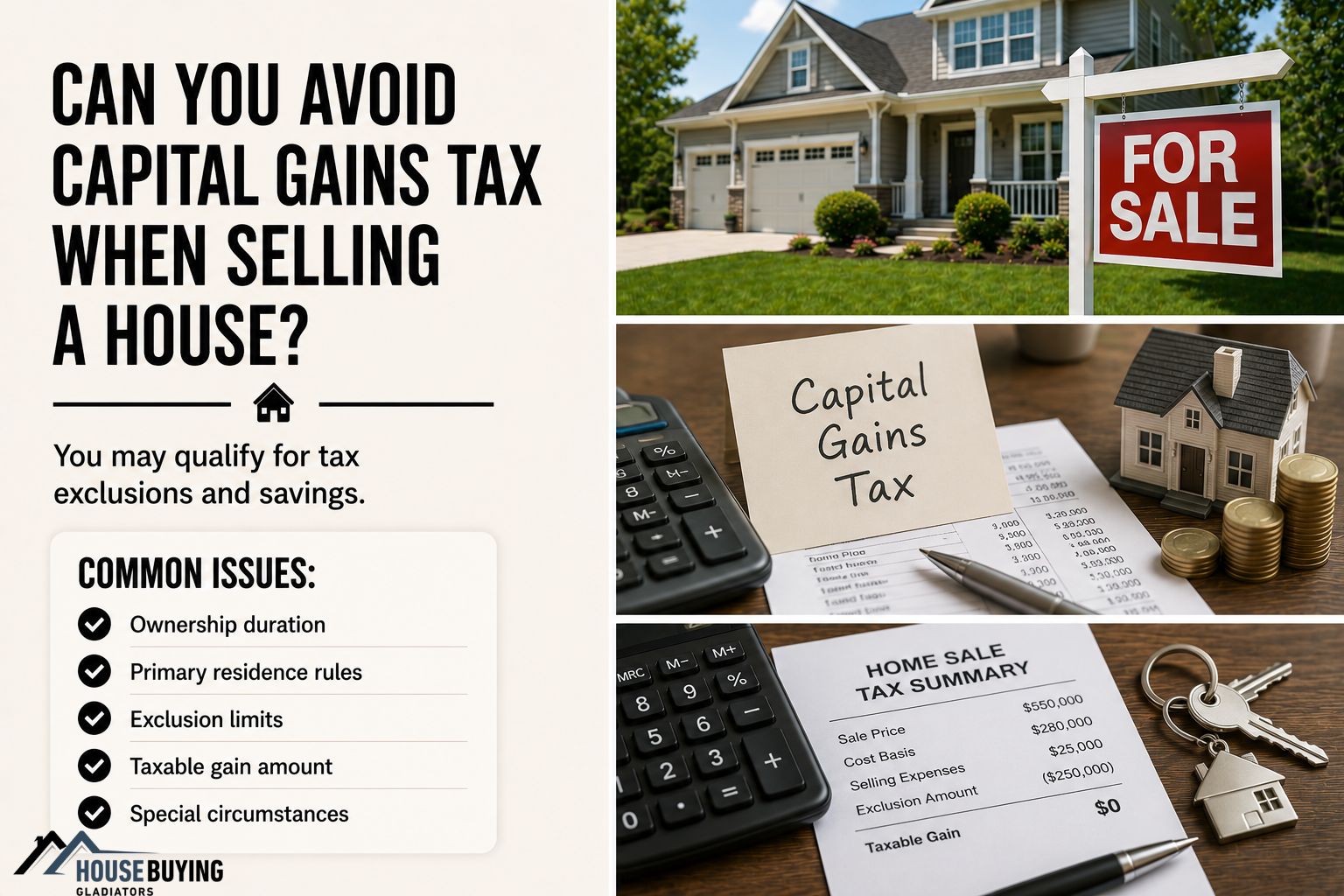
Yes, you may be able to avoid paying capital gains tax when selling a house if you qualify for the IRS home sale exclusion or meet other applicable tax rules. Whether you owe capital gains tax depends on factors such as how long you owned the home, whether it was your primary residence, your filing status, and the amount of profit you earned from the sale.
Many homeowners assume they’ll automatically owe taxes after selling a home. However, federal tax laws allow many eligible sellers to exclude a significant portion of their capital gains, meaning they may owe little or no federal capital gains tax on the sale.
Because every home sale is different, it’s important to understand the eligibility requirements before closing. Your ownership history, occupancy, taxable gain, and overall financial situation all play a role in determining whether you qualify for a capital gains tax exclusion or another form of tax relief.
In this guide, you’ll learn when capital gains tax applies, who qualifies for the home sale exclusion, how taxable gains are calculated, common situations that affect eligibility, and practical ways homeowners may reduce or avoid capital gains tax when selling a house.
Capital Gains Tax & Section 121 Exclusion Estimator
Capital Gains Tax & Section 121 Exclusion Estimator
Estimate your net taxable profit, calculate your Section 121 primary residence exclusion allowance, and uncover your potential IRS tax liability.
Calculation Note: Assumes fulfillment of IRS ownership and usage regulations (occupying property for 2 out of the prior 5 fiscal years). Calculations represent long-term capital rate distributions and exclude localized state structures or alternative income bracket surcharges.
Who Has To Pay Capital Gains Tax When Selling A House?
Not every homeowner pays capital gains tax when selling a house. You may owe tax only if your profit exceeds the available IRS home sale exclusion or if you don’t meet the ownership and residency requirements. Many primary homeowners qualify to exclude some or all of their taxable gain.
Selling a home doesn’t automatically create a tax bill.
Your tax liability depends on your eligibility, the amount of profit you earn, and how you used the property before selling.
When Capital Gains Tax May Apply
| Situation | Potential Tax Impact |
|---|---|
| Primary residence qualifies for the exclusion | Some or all capital gains may be excluded |
| Profit exceeds the IRS exclusion limit | Excess gain may be taxable |
| Investment or rental property | Different tax rules may apply |
| Ownership or residency requirements not met | You may not qualify for the exclusion |
| Home inherited or received as a gift | Special tax rules may apply |
Before assuming you’ll owe capital gains tax, determine whether you qualify for the IRS home sale exclusion and calculate your taxable gain accurately. Understanding these factors before closing can help you estimate your potential tax liability and avoid unexpected surprises.
If you’re estimating how much money you’ll receive after selling, what is net proceeds when selling a house explains how taxes, mortgage payoffs, commissions, and closing costs affect your final proceeds.
How Does The IRS Home Sale Exclusion Work?
The IRS home sale exclusion allows many eligible homeowners to exclude a portion of their capital gains from federal income tax when selling a primary residence. To qualify, you generally must meet the IRS ownership and use requirements before the sale.
The home sale exclusion is one of the biggest tax benefits available to homeowners.
However, not every seller qualifies, so reviewing the eligibility rules before closing is essential.
IRS Home Sale Exclusion At A Glance
| Requirement | General Rule |
|---|---|
| Primary residence | The home must generally qualify as your main residence |
| Ownership test | You generally must have owned the home for at least two of the last five years |
| Use test | You generally must have lived in the home as your primary residence for at least two of the last five years |
| Previous exclusion | You generally can’t claim the exclusion if you used it on another home sale within the previous two years |
| Eligible gain | Qualified homeowners may exclude up to the applicable IRS limit if all requirements are met |
Meeting the ownership and residency requirements doesn’t automatically guarantee the full exclusion. Reviewing how the home sale capital gains exclusion works can help homeowners better understand the IRS eligibility rules before selling.
If you’re preparing to sell your primary residence, how to prepare a house for sale explains the practical steps homeowners can take before listing their property.
Who Qualifies For The Home Sale Exclusion When Selling A House?
Homeowners generally qualify for the IRS home sale exclusion if they meet the ownership and use requirements for their primary residence and satisfy other applicable eligibility rules. Meeting these requirements may allow eligible sellers to exclude some or all of their capital gains from federal income tax.
Qualifying for the exclusion depends on more than owning a home.
The IRS also considers how long you owned and lived in the property before selling.
Home Sale Exclusion Eligibility Checklist
| Requirement | Why It Matters |
|---|---|
| Primary residence | The exclusion generally applies only to your main home |
| Ownership requirement | Confirms you owned the property for the required period |
| Residency requirement | Verifies you lived in the home long enough to qualify |
| Previous exclusion | Determines whether you’re eligible to claim the exclusion again |
| Taxable gain | Helps determine whether any remaining gain may be subject to tax |
Reviewing these requirements before listing your home can help you understand whether you may qualify for the exclusion and identify potential tax issues before closing. If your situation involves rental use, inherited property, or other special circumstances, different tax rules may apply.
If you’re planning your home sale, how to sell a house by owner (FSBO) explains the key steps involved from listing your property to closing the transaction.
What Situations Can Affect Capital Gains Tax When Selling A House?
Several factors can affect capital gains tax when selling a house, including whether the property is your primary residence, an investment property, or an inherited home. Your ownership history, residency, improvements, and previous home sales may also influence your tax liability.
Every home sale is different.
As a result, the same tax rules don’t apply to every homeowner.
Common Situations That May Affect Capital Gains Tax
| Situation | Possible Tax Consideration |
|---|---|
| Primary residence | May qualify for the IRS home sale exclusion |
| Investment or rental property | Different capital gains and depreciation rules may apply |
| Inherited property | May receive different tax treatment based on its stepped-up basis |
| Gifted property | The original cost basis may affect the taxable gain |
| Significant home improvements | May increase your adjusted cost basis and reduce taxable gain |
Understanding these situations before selling can help you identify potential tax implications and prepare for closing with greater confidence. If your home sale involves unique circumstances, reviewing the applicable IRS guidance or consulting a qualified tax professional can help you determine how the rules apply to your situation.
If you’re selling an inherited property, can you sell an inherited house explains the legal and financial steps homeowners should understand before completing the sale.
How Can Homeowners Reduce Capital Gains Tax When Selling A House?
Homeowners may reduce capital gains tax by qualifying for the IRS home sale exclusion, maintaining records of eligible home improvements, understanding their adjusted cost basis, and planning the timing of the sale. The right strategy depends on each homeowner’s circumstances and applicable tax rules.
Reducing capital gains tax starts long before closing.
Planning ahead and keeping accurate records can help you maximize available tax benefits and avoid unexpected liabilities.
Ways To Potentially Reduce Capital Gains Tax
| Strategy | Why It May Help |
|---|---|
| Qualify for the home sale exclusion | May allow eligible homeowners to exclude some or all taxable gain |
| Keep records of capital improvements | May increase your adjusted cost basis and reduce taxable gain |
| Review your ownership and residency history | Helps determine eligibility for the exclusion |
| Maintain accurate purchase and sale records | Supports tax reporting and gain calculations |
| Consult a qualified tax professional | Helps identify tax rules that apply to your specific situation |
Understanding your potential tax obligations before selling can help you make informed financial decisions and avoid unexpected surprises after closing. Because tax laws and individual circumstances vary, professional guidance may help you determine the most appropriate approach for your home sale.
If you’re preparing your finances before selling, what documents do I need to sell my house explains which records and closing documents homeowners should keep throughout the transaction.
FAQs: Can You Avoid Capital Gains Tax When Selling A House?
Do all homeowners pay capital gains tax when selling a house?
No. Many homeowners don’t pay capital gains tax because they qualify for the IRS home sale exclusion. However, eligibility depends on ownership, residency, and the amount of taxable gain.
How long do I have to live in my house to avoid capital gains tax?
Generally, you must have owned and used the home as your primary residence for at least two of the five years before selling to qualify for the IRS exclusion.
How much capital gains can I exclude when selling my primary residence?
Eligible homeowners may exclude up to the applicable IRS limit if they satisfy the ownership, residency, and other qualifying requirements before completing the home sale.
Do I pay capital gains tax if I sell my house and buy another one?
Buying another home doesn’t automatically eliminate capital gains tax. Instead, your eligibility depends on whether you qualify for the IRS home sale exclusion and other applicable tax rules.
Are home improvements tax deductible when selling a house?
Generally, routine repairs aren’t deductible. However, qualifying capital improvements may increase your adjusted cost basis, which can reduce your taxable capital gain when selling.
Does an inherited house qualify for the home sale exclusion?
Not always. Inherited properties often follow different tax rules, and eligibility for the home sale exclusion depends on ownership, occupancy, and other IRS requirements.
Do I owe capital gains tax on a rental or investment property?
Rental and investment properties generally don’t qualify for the primary residence exclusion. Therefore, different capital gains and depreciation recapture rules may apply when you sell.
What records should I keep to reduce capital gains tax?
Keep records of your purchase price, eligible capital improvements, selling expenses, and closing documents. These records help calculate your adjusted cost basis and taxable gain accurately.
Can I reduce capital gains tax without breaking tax rules?
Yes. Qualifying for the home sale exclusion, maintaining accurate records, and understanding your adjusted cost basis may legally reduce your capital gains tax liability.
Should I consult a tax professional before selling my house?
Yes. A qualified tax professional can review your circumstances, explain applicable IRS rules, and help you understand potential tax obligations before completing your home sale.
Conclusion: Can You Avoid Capital Gains Tax When Selling A House?
Avoiding capital gains tax when selling a house depends on more than simply completing a home sale. Your ownership history, primary residence status, taxable gain, and eligibility for the IRS home sale exclusion all influence whether you owe federal capital gains tax. Understanding these rules before listing your property can help you plan ahead and avoid unexpected tax consequences.
Review Your Eligibility ➜ Understand The IRS Exclusion ➜ Calculate Your Taxable Gain ➜ Keep Accurate Records ➜ Sell With Confidence
Although many homeowners qualify to reduce or eliminate capital gains tax, every situation is unique. Reviewing your eligibility early, maintaining documentation for capital improvements, and seeking professional tax guidance when needed can help you make informed decisions and maximize the financial outcome of your home sale.