Skip to content
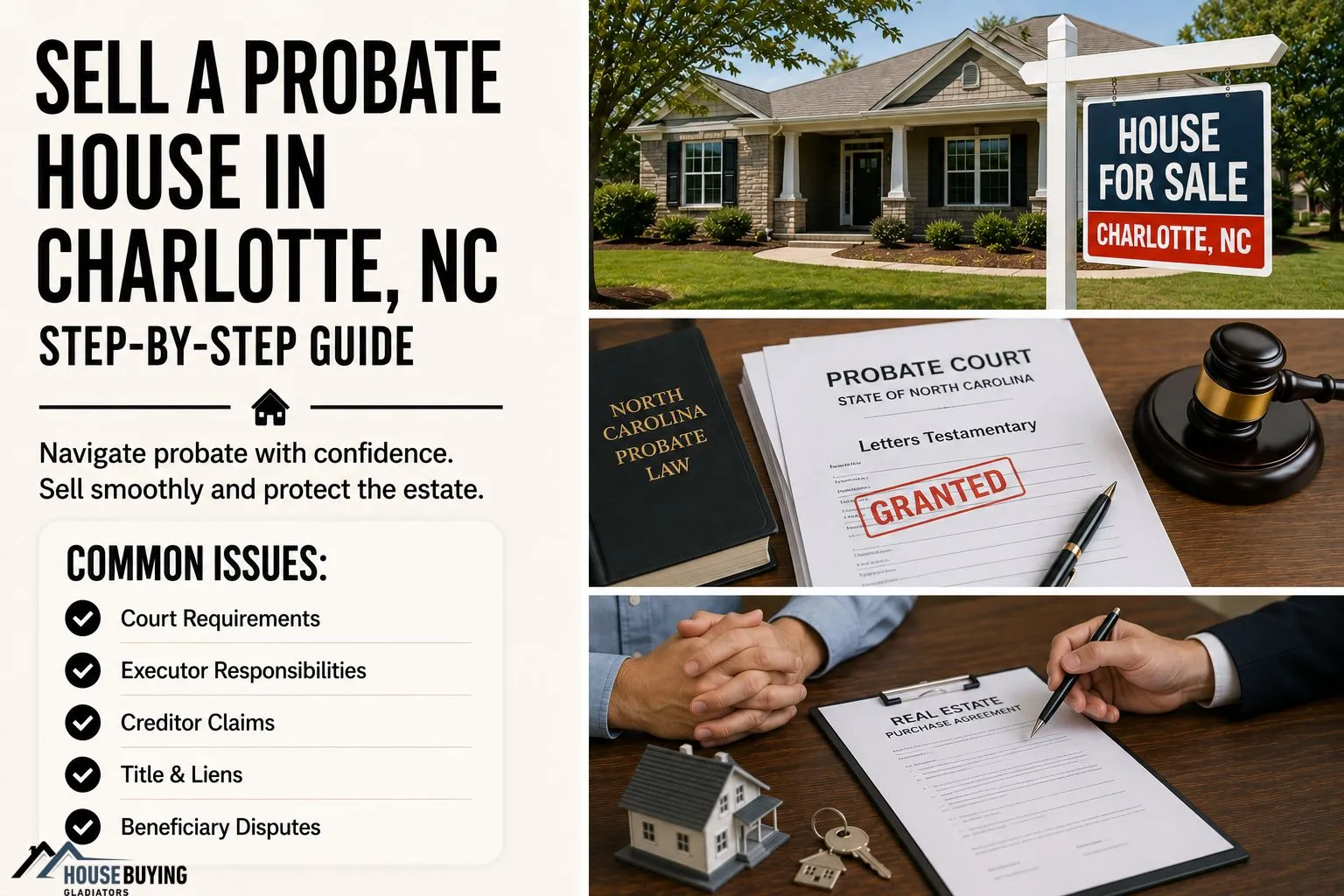
Yes, you can sell a probate house in Charlotte, NC, but only after the person with legal authority to act for the estate meets North Carolina’s probate requirements. Depending on the estate, you may need court-appointed authority, cooperation from beneficiaries, and compliance with probate procedures before transferring ownership. Understanding these requirements early helps prevent delays, protects the estate, and creates a smoother selling experience.
Selling a probate property is different from a traditional home sale. Beyond finding a buyer, the process often involves court documents, executor responsibilities, creditor claims, title verification, and estate administration. Many personal representatives also face practical challenges such as maintaining a vacant home, paying ongoing taxes and utilities, coordinating with multiple heirs, and deciding whether to sell the property as-is or invest in repairs before listing it.
What You Need To Know Before You Sell A Probate House In Charlotte, NC
In Charlotte and throughout Mecklenburg County, probate timelines and legal responsibilities can directly affect when a property may be listed, marketed, and transferred to a new owner. While North Carolina probate laws establish the legal framework, factors such as the estate’s complexity, beneficiary cooperation, existing mortgages, liens, or property condition often determine how quickly a sale can move forward. Planning for these issues early helps reduce unnecessary expenses and minimizes delays during the transaction.
At House Buying Gladiators, we’ve worked with homeowners, executors, and families navigating probate sales under a wide range of circumstances. Whether the inherited property is vacant, occupied, outdated, in need of extensive repairs, or part of a complex estate, understanding your available options before making decisions can save time, preserve equity, and reduce stress.
This guide provides a practical, step-by-step explanation of how to sell a probate house in Charlotte, NC. You’ll learn who has the legal authority to sell, when probate affects the transaction, how the process works under North Carolina law, common mistakes to avoid, the financial considerations involved, and the selling strategies that can help you complete the sale with confidence.
Mecklenburg County Probate & Carrying Cost Calculator
Estimate mounting holding costs during the probate process and evaluate net liquidity solutions.
Calculations incorporate statutory North Carolina Clerk of Superior Court filing schedules and average local carrying cost indexes.
Understanding Probate Sales In North Carolina
A probate sale in North Carolina is the sale of real estate owned by someone who has passed away, where the estate’s personal representative or executor transfers the property according to state probate laws. Not every inherited home requires the same probate process, but confirming who has legal authority to sell is essential before accepting an offer or closing the transaction.
What Makes A Probate Sale Different?
Unlike a traditional home sale, a probate sale involves both real estate and estate administration. Before ownership can transfer, the estate must follow legal procedures that protect beneficiaries, creditors, and other interested parties.
Key differences include:
- The executor or estate administrator not individual family members typically manages the sale.
- The estate must comply with North Carolina probate requirements before ownership transfers.
- Outstanding debts, liens, or creditor claims may need to be resolved through the estate.
- Sale proceeds generally become part of the estate before distribution to beneficiaries.
- Additional documentation may be required before closing.
These legal responsibilities make probate sales more structured than standard real estate transactions, but they do not necessarily make them difficult when handled correctly.
Probate Doesn’t Always Mean A Long Delay
Many homeowners assume probate automatically takes a year or longer. In reality, the timeline depends on factors such as:
| Factor | Potential Effect On The Sale |
|---|---|
| Estate complexity | Larger or disputed estates often require more time. |
| Court filings | Missing or delayed paperwork can slow progress. |
| Multiple heirs | Family disagreements may delay important decisions. |
| Creditor claims | Outstanding debts can affect when assets are distributed. |
| Property title | Clear title generally allows the process to move more smoothly. |
Simple estates often progress much faster than complex ones. Understanding these factors early helps executors and beneficiaries plan realistic expectations instead of relying on common misconceptions.
A Common Charlotte Scenario
Imagine an executor inherits a home in Charlotte after a parent’s passing. The property is vacant, requires cosmetic updates, and continues to generate monthly expenses for taxes, insurance, utilities, and maintenance. Rather than waiting until those costs accumulate, the executor begins the probate process promptly, gathers the necessary documents, and prepares a selling strategy. Acting early helps preserve the estate’s value while reducing unnecessary holding costs.
Key Takeaway
The most important step in any probate sale is confirming who has the legal authority to sell the property and what North Carolina law requires before ownership can transfer. Understanding these requirements early reduces delays, protects the estate, and helps everyone involved make informed decisions.
If you’re uncertain whether an inherited property can be sold during probate, our guide to selling an inherited house in Charlotte explains how probate, ownership, and beneficiary responsibilities work together when real estate becomes part of an estate.
Who Has The Legal Right To Sell A Probate House In Charlotte, NC?
In most North Carolina probate cases, only the court-authorized personal representative either the executor named in the will or the estate administrator appointed by the court has the legal authority to sell a probate house. Beneficiaries or family members cannot sell the property unless they have the legal authority to act on behalf of the estate.
Who Can Sell A Probate House In Charlotte, NC?
The person with authority depends on how the estate is administered.
| Person | Can They Sell The Property? | Typical Role |
|---|---|---|
| Executor | ✅ Yes | Named in the will and authorized to administer the estate. |
| Estate Administrator | ✅ Yes | Appointed by the court when no executor is available or no valid will exists. |
| Beneficiary | ❌ Usually No | Receives assets but generally cannot sell the property without legal authority. |
| Family Member | ❌ No | Relationship alone does not give the right to sell estate property. |
| Co-Executors | ✅ Yes | May need to act together, depending on the court order or estate documents. |
Understanding who can legally sign contracts and closing documents prevents unnecessary delays and helps avoid disputes later in the transaction.
Can Multiple Heirs Sell A Probate House In Charlotte, NC?
Multiple heirs do not automatically have the authority to sell a probate property. While beneficiaries often participate in important decisions, the personal representative remains responsible for managing the estate according to North Carolina law.
However, multiple heirs can still influence the sale by:
- Agreeing or disagreeing on the selling strategy.
- Raising concerns about the property’s value.
- Requesting independent appraisals.
- Challenging decisions if they believe the executor is not acting in the estate’s best interests.
Open communication among heirs often helps prevent conflicts that can delay the probate process.
Before Listing The Property, Confirm These Questions
Before accepting an offer, verify that you can answer yes to these questions:
- Has the court recognized the personal representative’s authority?
- Has ownership of the property been confirmed?
- Are all known heirs aware of the proposed sale?
- Have you identified any mortgages, liens, or creditor claims affecting the property?
- Do you understand whether additional court approval is required before closing?
Completing these steps early helps reduce legal complications and gives buyers greater confidence that the transaction can proceed smoothly.
Practical Insight
One of the biggest reasons probate sales become delayed isn’t the real estate market it’s uncertainty about who can legally sign the purchase agreement and closing documents. Confirming legal authority before marketing the property saves time, reduces contract issues, and creates a smoother experience for both the estate and prospective buyers.
If you’re comparing your selling options after receiving legal authority, our guide to selling a home quickly in Charlotte explains how different selling methods affect timelines, preparation requirements, and the overall closing process.
Can You Sell A Probate House Before Probate Is Complete?
Sometimes, yes but not in every situation. Whether you can sell a probate house before probate is complete in Charlotte, NC depends on the estate’s legal status, the authority granted to the personal representative, and North Carolina probate requirements. In many cases, you can begin preparing the property for sale or even accept an offer, but the transaction generally cannot close until all legal requirements have been satisfied.
What Happens Before You Sell A Probate House In Charlotte, NC?
Many executors assume they must wait until the entire probate process is over before taking any action. In reality, you may be able to move the sale forward by:
- Preparing the property for the market.
- Gathering estate and title documents.
- Ordering a property valuation or appraisal.
- Cleaning out personal belongings.
- Marketing the home to potential buyers.
- Negotiating purchase offers.
Taking these steps early can reduce the time between receiving legal authority and completing the sale.
What Happens Before You Can Sell A Probate House In Charlotte, NC?
Before ownership transfers to a buyer, the estate typically needs to satisfy several legal requirements.
| Requirement | Why It Matters |
|---|---|
| Legal authority confirmed | The executor or administrator must have authority to act for the estate. |
| Probate requirements completed | The transaction must comply with North Carolina probate procedures. |
| Clear title | Buyers and title companies need confirmation that ownership can transfer. |
| Estate obligations addressed | Mortgages, liens, or other estate obligations may need resolution before closing. |
| Required approvals obtained | Some estates may require additional approvals before the sale can be finalized. |
These requirements help protect both the estate and the buyer while ensuring the transfer complies with North Carolina law.
Why Timing Matters
Waiting until every probate step is complete before planning the sale can unnecessarily extend holding costs. Property taxes, insurance premiums, utilities, lawn care, maintenance, and security expenses continue while the home sits vacant. Preparing for the sale early allows many estates to close more efficiently once the legal requirements have been met.
Charlotte Example
Imagine an executor inherits a home in Mecklenburg County that has remained vacant for several months. Instead of waiting until the probate process finishes to begin planning, they obtain a property valuation, organize estate documents, and prepare the home for sale. Once they receive the legal authority to complete the transaction, they can move toward closing much more quickly than if they had waited to begin.
Key Takeaway
Probate doesn’t always prevent you from preparing or marketing a property it primarily determines when ownership can legally transfer. Understanding the distinction between preparing for a sale and completing one helps executors avoid unnecessary delays while remaining compliant with North Carolina probate law.
If you’re trying to decide whether selling the property without making repairs could save time and reduce estate expenses, our guide to selling a home in its current condition explains when an as-is sale may be the most practical option.
Step-By-Step Probate Home Selling Process In Charlotte, NC
Selling a probate house in Charlotte, NC follows a structured process that begins with establishing legal authority and ends with transferring ownership to the buyer. While every estate is different, following each step in the correct order helps avoid delays, protects the estate, and gives buyers confidence that the transaction can close successfully.
Step 1: Open The Probate Estate
If probate is required, the process starts by filing the appropriate documents with the North Carolina probate court. The court reviews the estate and authorizes the executor or appoints an estate administrator to act on its behalf.
Without this legal authority, you generally cannot complete the sale of the property.
Step 2: Confirm Ownership And Estate Obligations
Before listing the home, gather the information needed to understand the property’s legal and financial status, including:
- Property deed and ownership records
- Outstanding mortgage balance
- Property tax status
- Existing liens or judgments
- Homeowners insurance information
- Utility accounts and maintenance responsibilities
Identifying these items early reduces surprises during the closing process.
Step 3: Determine The Property’s Market Value
Knowing the home’s current market value helps the personal representative make informed decisions and fulfill their responsibility to act in the estate’s best interests.
Common valuation methods include:
- Comparative Market Analysis (CMA)
- Professional appraisal
- Cash offer evaluation
- Local market comparisons
Obtaining an accurate value also helps reduce disagreements among beneficiaries and supports informed negotiations with buyers.
Step 4: Choose The Best Selling Method
Not every probate property should be sold the same way. The right approach depends on the home’s condition, the estate’s timeline, and the goals of the beneficiaries.
| Selling Method | Best Suited For |
|---|---|
| Traditional listing | Updated homes with time to market the property |
| Cash sale | Homes needing repairs or a faster closing |
| Investor purchase | Distressed or vacant probate properties |
Selecting the appropriate selling strategy early often saves both time and money.
Step 5: Complete The Sale And Distribute Estate Funds
Once all legal requirements have been satisfied, the transaction can move toward closing. Sale proceeds are typically used to pay approved mortgages, liens, taxes, closing costs, and other estate obligations. The remaining funds are then distributed according to the will or North Carolina law after the estate administration process allows for distribution.
Probate Sale Checklist
Use this checklist before accepting an offer:
- ✓ Probate estate has been opened, if required.
- ✓ Legal authority to sell has been confirmed.
- ✓ Property ownership has been verified.
- ✓ Mortgage, liens, and taxes have been reviewed.
- ✓ Property value has been determined.
- ✓ Selling strategy has been selected.
- ✓ Required legal documents are ready for closing.
Practical Insight
Many probate sales experience delays not because buyers lose interest, but because estate paperwork isn’t completed before the property goes under contract. Preparing legal documents, confirming ownership, and understanding the estate’s obligations before listing the home often leads to a faster and smoother closing.
If you’re deciding whether selling directly to a local home buyer is the most efficient option, our guide to cash home buyers in Charlotte explains how cash sales work, when they make sense, and what to expect from the process.
Costs, Taxes & Common Mistakes When Selling A Probate House In Charlotte, NC
Selling a probate house in Charlotte, NC involves more than finding a buyer. Executors and heirs should understand the estate’s financial obligations, potential tax implications, and common mistakes before accepting an offer. Planning ahead helps protect the estate’s value, prevent unexpected closing delays, and ensure informed decisions throughout the probate sale.
Understanding common mistakes to avoid during probate can help executors reduce delays, protect estate assets, and fulfill their legal responsibilities more effectively throughout the probate process.
Typical Costs To Expect
Every estate is different, but probate home sales often include several expenses beyond standard closing costs.
| Expense | What It Covers |
|---|---|
| Mortgage payoff | Remaining loan balance secured by the property |
| Property taxes | Unpaid county or municipal taxes |
| Homeowners insurance | Coverage until the property transfers |
| Utilities & maintenance | Lawn care, electricity, water, security, and upkeep |
| Probate administration costs | Court-related estate expenses, where applicable |
| Closing costs | Title services, recording fees, and other transaction expenses |
Vacant properties can become increasingly expensive to maintain. Selling sooner may reduce ongoing carrying costs and help preserve estate assets.
Tax Considerations Heirs Should Understand
Many beneficiaries worry they’ll owe significant taxes after selling an inherited property. While taxes vary by situation, several factors commonly affect the final outcome:
- The property’s fair market value at the date of inheritance.
- Potential capital gains if the property increases in value before the sale.
- Outstanding mortgage or debt obligations.
- Estate-related expenses that may affect the final distribution.
Because tax consequences depend on individual circumstances, heirs should consult a qualified tax professional before making financial decisions.
Common Mistakes That Delay Probate Sales
Many probate transactions slow down because of avoidable mistakes rather than market conditions.
Avoid these common issues:
- Listing the property before confirming legal authority.
- Failing to identify liens or unpaid property taxes.
- Waiting too long to maintain or secure a vacant home.
- Pricing the property without understanding current market value.
- Overlooking communication with beneficiaries.
- Accepting an offer without confirming the buyer can complete the purchase.
Addressing these issues early often prevents unnecessary delays and protects the estate from additional expenses.
Charlotte Example
An executor inherits a home in Charlotte that has been vacant for several months. While waiting to sell, monthly insurance premiums, utility bills, lawn maintenance, and property taxes continue to accumulate. By reviewing these expenses before listing the property and selecting a selling strategy that matches the estate’s timeline, the executor can reduce holding costs and preserve more value for the beneficiaries.
Key Takeaway
The largest financial risk in many probate sales isn’t a single tax or closing fee it’s allowing avoidable carrying costs and preventable delays to reduce the estate’s value. Understanding your financial responsibilities before listing the property helps you make informed decisions and complete the sale more efficiently.
If you’re comparing a direct home sale with listing through a traditional agent, our comparison of cash home buyers and real estate agents in Charlotte explains the differences in costs, timelines, contingencies, and overall selling experience so you can choose the approach that best fits the estate’s needs.
Should You Sell A Probate House In Charlotte, NC As-Is Or Make Repairs?
You can sell a probate house in Charlotte, NC either as-is or after making repairs. The better option depends on the property’s condition, the estate’s budget, your timeline, and the expected return on investment. Many executors discover that spending money on renovations doesn’t always increase the estate’s net proceeds enough to justify the additional cost and delay.
Should You Sell A Probate House In Charlotte, NC As-Is?
Instead of assuming every probate home should be renovated, evaluate the property’s condition alongside the estate’s financial goals.
| Sell As-Is | Make Repairs |
|---|---|
| Home needs major renovations | Home only needs minor cosmetic improvements |
| Estate has limited funds | Estate has funds available for improvements |
| Beneficiaries want a faster sale | Maximizing sale price is the primary objective |
| Holding costs continue to increase | Local market conditions support higher resale values |
| Property has been vacant for an extended period | Repairs can be completed without delaying the sale significantly |
The right decision isn’t always the one that produces the highest sale price it’s the one that leaves the estate with the strongest overall financial outcome.
Costs Many Executors Overlook
Renovation budgets often focus on contractor estimates while overlooking the cost of waiting. Every additional month before closing can increase expenses such as:
- Property taxes
- Homeowners insurance
- Utilities
- Lawn maintenance
- HOA fees, if applicable
- Mortgage payments
- Security and property upkeep
These carrying costs can reduce the estate’s proceeds, even if the renovated home sells for a higher price.
Charlotte Example
An executor inherits a home in Charlotte that needs a new roof, updated flooring, and kitchen improvements. Renovations could take several months and require a substantial investment. During that time, the estate continues paying taxes, insurance, utilities, and maintenance. Selling the property as-is may produce a slightly lower purchase price, but it could also eliminate months of holding costs and allow beneficiaries to receive their inheritance much sooner.
Questions To Ask Before Renovating
Before investing estate funds into repairs, consider:
- Will the improvements increase the home’s value more than they cost?
- Can the estate comfortably pay for renovations?
- How much will holding the property cost each month?
- Are all beneficiaries willing to wait for a longer sale?
- Does the local Charlotte market support renovating this type of property?
Answering these questions often leads to a more informed decision than focusing solely on the highest possible listing price.
Key Takeaway
The best probate sale isn’t necessarily the one with the highest offer it’s the one that maximizes the estate’s final financial outcome after accounting for repair costs, holding expenses, time, and risk. Evaluating both options objectively helps executors fulfill their responsibility to act in the estate’s best interests.
If you’re trying to estimate how long each selling approach may take, our guide to home-selling timelines in Charlotte explains the factors that affect closing speed and what to expect from different selling methods.
Choosing The Best Selling Method For A Probate House In Charlotte, NC
The best way to sell a probate house in Charlotte, NC depends on the estate’s priorities not just the highest possible sale price. Executors should evaluate the property’s condition, probate timeline, holding costs, market demand, and beneficiary expectations before deciding whether to list traditionally or sell directly to a cash buyer.
Compare Your Selling Options
Every probate property is unique, so there’s no one-size-fits-all solution.
| Selling Method | Best For | Potential Drawbacks |
|---|---|---|
| Traditional Listing | Updated homes in desirable condition with flexible timelines | May require repairs, staging, inspections, and buyer financing |
| Cash Home Buyer | Estates needing a faster, simpler sale | Offers may be lower than a fully renovated retail sale |
| Real Estate Investor | Homes requiring extensive repairs or modernization | Offer quality varies depending on the buyer and local market |
| Hybrid Approach | Executors who want to compare multiple selling options | Requires additional time before making a decision |
The right choice should balance convenience, speed, costs, and the estate’s overall financial outcome.
Match The Selling Method To Your Situation
Consider these common scenarios:
| Situation | Often The Better Choice |
|---|---|
| Vacant property with ongoing expenses | Direct cash sale |
| Recently updated home | Traditional listing |
| Home needing major repairs | Cash buyer or investor |
| Multiple heirs want a quick resolution | Direct sale |
| Estate has time to maximize market exposure | Traditional listing |
Matching the selling strategy to the estate’s circumstances often produces better results than automatically choosing the highest listing price.
How Do You Choose The Best Way To Sell A Probate House In Charlotte, NC?
Before selecting a selling method, ask yourself:
- How quickly does the estate need to sell?
- How much will the property cost to hold each month?
- Does the home require repairs before listing?
- Are all beneficiaries comfortable waiting for a traditional sale?
- Is certainty more valuable than pursuing the highest possible offer?
- Which option best fulfills your responsibility to act in the estate’s best interests?
These questions help shift the focus from price alone to the estate’s total financial outcome.
Charlotte Market Insight
In Charlotte’s competitive housing market, well-maintained probate homes often attract strong interest from traditional buyers. However, properties requiring significant repairs, those left vacant for extended periods, or estates facing time-sensitive circumstances may benefit from a direct sale that reduces uncertainty, eliminates financing contingencies, and shortens the closing timeline.
Decision Framework
The best selling method is usually the one that delivers the greatest overall value after considering:
- Expected sale price
- Repair and renovation costs
- Monthly holding expenses
- Time required to close
- Risk of financing or inspection delays
- Convenience for the executor and beneficiaries
Looking at the complete financial picture rather than the purchase price alone often leads to a better decision for the estate.
If the probate property also has mortgage payment issues, our guide to avoiding foreclosure in Charlotte explains the options available before the situation becomes more complicated.
Why Homeowners Choose House Buying Gladiators To Sell A Probate House In Charlotte, NC
Many homeowners choose House Buying Gladiators because probate sales often require a faster, simpler, and more predictable process than a traditional home sale. Whether you’re an executor managing an estate or a family member helping settle a loved one’s affairs, our goal is to make selling a probate house in Charlotte, NC as straightforward as possible.
How We Help Probate Sellers
Every probate estate has different circumstances. Some properties need repairs, while others involve multiple heirs, vacant homes, or tight timelines. House Buying Gladiators works with homeowners throughout Charlotte to provide flexible solutions that fit their situation.
When you work with us, you can expect:
- Purchase homes in any condition no repairs or renovations required.
- Fair, no-obligation cash offers based on current market conditions.
- No real estate commissions or hidden fees.
- Flexible closing dates that work with your probate timeline.
- Assistance with properties that contain unwanted belongings.
- Clear communication throughout the selling process.
Our focus is on creating a smooth transaction while respecting the legal responsibilities of the estate.
Why Executors Choose A Direct Sale
For many estates, simplicity is just as important as price.
| Traditional Home Sale | House Buying Gladiators |
|---|---|
| May require repairs and staging | Buy houses as-is |
| Financing can delay closing | No lender financing contingencies |
| Multiple showings and open houses | No public showings required |
| Closing timeline can vary | Flexible closing schedule |
| Commissions and many selling expenses | No agent commissions or hidden fees |
For executors managing an estate, reducing uncertainty can make the probate process significantly less stressful.
A Local Team That Understands Charlotte
As a local Charlotte home buyer, House Buying Gladiators understands the neighborhoods, housing market, and challenges homeowners face when selling inherited or probate properties. Whether the home is in excellent condition or has been vacant for years, we evaluate every property individually and present a transparent offer without pressure.
Our Simple Process
Selling a probate property doesn’t have to be complicated.
- Contact House Buying Gladiators for a free property consultation.
- We evaluate the home’s condition and discuss your probate situation.
- Receive a fair, no-obligation cash offer.
- Choose a closing date that aligns with your legal timeline.
- Complete the sale with a straightforward closing process.
Our team works to make every step clear so executors and beneficiaries know what to expect from start to finish.
Why Families Trust House Buying Gladiators
Families often work with us because they want:
- A faster resolution to the estate.
- Fewer out-of-pocket expenses.
- No repairs or cleanup before selling.
- A straightforward process with fewer complications.
- A local team that communicates clearly and treats every situation with respect.
Key Takeaway
Selling a probate house isn’t just about finding a buyer it’s about choosing a process that protects the estate, respects legal requirements, and reduces unnecessary stress for everyone involved. House Buying Gladiators provides a practical solution for homeowners and executors who want a fair, efficient, and transparent way to sell a probate property in Charlotte, NC.
Frequently Asked Questions About Selling A Probate House In Charlotte, NC
In some cases, you can prepare the property for sale or accept an offer, but the transaction usually cannot close until the personal representative has the legal authority to transfer ownership and all applicable probate requirements have been satisfied.
The executor named in the will or the court-appointed estate administrator typically has the legal authority to sell the property on behalf of the estate.
No. Some inherited properties avoid probate through mechanisms such as living trusts, joint ownership with survivorship rights, or beneficiary designations, depending on how ownership was structured.
Multiple heirs may participate in decisions, but the executor or estate administrator is generally responsible for completing the sale according to North Carolina probate law.
Yes. Probate properties can often be sold in their current condition without making repairs, which may help reduce holding costs and simplify the sale.
The timeline varies depending on the probate process, the property’s condition, market demand, and the chosen selling method. Cash sales often close more quickly once legal requirements are met.
There may be tax considerations, including potential capital gains, depending on your specific circumstances. A qualified tax professional can explain how the rules apply to your situation.
It depends on the home’s condition, the estate’s budget, and the expected return on investment. Many executors compare repair costs, holding expenses, and potential resale value before making a decision.
Yes. House Buying Gladiators purchases probate homes in various conditions, allowing many sellers to avoid repairs, renovations, and lengthy preparation before closing.
The first step is confirming who has the legal authority to sell the property. After that, you can evaluate the home’s value, compare selling options, and request a no-obligation cash offer if a direct sale fits your needs.
Conclusion: Sell A Probate House In Charlotte, NC With Confidence
Selling a probate house in Charlotte, NC can feel overwhelming, especially when you’re managing legal responsibilities, financial obligations, and family expectations at the same time. Understanding who has the authority to sell, how probate affects the transaction, potential costs, tax considerations, and the available selling options helps you make informed decisions throughout the process.
While every estate is unique, planning ahead and choosing the right selling strategy can reduce delays, minimize carrying costs, and simplify the probate process. Whether the property needs repairs, has multiple beneficiaries, or you’re looking for the fastest path to closing, evaluating all of your options is essential.
At House Buying Gladiators, we help homeowners, executors, and families sell probate properties throughout Charlotte, NC with a straightforward, transparent process. If you’re ready to sell a probate house in Charlotte, NC, we’re here to provide a fair cash offer and a closing timeline that works for your estate.