Skip to content

If you need to sell a probate house in Nashville, TN, understanding the probate process, who has the legal authority to sell, and the property’s ownership status is essential before listing the home. While some probate properties can be sold with minimal delays, others require additional estate administration or court involvement depending on the circumstances.
Selling a probate house often involves more than a typical real estate transaction. Executors, personal representatives, administrators, and heirs may need to coordinate with beneficiaries, address title issues, manage existing mortgages, maintain a vacant property, or resolve estate-related responsibilities before closing. Understanding these factors early can help reduce delays and avoid costly surprises.
This guide explains how to sell a probate house in Nashville, TN, including general probate considerations, common executor responsibilities, available selling options, expected timelines, and practical steps to navigate the process. The information is provided for educational purposes only and should not be considered legal or tax advice. Because every estate is different, consult a qualified Tennessee probate attorney or tax professional for guidance specific to your situation.
What Is a Probate House?
A probate house is a home that becomes part of an estate after the owner’s death. In Nashville, TN, the ability to sell the property depends on how the owner held title, who has the legal authority to act on behalf of the estate, and the specific circumstances of the probate process.
Probate is the legal process that helps administer a deceased person’s estate, pay valid debts, and distribute assets to the appropriate beneficiaries or heirs. Not every home goes through probate, and the requirements vary depending on the ownership structure, estate planning documents, and Tennessee law.
Generally, the person responsible for handling the sale may be:
- An executor named in a will.
- A personal representative or administrator appointed by the court.
- A trustee, if the property is held in a trust.
- A surviving owner, if ownership transfers automatically outside probate.
| Situation | Probate May Be Required?* |
|---|---|
| Property held in a living trust | Often No |
| Joint ownership with survivorship rights | Often No |
| Sole ownership | Often Yes |
| Ownership depends on estate planning documents | Varies |
Every estate is different. Probate requirements depend on the property’s ownership and Tennessee law. Consult a qualified Tennessee probate attorney for guidance specific to your situation.
Before marketing a probate property, confirm who has the legal authority to sell it. Addressing ownership and title questions early can help prevent delays during the closing process.
If the property was inherited after probate or estate administration, learn more about your options in our guide on Sell an Inherited House in Nashville, TN.
Who Can Sell a Probate House in Nashville, TN?
Only the person with legal authority to act on behalf of the estate can sell a probate house in Nashville, TN. Depending on the estate, the court may appoint a personal representative or administrator, the will may identify an executor, or a trustee may manage the trust and its property. Beneficiaries do not automatically have the authority to sell the home.
Before listing the property, identify the person who has legal authority to sign contracts and closing documents. Selling a probate home without the proper authority can delay the transaction or create title issues.
Common roles include:
- Executor: Named in the will to administer the estate.
- Personal Representative/Administrator: Appointed by the court if necessary to manage the estate.
- Trustee: Manages and may sell property held in a trust according to the trust’s terms.
- Beneficiaries or Heirs: May inherit the property but generally cannot sell it unless ownership has legally transferred or they have the appropriate authority.
| Role | Can They Usually Sell the Property?* |
|---|---|
| Executor | Often, if authorized through the estate process |
| Personal Representative/Administrator | Often, if appointed by the court |
| Trustee | Often, under the trust’s authority |
| Beneficiary or Heir | Not automatically; depends on ownership and legal authority |
Authority to sell varies based on the estate, governing documents, and Tennessee law. Consult a qualified Tennessee probate attorney for guidance specific to your situation.
Even when someone has authority to sell, they typically have a responsibility to act in the best interests of the estate and its beneficiaries. Keeping accurate records, communicating with interested parties, and following the required legal process can help the sale proceed more smoothly.
If you’re considering the financial impact of selling estate property, explore our guide on What Are Net Proceeds When Selling a House in Nashville, TN.
Can You Sell a Probate House Before Probate Is Complete?
Sometimes. Whether you can sell a probate house before probate is complete depends on the estate’s circumstances, the authority granted to the executor or personal representative, and applicable Tennessee procedures. Some sales can move forward during estate administration, while others may require additional approvals before closing.
Many people assume a probate property cannot be sold until the entire estate is settled, but that isn’t always the case. The timing depends on factors such as the estate’s administration, title status, and the authority of the person managing the estate.
| Situation | Sale Timing* |
|---|---|
| Executor or personal representative has authority | A sale may proceed during probate, depending on the estate |
| Additional court approval is required | Closing may be delayed until approval is obtained |
| Title or ownership issues exist | The sale may need to wait until they’re resolved |
Every probate estate is different. Requirements vary under Tennessee law and should be discussed with a qualified probate attorney.
Even when a buyer is ready to move forward, unresolved title issues, estate debts, missing documentation, or beneficiary disputes can delay closing. Addressing these matters early helps reduce unexpected complications and gives buyers greater confidence in the transaction.
If you’re serving as an executor or personal representative, coordinating with your attorney, title company, and real estate professionals early in the process can help keep the sale on track while meeting your responsibilities to the estate.
If you’re trying to estimate how probate could affect your selling timeline, read our guide on How Long Does Probate Take in Tennessee?
What Are Your Options for Selling a Probate House?
If you’re selling a probate house in Nashville, TN, you generally have three primary options: keep the property, sell it through a real estate agent, or sell it directly to a cash buyer. The right choice depends on the property’s condition, the estate’s timeline, local market conditions, and the goals of the executor and beneficiaries.
Before deciding, compare the benefits and trade-offs of each option.
| Selling Option | Best For |
|---|---|
| Keep the property | Long-term investment or family use |
| List with a Realtor | Homes in good condition that can benefit from full market exposure |
| Sell to a cash buyer | Homes needing repairs or estates seeking a faster, simpler sale |
A traditional listing may produce the highest sale price for a well-maintained home, but it often requires preparing the property, scheduling showings, negotiating repairs, and waiting for buyer financing. For probate properties that have been vacant or need significant updates, this process can take longer.
A direct cash sale may reduce the time and effort involved because it allows homeowners or estate representatives to sell the property in its current condition. Many estates choose this option to avoid repairs, simplify the sale, and reduce ongoing expenses such as insurance, utilities, and maintenance throughout the probate process.
There’s no universally best solution. Compare the expected timeline, costs, convenience, and potential net proceeds before choosing the approach that best serves the estate and its beneficiaries.
Before choosing a selling method, compare the advantages and trade-offs in our guide on Cash Home Buyers vs. Realtors in Nashville, TN to determine which option best fits your situation.
What Costs Are Involved in Selling a Probate House?
Selling a probate house in Nashville, TN involves more than finding a buyer. Depending on the estate and the property’s condition, costs may include mortgage payoff, closing expenses, property maintenance, insurance, taxes, and repairs. Understanding these potential expenses early can help the executor or personal representative plan for a smoother sale.
While every estate is different, these are some of the most common costs to consider.
| Potential Cost | What to Expect |
|---|---|
| Mortgage payoff | Any remaining loan balance is typically paid from the sale proceeds |
| Closing costs | Title services, recording fees, and other transaction expenses |
| Property taxes | Taxes may be due through the closing date |
| Insurance | Vacant probate homes may require specialized coverage |
| Utilities and maintenance | Ongoing expenses until the property is sold |
| Liens or estate debts | May need to be resolved before closing |
One commonly overlooked expense is the cost of holding a vacant probate property. Lawn care, utilities, insurance, security, and routine maintenance continue even while the executor or personal representative administers the estate. Delaying the sale can increase these carrying costs, and neglecting the home may also reduce its market value.
Executors and personal representatives should also understand that selling expenses are only one part of settling an estate. The timing of the sale, outstanding obligations, and the property’s condition can all influence the estate’s final proceeds. Because every estate has unique legal and financial considerations, consult qualified Tennessee professionals for advice specific to your circumstances.
To better estimate how selling expenses may affect the estate’s proceeds, read our guide on How Much Does It Cost to Sell a House in Nashville, TN?
Should You Repair a Probate House Before Selling?
Not always. Whether you should repair a probate house before selling in Nashville, TN depends on the property’s condition, the estate’s budget, available time, and expected return on investment. While minor improvements may increase buyer interest, major renovations don’t always result in higher net proceeds for the estate.
Before spending estate funds on repairs, compare the expected cost with the potential increase in the home’s value. Reviewing home renovations that increase value can also help you identify improvements that are more likely to attract buyers and deliver a stronger return before deciding whether to renovate or sell the property as-is.
| Property Condition | Recommended Approach |
|---|---|
| Move-in ready | Consider minor cosmetic updates and cleaning |
| Needs moderate repairs | Compare repair costs with expected resale value |
| Significant damage or deferred maintenance | Selling as-is may be more practical |
| Vacant for an extended period | Inspect for maintenance, safety, and insurance concerns |
Probate homes are often older properties that have been vacant or lightly maintained during estate administration. Issues such as outdated interiors, roof damage, plumbing leaks, or overgrown landscaping may affect buyer interest, but not every repair is financially worthwhile.
If the estate’s priority is maximizing the sale price, targeted improvements like fresh paint, deep cleaning, and basic curb appeal may provide a better return than large-scale renovations. However, if the estate wants to reduce holding costs, avoid managing contractors, or distribute assets sooner, selling the property in its current condition may be the more efficient choice.
Every probate property is different. Before investing in repairs, evaluate the likely return, the estate’s timeline, and the additional carrying costs that may accumulate while contractors complete the work.
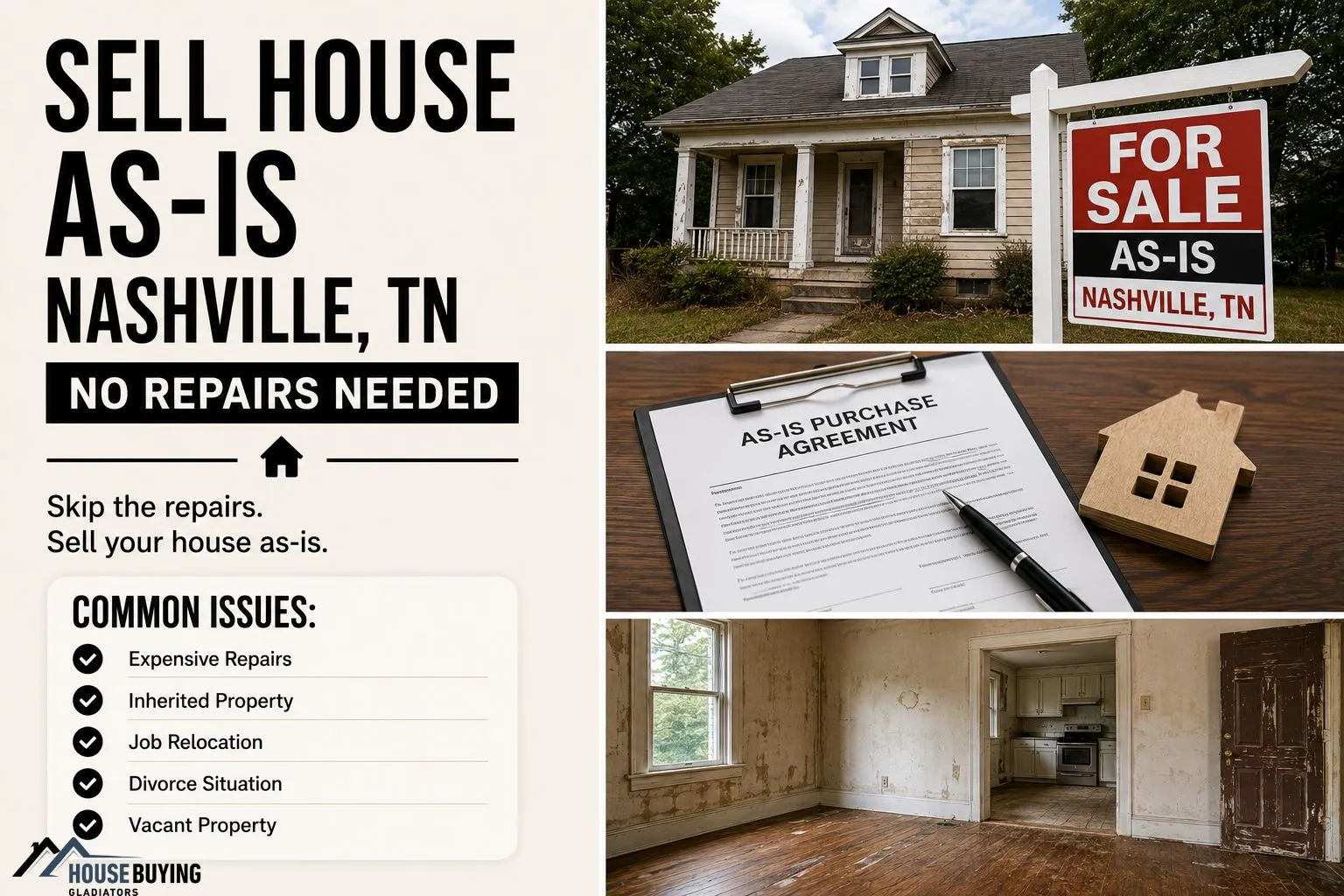
If you’re considering selling the property without making repairs, learn what to expect in our guide on Sell House As-Is in Nashville, TN.
Why Do Many Families Choose to Sell a Probate House?
Many families choose to sell a probate house in Nashville, TN to simplify estate administration, avoid ongoing property expenses, and distribute estate assets more efficiently. While keeping the home may be the right decision in some cases, selling is often the most practical option when the property is vacant, needs repairs, or several beneficiaries share ownership.
Every estate has different priorities, but families sell probate properties for several common reasons.
| Situation | Why Selling May Make Sense |
|---|---|
| The home is vacant | Reduces ongoing maintenance and security concerns |
| Multiple beneficiaries | Simplifies distributing the estate’s value |
| The property needs repairs | Avoids investing additional estate funds |
| Outstanding mortgage or expenses | Eliminates continuing financial obligations |
| Executor lives out of town | Reduces the burden of managing the property remotely |
Keeping a probate property often means paying for insurance, utilities, lawn care, property taxes, and routine maintenance until the executor transfers ownership or a new owner moves into the home. If the property remains vacant for an extended period, these costs can place additional pressure on the estate and increase the risk of deferred maintenance.
Selling isn’t always the best financial decision. Some families choose to keep the property as a long-term investment or preserve it for personal use. Before making a final decision, compare the home’s ongoing costs, potential appreciation, and the estate’s objectives to determine which option best serves everyone involved.
If the estate needs to sell quickly and with fewer complications, explore your options in our guide on We Buy Houses in Nashville, TN.
FAQs About Selling a Probate House in Nashville, TN
Sometimes. An executor or personal representative may sell a probate property during estate administration if they have legal authority. Some estates require additional approvals before closing. Consult a qualified Tennessee probate attorney for guidance.
The person with legal authority such as the executor, personal representative, administrator, or trustee typically handles the sale. Beneficiaries do not automatically have the authority to sell the property.
No. Some properties transfer outside probate, such as those held in a living trust or jointly owned with survivorship rights. Whether probate is required depends on how the property is titled and Tennessee law.
Yes. Probate homes can often be sold in their current condition. Whether repairs are worthwhile depends on the property’s condition, the estate’s goals, and the expected return on investment.
You can usually sell a probate property even if it has an outstanding mortgage. In many cases, the sale proceeds pay off the remaining loan balance at closing.
The timeline varies depending on probate administration, title issues, buyer financing, and local market conditions. Some sales close in a few weeks, while others take several months.
Yes, if the person with legal authority follows the estate process and obtains any required approvals. Disagreements among beneficiaries may delay the sale.
In many situations, yes. A cash buyer is simply one selling option. Whether a cash sale can proceed depends on the estate’s authority to sell and any applicable probate requirements.
Final Thoughts on Selling a Probate House in Nashville, TN
Selling a probate house in Nashville, TN can feel overwhelming, especially when you’re balancing estate responsibilities, legal requirements, and family expectations. Understanding who has the authority to sell, the property’s condition, potential costs, and the available selling options can help you make informed decisions and avoid unnecessary delays throughout the process.
There is no one-size-fits-all approach to selling a probate property. For some estates, listing with a real estate agent may maximize market exposure and potential sale price. For others, selling the home as-is or accepting a competitive cash offer may provide a faster, more practical solution that reduces ongoing maintenance and carrying costs. The best choice depends on the estate’s goals, the property’s condition, and the needs of the beneficiaries.
Because every probate estate is unique, use this guide as an educational resource rather than legal or tax advice. Before moving forward, consult a qualified Tennessee probate attorney or tax professional for guidance tailored to your specific situation. With the right information and professional support, you can confidently choose the selling strategy that best serves the estate and everyone involved.