Skip to content
When an Empty House Starts Becoming a Bigger Problem Than Expected
If you’re searching sell abandoned house Delaware County OH, you’re likely dealing with a property that hasn’t just been sitting it’s been creating new problems over time.
Leaving a house empty is often meant to be temporary. However, what starts as a short-term situation can quickly turn into an ongoing burden.
Should you keep maintaining it from a distance?
Should you invest in repairs before selling?
Or should you sell before the situation gets more expensive?
For example, a homeowner who moved out of state for a new job initially planned to return and sell later. However, after months of vacancy, minor exterior wear turned into water intrusion and interior damage. As a result, the cost and effort to fix the home increased beyond expectations.
Because of this, many owners begin looking for a more practical way forward.
What Defines an Abandoned House in Delaware County OH
An abandoned house is typically a property left unoccupied without consistent maintenance or oversight.
Common signs include:
- overgrown landscaping and exterior neglect
- visible structural or cosmetic damage
- disconnected or inactive utilities
- lack of routine inspections or upkeep
For instance, an inherited property in Sunbury remained vacant after ownership transferred between siblings. However, without regular visits, small maintenance issues went unnoticed until they became more serious.
Because of this, property condition can decline faster than expected.
Why Homes Become Abandoned Over Time
There are several reasons a home may sit vacant longer than planned.
These often include:
- relocation for work or life changes
- inherited property without local management
- financial strain or deferred maintenance
- tenant vacancy with no immediate next step
For example, a landlord in Delaware County experienced tenant turnover but delayed preparing the property for resale. However, as months passed, holding costs continued while the home remained unused.
Because of this, temporary situations often become long-term challenges.
Problems That Develop in Vacant Properties
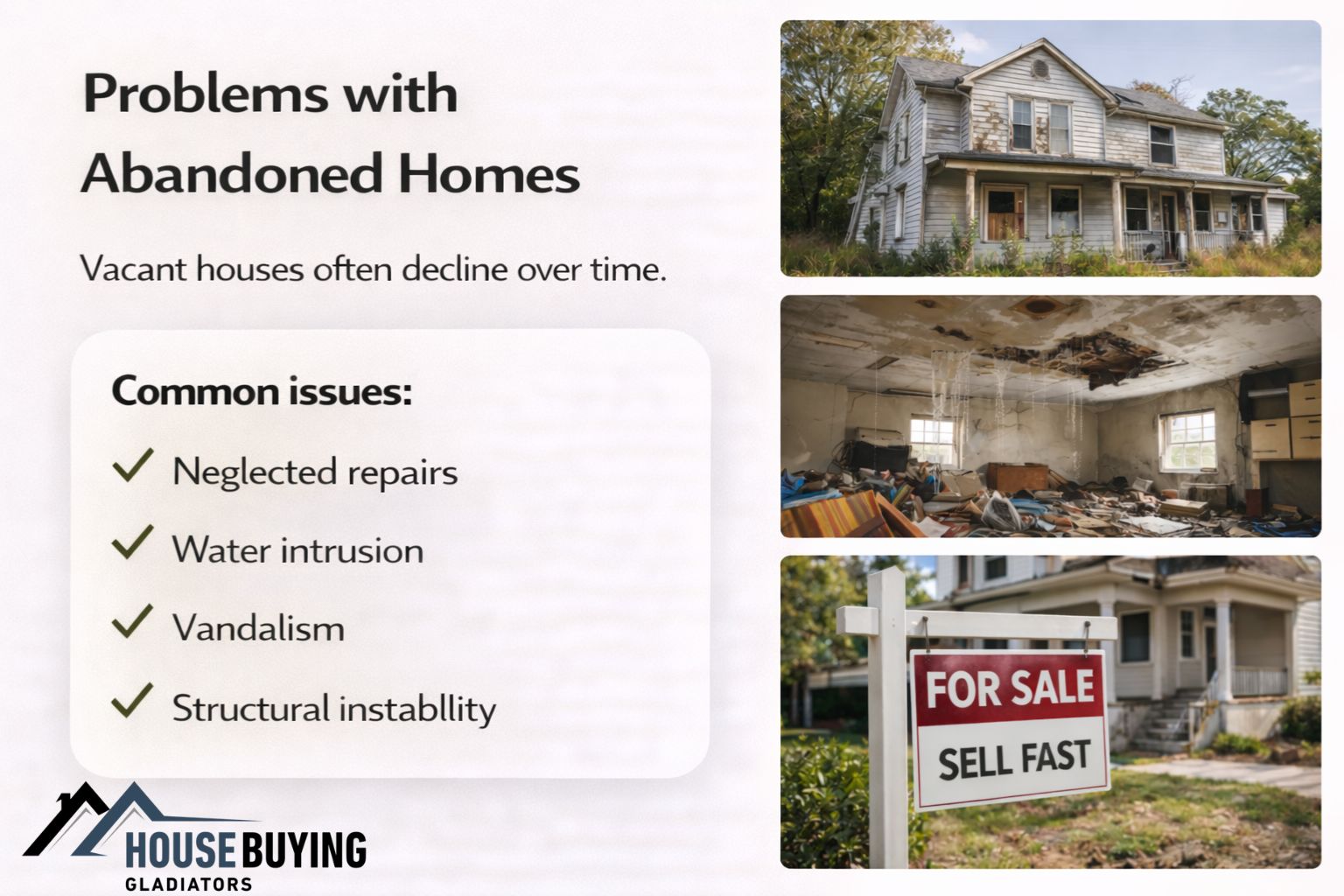
Abandoned homes tend to deteriorate without regular attention.
Common issues include:
- roof leaks leading to water damage
- plumbing failures or pipe deterioration
- pest infestations and environmental damage
- structural wear affecting long-term integrity
For instance, a Powell homeowner discovered that a minor roof issue had allowed moisture into the attic. As a result, mold and insulation damage developed, increasing repair costs significantly.
Because of this, small issues often escalate when left unaddressed.
The Ongoing Cost of Holding an Abandoned Property

Even without occupants, financial obligations continue.
These may include:
- property taxes and insurance premiums
- maintenance and yard upkeep
- security measures to prevent vandalism
- utility or system preservation costs
For example, an out-of-state owner continued paying taxes and maintenance for over a year while deciding what to do. However, without generating income, the property became a financial drain.
Because of this, many homeowners begin reconsidering how long they want to hold the property.
Local Responsibilities and Vacant Property Rules
Owning an abandoned property still comes with responsibilities, especially at the local level.
These may involve:
- maintaining safe exterior conditions
- preventing hazards or code violations
- keeping the property compliant with local standards
Because of this, it’s important to understand how vacant property regulations work. According to vacant property guidelines, municipalities may require basic maintenance and safety compliance even when a home is unoccupied.
For instance, a Delaware homeowner received a notice regarding exterior maintenance after neighbors reported the condition of the property. As a result, additional pressure was added to resolve the situation.
Options to Sell Abandoned House Delaware County OH
Homeowners generally have several options available:
- repair and list on the traditional market
- hold the property and improve condition over time
- adjust pricing based on current condition
- sell the property as-is without repairs
Because each situation is different, the best option depends on time, budget, and long-term plans.
How to Sell an Abandoned House As-Is Without Repairs
Some homeowners choose to sell without completing repairs or cleanup.
This approach allows you to:
- avoid upfront repair costs
- skip lengthy preparation timelines
- reduce ongoing maintenance responsibilities
In situations like this, certain buyers including companies like WeBuyHouses focus on purchasing vacant or distressed properties in their current condition, which can help owners avoid managing repairs or coordinating work from a distance.
For example, an inherited property owner living out of state chose not to coordinate repairs remotely. Instead, selling as-is allowed them to avoid managing contractors and delays.
Because of this, simplicity often becomes the deciding factor.
Timeline for Selling an Abandoned House in Delaware County OH
Timelines vary depending on the property and approach.
Key factors include:
- current condition of the home
- level of required repairs
- buyer demand in the area
Traditional listings may take longer if repairs or inspections are required.
For instance, a Sunbury property remained on the market due to buyer concerns about deferred maintenance. As a result, the timeline extended beyond initial expectations.
When Selling Quickly Becomes the Practical Option

In some cases, waiting creates more complications than solutions.
Selling quickly may make sense when:
- maintenance becomes difficult to manage
- repair costs continue increasing
- the owner lives far from the property
- the home remains unused for an extended period
For example, a homeowner managing a vacant property from another state decided to sell after repeated maintenance issues required local intervention.
Because of this, reducing responsibility often becomes more important than holding the property longer.
FAQs – Selling an Abandoned House in Delaware County OH
Yes. You can sell an abandoned house as-is without completing repairs. For example, some owners choose this option to avoid cleanup costs and long preparation timelines.
Yes. Even if vacant, homeowners are still responsible for basic upkeep, safety, and preventing property damage.
Sometimes. However, the right pricing and approach can still attract buyers, especially those looking for renovation opportunities.
Yes. Once ownership is confirmed, inherited properties can be sold as-is or after improvements.
Yes. Without regular maintenance, issues like moisture damage, pests, and structural wear can develop faster than expected.
Yes. Many homeowners sell abandoned properties remotely without needing to return in person.
Often. Buyers may request inspections to evaluate structural condition and repair needs.
Sometimes. It depends on the buyer and whether inspections or evaluations are needed.
Selling as-is is usually the fastest option because it avoids repairs, cleanup, and financing delays.
Yes. Many buyers specialize in vacant or distressed properties and can purchase without requiring repairs.
Yes. Property condition can decline due to neglect, which may reduce overall value if issues worsen.
It depends. If repair costs and time commitments are high, selling as-is may be the more practical option.
It varies. However, issues like water damage, mold, and pest activity can begin within a few months.
Final Thoughts
An abandoned property rarely stays neutral it either improves with effort or declines over time.
Because of this, waiting too long can increase both costs and complexity. However, understanding your options early allows you to make a decision based on clarity rather than pressure.
If you’re unsure whether repairing or selling makes more sense, you can Get Your Cash Offer to compare your options without committing to repairs or long timelines.
At House Buying Gladiators, our goal is simple: to help you move forward in a way that fits your situation not someone else’s timeline.