Skip to content
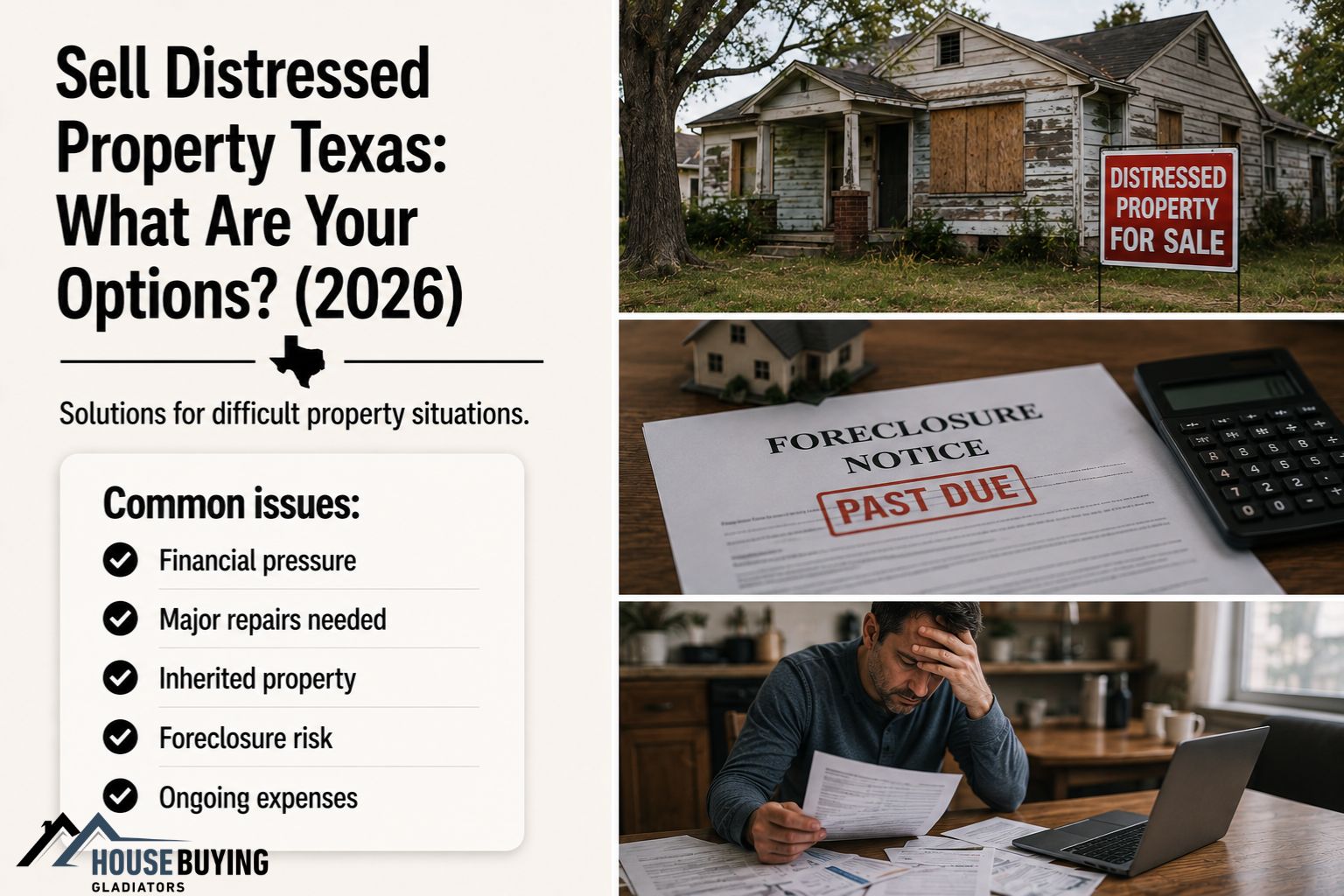
If you need to sell distressed property Texas homeowners often face situations involving financial pressure, major repairs, inherited homes, foreclosure concerns, or other challenges that make a traditional sale more complicated.
For many homeowners, the problem is rarely just the house.
Instead, it is everything happening around the house.
A property may need repairs.
Mortgage payments may be falling behind.
An inherited home may be sitting vacant.
Family members may disagree about what to do next.
Property taxes, insurance premiums, and maintenance costs may continue accumulating month after month.
As a result, what starts as a property problem often becomes a financial and emotional burden.
What most homeowners don’t realize is that distressed properties are extremely common.
Life changes.
Unexpected situations arise.
Financial circumstances shift.
The important thing is understanding your options before costs, stress, and uncertainty continue growing.
What Is a Distressed Property?
A distressed property is a home facing financial, legal, physical, or ownership-related challenges that may make selling more difficult than a traditional real estate transaction.
Many people assume distressed properties only involve foreclosure.
However, distress can take many forms.
Common examples include:
- Homes facing foreclosure
- Inherited properties
- Probate properties
- Vacant houses
- Properties needing major repairs
- Homes with code violations
- Rental properties with difficult tenants
- Houses affected by divorce
- Properties with title issues
Additionally, distress often involves multiple challenges occurring at the same time.
For example, an inherited house may also be vacant, require repairs, and generate ongoing expenses.
Consequently, the situation becomes more complicated than simply listing a property for sale.
Can You Sell a Distressed Property in Texas?
Yes. Homeowners can sell distressed property in Texas even when the property has repair issues, financial challenges, legal complications, or ownership concerns.
Many distressed property owners mistakenly believe they must solve every problem before selling.
However, that is not always the case.
Depending on the situation, homeowners may be able to sell properties involving:
- Deferred maintenance
- Foundation problems
- Probate matters
- Inherited ownership
- Financial hardship
- Vacant property concerns
- Tax issues
- Code violations
As a result, understanding the available options often becomes more important than immediately fixing every problem.
Common Situations That Create Distressed Properties
Most distressed properties result from major life events, financial challenges, property deterioration, or legal complications that make ownership increasingly difficult.
Every situation is different.
However, several circumstances appear repeatedly among distressed property owners throughout Texas.
Financial Hardship
Unexpected financial challenges can quickly create pressure for homeowners.
For example:
- Job loss
- Medical expenses
- Reduced income
- Business difficulties
- Rising living costs
Meanwhile, mortgage payments, property taxes, insurance premiums, and maintenance expenses often continue regardless of financial circumstances.
Consequently, some homeowners begin exploring alternatives before financial pressure becomes even more severe.
Foreclosure Pressure
Foreclosure is one of the most common forms of property distress.
When mortgage payments fall behind, homeowners often face increasing stress and uncertainty.
Additionally, missed payments may limit future options if action is delayed too long.
As a result, many homeowners begin evaluating selling strategies before the foreclosure process advances further.
Inherited Houses
Inheriting property can create unexpected responsibilities.
Although an inherited house may represent a valuable asset, it may also involve:
- Repairs
- Probate requirements
- Vacancies
- Family disagreements
- Ongoing expenses
Consequently, many heirs eventually evaluate whether keeping the property remains practical.
Probate Delays
Probate can create uncertainty regarding ownership, responsibilities, and future plans for inherited property.
Additionally, probate timelines often extend longer than families initially expect.
Meanwhile, maintenance costs and property expenses may continue accumulating.
Major Repair Problems
Properties requiring substantial repairs often become distressed when repair costs exceed available resources.
Common issues include:
- Foundation movement
- Roof damage
- Plumbing failures
- Electrical concerns
- Water damage
- Structural issues
Additionally, repair estimates frequently increase once projects begin.
As a result, homeowners often question whether investing additional money into the property makes financial sense.
Vacant Properties
Vacant homes frequently create challenges that active homeowners do not anticipate.
Common concerns include:
- Property deterioration
- Insurance complications
- Security risks
- Vandalism
- Maintenance costs
- Utility expenses
Furthermore, small problems often become larger problems when nobody regularly monitors the property.
Divorce Situations
Selling a property during divorce often involves both emotional and financial considerations.
Additionally, disagreements regarding repairs, pricing, ownership, or timing can delay important decisions.
Consequently, some couples seek solutions that reduce complexity and allow both parties to move forward.
Landlord Burnout
Rental property ownership is not always as passive as many investors expect.
Some landlords become overwhelmed by:
- Problem tenants
- Maintenance requests
- Property damage
- Evictions
- Rising expenses
As a result, long-term rental ownership sometimes becomes more stressful than anticipated.
Why Waiting Often Makes Distressed Property Problems Worse
Many distressed property situations become more expensive over time because costs continue accumulating while decisions are delayed.
Many homeowners postpone action because they hope circumstances will improve.
However, property-related expenses often continue regardless of whether a decision has been made.
Common holding costs include:
- Mortgage payments
- Property taxes
- Insurance premiums
- Utility bills
- Maintenance expenses
- HOA fees
Additionally, property conditions may continue deteriorating.
Meanwhile, financial pressure often increases.
Consequently, waiting rarely eliminates the underlying problem.
Instead, it frequently increases the overall cost of ownership.
What Most Distressed Property Owners Want
Although every situation is different, most homeowners facing distress are usually searching for the same things:
- Clarity
- Simplicity
- Reduced stress
- Financial stability
- A realistic path forward
The good news is that distressed property owners often have more options than they initially realize.
Understanding those options is frequently the first step toward regaining control of the situation.
Foreclosure Situations That Lead Owners to Sell Distressed Property Texas Homes
Foreclosure pressure is one of the most common reasons homeowners decide to sell distressed property Texas real estate before financial problems become more severe.
When mortgage payments fall behind, many homeowners feel trapped.
However, foreclosure is often a process rather than a single event.
As a result, homeowners may still have options available depending on their circumstances.
Common causes of foreclosure pressure include:
- Job loss
- Medical expenses
- Divorce
- Reduced income
- Unexpected financial hardship
Meanwhile, missed payments can continue accumulating.
Additionally, penalties, fees, and financial stress often increase over time.
Consequently, many homeowners begin exploring alternatives before the situation becomes more difficult to resolve.
Inherited Homes and Distressed Property in Texas
Inherited properties frequently become distressed when repairs, probate requirements, vacancies, and ongoing expenses create financial or logistical challenges for heirs.
At first, inheriting a home may seem straightforward.
However, many heirs quickly discover additional responsibilities.
For example, inherited properties may involve:
- Deferred maintenance
- Probate delays
- Property taxes
- Insurance costs
- Vacancies
- Family disagreements
Furthermore, heirs often live in different cities or states.
As a result, managing the property can become increasingly difficult.
Consequently, some families choose to sell distressed property Texas homes rather than continue absorbing ongoing expenses.
For more information, see our Sell Inherited House Texas guide.
Probate Delays and Distressed Property Challenges
Probate delays can increase costs, create uncertainty, and complicate decisions involving inherited real estate.
Many families expect probate to move quickly.
However, legal timelines frequently take longer than anticipated.
Meanwhile:
- Property taxes continue
- Insurance premiums continue
- Maintenance continues
- Repair needs continue growing
Additionally, uncertainty surrounding ownership can delay important decisions.
As a result, probate often contributes to property distress when expenses continue accumulating while the estate remains unresolved.
Families seeking additional guidance may also find value in our Texas Probate Guide (2026): What Families Need to Know.
Major Repairs That Cause Homeowners to Sell Distressed Property Texas Homes
Major repair expenses frequently create distressed property situations when the cost of repairs exceeds a homeowner’s budget or comfort level.
Some repairs are relatively manageable.
Others can quickly become overwhelming.
Common examples include:
- Foundation movement
- Roof replacement
- Plumbing failures
- Electrical upgrades
- HVAC replacement
- Water damage
- Structural concerns
Additionally, repair projects often uncover hidden issues.
For example, a plumbing repair may reveal water damage.
Similarly, a roof replacement may expose structural concerns.
Consequently, many homeowners discover that repair costs become much higher than expected.
For homeowners evaluating repair-heavy properties, understanding all available options often becomes just as important as understanding the repairs themselves.
Vacant Property Risks
Vacant homes frequently become distressed because maintenance issues, security concerns, and ongoing expenses continue even when nobody lives there.
Many vacant properties begin as temporary situations.
However, months can pass quickly.
Meanwhile, vacant homes often face risks such as:
- Water damage
- Vandalism
- Theft
- Pest infestations
- Code violations
- Deferred maintenance
Furthermore, insurance complications sometimes arise when properties remain unoccupied for extended periods.
As a result, vacant homes often become more expensive to maintain the longer they sit empty.
Consequently, some owners decide to sell distressed property Texas assets before costs continue increasing.
Divorce Situations and Distressed Property Decisions
Divorce frequently creates property decisions that are both financially and emotionally challenging.
In many situations, neither spouse wants to maintain sole ownership.
However, determining what to do with the property is not always simple.
Common challenges include:
- Ownership disagreements
- Repair decisions
- Pricing disputes
- Equity division
- Timeline concerns
Additionally, ongoing property expenses rarely stop during the divorce process.
As a result, some couples prioritize simplicity and reducing future obligations.
Consequently, selling the property often becomes one of the available solutions.
Landlord Burnout and Rental Property Stress
Some rental properties become distressed when ownership responsibilities outweigh the benefits of continued investment.
Many landlords enter real estate expecting relatively passive income.
However, rental ownership often involves ongoing responsibilities.
Common frustrations include:
- Difficult tenants
- Late rent payments
- Property damage
- Evictions
- Maintenance requests
- Rising operating costs
Furthermore, older rental properties frequently require significant repairs.
As a result, long-term ownership may become less attractive over time.
Consequently, some investors decide to sell distressed property Texas rentals rather than continue managing increasing challenges.
Multiple Problems Often Occur at the Same Time
Most distressed properties involve more than one challenge, which is why solutions are rarely as simple as they first appear.
For example:
- An inherited house may also be vacant.
- A vacant property may also need repairs.
- A divorce situation may involve financial hardship.
- A foreclosure situation may involve deferred maintenance.
Additionally, each challenge often creates new expenses and responsibilities.
As a result, homeowners frequently feel overwhelmed by the number of decisions they must make.
What most people discover is that distressed property situations become easier to manage once they understand all available options and begin evaluating practical solutions.
The Hidden Cost of Owning a Distressed Property
Many distressed properties become more expensive over time because ownership costs continue accumulating while problems remain unresolved.
When homeowners think about distress, they often focus on the immediate problem.
However, ongoing expenses frequently create an even larger financial burden.
Common holding costs include:
- Mortgage payments
- Property taxes
- Insurance premiums
- Utility bills
- HOA fees
- Lawn maintenance
- Repairs
- General upkeep
Meanwhile, the property may continue deteriorating.
As a result, delaying decisions often increases the overall cost of ownership.
Why Holding Costs Matter
Holding costs can significantly reduce a homeowner’s financial outcome, especially when a property remains unsold for an extended period.
Many owners focus exclusively on the potential sale price.
However, every additional month often creates new expenses.
For example:
- Property taxes continue accumulating.
- Insurance premiums remain due.
- Utility bills continue arriving.
- Maintenance responsibilities continue growing.
Furthermore, unexpected repairs may appear while the property remains under ownership.
Consequently, the true cost of waiting is often much higher than homeowners initially expect.
Options to Sell Distressed Property Texas Homeowners Should Consider
The best selling option depends on the property’s condition, the homeowner’s financial situation, timeline goals, and willingness to manage repairs or improvements.
There is no single solution that works for every situation.
Instead, homeowners should evaluate the advantages and disadvantages of each option.
Option 1: List the Property With an Agent
A traditional listing may provide maximum market exposure, although distressed properties often require additional preparation before reaching the market.
Potential advantages include:
- Broad buyer exposure
- Professional marketing
- Negotiation assistance
- Potentially higher sale price
However, homeowners may also face:
- Repairs
- Showings
- Inspections
- Appraisals
- Financing contingencies
As a result, this option often requires the greatest investment of time and effort.
Option 2: Repair the Property Before Selling
Some distressed properties benefit from targeted improvements, although major renovation projects frequently involve significant costs and delays.
For example, cosmetic updates may improve buyer appeal.
However, foundation repairs, roof replacement, structural work, and major system upgrades can become expensive.
Additionally, contractor delays and hidden problems often increase project timelines.
Consequently, homeowners should compare repair costs against the expected increase in value before proceeding.
Option 3: Sell As-Is
Selling as-is allows homeowners to market the property without completing major repairs beforehand.
This option may appeal to owners who:
- Want to avoid renovation costs
- Need to move quickly
- Lack funds for repairs
- Prefer a simpler process
Additionally, selling as-is may reduce the stress associated with managing large construction projects.
Homeowners evaluating this option may also find value in our Selling a House As-Is in Texas guide.
Option 4: Sell Directly
Some distressed property owners prioritize certainty, speed, and reducing responsibilities over maximizing every possible dollar.
Direct sales often reduce concerns involving:
- Repairs
- Contractor management
- Showings
- Financing delays
- Inspection negotiations
Additionally, homeowners may be able to move forward more quickly than they could through traditional selling methods.
However, every situation is different.
Therefore, comparing all available options remains important.
Comparing Your Options
| Option | Speed | Upfront Costs | Effort Required |
|---|---|---|---|
| Traditional Listing | Slow | Moderate to High | High |
| Repair Then Sell | Slowest | High | High |
| Sell As-Is | Moderate | Low | Moderate |
| Sell Directly | Fast | Low | Low |
Ultimately, the right choice depends on your goals, timeline, finances, and property condition.
Common Mistakes When You Sell Distressed Property Texas Homes
Waiting Too Long
Many homeowners postpone decisions while hoping circumstances improve.
Meanwhile:
- Costs continue
- Repairs continue
- Stress continues
- Property deterioration continues
As a result, delays often increase the financial burden.
Underestimating Repair Costs
Additionally, repair estimates frequently increase after work begins.
What initially appears to be a manageable project sometimes becomes significantly larger.
Ignoring Holding Costs
Many owners focus solely on repair expenses.
However, taxes, insurance, utilities, and maintenance often continue accumulating throughout the process.
Consequently, holding costs should be part of every financial calculation.
Focusing Only on Sale Price
The highest sale price does not always produce the best overall outcome.
Repair costs, carrying costs, delays, and effort should also be considered.
Failing to Explore Multiple Options
Some homeowners commit to one strategy before evaluating alternatives.
Therefore, comparing multiple approaches often leads to better decision-making.
How to Decide Whether to Sell Distressed Property Texas Real Estate
There is no universally correct answer.
Instead, the best decision depends on your specific circumstances.
If Maximizing Value Is Your Goal
A traditional listing may provide greater market exposure.
However, it often requires more preparation and a longer timeline.
If Repairs Feel Overwhelming
Selling as-is may reduce financial risk and eliminate major renovation responsibilities.
If Speed Matters Most
Some homeowners prioritize certainty and simplicity.
In these situations, reducing delays often becomes more important than maximizing every possible dollar.
If Financial Pressure Is Growing
Mortgage payments, taxes, insurance, and maintenance costs can create increasing stress over time.
Consequently, acting sooner may help prevent additional financial strain.
If the Property Is Inherited
Inherited properties often involve probate, repairs, vacancies, and family decisions.
For more information, see our Sell Inherited House Texas guide.
The Question Most Distressed Property Owners Should Ask
Instead of asking:
“What is my house worth?”
A better question is often:
“Which option creates the best overall outcome after considering costs, timelines, effort, and stress?”
For many homeowners, that question ultimately provides far more clarity than focusing exclusively on price.
Frequently Asked Questions About Selling Distressed Property in Texas
Yes. Homeowners can sell distressed property in Texas even if the property has repair issues, financial challenges, title concerns, or other complications.
A distressed property is a home facing financial, legal, physical, or ownership-related challenges that make selling more complicated than a traditional transaction.
Selling without major repairs is often the fastest option. Avoiding renovation projects, contractor schedules, and repair delays can significantly shorten the timeline.
Yes. Many distressed properties are sold in their current condition. Buyers often factor repair costs into their offers rather than requiring the seller to complete the work beforehand.
Possibly. However, repair costs, holding expenses, contractor delays, and ongoing ownership costs should also be considered when evaluating your overall financial outcome.
In many situations, yes. However, the ability to sell depends on the estate’s circumstances, probate requirements, and legal authority.
Yes. Many inherited homes are sold before major repairs or renovations are completed. In some cases, selling allows heirs to reduce ongoing expenses and responsibilities.
Waiting too long is one of the most common mistakes. Meanwhile, taxes, insurance, maintenance costs, and property deterioration often continue accumulating.
Yes. Many buyers purchase homes with foundation issues, roof damage, water damage, outdated systems, and other repair concerns.
It depends. If repairs are likely to increase value more than they cost, they may be worthwhile. However, some homeowners find that selling in the property’s current condition is the more practical option.
Final Thoughts
Selling distressed property in Texas can feel overwhelming, especially when multiple challenges occur at the same time.
In many situations, homeowners are not dealing with just one problem.
Instead, they may be facing financial pressure, major repairs, probate complications, inherited property responsibilities, divorce-related decisions, vacant homes, or ongoing holding costs simultaneously.
Additionally, delaying action often increases both stress and expenses.
Property taxes continue.
Insurance premiums continue.
Maintenance costs continue.
Meanwhile, the underlying challenges frequently become more difficult to resolve.
The good news is that distressed property owners often have more options than they realize.
Whether your priority is maximizing value, reducing responsibilities, avoiding repairs, or moving forward quickly, understanding your options can help you make informed decisions with greater confidence.
Explore Your Options
If you’re trying to determine the best path forward, gathering information early can provide valuable clarity.
There is no pressure to make an immediate decision.
However, understanding potential timelines, costs, repair considerations, and selling options can help reduce uncertainty and make future decisions easier.
If you’d like to explore your options further, you can Get Your Cash Offer and compare potential outcomes without obligation.