Skip to content
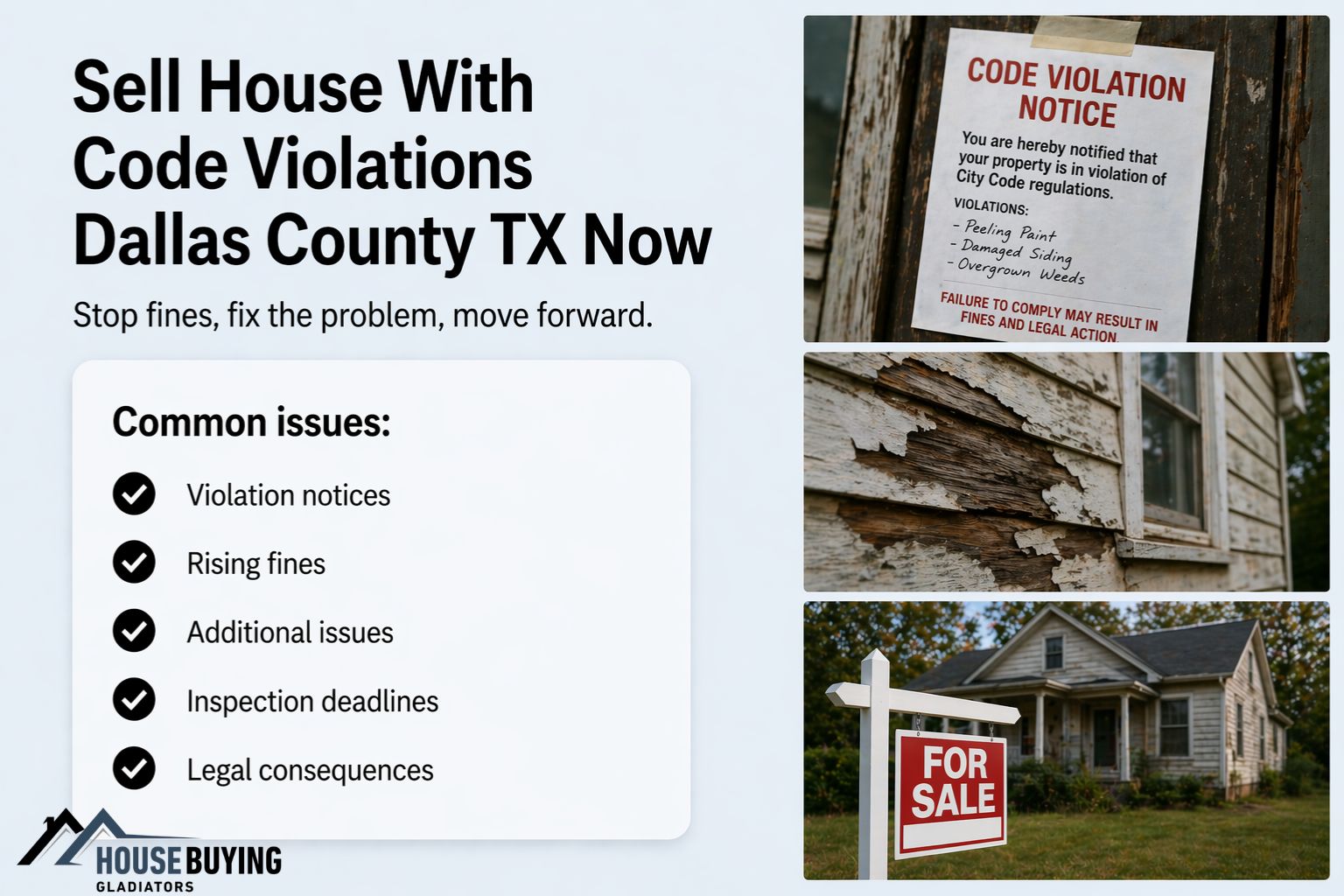
When Code Violations Start Controlling the Situation
If you’re trying to sell house with code violations Dallas County TX, you’re likely not just dealing with a property you’re dealing with deadlines, pressure, and costs that don’t slow down.
At first, it doesn’t feel serious.
A homeowner in Irving ignored a minor exterior violation notice, thinking it could wait. However, within weeks:
- a follow-up inspection was scheduled
- fines began accumulating
- additional issues were documented
Because of this, what felt optional quickly became enforced.
Sell House With Code Violations Dallas County TX – What It Really Means
A code violation is not just a warning it’s a compliance requirement.
It means the property no longer meets local standards related to:
- structural safety
- sanitation
- exterior condition
- permitted modifications
For example, a Garland homeowner discovered that an unpermitted garage conversion triggered multiple violations not just one.
As a result, one issue often leads to several.
How Code Violations Escalate Over Time in Dallas County
Most homeowners underestimate how structured this process is.
Typical escalation path:
- Initial notice
- Compliance deadline
- Re-inspection
- Fines or penalties
- Possible legal action
A Dallas homeowner delayed repairs for 30 days, expecting flexibility. Instead, penalties were added and enforcement intensified.
Because of this, time doesn’t pause the issue it accelerates it.
The Real Cost of Fixing Code Violations

Fixing violations sounds simple until the process begins.
Common challenges include:
- contractor scheduling delays
- permit approvals
- inspection backlogs
- uncovering deeper structural damage
- rising repair costs mid-project
One Mesquite homeowner started fixing a roof violation but uncovered electrical issues during inspection, doubling the total cost.
Because of this, repair costs are rarely predictable.
Why Selling Through a Realtor Becomes More Difficult
Traditional selling introduces additional friction.
Buyers and lenders often:
- hesitate due to risk
- request repairs before closing
- rely on inspections that highlight more issues
A homeowner in Dallas listed their home but lost two buyers due to inspection findings tied to violations.
As a result, deals become uncertain and timelines extend.
Fix It or Exit It: The Decision Most Homeowners Face
At some point, the question changes:
👉 “Can I fix this?”
to
👉 “Do I want to keep dealing with this?”
For example, a recently divorced homeowner chose not to manage multiple violations while handling legal separation and financial stress.
Because of this, the decision becomes less about property and more about control.
A Faster Way to Sell House With Code Violations Dallas County TX
Some homeowners choose to simplify instead of repair.
Selling as-is can:
- remove the need to fix every issue
- avoid contractor coordination
- reduce time pressure
- stop fines from escalating
In situations like this, some homeowners also look into solutions from Revival Homebuyer, which focuses on purchasing properties with existing issues, including code violations, and helping sellers avoid the delays and costs associated with bringing a property into compliance before selling.
A Garland homeowner chose this route after receiving multiple notices and avoided further penalties by closing quickly.
Because of this, the process shifts from ongoing stress → to resolution.
Why Timing Matters More Than Price in These Situations
With code violations, waiting can cost more than acting.
Delays can lead to:
- increasing fines
- expanded repair scope
- stricter enforcement
- legal complications
Because of this, speed protects both finances and peace of mind.
When Selling Becomes the Practical Solution

Selling is often the right move when:
- repair costs exceed expectations
- multiple violations exist
- deadlines are approaching
- fines are increasing
- the situation feels overwhelming
At that point, continuing to fix everything may create more pressure than progress.
FAQs – Sell House With Code Violations Dallas County TX
Yes. You can sell a house with code violations. In most cases, buyers factor in repairs, compliance costs, and risk when making an offer.
No. You can sell as-is without fixing violations. However, fixing them may increase price but often adds time, permits, and upfront costs.
Yes. Properties with open permits or unpermitted work can still be sold. Buyers typically adjust offers based on correction costs and inspection risks.
Yes. Violations usually reduce value. Buyers account for repair costs, legal compliance, and potential delays when pricing the property.
It depends. Some buyers require inspections, while others purchase as-is. However, inspections often uncover additional structural or compliance issues.
Yes. Code violations can lead to ongoing fines and enforcement actions. Over time, this increases your total holding costs and financial pressure.
They can slow it down. Violations often lead to buyer hesitation, inspection issues, and negotiation delays.
Yes. Even serious issues like structural damage or safety hazards can be sold. However, buyers will factor risk and repair scope into pricing.
Selling as-is is usually the fastest option. It avoids repairs, permits, inspections, and financing delays that extend timelines.
It depends. If repair costs, permits, and timelines are high, selling as-is is often more practical and predictable.
It depends. In many cases, repair costs, delays, and holding expenses reduce profit, making as-is selling financially comparable or better.
FINAL SECTION
Code violations rarely stay the same they grow, escalate, and add pressure over time.
However, you still have control over how you handle the situation.
If you want to understand what your options look like without committing to repairs or timelines, you can explore a no-obligation cash offer and decide what works best for you.
At House Buying Gladiators, the goal is simple:
help you move from pressure → to clarity → to a solution that fits your situation.