Skip to content
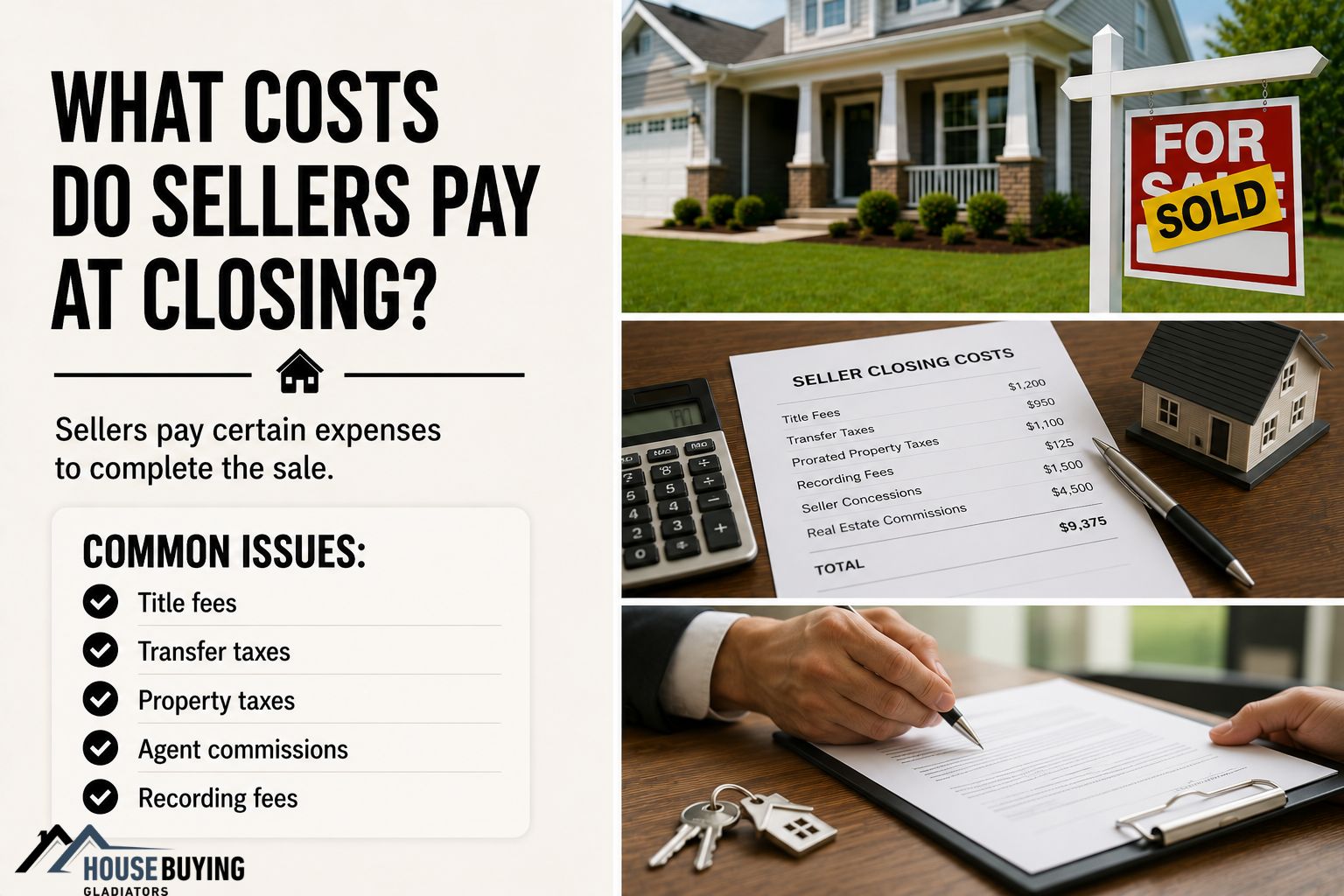
If you’re wondering what costs sellers pay at closing, the short answer is that sellers pay certain expenses to complete the sale of their home. These expenses commonly include title-related fees, transfer taxes, prorated property taxes, recording fees, seller concessions, and real estate commissions when applicable.
Many homeowners focus on the sale price.
What really matters is how much money they receive after closing.
Understanding these expenses before accepting an offer helps you estimate your net proceeds, avoid unexpected deductions, and negotiate with confidence. State and local laws require some fees, while the purchase agreement determines others.
Whether you sell through a real estate agent or to a cash buyer, understanding what costs sellers pay at closing helps you plan ahead, budget accurately, and avoid last-minute surprises.
This guide explains the most common seller closing costs, shows how professionals calculate them, and shares practical ways to prepare before closing day.
Seller Net Sheet & Closing Cost Estimator
Seller Net Sheet & Closing Cost Estimator
Calculate your estimated real estate transaction fees, outstanding debt payoffs, and net walk-away cash proceeds.
Analyzing costs structure…
Why Do Sellers Pay Closing Costs?
Sellers pay closing costs because completing a home sale involves legal, financial, and administrative steps that transfer ownership to the buyer. These expenses cover the services, taxes, and contractual obligations needed to finalize the transaction.
Many homeowners focus on the sale price.
Your net proceeds depend on the closing costs deducted before you receive your funds.
Purchase Agreement Signed ➔ Closing Costs Reviewed ➔ Documents Completed ➔ Ownership Transfers
| Reason | Why It Matters |
|---|---|
| Title transfer | Legally transfers ownership to the buyer |
| Taxes and recording fees | Meet state and local requirements |
| Seller concessions | Fulfill negotiated contract terms |
| Professional services | Help complete the closing process |
Closing costs are a standard part of selling a home, not an unexpected penalty. Reviewing what closing costs are and why they are charged can help sellers understand the legal, financial, and administrative expenses involved in transferring ownership and preparing for closing.
If you’re reviewing the sales contract, what is a purchase agreement when selling a house explains how buyers and sellers negotiate closing costs and other contractual responsibilities.
What Closing Costs Do Sellers Typically Pay?
Seller closing costs vary by state, local regulations, and the terms of the purchase agreement. In most home sales, sellers commonly pay title-related fees, transfer taxes, recording fees, prorated property taxes, agreed seller concessions, and real estate commissions when applicable.
The exact costs depend on where you live and how you negotiate the sale. Understanding these expenses before closing helps you estimate your net proceeds and avoid unexpected deductions.
Closing Costs Reviewed ➔ Seller Responsibilities Confirmed ➔ Closing Completed
| Typical Seller Closing Cost | Why It May Apply |
|---|---|
| Real estate commission (if applicable) | Compensates the listing and buyer’s agents |
| Transfer taxes | Required by many state or local governments |
| Title-related fees | Help complete the legal transfer of ownership |
| Recording fees | Officially record the property transfer |
| Prorated property taxes | Cover the seller’s share before closing |
| Seller concessions | Pay agreed buyer closing costs when negotiated |
Every home sale is different, so don’t assume you’ll pay every fee listed above. Review your settlement statement carefully, confirm each charge, and ask questions before closing. Knowing exactly what you’re paying makes it easier to budget, negotiate, and protect your net proceeds.
If you’re negotiating buyer assistance, what is a seller concession explains when sellers agree to cover certain buyer closing costs as part of the purchase agreement.
How Much Are Seller Closing Costs?
Seller closing costs typically range from 6% to 10% of the home’s sale price, although the exact amount depends on your location, the purchase agreement, real estate commissions, transfer taxes, and any negotiated seller concessions.
For many homeowners, the largest closing expense is the real estate commission when agents are involved. However, every transaction is different, so your final costs may be higher or lower depending on the terms of the sale.
Sale Price Agreed ➔ Closing Costs Estimated ➔ Net Proceeds Calculated
| Cost Factor | How It Affects Closing Costs |
|---|---|
| Home sale price | Influences percentage-based expenses |
| Real estate commission | Often the largest seller cost |
| State and local fees | Vary by location |
| Seller concessions | Increase costs if negotiated with the buyer |
Request a preliminary settlement statement before closing to see an estimate of your final expenses. Reviewing these numbers early helps you budget accurately, identify negotiable fees, and understand how much money you’ll receive after the sale.
If you’re estimating your final payout, what is net proceeds when selling a house explains how sellers calculate the amount they take home after paying closing costs and other obligations. closing.
How Can Sellers Reduce Closing Costs?
Sellers can reduce closing costs by reviewing every fee before closing, negotiating expenses where possible, limiting seller concessions, and understanding the financial terms of the purchase agreement before signing.
While some closing costs are required by state law, others depend on the services you choose and the terms you negotiate with the buyer. Planning ahead can help you avoid unnecessary expenses and maximize your net proceeds.
Review Closing Estimate ➔ Negotiate Expenses ➔ Confirm Final Charges ➔ Close With Confidence
| Strategy | Why It Helps |
|---|---|
| Review the settlement statement | Identifies unexpected or incorrect charges |
| Negotiate seller concessions | Helps reduce out-of-pocket expenses |
| Compare service providers (where permitted) | May lower certain closing fees |
| Understand the purchase agreement | Prevents unexpected financial obligations |
Reducing closing costs starts long before closing day. Review your estimated settlement statement carefully, ask questions about unfamiliar charges, and negotiate when appropriate. Reviewing ways to reduce closing costs when selling a home can help sellers identify negotiable fees, compare service providers where permitted, and keep more of their sale proceeds.
If you’re comparing selling options, cash offer vs mortgage offer explains how different types of offers can affect closing timelines, negotiations, and your overall selling costs.
What Should Sellers Know Before Closing?
Before closing, sellers should review the settlement statement, confirm every closing cost, verify the purchase agreement, and understand exactly how much they will receive from the sale. Taking these steps helps prevent delays, resolve issues early, and avoid last-minute surprises.
Closing day should confirm the details you’ve already reviewed not introduce new ones.
Review Settlement Statement ➔ Confirm Closing Costs ➔ Sign Documents ➔ Receive Sale Proceeds
| What To Review | Why It Matters |
|---|---|
| Settlement statement | Confirms all fees, credits, and final proceeds |
| Closing costs | Helps prevent unexpected deductions |
| Purchase agreement | Confirms your contractual obligations |
| Sale proceeds | Estimates the amount you’ll receive after closing |
Preparing for closing is just as important as negotiating the offer. Review every document carefully, verify the final numbers, and ask questions about any unfamiliar charges before signing. A little preparation helps protect your finances and makes closing day smoother and less stressful.
If you’re preparing for the final step of the transaction, what happens at closing when selling a house explains what sellers can expect on closing day, from signing documents to receiving their sale proceeds.
FAQs: What Costs Do Sellers Pay At Closing?
Sellers commonly pay title-related fees, transfer taxes, recording fees, prorated property taxes, agreed seller concessions, and real estate commissions when applicable. The exact costs depend on your location and the terms of the purchase agreement.
Seller closing costs typically range from 6% to 10% of the home’s sale price. Your total costs depend on factors such as commissions, taxes, local fees, and any negotiated concessions.
Both the buyer and seller usually pay closing costs, but each party covers different expenses. The purchase agreement and local laws determine who pays each specific cost.
For many homeowners, the largest closing expense is the real estate commission when agents are involved. Transfer taxes, title-related fees, and seller concessions may also add to the total cost.
Yes. Sellers can often negotiate concessions, compare certain service providers where permitted, and review the settlement statement to identify unnecessary or incorrect charges. However, government taxes and recording fees are generally non-negotiable.
Yes. Selling for cash eliminates mortgage-related delays but does not eliminate seller closing costs. Sellers may still pay title fees, transfer taxes, recording fees, prorated taxes, and any agreed contractual expenses.
A seller’s settlement statement lists the home’s sale price, closing costs, commissions, taxes, credits, mortgage payoff amounts, and the estimated net proceeds the seller will receive.
Closing costs are typically deducted from the seller’s proceeds on closing day before the remaining funds are distributed.
Start with the expected sale price, then subtract your mortgage payoff, closing costs, commissions, taxes, seller concessions, and any other agreed expenses. Reviewing a preliminary settlement statement provides the most accurate estimate.
Conclusion: What Costs Should Sellers Expect At Closing?
Understanding what costs sellers pay at closing helps you plan ahead, estimate your net proceeds, and avoid unnecessary surprises on closing day. Although the exact costs vary by location and the terms of your purchase agreement, knowing what you’ll likely pay puts you in a stronger position to negotiate and prepare financially.
Review Closing Costs ➔ Confirm Final Numbers ➔ Close Successfully ➔ Receive Your Proceeds
Before closing, review your settlement statement, verify every fee, and confirm your expected proceeds. Taking a few extra minutes to understand your closing costs can help you avoid unexpected deductions, protect your finances, and complete your home sale with confidence.
Ready for closing? Use this guide to understand what costs sellers pay at closing, estimate your selling expenses accurately, and move through closing with confidence and fewer surprises.