Skip to content
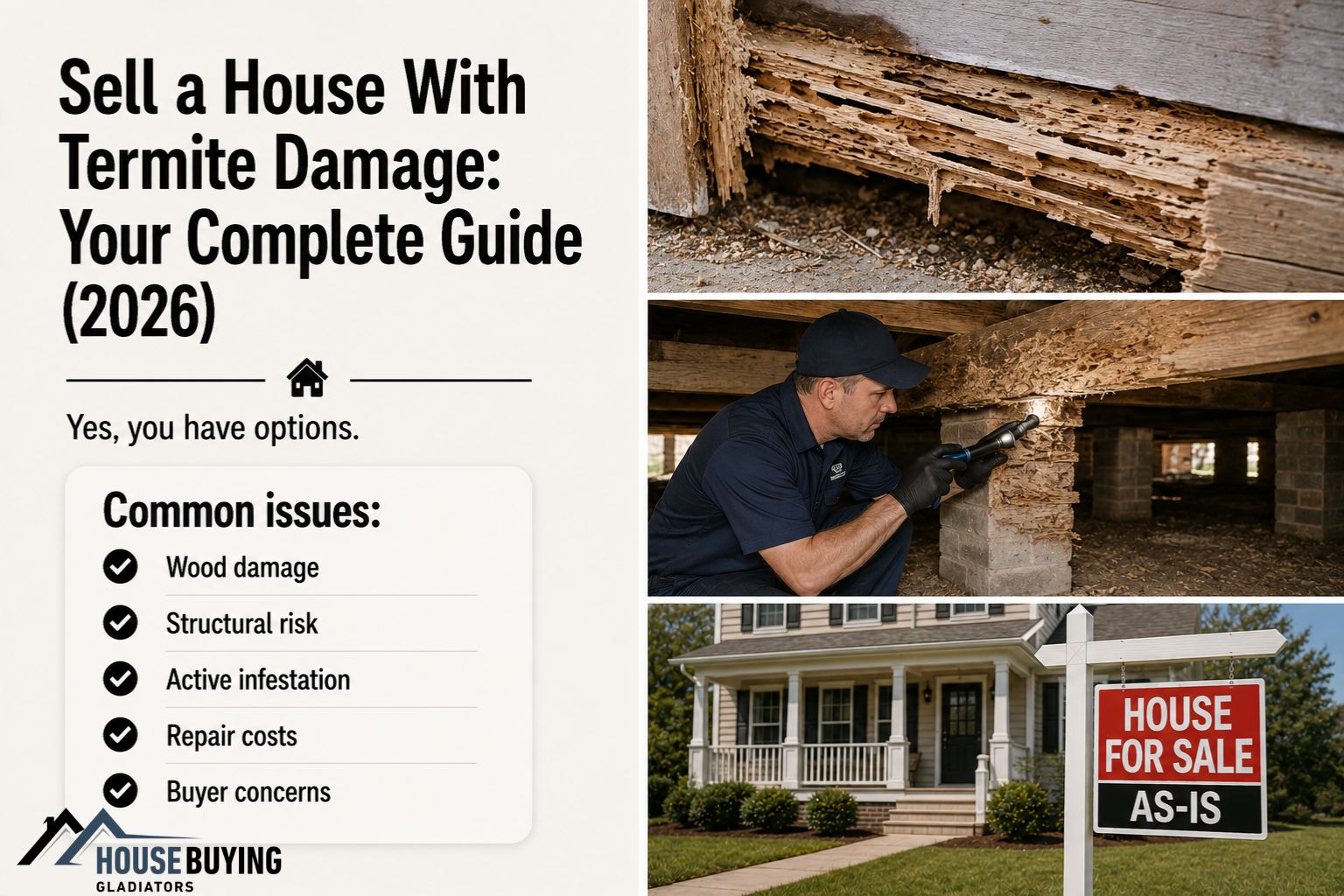
If you need to sell a house with termite damage, you’re probably wondering how much the issue will affect your sale. Maybe a buyer’s inspection uncovered damaged wood, a pest-control company found evidence of a past infestation, or you’ve recently discovered active termites and aren’t sure what to do next.
The good news is that termite damage does not automatically prevent a successful home sale. In fact, many homeowners sell properties with termite-related issues every year. However, repair costs, financing requirements, buyer confidence, and the extent of the damage can all influence the outcome.
What makes this situation challenging is the uncertainty. Should you invest in repairs before listing? Will buyers walk away after an inspection? Could termite damage reduce your home’s value or create financing problems? Additionally, do you need to disclose the issue even if the infestation has already been treated?
Fortunately, homeowners have several options. Depending on the condition of the property, you may decide to complete repairs, offer credits to buyers, adjust the asking price, or sell the home as-is. Therefore, the best approach often depends on your timeline, budget, and overall selling goals.
In this guide, you’ll learn how termite damage affects property value, what buyers and lenders actually care about, when repairs may make sense, whether selling as-is is a viable option, and how to choose the strategy that best fits your situation.
Active Termites vs. Existing Damage
Although people often use the terms interchangeably, active termites and termite damage are not the same thing. An active infestation represents a current pest problem, while termite damage refers to the physical impact termites have already caused.
Understanding this distinction is important because buyers, inspectors, lenders, and homeowners often evaluate these situations differently.
Active Termites
An active infestation means termites are currently present and feeding on wood or other cellulose-based materials. As a result, the damage can continue to worsen until treatment stops the infestation.
Potential concerns include:
- Ongoing structural damage
- Future repair costs
- Treatment requirements
- Buyer uncertainty
Existing Termite Damage
By contrast, existing termite damage refers to the physical effects left behind after a previous infestation. In these situations, the termites may be gone, but evidence of their activity remains.
Common examples include:
- Damaged floor joists
- Weakened support beams
- Cosmetic damage
- Previously repaired structural components
Consequently, buyers often focus on the extent of the damage and whether repairs were completed properly rather than the infestation itself.
Comparison Table: Active Termites vs. Existing Damage
| Active Termites | Existing Damage |
|---|---|
| Current pest problem | Result of past activity |
| Requires treatment | May require repairs |
| Ongoing risk | Historical condition |
| Creates immediate concern | Creates evaluation concerns |
| Can continue causing damage | Damage has already occurred |
Why the Difference Matters
Many homeowners use these terms interchangeably. However, buyers, lenders, and inspectors often evaluate them very differently.
For example, a home with documented past damage and completed repairs may create fewer concerns than a property with an active infestation. In contrast, active termites can raise questions about future damage, treatment costs, and ongoing risk.
Entity Relationship
Active Termites
↓
Wood Consumption
↓
Property Damage
↓
Repair Decisions
↓
Sale Strategy
Key Takeaway
Before deciding how to sell, determine whether you’re dealing with an active infestation, existing damage, or both. Once you understand the situation, it becomes easier to evaluate treatment options, repair needs, and potential selling strategies.
How Inspections Reveal Hidden Problems
Many homeowners first learn about termite issues during a professional inspection. Because termites often remain hidden for long periods, inspections frequently uncover problems that sellers did not previously know existed.
Termite damage often develops behind walls, beneath flooring, or inside crawl spaces. As a result, professional inspections may reveal issues that are not visible during everyday use of the property.
Common Areas Inspectors Evaluate
Inspectors typically examine:
- Crawl spaces
- Basements
- Floor joists
- Support beams
- Attics
- Exterior wood components
- Foundation-adjacent areas
Since termites often work out of sight, visible damage may represent only part of the overall problem.
Why Inspection Reports Matter
Inspection findings can influence:
- Buyer confidence
- Negotiations
- Repair requests
- Financing approvals
- Sale timelines
Consequently, the inspection report often becomes one of the most important documents in the transaction.
Example
A homeowner may believe a previous termite treatment resolved the issue years ago. However, during a buyer’s inspection, hidden damage could be discovered beneath flooring or inside structural components.
Because the issue is identified before closing, both parties can discuss repair options, negotiate pricing adjustments, or explore other solutions before moving forward.
Why This Matters
Inspections reduce uncertainty. As buyers gain more information about the property’s condition, they can make decisions with greater confidence, which often helps transactions move more smoothly.
Do You Have to Disclose Termite Damage?
In many situations, homeowners must disclose known termite damage, previous infestations, or related issues when selling a property. Disclosure requirements vary by state, but sellers generally cannot knowingly conceal material defects.
Known termite damage often qualifies as information buyers would consider important when evaluating a property. As a result, disclosure obligations frequently apply.
What May Need to Be Disclosed?
Depending on local requirements and the circumstances, disclosures may include:
- Previous termite infestations
- Active infestations
- Structural damage
- Repair history
- Treatment records
- Inspection reports
What Most Homeowners Get Wrong
Many sellers assume that if the termites are gone, disclosure is no longer necessary.
However, buyers often want to understand:
- What happened?
- Was treatment completed?
- Was damage repaired?
- Could future issues exist?
Documentation often helps answer these questions.
Key Takeaway
Disclosure is not only about compliance. It also helps build trust and reduce surprises that could disrupt a transaction.
What Is a Wood-Destroying Organism (WDO) Report?
A Wood-Destroying Organism (WDO) report sometimes called a termite clearance letter or pest inspection report is a professional assessment of a property’s condition regarding termites and other wood-destroying pests. Many lenders require this report before approving financing on a home with known or suspected termite history.
Why WDO Reports Matter in a Sale
For buyers using FHA or VA loans, a WDO report is often a required step in the financing process. Termite clearance letters are required for certain types of loans and may be a condition for some loans for homes in high-risk areas. When an inspector uncovers termites, many lenders will require potential buyers to secure a termite bond, which can range from $500 to $2,000. Angi
What a WDO Report Covers
A WDO inspection typically evaluates:
- Evidence of active termite activity
- Signs of previous infestations
- Structural damage caused by wood-destroying organisms
- Moisture conditions that create risk
- Recommendations for treatment or repair
What It Means for Sellers
If you’re selling to a buyer using government-backed financing, be prepared for a WDO inspection as part of the process. Having your own inspection report, treatment records, and repair documentation ready before listing can help prevent delays and build buyer confidence from the start.
Key Takeaway
A WDO report is not just a formality it’s often a financing requirement. Sellers who prepare documentation in advance are better positioned to move through the transaction efficiently.
Termite Disclosure Requirements: How They Vary by State
While most states require sellers to disclose known termite damage and infestations, the specific requirements, forms, and legal consequences vary considerably depending on where the property is located.
States with strict termite disclosure requirements:
In California, the Real Estate Transfer Disclosure Statement mandates that sellers disclose any termite damage, treatments, and any warranties related to termite control. California, Florida, and Texas all require specific termite disclosures as part of the real estate transaction including inspection reports, treatment history, and any known structural damage.
In New York, if a property has had a termite infestation or damage, it must be disclosed when selling. In New Jersey, sellers who hide or fail to mention known latent defects like an unrepaired termite infestation can be sued for fraud or misrepresentation.
States with limited or caveat emptor rules:
A small number of states place the responsibility on buyers to investigate the property’s condition. However, even in these states, intentionally concealing known termite damage can still result in legal liability.
What sellers should do regardless of state:
In most states, sellers are legally required to disclose known termite damage and infestations through a seller’s disclosure statement that directly asks about pest problems and structural damage — including when the infestation was discovered, which areas were affected, what treatment methods were used, and whether structural repairs were necessary. Sellers who fail to disclose known termite damage can face lawsuits for fraud or misrepresentation, have the sale reversed, or face other costly consequences.
How Termite Damage Affects Property Value
Termite damage can reduce a property’s value, but the impact depends on the severity of the damage, whether repairs have been completed, the presence of active termites, and overall buyer demand.
Properties with termite damage can still sell successfully. However, buyers often adjust their offers based on repair costs, perceived risk, financing concerns, and the likelihood of future issues.
Why Value Changes
Buyers typically factor in:
- Structural repair costs
- Pest treatment expenses
- Future maintenance concerns
- Inspection findings
- Financing challenges
- Project uncertainty
As uncertainty increases, buyers often expect larger discounts.
Property Value Relationship
Termite Damage
↓
Repair Costs
↓
Buyer Risk Assessment
↓
Negotiation Leverage
↓
Final Sale Price
Example Scenario
Two homes have similar termite histories.
The first has documentation showing professional treatment and completed repairs.
The second has visible damage but no records explaining what was done.
Even if the actual damage is similar, buyers often place greater value on the property with clear documentation because uncertainty is lower.
Bottom Line
The actual damage matters, but buyer confidence often plays an equally important role in determining value.
If your home has multiple issues beyond termite damage, our guide on selling a house with foundation problems covers related structural concerns that may apply.
Treatment Costs vs. Structural Repair Costs
Many homeowners assume termite treatment and termite repairs are the same thing. However, treatment eliminates the pest problem, while repairs address the damage termites leave behind.
Eliminating termites does not automatically restore damaged wood. As a result, homeowners often need to evaluate treatment costs separately from repair costs when deciding how to move forward.
Understanding the Difference
Termite Treatment
Termite treatment focuses on stopping active termite activity and preventing additional damage. Depending on the severity of the infestation, treatment may involve:
- Liquid treatments
- Bait systems
- Spot treatments
- Professional pest control services
According to Angi, termite treatment costs range between $75 and $1,750, with a national average of $621 depending on the type of treatment, infestation size, and scope of the problem. Termite tenting for a full home can cost $2,000 to $8,000. Visit Angi’s termite treatment cost guide for a full breakdown.
Ultimately, the goal is to eliminate the infestation and reduce the risk of future termite activity.
Structural Repairs
Once termites have been eliminated, attention often shifts to repairing any damage they caused. By contrast, structural repairs focus on restoring the property’s condition rather than addressing the pest problem itself.
Repairs may include:
- Replacing damaged joists
- Reinforcing support beams
- Repairing framing
- Replacing subflooring
- Correcting structural weaknesses
According to Angi’s 2026 termite damage repair data, the average cost of termite damage repair is $3,000, with most projects ranging from $1,000 to $10,000 depending on the size and severity of the damage. Minor cosmetic repairs like patching drywall typically cost $300 to $2,000, while major structural repairs involving support beams or subfloors can reach $5,000 to $15,000 or more.
As a result, these repairs help restore the property’s safety, stability, and long-term integrity.
Why This Matters to Sellers
Although treatment can stop an infestation, it does not automatically repair damaged wood. Likewise, repairing structural damage without addressing active termites can leave the property vulnerable to future problems. For that reason, homeowners should evaluate treatment needs and repair requirements separately when planning a sale.
Why This Difference Matters
A successful treatment does not necessarily mean the property no longer requires repairs. Likewise, repairing damaged wood without addressing an active infestation can allow new damage to occur.
Consequently, homeowners should evaluate both issues separately when estimating costs and planning a selling strategy.
Comparison Table
| Treatment | Repairs |
|---|---|
| Eliminates termites | Fixes damage |
| Addresses active infestation | Addresses consequences |
| Usually completed by pest professionals | Usually completed by contractors |
| Prevents further damage | Restores structural integrity |
Common Point of Confusion
Many homeowners receive a treatment estimate and assume the entire problem is solved.
However, treatment and repair costs are often separate expenses.
What Sellers Should Know
Before deciding how to proceed, determine whether you’re dealing with active termites, existing damage, or both.
Should You Repair Termite Damage Before Selling?
Many homeowners who need to sell a house with termite damage struggle to determine whether repairs will increase their net proceeds or simply add more expenses.
Not always. The right decision depends on repair costs, market conditions, buyer expectations, available funds, and your timeline.
Some homeowners achieve better outcomes by repairing termite damage before listing. Others determine that selling without completing repairs creates a stronger overall financial result.
Situations Where Repairs May Make Sense
Repairs may be worth considering when:
- Damage is limited
- Costs are manageable
- Financing concerns may reduce buyers
- Market conditions favor move-in-ready homes
- Documentation can improve buyer confidence
Situations Where Selling Without Repairs May Make Sense
Selling without repairs may be practical when:
- Damage is extensive
- Costs are substantial
- Multiple property issues exist
- Speed is a priority
- Available funds are limited
Decision Framework
Repair First If:
- Costs are predictable
- Buyer demand is strong
- Financing approval is important
- You want to maximize marketability
Consider Selling As-Is If:
- Repairs are expensive
- The property has several issues
- Time matters more than price
- You want to avoid project management
Example
A homeowner receives a $25,000 estimate to repair extensive termite damage.
Rather than investing additional money into the property, they decide to price the home accordingly and allow a buyer to handle repairs after closing.
Key Takeaway
The highest sale price does not always produce the best outcome. Repair costs, holding expenses, and time should all factor into the decision.
Want to Sell Your House With Termite Damage Without Dealing With Repairs?
If termite damage has made the traditional listing process complicated or if repair costs, financing requirements, and buyer negotiations feel overwhelming there is a simpler path forward.
House Buying Gladiators buys houses with termite damage directly for cash — as-is, in any condition, with no repairs required, no fees, and no obligation.
We work with homeowners across the United States who need to sell quickly without investing more money into a property. No WDO reports to pass, no lender requirements to satisfy, no repair estimates to negotiate over.
Can Buyers Get Financing on a Property With Termite Damage?
Sometimes. Financing often depends on the severity of the damage, whether termites remain active, lender requirements, and the property’s overall condition.
For homeowners trying to sell a house with termite damage, financing concerns can significantly affect the pool of potential buyers.
Lenders generally focus on risk. Significant structural damage or active infestations may create financing challenges because they affect the property’s condition and long-term value.
Why Lenders Pay Attention
Mortgage lenders want to ensure the property serves as suitable collateral for the loan. As a result, they often evaluate whether termite-related issues could affect the property’s condition, value, or long-term marketability.
Potential concerns include:
- Structural integrity
- Habitability
- Ongoing deterioration
- Safety risks
- Future repair costs
How Financing Challenges Can Affect Buyers
When lenders identify significant termite-related concerns, buyers may encounter additional requirements before the loan can move forward.
These challenges may include:
- Additional inspections
- Repair requirements
- Delayed approvals
- Appraisal concerns
- Loan denial in severe situations
For example, a lender may request further evaluation if an inspection reveals active termites or substantial structural damage. Consequently, the transaction could take longer to complete while the issues are reviewed and addressed.
Cash Buyers vs. Financed Buyers
| Cash Buyers | Financed Buyers |
|---|---|
| No lender approval required | Must satisfy lender requirements |
| Greater flexibility | Subject to underwriting standards |
| Often move faster | May face delays |
| Frequently purchase distressed properties | May avoid major issues |
Example
A home with documented past termite damage and completed repairs may qualify for financing without difficulty.
By contrast, active termites and visible structural damage often create additional hurdles during underwriting.
What This Means for Sellers
Financing concerns typically stem from property condition and risk rather than the word “termites” appearing in a report.
What Buyers Actually Care About
Homeowners who need to sell a house with termite damage often assume buyers will focus only on the damage itself. However, buyers typically focus on risk, documentation, and future costs.
When evaluating a home with termite damage, buyers typically focus on uncertainty, repair costs, future liability, and whether the problem has been properly addressed rather than the damage itself.
Questions Buyers Commonly Ask
When evaluating a property with termite damage, buyers typically look beyond the damage itself and focus on the level of risk involved.
Common questions include:
- Are termites still active?
- How extensive is the damage?
- Has the property been treated?
- Were repairs completed correctly?
- Are records available?
- Will financing be possible?
- Could additional damage exist?
As a result, the more clearly these questions can be answered, the easier it becomes for buyers to evaluate the opportunity and make a confident decision.
Why Documentation Matters
Documentation often reduces uncertainty and helps buyers understand exactly what occurred, what was repaired, and whether any concerns remain.
Helpful records may include:
- Termite inspection reports
- Treatment records
- Repair invoices
- Contractor reports
- Structural assessments
- Warranty information
As a result, well-documented repairs frequently improve buyer confidence and reduce concerns about hidden issues.
Buyer Decision Relationship
Inspection Findings
↓
Buyer Confidence
↓
Perceived Risk
↓
Offer Strength
↓
Transaction Outcome
Bottom Line
In many situations, uncertainty creates more concern than the termite damage itself. Therefore, providing clear information, supporting documentation, and repair records can often have a greater impact on buyer confidence than the damage alone.
Cash buyers are often the most flexible option for homes with termite damage. Learn more about how our cash home buying process works
Common Mistakes When You Sell a House With Termite Damage
Many homeowners underestimate how much documentation can influence buyer confidence.
Many termite-related sales become more complicated when homeowners delay action, underestimate buyer concerns, or fail to gather important documentation before listing the property.
Termite damage does not automatically derail a transaction. However, poor preparation, incomplete information, and unrealistic expectations can create avoidable obstacles that slow negotiations and reduce buyer confidence.
Waiting Too Long to Investigate
Some homeowners suspect termite issues but postpone inspections until a buyer uncovers the problem.
As a result, they often lose negotiating leverage and face additional pressure once the issue surfaces during the transaction.
Assuming Treatment Solves Everything
Eliminating termites is only part of the process.
Even after treatment is complete, buyers may still want information about existing damage, completed repairs, and the overall condition of the property. Therefore, treatment records alone may not answer every concern.
Looking Only at the Highest Offer
The highest offer is not always the strongest offer.
For example, a slightly lower offer from a well-qualified buyer may create fewer complications than a higher offer that depends on financing, extensive repair requests, or multiple contingencies.
Overlooking the Importance of Documentation
Missing records often increase buyer uncertainty.
Without inspection reports, repair invoices, or treatment documentation, buyers may assume greater risk and adjust their offers accordingly.
Seller Decision Relationship
Property Condition
↓
Available Documentation
↓
Buyer Confidence
↓
Negotiation Strength
↓
Transaction Outcome
Final Thought
Preparation creates flexibility. By addressing concerns early and providing clear information, homeowners can often reduce uncertainty, improve buyer confidence, and navigate negotiations more effectively.
Frequently Asked Questions
Yes. Many homeowners sell properties with termite damage without completing repairs. Whether this approach makes sense depends on repair costs, buyer expectations, market conditions, and your overall goals.
In many situations, yes. Disclosure requirements vary by state, but known termite damage, previous infestations, and related repairs may need to be disclosed to potential buyers.
Often, yes. The extent of the impact depends on the severity of the damage, repair history, buyer demand, and the level of uncertainty surrounding the issue.
Active termites are a current infestation. Termite damage refers to the physical effects left behind after termites have consumed or weakened wood and other materials.
Sometimes. Financing eligibility depends on lender requirements, the condition of the property, whether termites remain active, and the severity of any structural concerns.
It depends. Repairing damage may improve buyer confidence and financing opportunities, while selling as-is may save time and eliminate upfront expenses.
Many homeowners choose to sell the property in its current condition rather than complete extensive repairs. This approach may reduce preparation time and simplify the process.
Not necessarily. Inspection findings may lead to negotiations, repair requests, price adjustments, or additional evaluations, but they do not automatically prevent a sale.
Possibly. Active infestations can continue causing damage, and repair costs may increase if issues remain unresolved for an extended period.
Repair costs, holding expenses, buyer demand, financing limitations, market conditions, and negotiation outcomes often have a greater impact on profit than the termite damage itself.
Ready to Sell Your House With Termite Damage?
Whether your property has active termites, existing structural damage, or a history of past infestations, you don’t have to spend thousands on repairs before you can move forward.
House Buying Gladiators buys houses with termite damage directly for cash, anywhere in the United States. No repairs, no agent fees, no waiting for buyer financing to clear.
Get Your Free Cash Offer Today →
Conclusion
Yes, you can sell a house with termite damage. While termite-related issues may affect buyer confidence, financing options, negotiations, and property value, they do not automatically prevent a successful transaction.
The most important step is understanding exactly what you’re dealing with active termites, existing structural damage, completed repairs, and available documentation each affect the sale differently. The right strategy depends on repair costs, your timeline, and your overall financial goals.
Some homeowners achieve better outcomes by completing treatment and repairs before listing. Others find that selling as-is to a cash buyer provides a faster, more practical solution especially when damage is extensive, repair costs are high, or time is limited.
Before making a decision, consider the full financial picture: treatment costs, structural repair expenses, WDO report requirements, holding costs, and potential buyer demand. Understanding all of your options not just the repair path is the best way to choose a strategy that actually works for your situation.