Skip to content
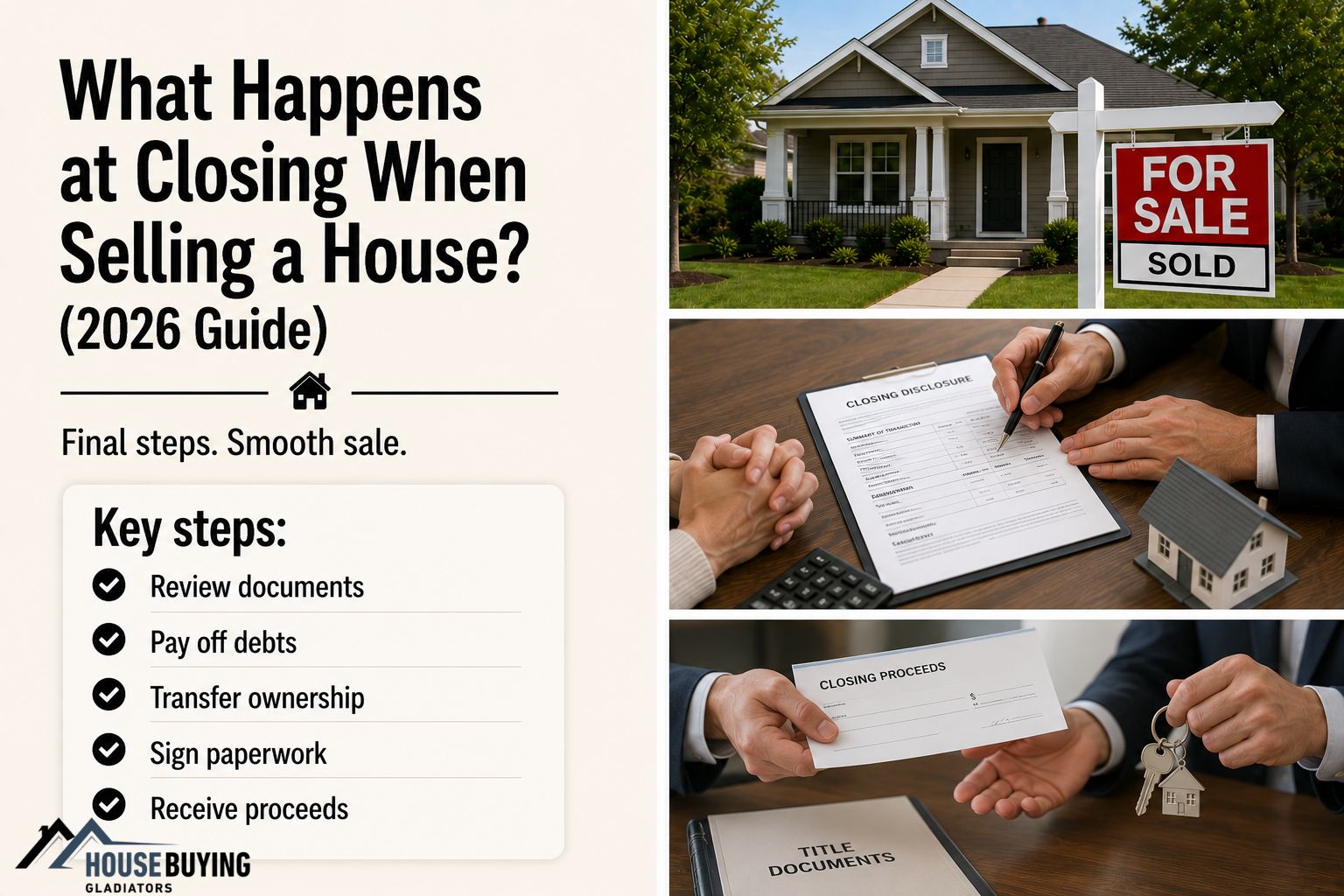
If you are wondering what happens at closing when selling a house, the short answer is that several final steps take place before you receive your money and officially complete the sale. During closing, the title company coordinates the paperwork, pays off any outstanding debts, transfers ownership to the buyer, and releases your remaining proceeds.
Many homeowners think closing is a single appointment where everyone signs paperwork and leaves.
That is rarely the case.
Closing is a process that starts after you accept an offer and ends when the county records the new ownership and the title company sends your proceeds.
Understanding these steps early can help you avoid delays, reduce stress, and know exactly what to expect before handing over the keys.
What Will I Walk Away With? Closing Calculator
What Will I Walk Away With? Closing Calculator
What Happens at Closing When Selling a House Step by Step?
After you accept an offer, several teams work together to complete the sale. The title company verifies ownership, the buyer’s lender finalizes financing, both parties sign documents, escrow pays outstanding debts, and you receive your remaining proceeds.
Accept Offer ➔ Open Escrow ➔ Complete Title Search ➔ Finalize Buyer Financing ➔ Sign Documents ➔ Pay Off Debts ➔ Receive Your Money
| Step | What Happens | Why It Matters |
|---|---|---|
| Accept Offer | Buyer and seller sign the purchase agreement | Officially starts the transaction |
| Open Escrow | The title company opens the file and begins processing documents | Creates a secure environment for the sale |
| Complete Title Search | The title company verifies ownership and checks for liens | Prevents ownership disputes |
| Finalize Buyer Financing | The buyer’s lender approves and prepares the loan | Confirms funds are available |
| Sign Closing Documents | Both parties sign the required paperwork | Legally transfers ownership |
| Pay Off Debts | Escrow pays mortgages, liens, taxes, and other obligations | Clears the property’s financial obligations |
| Receive Proceeds | The title company sends the remaining funds to you | Completes the transaction |
Every transaction follows a slightly different timeline. However, most sellers complete these steps within 30 to 60 days after accepting an offer.
If your property already has outstanding legal claims, can you sell a house with liens explains how title companies resolve these issues before closing.
Who Is Involved During Closing When Selling a House?
Several professionals work together to complete the sale after you accept an offer. Each person handles a specific part of the transaction, from verifying ownership to paying off debts and releasing your proceeds.
Seller ➔ Buyer ➔ Title Company ➔ Escrow Officer ➔ Lender ➔ Real Estate Agents
| Person | Primary Responsibility | Why It Matters |
|---|---|---|
| Seller | Signs documents and transfers ownership | Allows the transaction to move forward |
| Buyer | Finalizes financing and completes paperwork | Provides the funds needed to purchase the home |
| Title Company | Verifies ownership, checks for liens, and coordinates closing | Helps prevent ownership disputes |
| Escrow Officer | Manages documents, receives funds, and pays debts | Keeps the transaction organized and secure |
| Lender | Releases the buyer’s loan funds | Allows the purchase to close |
| Real Estate Agents | Coordinate communication and deadlines | Help keep the transaction on schedule |
Every person has a specific role. Delays often happen when someone submits paperwork late, misses a deadline, or discovers an issue during the closing process.
What Documents Do Sellers Sign at Closing?
Most sellers sign five core documents at closing. These documents transfer ownership, confirm financial details, authorize loan payoffs, and officially complete the sale.
Verify Information ➔ Sign Ownership Documents ➔ Review Costs ➔ Authorize Payoffs ➔ Complete Closing
| Document | What It Does | Why It Matters |
|---|---|---|
| Property Deed | Transfers ownership to the buyer | Legally completes the sale |
| Settlement Statement | Breaks down costs, payoffs, and final proceeds | Shows exactly where the money goes |
| Tax Forms | Reports required tax information | Helps satisfy tax reporting requirements |
| Seller affidavit or state-required declarations | Confirms ownership and property information | Helps prevent future disputes |
| Mortgage Payoff Documents | Authorizes the payoff of any existing loans | Clears outstanding debt before ownership transfers |
Most sellers sign these documents during a single appointment. However, some states allow remote or electronic signing, depending on local regulations and your title company.
Reviewing these documents before closing can help you avoid delays and last-minute surprises.
If you want to prepare your paperwork ahead of time, what documents do I need to sell my house explains everything sellers typically need before closing.
What Gets Paid at Closing?
The full sale price does not go directly into your bank account. Before you receive your money, the escrow officer uses the buyer’s funds to pay off any debts, taxes, commissions, and closing costs attached to the transaction.
Sale Price ➔ Mortgage Payoff ➔ Liens ➔ Taxes ➔ Agent Commissions ➔ Closing Costs ➔ Remaining Proceeds
| Expense | What Gets Paid | Why It Matters |
|---|---|---|
| Mortgage Payoff | Your remaining loan balance | Clears the mortgage before ownership transfers |
| Property Liens | Tax liens, judgments, or contractor claims | Removes legal claims against the property |
| Property Taxes | Unpaid taxes and prorated balances | Satisfies local tax obligations |
| Agent Commissions | Agreed-upon real estate commissions | Pays agents involved in the sale |
| Title and Escrow Fees | Transaction processing costs | Completes the closing process |
| Other Closing Costs | Agreed-upon seller expenses | Finalizes the transaction |
After escrow pays these expenses, the title company sends the remaining proceeds to you.
Many homeowners underestimate how much these deductions can reduce their final payout. Reviewing these costs early can help you estimate your net proceeds more accurately and avoid last-minute surprises.
Homeowners who want a broader breakdown of seller expenses can also review Opendoor’s guide to seller closing costs.
Homeowners who still have an active loan can review can you sell a house with an existing mortgage to understand how mortgage payoffs work during closing.
If you want to estimate how much money you may receive, how much will I make selling my house can help you calculate your final proceeds.
What Can Delay Closing When Selling a House?
Many homeowners assume inspections are the biggest cause of delays.
In reality, paperwork and financing issues are often the biggest obstacles.
Missing Documents ➔ Financing Issues ➔ Title Problems ➔ HOA Delays ➔ Repair Negotiations ➔ Closing Delays
Common reasons closing gets delayed include:
| Issue | How It Delays Closing |
|---|---|
| Missing paperwork | Prevents escrow from completing required steps |
| Buyer financing problems | Delays loan approval and funding |
| Title issues | Ownership disputes must be resolved |
| HOA documents | Buyers cannot review required information |
| Repair negotiations | Both parties may need additional time |
| Property liens | Debts must be cleared before ownership transfers |
The earlier you identify these issues, the smoother your transaction will be.
Homeowners who want to learn more about common closing delays can also review Realtor.com’s guide on factors that can stall the closing process.
Many of these issues can extend your selling timeline. Homeowners who want to understand the full process can review how long does it take to sell a house.
Homeowners dealing with complicated situations can also review sell house fast vs list with a Realtor to compare their available options.
FAQs: What Happens at Closing When Selling a House?
Most closings take 30 to 60 days after you accept an offer. Cash sales can often close in 7 to 21 days because they do not rely on traditional mortgage financing.
Most sellers receive their proceeds on the same day or within one business day after the county records the sale.
Not always. Many states allow remote, electronic, or mail-away closings, depending on local laws and your title company.
The escrow officer pays off your remaining mortgage balance directly from the buyer’s funds during closing.
Common deductions include mortgage payoffs, unpaid taxes, liens, agent commissions, title fees, escrow fees, and other agreed-upon closing costs.
Yes. Title companies must resolve most liens before ownership transfers to the buyer.
Missing paperwork, buyer financing problems, title issues, HOA delays, and repair negotiations are some of the most common causes.
The title company and escrow officer coordinate most of the transaction, collect documents, receive funds, and distribute payments.
In most cases, sellers hand over the keys after closing is complete and ownership officially transfers to the buyer.
Yes. Homeowners can sell without a Realtor through a for-sale-by-owner transaction or by selling directly to a cash buyer.
Conclusion: Understand What Happens at Closing Before You Sell Your House
Understanding what happens at closing when selling a house can help you avoid surprises, reduce stress, and make better decisions throughout the selling process.
Many homeowners assume closing is a single appointment where everyone signs paperwork and the transaction ends.
In reality, closing is a series of steps that begins after you accept an offer and ends when the title company transfers ownership, pays outstanding debts, and releases your remaining proceeds.
The earlier you understand this process, the easier it becomes to prepare your paperwork, avoid delays, and estimate your final payout.
Ready to see how much money you could walk away with? Scroll back to the top of this guide to review each stage of the closing process and better understand what to expect before the sale is complete.