Skip to content
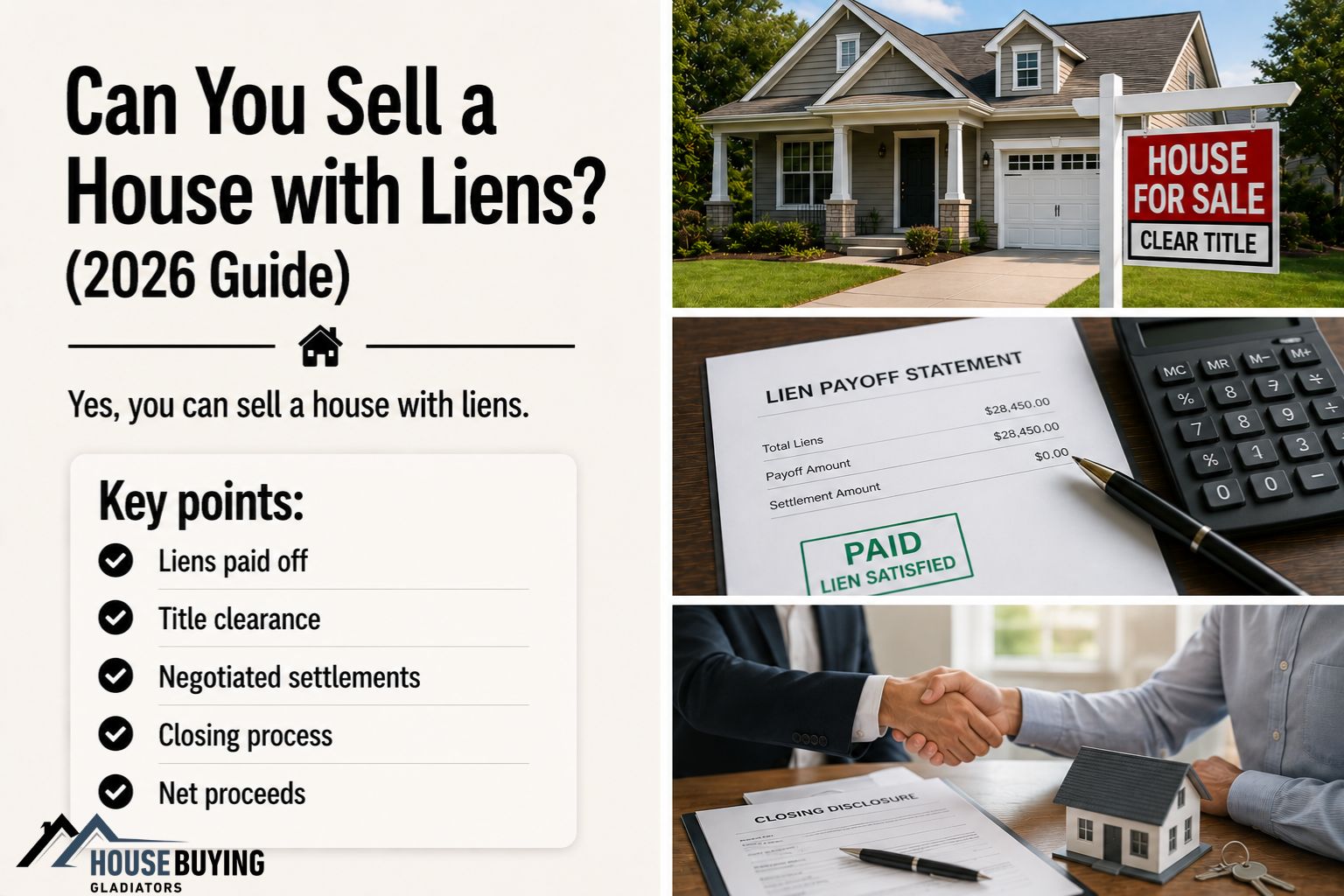
If you are trying to understand whether you can sell a house with liens attached to it, the direct answer is a resounding yes. Specifically, having outstanding financial liabilities recorded against your real estate does not block your legal right to put the property up for sale.
However, that is a structural detail many property owners accidentally overlook until closing.
Because a lien creates a legal claim against your property, the title company must resolve it before closing. It can pay off the lien, negotiate a settlement, or remove it entirely so you can transfer a clear title to the buyer. The closing process then handles these payments automatically and protects all parties involved.
Homeowners who understand how much will I make selling my house can also better estimate how liens, closing costs, and creditor payoffs may impact their final proceeds before listing the property.
Property Lien Payoff & Net Proceeds Estimator
Property Lien Payoff & Net Proceeds Estimator
Can You Sell a House With Liens? How Title Companies Resolve Them
In many cases, a professional title insurer or escrow office coordinates the process of clearing active debts before closing. Consequently, homeowners who ask, “Can you sell a house with liens?” should understand how title companies identify, verify, and prioritize these claims.
Order Title Search ➔ Uncover Lien Records ➔ Request Payoff Letters ➔ Clear Debts at Closing ➔ Issue Clean Deed
| Settlement Phase | Primary Party Responsible | Financial Mechanism | Payout Priority |
|---|---|---|---|
| Title Examination | Title Underwriter | Searches public county database records | Identifies all existing property claims |
| Lien Payoff Request | Escrow Officer | Demands official written payoff statements | Calculates final interest up to closing |
| Debt Settlement | Escrow Agent | Wires funds directly from sales proceeds | Satisfies creditors before seller is paid |
| Lien Release Filing | County Recorder | Records official satisfaction of lien forms | Formally clears the real estate title |
As a result, this structured timeline ensures the property’s title is wiped clean before ownership officially shifts. Understanding can you sell a house with a mortgage can also help homeowners see how mortgage liens fit into the broader payoff process.
Additionally, some properties have older ownership disputes, estate clouds, or unrecorded boundary issues that require separate legal action before a clean title can be transferred. To better understand this process, review this guide on quiet title actions.
Common Debt Types: What Liens Can You Sell a House With?
Contrary to popular belief, different creditors use different legal channels to record debt against a home. Instead of treating all claims equally, state courts rank them based on statutory priority.
Secured Mortgages (First Priority) ➔ Government Tax Claims ➔ HOA Assessments ➔ Mechanic Judgments
Satisfying Delinquent Taxes and Paying Off Government Tax Liens at Closing
First, state and federal tax authorities hold a high-priority claim on your equity. Specifically, municipal property tax liens often jump to the front of the line, even ahead of your primary mortgage lender.
Consequently, these outstanding public liabilities must be paid off directly from your transaction proceeds before closing is approved. Understanding how much does it cost to sell a house can also help sellers prepare for the additional expenses deducted throughout the transaction.
If you are already behind on property taxes before listing, addressing those balances early can help prevent unnecessary delays during closing.
Resolving HOA Judgments and Contractor Mechanics Liens
On the other hand, secondary claims like HOA dues or unpaid contractor bills sit lower on the priority list. Specifically, if a contractor files a claim for unpaid renovations, it is recorded as a mechanic’s lien.
Consequently, the escrow officer must settle this balance to ensure the title company can issue a clean title insurance policy. Reviewing these claims early can also help homeowners identify inaccurate charges before closing begins.
Debt vs. Value: How to Sell a House with Liens Exceeding Equity
Without a doubt, the legal process becomes much more complex if your total property debt exceeds your home’s current market value. Indeed, when answering can you sell a house with liens, this negative equity scenario represents one of the biggest hurdles homeowners face.
Total Debt Exceeds Value ➔ Request Creditor Haircuts ➔ File Hardship Packages ➔ Secure Short Sale Authorization
Fortunately, homeowners facing this situation still have several strategic options. Understanding what is fair market value of a home can also help sellers compare their total debt obligations against their property’s current market value before deciding on a strategy.
For example, you can choose to bring cash to the closing table, negotiate discounted payoffs with junior lien holders, or request a bank-approved short sale.
Typically, during short sale negotiations, secondary creditors agree to accept a partial payout to release their claims, allowing the transaction to move forward.
Can You Sell a House With Liens Fast? Your Sales Options
Ultimately, your choice of sales strategy depends on your home’s physical condition, your financial cash reserves, and any immediate foreclosure pressure.
Complicated Liens + Foreclosure Threat ➔ Skip MLS Staging ➔ Target Direct Cash Buyers ➔ Close Within Days
Relying on a Traditional Real Estate Agent to Capture Top Value
If your property is in good structural condition and has sufficient equity to cover all recorded liabilities, listing traditionally is often your best path. Without a doubt, this maximizes open-market buyer competition.
If you are uncertain how professionals establish competitive pricing before listing, understanding what is a comparative market analysis (CMA) can help you set realistic expectations.
However, you will remain fully responsible for mortgage payments, interest accruals, and holding costs during the marketing period. Planning for these expenses early can help you avoid unnecessary financial pressure while the property is listed.
Selling directly to a Cash Investor to Simplify Settlement Friction
Conversely, if you are facing foreclosure or multiple uncooperative lien holders, selling directly to an investment buyer can save time. Cash home buyers regularly purchase houses with liens and often help streamline creditor negotiations.
If extensive repairs are also part of the situation, our guide on can you sell a house as-is explains how these transactions work and why some homeowners choose speed and convenience over traditional listings.
Therefore, this strategy can provide a faster, more predictable exit while helping prevent foreclosure from causing additional financial damage.
Protect Your Equity and Explore Your Options
Property liens and title issues do not automatically prevent you from selling, but waiting can increase costs and reduce your remaining equity.
Get Your Cash Offer and privately explore your options, timelines, and potential next steps without pressure or obligation.
FAQs About How to Sell a House with Liens
To put it simply, yes. You can sell a home with active liens, but the title company must clear those debts before transferring a clean title to the buyer at closing.
Specifically, you can pull your title records by visiting your county recorder’s office. Alternatively, a title company can run a comprehensive search to uncover any recorded financial claims.
Yes, indeed. Because contractors or tax offices can record claims without your immediate knowledge, many sellers only discover these clouds when the title company runs its pre-closing checks.
Generally, the escrow company pays property tax liens first. It then pays off your primary mortgage and resolves junior liens, such as HOA liens, mechanic’s liens, and personal judgments, based on their filing dates.
No, actually. While the debts must be satisfied to close, you do not need upfront cash. Escrow will pay off the creditors directly using the buyer’s purchase funds.
Specifically, your proceeds are directly reduced by the payoff amounts. Consequently, the escrow officer deducts those debts from the sale price, and you pocket whatever equity remains.
Yes, absolutely. In many cases, creditors like credit card companies or contractors will accept a lump-sum settlement of 50% to 80% of the debt to close the account.
When this happens, you must either bring cash to the closing table to cover the gap or work with your primary lender to approve a short sale.
Yes, indeed. However, the liens must still be satisfied at closing. Cash buyers often handle the creditor negotiations directly to simplify the transaction for the seller.
Yes, absolutely. As long as you accept an offer and close before the official foreclosure auction date, the sale proceeds will satisfy the mortgage and stop the foreclosure.
Conclusion: Take Control of Your Property’s Title Before Listing
Ultimately, knowing can you sell a house with liens allows you to approach your transaction with confidence and protect your investment equity. Therefore, running an early title search, calculating your payoff obligations, and negotiating settlements early can help create a smoother closing process.
Ready to see how liens could affect your final payout? Scroll back to the top of this guide to run your numbers through our interactive lien payoff estimator and compare different selling scenarios before listing your property.