Skip to content
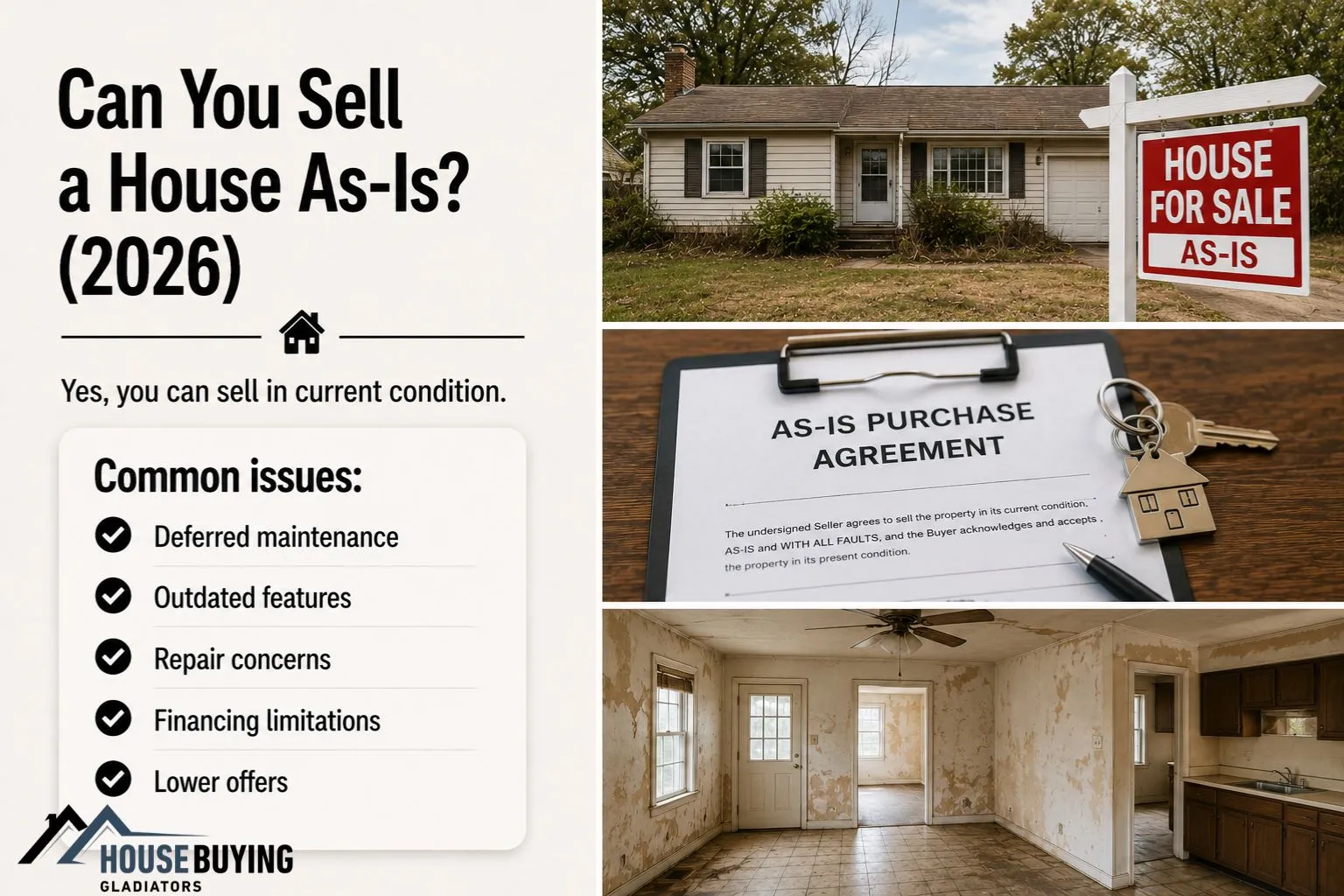
Can you sell a house as-is? Yes. In most situations, homeowners can sell a property in its current condition without completing repairs, although the home’s condition may affect buyer demand, financing options, and overall value.
Many homeowners assume they must fix every problem before putting a house on the market.
However, that is not always necessary.
Properties with deferred maintenance, outdated features, roof damage, foundation concerns, inherited ownership issues, or other challenges are sold every day.
Additionally, some homeowners simply do not have the time, budget, or desire to complete extensive repairs before selling.
As a result, selling a house as-is can be a practical option in certain situations.
Understanding how as-is sales work can help homeowners set realistic expectations, avoid common mistakes, and determine whether this approach aligns with their goals.
Understanding As-Is Home Sales
Selling a house as-is generally means the seller is offering the property in its current condition without agreeing to complete repairs before closing.
In other words, the seller is not promising to fix issues that may exist within the property.
However, this does not mean buyers automatically accept every problem without questions.
Additionally, buyers often conduct their own inspections and evaluate the home’s condition before making a final decision.
Consequently, selling as-is changes repair expectations, but it does not eliminate the buyer’s ability to assess the property.
Why Homeowners Choose This Approach
Many homeowners choose to sell as-is because it can reduce costs, simplify the process, and eliminate repair-related delays.
Common reasons include:
- Major repair needs
- Financial hardship
- Inherited property
- Relocation
- Divorce
- Vacant homes
- Landlord burnout
Furthermore, some homeowners simply prefer avoiding contractor management, renovation expenses, and project timelines.
As a result, selling as-is often becomes an attractive alternative.
Common Situations Where Selling As-Is Makes Sense
Properties Requiring Significant Repairs
Homes with major repair concerns often require substantial investments before listing.
Examples include:
- Foundation issues
- Roof damage
- Plumbing problems
- Electrical concerns
- Water damage
Consequently, some homeowners evaluate whether completing repairs is truly worthwhile before investing additional money.
Inherited Property
Inherited homes frequently come with maintenance responsibilities, ongoing expenses, and family decisions.
Additionally, heirs may not want to invest further resources into the property.
As a result, selling as-is is often considered when managing inherited real estate.
For more information, see our Sell Inherited House Texas (2026): What Heirs Need to Know guide.
Financial Challenges
Unexpected financial circumstances can make major renovations difficult.
For example:
- Job loss
- Medical expenses
- Divorce
- Relocation costs
In these situations, homeowners often prioritize simplicity and speed over completing repairs.
Vacant Homes
Vacant properties can create ongoing expenses and maintenance concerns.
Meanwhile:
- Property taxes continue.
- Insurance premiums continue.
- Utility costs continue.
- Maintenance responsibilities continue.
Therefore, some owners prefer selling sooner rather than investing additional time and money into the property.
What Selling As-Is Does Not Mean
Many homeowners misunderstand what selling a house as-is actually means.
Selling as-is does not necessarily mean:
- Buyers cannot request inspections.
- Buyers cannot negotiate.
- Buyers must purchase the property regardless of condition.
- The seller can hide known issues.
Instead, the term primarily refers to the seller’s intention not to complete repairs before closing.
Understanding this distinction helps prevent confusion throughout the transaction.
Why Expectations Matter
Homeowners considering an as-is sale should understand that property condition often influences buyer interest, pricing, and financing.
Although selling as-is can simplify certain aspects of the process, buyers still evaluate value and risk.
Additionally, lenders may have requirements depending on the property’s condition.
Consequently, realistic expectations are often important when evaluating potential outcomes.
The Goal Is Not Always Perfection
Many homeowners delay selling because they believe the property must be in perfect condition.
However, buyers purchase homes in a wide range of conditions every day.
Furthermore, some repairs may cost more than the value they ultimately add.
As a result, determining whether repairs are truly necessary is often more important than attempting to create a flawless property.
Do You Have to Make Repairs Before Selling?
No. In most situations, homeowners can sell a house as-is without completing repairs beforehand.
Many sellers assume every issue must be fixed before listing the property.
However, buyers purchase homes in various conditions every day.
Additionally, some repairs may cost more than the value they ultimately add.
As a result, homeowners often evaluate whether repairs are financially worthwhile before investing additional money into the property.
For a deeper discussion, see our What Repairs Are Worth Making Before Selling a House? (2026) guide.
What Must Sellers Disclose?
Selling a house as-is does not eliminate disclosure obligations.
Although requirements vary by location, sellers are generally expected to disclose known material issues that could affect a buyer’s decision.
Common examples may include:
- Foundation problems
- Roof leaks
- Water damage
- Plumbing issues
- Electrical concerns
- Structural defects
Furthermore, transparency often helps reduce disputes later in the transaction.
Consequently, understanding disclosure requirements is an important part of any as-is sale.
Can Buyers Still Get Inspections?
Yes. Buyers can often conduct inspections even when a property is being sold as-is.
Many homeowners mistakenly believe an as-is sale prevents inspections.
However, inspections remain one of the most common parts of the buying process.
Additionally, inspections help buyers understand:
- Property condition
- Repair needs
- Potential future expenses
- Safety concerns
As a result, buyers frequently order inspections before making a final commitment.
Can Buyers Negotiate After an Inspection?
Yes. Buyers may still attempt to negotiate after reviewing inspection findings.
For example, buyers may request:
- Price reductions
- Seller credits
- Contract adjustments
- Additional information
However, the seller is generally not obligated to complete repairs simply because requests are made.
Consequently, negotiations often depend on market conditions, buyer demand, and the property’s overall condition.
Can Buyers Get Financing on an As-Is House?
Financing is often available for as-is properties, although the home’s condition may affect lender requirements.
Some homes qualify for financing without difficulty.
However, properties with significant issues may present additional challenges.
Common concerns include:
- Severe foundation damage
- Major roof problems
- Structural concerns
- Safety hazards
- Extensive water damage
Additionally, lenders often evaluate whether the property meets minimum standards before approving financing.
As a result, severe condition issues may reduce the pool of eligible buyers.
How Selling As-Is Affects Property Value
Property condition often influences value because buyers typically factor repair costs and risk into their offers.
When evaluating an as-is property, buyers commonly consider:
- Expected repair costs
- Time required for improvements
- Future maintenance needs
- Overall property condition
Consequently, homes sold as-is sometimes receive lower offers than comparable properties in updated condition.
However, avoiding repair costs and reducing holding expenses may offset part of that difference.
Why Some Buyers Prefer As-Is Properties
Not all buyers are discouraged by as-is sales.
In fact, some buyers actively seek these opportunities.
Examples include:
- Investors
- Renovation buyers
- Landlords
- Cash buyers
- Experienced homeowners
Additionally, some buyers prefer making improvements themselves rather than paying a premium for completed renovations.
As a result, an as-is property may still attract substantial interest depending on market conditions.
Homeowners exploring as-is selling options sometimes review companies such as We Buy Ugly Houses, which specializes in purchasing properties that require repairs, updates, or other improvements.
What Homeowners Should Consider Before Selling As-Is
Before deciding to sell a house as-is, consider:
How much would repairs cost?
Would repairs increase value enough to justify the expense?
How quickly do you need to sell?
Can you afford ongoing ownership costs?
What selling options are available?
Answering these questions often helps homeowners determine whether selling as-is aligns with their financial goals and timeline.
Selling As-Is Does Not Mean Selling Without a Strategy
Many homeowners assume selling as-is means doing nothing.
However, preparation still matters.
For example, homeowners often benefit from:
- Gathering important documents
- Organizing disclosures
- Understanding property condition
- Researching market conditions
- Evaluating selling options
Therefore, even when repairs are not completed, preparation can help create a smoother transaction.
Benefits of Selling a House As-Is
Selling a house as-is can reduce costs, simplify the process, and help homeowners avoid repair-related delays.
Homeowners focused on speed may also benefit from reading How to Sell a House Fast (2026) to understand the factors that influence selling timelines.
Many homeowners choose this approach because it eliminates the need to complete major renovations before listing.
Additionally, selling as-is may help reduce:
- Contractor management
- Renovation expenses
- Project delays
- Unexpected repair costs
As a result, homeowners can often focus on moving forward rather than managing extensive property improvements.
Potential Drawbacks of Selling As-Is
While selling as-is offers advantages, it may also affect buyer demand, financing options, and property value.
Some buyers prefer move-in-ready homes.
Consequently, certain buyers may choose other properties instead.
Additionally, buyers often factor anticipated repair costs into their offers.
As a result, sellers may receive lower offers than they would for a fully updated property.
However, avoiding repair expenses and holding costs may offset part of that difference.
Additionally, homeowners should compare potential repair expenses against overall selling costs. Our How Much Does It Cost to Sell a House? (2026) guide explains the expenses sellers often overlook.
Common Mistakes Homeowners Make
Assuming No Preparation Is Required
Many sellers believe an as-is sale requires no preparation.
However, buyers still evaluate the property’s condition and overall value.
Therefore, gathering documents, organizing disclosures, and understanding the home’s condition remain important.
Waiting Too Long to Make a Decision
Some homeowners postpone selling while considering repair projects.
Meanwhile:
- Property taxes continue.
- Insurance premiums continue.
- Utility expenses continue.
- Maintenance costs continue.
As a result, delays can increase ownership expenses over time.
Overimproving the Property
Many homeowners assume every repair will increase value.
However, some projects cost more than the value they ultimately add.
Consequently, evaluating repair ROI before investing money is often a smarter approach.
Ignoring Holding Costs
Holding costs are often overlooked when homeowners compare selling options.
Meanwhile, mortgage payments, taxes, insurance, and maintenance expenses continue accumulating.
Therefore, waiting for a higher offer is not always the most profitable decision.
Should You Repair the House or Sell As-Is?
The answer depends on repair costs, property condition, timeline goals, and expected return on investment.
For some homeowners, completing targeted repairs may improve marketability and increase value.
However, others may discover that repairs are too expensive, time-consuming, or unlikely to generate a worthwhile return.
As a result, evaluating both options carefully is often the best approach.
Questions to Ask Before Making Repairs
Before investing money into renovations, consider:
How much will the repairs cost?
How much additional value will they likely create?
Can you afford ongoing ownership costs during that time?
Would selling now produce a similar financial outcome?
Answering these questions can help homeowners make more informed decisions.
A Simple Decision Framework
Selling As-Is May Make Sense If:
- Major repairs are needed
- Time is limited
- Funds for repairs are unavailable
- Ongoing ownership costs are becoming a burden
- Simplicity is a priority
Making Repairs May Make Sense If:
- Repair costs are manageable
- Improvements are likely to increase value significantly
- Time is available
- Market conditions support higher pricing
Ultimately, there is no universal solution.
Instead, the best choice depends on the homeowner’s goals and circumstances.
The Better Question
Many homeowners ask:
“Can you sell a house as-is?”
The answer is usually yes.
However, a more useful question is often:
“Should I sell my house as-is or make repairs first?”
The answer depends on costs, timelines, market conditions, and personal goals.
Consequently, understanding both options often leads to better financial decisions.
Every Situation Is Different
Some homeowners prioritize maximizing value.
Meanwhile, others prioritize reducing stress, avoiding repairs, or moving quickly.
Additionally, inherited properties, vacant homes, financial challenges, and major repair needs may influence the decision.
Therefore, the right strategy is the one that aligns with your specific circumstances rather than a one-size-fits-all approach.
Frequently Asked Questions About Selling a House As-Is
Yes. In most situations, homeowners can sell a house as-is without completing repairs. However, the property’s condition may affect buyer demand, financing options, and overall value.
No. Selling as-is generally means the seller is offering the property in its current condition and does not intend to complete repairs before closing.
Yes. Buyers commonly conduct inspections on as-is homes to evaluate the property’s condition and estimate potential repair costs.
Yes. Buyers may request price reductions, credits, or contract adjustments based on inspection findings. However, sellers are not automatically required to complete repairs.
Often, yes. However, severe property issues such as major structural damage, significant roof problems, or serious safety concerns may create financing challenges.
It can. Buyers often factor anticipated repair costs and perceived risk into their offers. However, avoiding repair expenses and holding costs may offset part of the difference.
In many cases, yes. Avoiding repair projects can reduce preparation time and eliminate renovation-related delays. However, the overall timeline still depends on market conditions, buyer demand, financing, and inspections.
Many homeowners assume selling as-is requires no preparation. However, organizing documents, understanding disclosure requirements, and evaluating selling options can still improve the overall process.
It depends. Repair costs, expected return on investment, timeline goals, property condition, and holding expenses should all be considered before making a decision.
Final Thoughts
Understanding can you sell a house as-is is often less about whether it is possible and more about whether it is the right choice for your situation.
In most cases, homeowners can sell a house as-is without completing repairs.
However, property condition, buyer demand, financing requirements, and market conditions may all influence the outcome.
Additionally, every homeowner’s circumstances are different.
Some sellers prioritize maximizing value.
Meanwhile, others prioritize reducing stress, avoiding repairs, simplifying responsibilities, or moving quickly.
As a result, the best approach depends on your goals, budget, timeline, and the condition of the property.
The good news is that many homes sell successfully without extensive renovations.
Therefore, understanding your options can help you make a more informed decision and avoid spending money on repairs that may not provide a worthwhile return.
Explore Your Options
If you’re evaluating whether selling as-is makes sense, gathering information early can provide valuable clarity.
There is no pressure to make an immediate decision.
However, understanding repair costs, potential timelines, holding expenses, and available selling options can help you move forward with greater confidence.
If you’d like to explore your options further, you can Get Your Cash Offer and compare potential outcomes without obligation.