Skip to content
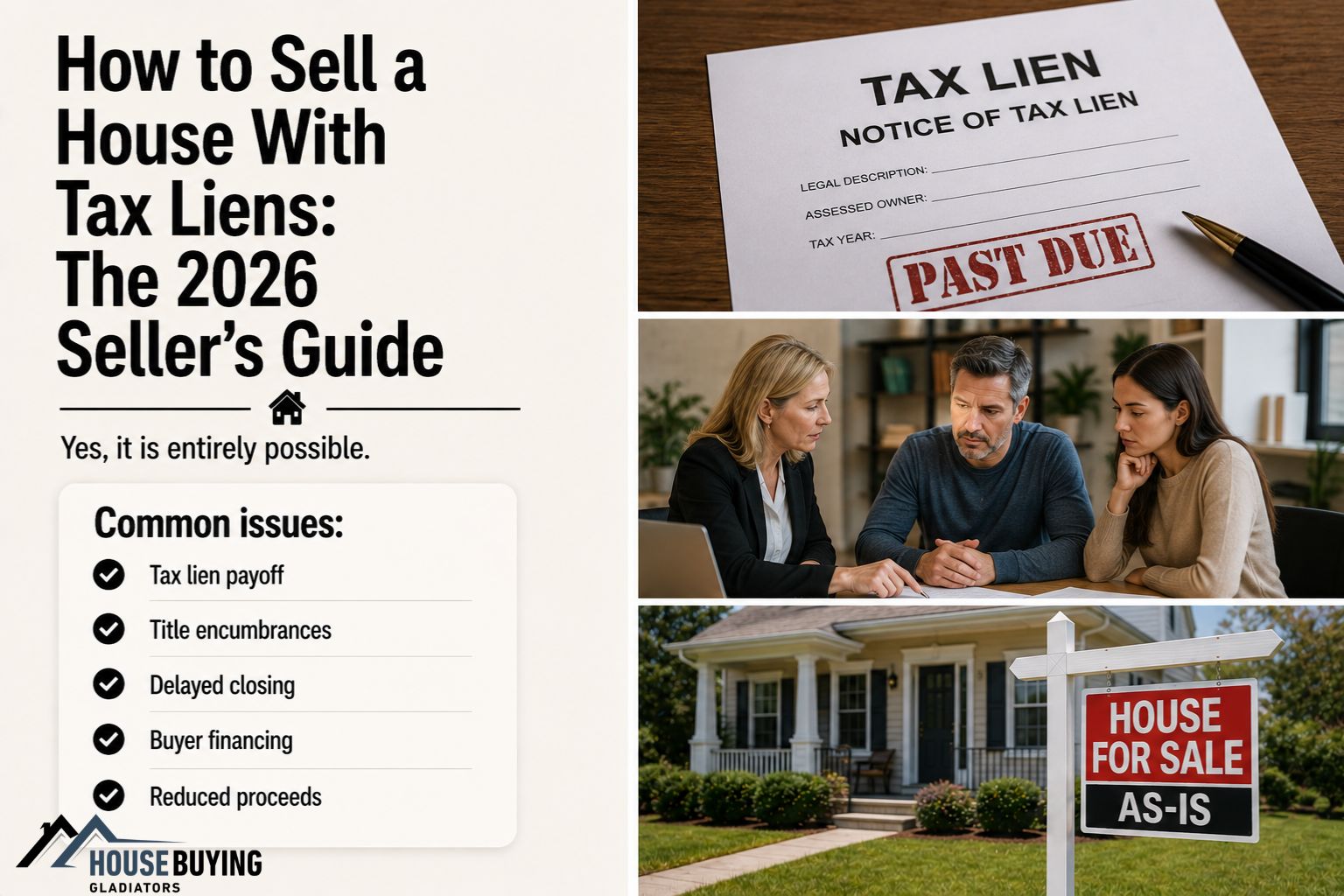
If you need to sell a house with tax liens attached to the title, the short answer is yes, it is entirely possible. Homeowners successfully navigate and close these transactions every single year.
However, a tax lien fundamentally alters the mechanics of your real estate transaction. It impacts your closing timeline, reshapes buyer psychology, complicates buyer financing, and directly reduces your net cash proceeds.
The core challenge of selling a property with a tax lien isn’t getting a buyer to fall in love with the home it’s proving to the title company and the lender that you can deliver a clear, unencumbered title at the closing table.
Can You Sell a House With Tax Liens?
The short answer is yes. You can absolutely sell a house with tax liens attached to the title because a lien does not freeze your legal right to market, list, or contract your property. Instead, it acts as a financial roadblock that must be addressed during escrow.
Distinguishing the Type of Tax Lien Matters
Before mapping out a sales strategy, you must identify who placed the cloud on your title. Different government entities require completely different resolution protocols:
- Municipal Property Tax Liens: These are placed by local county or city tax collectors. They hold super-priority status over almost all other liens, including your primary mortgage. They must be resolved to prevent a tax certificate sale or foreclosure.
- IRS Federal Tax Liens: Filed via a Notice of Federal Tax Lien (NFTL), these attach to all your personal and real property. Resolving these requires navigating formal federal administrative channels.
- State Income Tax Liens: Similar to federal liens, these are managed by your state’s Department of Revenue and must be cleared according to specific state statutes.
The Equity Litmus Test
The fundamental question you must answer before listing your home is not if you can sell, but how much equity you have.
The Golden Rule of Lien Sales: If the market value of your home is greater than the combined total of your primary mortgage balance, transaction fees, and the absolute payoff amount of the tax liens, the closing process can smoothly absorb and wipe out the debt.
What Happens to a Tax Lien During Closing?
In a standard real estate transaction, the seller does not typically write a personal check to the taxing authority prior to listing. Instead, the entire resolution takes place automatically within escrow.
[Property Listed] ➔ [Purchase Contract Signed] ➔ [Title Search Flags Lien] ➔ [Escrow Requests Official Payoff Letter] ➔ [Lien Paid via Seller Proceeds at Closing] ➔ [Clear Title Transferred]
The Legal Priority of Proceeds Distribution
Sellers occasionally assume they will receive the buyer’s funds directly and can then distribute payments to their creditors. Title companies and escrow attorneys operate under strict legal priority rules to ensure all encumbrances are legally wiped clean before the buyer takes ownership.
A standard settlement statement (ALTA sheet) processes funds in this precise order:
| Distribution Priority | Expense Item | Example Figures |
|---|---|---|
| Priority 1 | Primary Mortgage Payoff | $250,000 |
| Priority 2 | Super-Priority Municipal Property Tax Liens | $8,000 |
| Priority 3 | Federal/State Income Tax Liens & Judgments | $12,000 |
| Priority 4 | Transaction Fees (Agent Commissions, Escrow, Title Charges) | $18,000 |
| Priority 5 | Net Seller Proceeds (Remaining Equity) | $62,000 |
| Total | Contract Sale Price | $350,000 |
To understand how these closing costs interact with your final bottom line, you can model your potential net cash returns using our dedicated real estate seller net sheet calculator.
When Tax Liens Become a Serious Closing Obstacle
While high-equity sales are straightforward, serious operational bottlenecks arise when a property is “underwater” meaning the total debt exceeds the home’s market value.
The Underwater Capital Bottleneck
Consider this scenario: Your home is worth $300,000. Your mortgage balance is $270,000, and you owe $45,000 in IRS back taxes. Your total liability is $315,000 before factoring in standard closing costs.
Because the sale price cannot cover the debt, the title company cannot issue a clean title policy. If you attempt to sell a house with tax liens when your total equity is entirely wiped out by back taxes, you must either bring the shortage to the closing table out-of-pocket or pursue advanced administrative remedies.
IRS Certificate of Discharge
If you are dealing with a federal lien and face an equity shortage, you can submit IRS Publication 783. This formally requests a Certificate of Discharge of Property from Federal Tax Lien.
If approved, the IRS legally detaches the lien from the specific piece of real estate so it can be sold to a clean buyer, while the remaining tax debt hooks onto you personally or transfers to other assets. Navigating this bureaucratic maze takes time; learn exactly how to expedite this paperwork in our detailed walkthrough on how to navigate IRS property lien discharges.
How Tax Liens Affect Financing and Buyer Demand
A tax lien directly alters your buyer pool and dictates what type of offers you can realistically accept.
The Financed Buyer Hurdle
Conventional, FHA, and VA underwriters maintain zero-tolerance policies for unresolved clouds on titles. A traditional lender will not fund a mortgage if a pre-existing tax lien threatens their lien priority position. For a financed buyer, the transaction can only move forward if your title company guarantees the lien will be paid in full out of escrow on closing day.
The Strategic Cash Buyer Advantage
Because institutional financing guidelines create rigid timelines, many sellers with complex, multi-lien issues turn to real estate investors or cash buyers.
Cash buyers do not rely on underwriting approvals. While they still require a clean title policy to protect their equity, they possess the structural flexibility to structure advanced settlement terms, advance earnest money to stall a tax foreclosure, or wait out extended governmental approval delays. To evaluate whether this path suits your timeline, read our breakdown comparing traditional listings vs. selling to a cash cash home buyer.
Should You Pay the Tax Lien Before Listing?
Sellers frequently stress over whether they should deplete their liquid savings to wipe out a lien before putting a “For Sale” sign in the yard.
When to Pay Upfront
If the lien balance is small (e.g., less than $3,000) and you have ample cash reserves, clearing it prior to listing is highly advantageous. It eliminates the risk of an automated title flag scaring off cautious retail buyers and keeps the transaction friction-free. Once paid, ensure you secure a formal release document and verify it is recorded with your county clerk.
When to Pay Through Escrow
If your cash is tied up or the lien balance is substantial, it is smarter to let the closing proceeds handle it. This preserves your liquidity during the moving process.
To help map out your financial timeline, utilize our systematic home seller pre-listing checklist to determine if your specific financial profile warrants an upfront payment or an escrow settlement.
Critical Mistakes That Cost Lien Sellers Money
- Delaying the Payoff Request: Never rely on old notices from the IRS or county. Interest and administrative penalties accrue daily. Request an official, certified payoff statement from the taxing entity immediately upon entering escrow.
- Failing to Audit for Multiple Liens: Tax issues rarely happen in a vacuum. A property tax lien can easily overlap with contractor mechanics’ liens or state judgments. Run a proactive, preliminary title search to uncover hidden encumbrances early. For a complete guide on uncovering hidden title clouds, review our guide on how to run a preliminary title search.
- Hiding the Lien from Your Real Estate Agent: Total transparency with your listing agent and title officer is paramount. If they know about the lien on day one, they can draft specific clauses in the purchase agreement to account for extended government processing timelines, protecting you from breaching contract dates.
Frequently Asked Questions
No. A tax lien simply transforms into a mandatory payout line item on your closing settlement sheet. As long as your home’s sale price can completely cover the lien alongside your mortgage and closing fees, the transaction can move forward normally.
Yes, but you are operating against a strict clock. You can sell the home up until the exact moment the foreclosure auction concludes or the redemption period expires. A rapid cash sale is often deployed in these scenarios to salvage remaining equity.
If a title company missed a lien during your initial purchase, it becomes a matter for your Owner’s Title Insurance Policy. Your title insurer should step in to legally defend your title and resolve the financial claim without utilizing your funds. Read more about protecting your investment via our look at the importance of title insurance policies.
Yes, but the timelines vary. Federal IRS tax liens generally expire 10 years from the assessment date, though the IRS can choose to refile and extend them. Local property tax liens rarely expire; instead, municipalities will foreclose or sell the tax certificate long before any time limit runs out.
It depends on your state laws and how your deed is held. In community property states, a lien against one spouse usually attaches to the home. In other states, if the deed is held as Tenants by the Entirety, an individual lien against only one spouse often cannot block the sale.
Conclusion
Sell a house with tax liens is rarely as simple as listing the property and waiting for a buyer.
It often involves coordinating with lienholders, understanding payoff amounts, managing timelines, and evaluating how the lien will affect your final proceeds.
The good news is that a tax lien does not prevent you from selling it simply changes how the transaction is structured and where a portion of the proceeds will go.
By gathering accurate payoff information early, working with experienced professionals, and understanding your options, you can avoid surprises and move forward with greater confidence.
If it helps to better understand your situation, you can Get Your Cash Offer and explore your options privately without pressure or obligation.
At House Buying Gladiators, the goal is simple: help homeowners create clarity, resolve property challenges, and move forward with confidence.