Skip to content
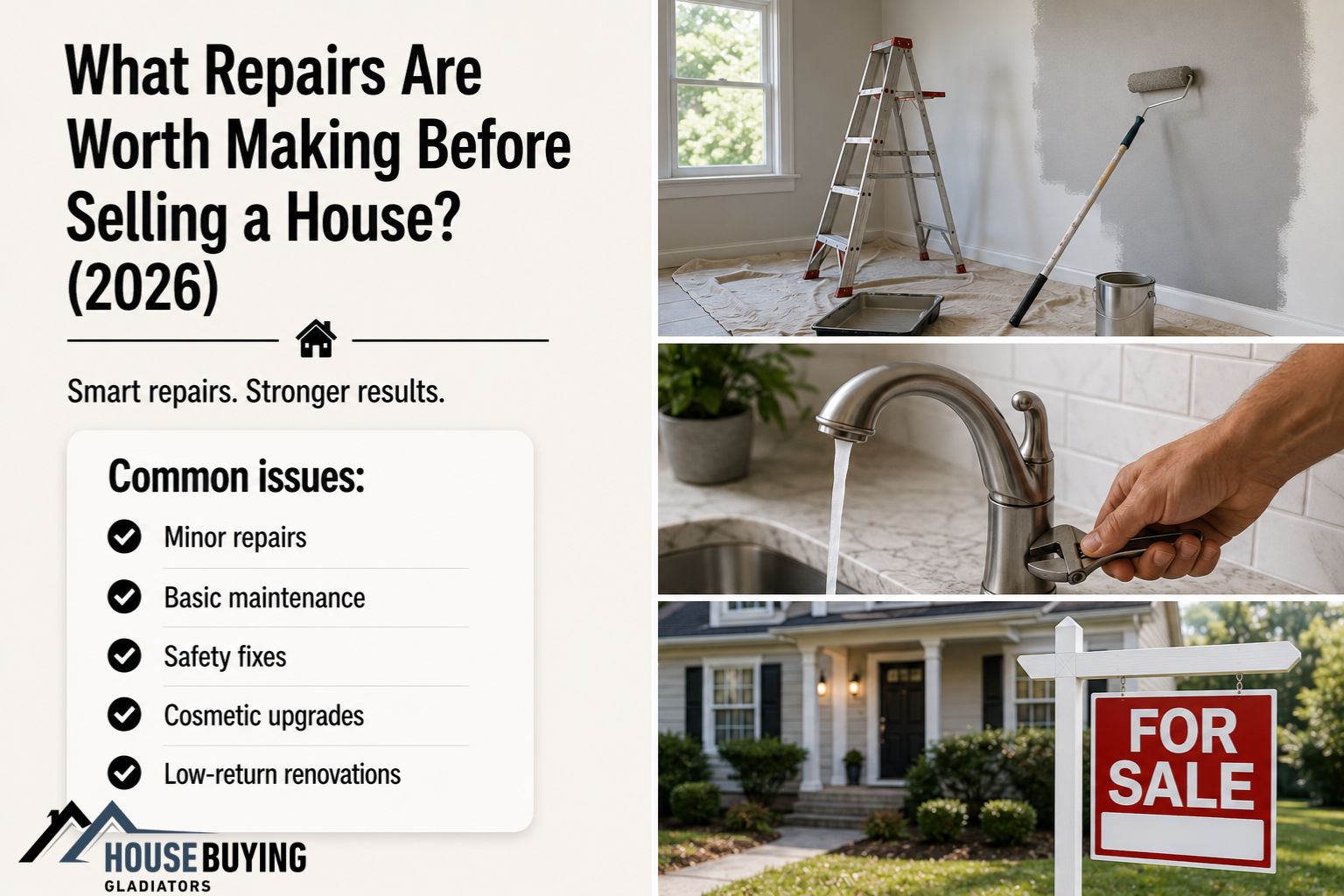
What repairs are worth making before selling a house? In many cases, minor repairs, basic maintenance, safety-related fixes, and cosmetic improvements provide the best return, while large renovation projects often deliver less value than homeowners expect.
Many homeowners assume they must repair everything before putting a property on the market.
However, that is not always the case.
A fresh coat of paint may improve buyer perception.
A small plumbing repair may eliminate concerns during an inspection.
Meanwhile, an expensive kitchen remodel or major renovation may not produce enough additional value to justify the cost.
As a result, one of the most important decisions homeowners face is determining which repairs are actually worth the investment.
Understanding the difference between high-impact repairs and low-return projects can help you avoid unnecessary expenses, reduce stress, and make more informed selling decisions.
What Repairs Are Worth Making Before Selling a House?
The repairs most often worth making before selling a house are those that improve safety, functionality, cleanliness, and first impressions without requiring a major financial investment.
Buyers generally focus on problems that affect their ability to live comfortably in the home.
Consequently, repairs that address obvious concerns often provide more value than expensive upgrades.
In many situations, the goal is not to create a perfect house.
Instead, the goal is to eliminate issues that may discourage buyers or complicate the transaction.
Why Homeowners Often Overestimate the Value of Repairs
Many homeowners assume every dollar spent on repairs will increase the home’s value, but that is rarely how buyers evaluate properties.
For example, spending $30,000 on renovations does not automatically increase a home’s value by $30,000.
Additionally, buyers often have different preferences regarding finishes, materials, and design choices.
As a result, homeowners sometimes invest heavily in upgrades that buyers neither expect nor fully value.
What matters most is whether the repair improves marketability, reduces buyer concerns, or helps the property compete more effectively with similar homes.
The Difference Between Necessary Repairs and Optional Upgrades
Necessary repairs address problems that may affect safety, financing, inspections, or buyer confidence, while optional upgrades are typically cosmetic improvements that are not required for a successful sale.
Understanding this distinction can prevent costly mistakes.
Necessary Repairs Often Include:
- Active roof leaks
- Unsafe electrical issues
- Major plumbing leaks
- Broken HVAC systems
- Safety hazards
- Water intrusion problems
These issues frequently attract attention during inspections and may affect financing eligibility.
Optional Upgrades Often Include:
- Luxury countertops
- High-end appliances
- Custom cabinetry
- Premium flooring upgrades
- Designer fixtures
Although these improvements may enhance appearance, they do not always provide a strong financial return.
Consequently, homeowners should evaluate whether the expected increase in value justifies the additional expense.
The Real Goal Before Selling
The goal is not necessarily to maximize the home’s condition. The goal is often to maximize the overall financial outcome.
Many homeowners focus exclusively on achieving the highest possible sale price.
However, repair costs, contractor delays, holding expenses, and project risks should also be considered.
For example:
- Property taxes continue.
- Insurance premiums continue.
- Utility bills continue.
- Maintenance expenses continue.
Meanwhile, renovation timelines often extend beyond original expectations.
As a result, the highest sale price does not always produce the highest net profit.
Understanding this concept is often the first step toward making smarter repair decisions before selling.
Should Every Homeowner Make Repairs Before Selling?
No. The right decision depends on the property’s condition, the homeowner’s budget, local market conditions, and overall goals.
For some homeowners, targeted repairs may improve marketability and create a stronger selling experience.
For others, the cost, effort, and delay associated with repairs may outweigh the potential benefits.
Consequently, evaluating each repair individually is often more effective than assuming every issue must be fixed before listing.
Repairs Worth Making Before Selling a House
The repairs most often worth making before selling a house are affordable improvements that address buyer concerns, improve first impressions, and help prevent issues during inspections.
Many homeowners assume they need a major renovation before listing their property.
However, smaller improvements often provide a better return with far less cost and risk.
As a result, focusing on practical repairs rather than extensive remodeling is often the smarter approach.
Minor Plumbing Repairs
Minor plumbing repairs are often worth making before selling a house because buyers frequently notice leaks, drips, and water-related problems.
Common examples include:
- Leaky faucets
- Running toilets
- Slow drains
- Minor pipe leaks
- Loose fixtures
Although these issues may seem small, they can create the impression that the property has been poorly maintained.
Consequently, addressing simple plumbing concerns often helps improve buyer confidence.
Minor Electrical Repairs
Basic electrical repairs are frequently worth making before selling because safety concerns can immediately raise red flags for buyers.
Examples include:
- Faulty outlets
- Broken switches
- Missing cover plates
- Non-functioning light fixtures
- Exposed wiring concerns
Additionally, electrical issues often attract attention during inspections.
As a result, resolving obvious problems may help prevent unnecessary negotiations later.
Paint Touch-Ups and Cosmetic Improvements
Fresh paint is often one of the most cost-effective repairs worth making before selling a house.
Paint can improve:
- First impressions
- Perceived cleanliness
- Brightness
- Overall presentation
Furthermore, neutral colors generally appeal to a wider range of buyers.
Unlike major renovations, paint projects often provide noticeable visual improvement without requiring a large investment.
Deep Cleaning
Deep cleaning is one of the most valuable and affordable improvements homeowners can make before selling.
Many buyers form opinions within minutes of entering a property.
Therefore, cleanliness often has a significant impact on buyer perception.
Areas that deserve attention include:
- Floors
- Bathrooms
- Kitchens
- Windows
- Baseboards
- Appliances
Additionally, removing odors can dramatically improve the overall impression of the home.
Basic Landscaping and Curb Appeal
Improving curb appeal is often worth the investment because buyers see the exterior before they see anything else.
Simple improvements may include:
- Mowing the lawn
- Trimming shrubs
- Removing weeds
- Cleaning walkways
- Refreshing mulch
- Removing debris
While these projects may seem minor, they often improve first impressions and encourage buyers to explore the property further.
Safety-Related Repairs
Safety issues are among the most important repairs worth making before selling a house because they can affect both buyer confidence and financing.
Examples include:
- Loose handrails
- Broken steps
- Missing smoke detectors
- Trip hazards
- Unsafe electrical issues
Additionally, safety concerns frequently appear in inspection reports.
Consequently, addressing obvious hazards may help reduce potential obstacles during the transaction.
HVAC Repairs
Minor HVAC repairs are often worth making before selling because buyers pay close attention to heating and cooling systems.
Common concerns include:
- Dirty filters
- Thermostat issues
- Poor airflow
- Minor maintenance problems
However, a complete system replacement is not always necessary.
As a result, homeowners should carefully evaluate whether major HVAC investments are likely to provide a reasonable return.
Roof Repairs
Minor roof repairs are often worth making before selling, while full roof replacement requires a more careful financial evaluation.
For example, addressing:
- Missing shingles
- Minor leaks
- Small maintenance issues
May improve buyer confidence without requiring a major investment.
However, replacing an entire roof may not always produce enough additional value to justify the expense.
Flooring Repairs
Simple flooring repairs are frequently worth making before selling a house because buyers immediately notice flooring condition.
Examples include:
- Damaged carpet sections
- Minor tile repairs
- Loose flooring
- Deep cleaning existing flooring
In contrast, replacing every floor in the house may not always provide a strong return.
Therefore, homeowners should compare improvement costs against potential value gains.
Repairs That Improve Buyer Confidence
The best repairs are often the ones that remove buyer concerns rather than dramatically increase property value.
Buyers generally want reassurance that:
- The home has been maintained.
- Major systems function properly.
- Safety concerns are limited.
- Expensive surprises are less likely.
Consequently, many of the repairs worth making before selling a house involve improving confidence rather than creating luxury upgrades.
What Most Buyers Actually Notice
Many homeowners focus on expensive projects.
However, buyers often notice:
- Cleanliness
- Maintenance
- Functionality
- Safety
- First impressions
As a result, relatively inexpensive improvements frequently influence buyer perception more than large-scale renovation projects.
Repairs Often Not Worth Making Before Selling a House
Some repairs and renovation projects cost far more than the value they add, making them poor investments before selling a house.
Many homeowners assume every improvement will increase their profit.
However, buyers rarely pay dollar-for-dollar for renovations.
As a result, some projects create significant expense without producing a meaningful financial return.
Understanding which repairs are often not worth making before selling a house can help homeowners avoid costly mistakes.
Full Kitchen Remodels
A complete kitchen remodel is often not worth making before selling a house because the cost frequently exceeds the additional value created.
Many homeowners believe a new kitchen guarantees a higher sale price.
However, buyers have different preferences regarding:
- Cabinets
- Countertops
- Appliances
- Layouts
- Finishes
Additionally, kitchen renovations often become more expensive than originally expected.
Consequently, minor updates frequently provide a better return than a full remodel.
Luxury Upgrades
Luxury improvements are rarely worth making before selling a house unless they align with buyer expectations in the local market.
Examples include:
- Premium appliances
- High-end fixtures
- Custom cabinetry
- Luxury flooring
- Designer finishes
Although these upgrades may look impressive, buyers often focus more on functionality and overall value.
As a result, expensive luxury improvements do not always increase offers enough to justify their cost.
Major Bathroom Renovations
Major bathroom renovations are often not worth making before selling because buyers rarely pay enough extra to recover the full investment.
For example:
- Custom tile work
- Luxury showers
- High-end vanities
- Extensive layout changes
May improve appearance but often provide limited financial return.
Instead, simple repairs and cosmetic improvements are frequently more practical.
Extensive Foundation Repairs
Foundation repairs may be necessary in some situations, but they are not always worth completing before selling.
Foundation work can be expensive.
Additionally, repair costs sometimes exceed the increase in property value.
As a result, homeowners should carefully evaluate:
- Repair estimates
- Expected value increases
- Timeline impacts
- Holding costs
Before proceeding.
This is one reason some homeowners choose to sell properties with foundation issues rather than fund major structural repairs.
Whole-Home Renovations
Large-scale renovations are often among the least predictable investments before selling a house.
Many homeowners begin renovation projects expecting substantial returns.
However, these projects frequently involve:
- Contractor delays
- Permit requirements
- Cost overruns
- Unexpected discoveries
Meanwhile:
- Property taxes continue.
- Insurance continues.
- Utility costs continue.
Consequently, extensive renovations often create more risk than expected.
Room Additions
Adding new living space is rarely worth making before selling because the project is expensive, time-consuming, and difficult to complete efficiently.
Room additions frequently involve:
- Construction costs
- Permit approvals
- Inspections
- Extended timelines
Furthermore, buyers may not value the addition as highly as the homeowner expects.
As a result, room additions are generally poor pre-sale investments.
How to Calculate Repair ROI Before Selling
Before making repairs, homeowners should compare the estimated cost against the likely increase in value and the impact on the selling timeline.
A simple framework includes:
Step 1
Estimate the repair cost.
Step 2
Estimate the potential increase in property value.
Step 3
Consider holding costs such as:
- Property taxes
- Insurance
- Utilities
- HOA fees
- Maintenance
Step 4
Evaluate the additional time required.
Only then can homeowners determine whether a repair is truly worth the investment.
Common Mistakes Homeowners Make
Trying to Fix Everything
Many sellers assume every issue must be addressed.
However, buyers rarely expect perfection.
Consequently, excessive repairs often reduce profitability.
Focusing Only on Sale Price
The highest sale price does not always produce the highest net outcome.
Repair costs, delays, and carrying expenses should also be considered.
Ignoring Holding Costs
Many homeowners calculate repair expenses but overlook the cost of continued ownership.
Meanwhile, taxes, insurance, and maintenance continue accumulating.
As a result, waiting may become more expensive than expected.
Choosing Upgrades Based on Personal Taste
What appeals to one homeowner may not appeal to a buyer.
Therefore, highly personalized upgrades often provide limited value.
Should You Repair or Sell As-Is?
The answer depends on the property’s condition, available budget, timeline goals, and expected return on investment.
For some homeowners, targeted repairs make sense.
For others, selling without completing major projects may provide a better overall outcome.
Homeowners comparing as-is selling options sometimes review companies such as We Buy Ugly Houses, which specializes in purchasing properties that require repairs or updates.
Important considerations include:
- Repair costs
- Property condition
- Market conditions
- Available cash
- Timeline goals
- Holding costs
Ultimately, the goal is not simply to increase value.
The goal is to maximize the overall financial outcome.
The Question Every Homeowner Should Ask
Instead of asking:
“What repairs can I make?”
A better question is:
“What repairs are worth making before selling a house?”
That distinction often prevents unnecessary spending and leads to better financial decisions.
The best repairs are usually the ones that improve buyer confidence, address obvious concerns, and provide meaningful value without creating excessive cost or delay.
Frequently Asked Questions About Repairs Before Selling a House
Minor repairs, safety-related fixes, basic maintenance, paint touch-ups, deep cleaning, and curb appeal improvements are often worth making before selling a house because they can improve buyer confidence without requiring a major investment.
No. Most homeowners do not need to repair everything before selling. Instead, it is often more effective to focus on issues that affect safety, functionality, inspections, or buyer perception.
It depends. Foundation repairs can be expensive, and the increase in value does not always exceed the cost. Homeowners should compare repair estimates, timeline impacts, and potential returns before proceeding.
Not always. Minor roof repairs are often worth making before selling a house, but a complete roof replacement may not provide enough additional value to justify the expense.
Usually not. Full kitchen remodels are among the most expensive projects homeowners undertake, and buyers rarely pay enough extra to recover the entire investment.
Yes. Fresh paint is often one of the most affordable and effective improvements homeowners can make before listing a property.
Buyers typically pay the most attention to roofing, foundation issues, plumbing, electrical systems, HVAC performance, water damage, and safety concerns.
Trying to fix everything is one of the most common mistakes. In many cases, homeowners spend money on projects that provide little financial return.
It depends. If repairs are affordable and likely to increase value more than they cost, they may be worthwhile. However, selling as-is may be the more practical option in some situations.
A repair is generally worth considering if it improves marketability, reduces buyer concerns, helps prevent inspection issues, and costs less than the value it is expected to add.
Related Resources
If you’re deciding whether to make repairs before selling, these guides may also help:
- How to Sell a House That Needs Repairs
- Sell House Without Repairs Texas: Is Fixing It Worth It? (2026)
- Selling a House As-Is in Texas
- How Fast Can You Sell a House As-Is? (2026)
- Sell Distressed Property Texas: What Are Your Options? (2026)
- How Long Does It Take to Sell a House?
- Sell Inherited House Texas (2026): What Heirs Need to Know
- Texas Probate Guide (2026): What Families Need to Know
Final Thoughts
Understanding what repairs are worth making before selling a house can help homeowners avoid unnecessary expenses and make more informed financial decisions.
While some repairs improve buyer confidence and help properties show better, others may cost far more than the value they ultimately add.
Additionally, every situation is different.
Some homeowners have the time and budget to complete targeted improvements.
Others may be dealing with financial pressure, inherited property, relocation, major repairs, or timeline constraints that make extensive projects impractical.
As a result, the best approach is often to evaluate each repair based on its potential return, cost, risk, and impact on the selling timeline.
Ultimately, the goal is not simply to spend money on improvements.
Instead, the goal is to maximize your overall outcome while avoiding projects that create unnecessary expense or delay.
Explore Your Options
If you’re unsure whether repairs are worth the investment, gathering information early can provide valuable clarity.
There is no pressure to make an immediate decision.
However, understanding repair costs, potential returns, holding expenses, and selling alternatives can help you move forward with greater confidence.
If you’d like to explore your options further, you can Get Your Cash Offer and compare potential outcomes without obligation.