Skip to content
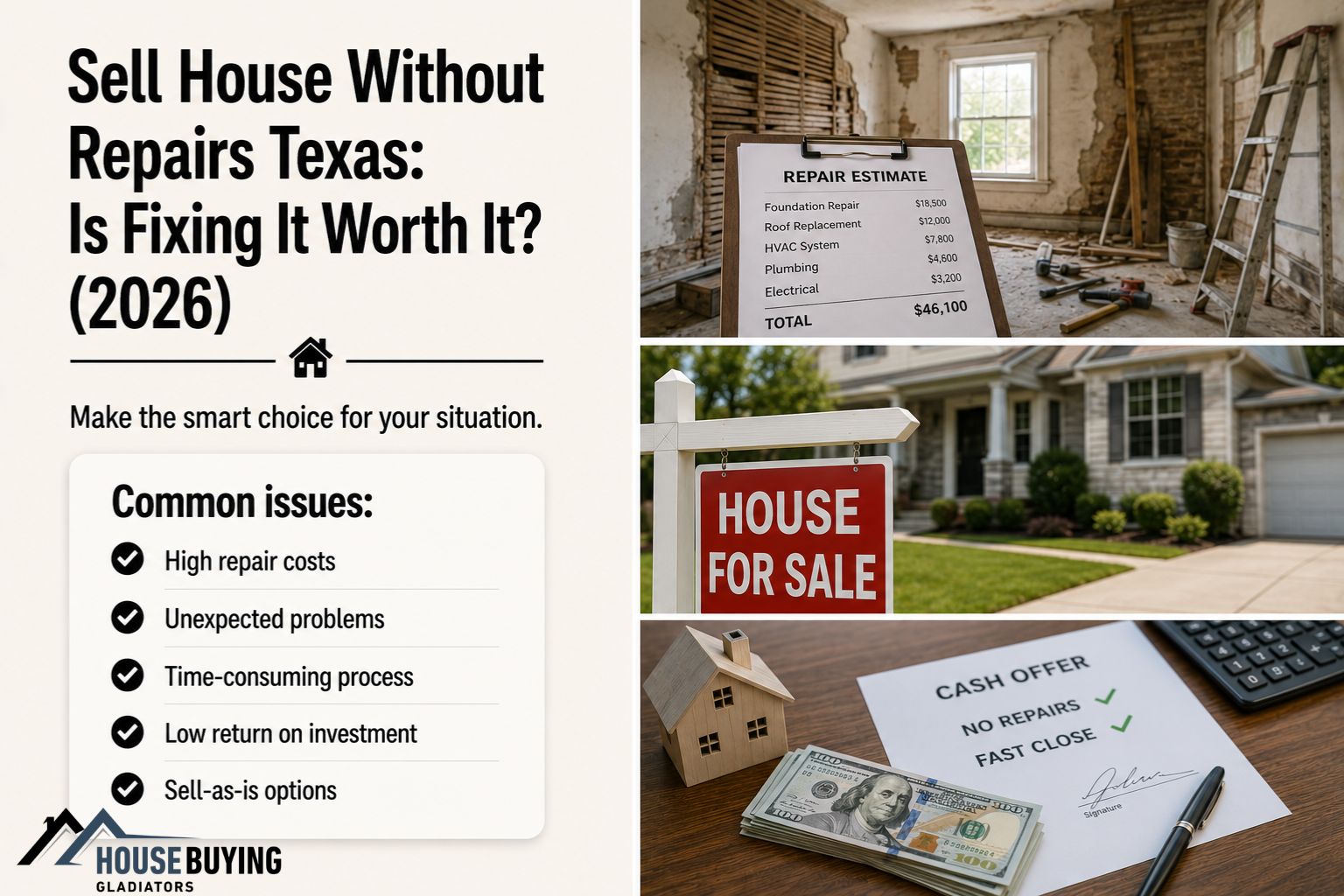
If you’re trying to sell house without repairs Texas property, you’re probably facing a difficult decision: spend money fixing the home or sell it in its current condition.
For many homeowners, repairs seem like the obvious first step.
Then the estimates arrive.
A foundation repair costs thousands of dollars.
The roof needs replacement.
An HVAC system fails.
A plumbing issue reveals additional problems behind the walls.
Suddenly, what looked like a manageable project becomes a major financial commitment.
In many cases, homeowners discover that repairing a property is not the only option. Understanding the true costs, timelines, and alternatives can help you determine whether fixing the house is actually worth it.
Can You Sell a House Without Repairs in Texas?
Yes. Homeowners can sell a house without repairs in Texas. Many properties are sold in their current condition, even when they have significant repair needs or deferred maintenance.
A common misconception is that every house must be fully repaired before it can be sold.
However, buyers purchase homes with issues every day.
For example, properties may have:
- Foundation problems
- Roof damage
- Plumbing issues
- Electrical concerns
- Water damage
- Outdated interiors
- Deferred maintenance
Additionally, some buyers specifically look for homes that need work.
As a result, the decision often becomes less about whether you can sell and more about whether making repairs makes financial sense.
Why Homeowners Sell a House Without Repairs in Texas
Many homeowners choose to sell without repairs because renovation costs, contractor delays, financial limitations, and life circumstances make repairs impractical.
Every situation is different.
However, several challenges commonly lead homeowners to explore selling without making repairs.
Major Repair Costs
Large repair projects often cost significantly more than expected.
Furthermore, contractor estimates frequently increase once work begins.
What starts as a simple project can quickly become a much larger financial commitment.
Financial Pressure
Some homeowners simply do not have the extra cash needed for repairs.
Meanwhile, mortgage payments, taxes, insurance premiums, and other expenses continue.
As a result, investing additional money into the property may not feel realistic.
Job Relocation
A new job opportunity may require moving quickly.
In these situations, homeowners often prioritize speed and convenience over managing lengthy renovation projects.
Divorce Situations
Selling a house during divorce frequently involves emotional and financial decisions.
Additionally, coordinating repair projects may add unnecessary complexity to an already difficult situation.
Inherited Properties
Inherited homes often require repairs that accumulated over many years.
For example, heirs may discover outdated systems, deferred maintenance, or major structural concerns after taking ownership.
Consequently, many families compare repair costs against the benefits of selling the property in its current condition.
Vacant Properties
Vacant homes create ongoing responsibilities even when nobody lives there.
Property taxes continue.
Insurance continues.
Maintenance continues.
Meanwhile, the property may continue deteriorating.
For this reason, many owners prefer not to invest additional time and money into major repairs.
What Most Homeowners Don’t Realize About Repairs
The cost of repairs often extends beyond the contractor’s estimate. Delays, holding costs, permits, and unexpected discoveries frequently increase the true cost of a project.
Many homeowners focus only on the quoted repair cost.
However, renovations often involve additional expenses such as:
- Permit fees
- Temporary housing
- Utility costs
- Property taxes
- Insurance
- Contractor delays
- Material price increases
Additionally, repair projects frequently uncover hidden problems.
For example, replacing damaged flooring may reveal subfloor issues.
A roof replacement may uncover water damage.
A plumbing repair may expose additional leaks.
As a result, the final cost often exceeds the original estimate.
Is Fixing the House Always the Best Financial Decision?
Not necessarily. Some repairs increase value, while others cost more than the additional value they create.
Many homeowners assume repairs automatically produce higher profits.
However, that is not always true.
For example:
- Repair Cost: $25,000
- Expected Value Increase: $15,000
Although the property may sell for more, the owner could still spend more than they recover.
Additionally, the project may add weeks or months to the selling timeline.
Consequently, evaluating the return on investment is often more important than simply focusing on the final sale price.
The Real Question Isn’t “Can I Sell Without Repairs?”
The real question is whether spending money on repairs will improve your overall financial outcome after accounting for costs, risks, and delays.
For some homeowners, repairs make perfect sense.
For others, they simply create additional expense and stress.
What most homeowners discover is that the best decision depends on:
- Property condition
- Repair costs
- Available cash
- Timeline goals
- Market conditions
- Personal circumstances
Ultimately, understanding all available options often leads to better decisions than automatically assuming repairs are required.
Common Repairs Before You Sell a House Without Repairs in Texas
Foundation problems, roof replacement, HVAC failure, plumbing issues, electrical upgrades, and water damage are among the most expensive repairs homeowners commonly encounter.
Many homeowners begin gathering repair estimates expecting manageable costs.
Unfortunately, major systems often cost significantly more than anticipated.
Additionally, repair projects frequently uncover hidden issues that increase both expenses and timelines.
As a result, understanding potential repair costs is often an important step before deciding whether to renovate or sell without repairs.
Foundation Repair Costs
Foundation repairs are often among the most expensive home repairs and can significantly affect both property value and buyer financing.
Problems may include:
- Cracks in walls
- Uneven floors
- Sticking doors
- Structural movement
- Settlement issues
For many homeowners, foundation concerns create immediate stress because the repair costs can be substantial.
Additionally, foundation repairs often require specialized contractors and engineering evaluations.
What most homeowners don’t realize is that foundation issues may also affect inspections, appraisals, and financing eligibility.
Consequently, some owners choose to compare repair costs against selling the property in its current condition.
Roof Replacement Costs
Roof replacement is one of the most common major expenses homeowners face before selling a property.
Problems frequently involve:
- Missing shingles
- Storm damage
- Leaks
- Water intrusion
- Aging materials
Furthermore, buyers often pay close attention to roofing conditions during inspections.
As a result, roof concerns can influence both buyer interest and financing approval.
For some homeowners, investing in a new roof may make sense.
However, others discover that the cost outweighs the potential increase in value.
Plumbing Problems
Plumbing repairs can range from relatively minor fixes to major projects involving pipe replacement, sewer lines, or extensive water damage.
Common plumbing concerns include:
- Leaking pipes
- Sewer line issues
- Water pressure problems
- Drainage concerns
- Fixture failures
Additionally, plumbing issues often remain hidden until inspections occur.
Consequently, repair costs sometimes become much larger than homeowners initially expected.
Electrical Issues
Electrical problems can create safety concerns, financing obstacles, and expensive upgrade requirements.
Common electrical issues include:
- Outdated wiring
- Unsafe panels
- Faulty circuits
- Insufficient electrical capacity
- Code-related concerns
Furthermore, many older homes contain electrical systems that no longer meet modern standards.
As a result, upgrades may become necessary before certain buyers can obtain financing.
HVAC Replacement
Heating and cooling system replacement is another repair that can significantly affect selling decisions.
Buyers frequently evaluate:
- Air conditioning systems
- Furnaces
- Heat pumps
- Ductwork
- System age
Additionally, HVAC failures often occur unexpectedly.
Consequently, homeowners may face a difficult choice between investing in a replacement system or selling without completing the repair.
Water Damage and Moisture Problems
Water damage often becomes more expensive than homeowners expect because the visible damage is not always the full extent of the problem.
Common causes include:
- Roof leaks
- Plumbing leaks
- Flooding
- Drainage issues
- Appliance failures
Additionally, water intrusion can affect:
- Flooring
- Drywall
- Insulation
- Structural components
As a result, repair projects frequently expand once contractors begin investigating the source of the damage.
Mold Remediation
Mold problems often require specialized treatment and can create additional concerns for both buyers and lenders.
In many cases, mold develops after:
- Water damage
- Roof leaks
- Plumbing failures
- Long-term moisture exposure
Furthermore, remediation costs vary significantly depending on the severity of the problem.
For this reason, many homeowners evaluate whether remediation costs justify delaying a sale.
Which Repairs Are Usually Worth Fixing?
The best repairs are often those that improve marketability without requiring major financial investment.
In many cases, smaller improvements provide a better return than large renovation projects.
Examples may include:
- Basic cleaning
- Paint touch-ups
- Minor landscaping
- Safety-related fixes
- Simple cosmetic improvements
Additionally, these projects typically involve less risk than major structural repairs.
Consequently, homeowners often achieve a better balance between cost and potential value.
Which Repairs Are Often Not Worth Fixing?
Some major repairs cost more than the value they ultimately add to the property.
Examples may include:
- Extensive foundation work
- Major structural reconstruction
- Complete home renovations
- Large-scale remodeling projects
- Significant deferred maintenance projects
However, every property is different.
Therefore, homeowners should compare estimated repair costs against the likely increase in property value before moving forward.
The Hidden Costs of Waiting for Repairs
Repair costs are only part of the equation. Holding costs often continue while projects are underway.
Meanwhile, homeowners may continue paying:
- Property taxes
- Insurance premiums
- Mortgage payments
- Utility bills
- HOA fees
- Maintenance expenses
Additionally, contractor delays can extend project timelines far beyond original expectations.
As a result, waiting for repairs sometimes becomes more expensive than homeowners initially realize.
What Most Homeowners Discover
Many homeowners start by asking:
“How much will the repairs cost?”
However, the more important question is often:
“Will the repairs increase my overall profit enough to justify the expense, risk, and delay?”
In many cases, the answer depends on the property’s condition, local market conditions, available cash, and personal goals.
Consequently, understanding all available selling options becomes just as important as understanding the repairs themselves.
How Much Do Repairs Cost in Texas?
Repair costs vary widely depending on the issue involved. While some repairs may cost a few hundred dollars, major projects can quickly reach tens of thousands of dollars.
Many homeowners begin by requesting contractor estimates.
However, the initial estimate is often only part of the total cost.
Additionally, labor shortages, material costs, permit requirements, and unexpected discoveries frequently increase expenses.
Common repair categories include:
| Repair Type | Typical Cost Range |
|---|---|
| Minor Cosmetic Repairs | Low |
| Paint & Flooring Updates | Low to Moderate |
| HVAC Repairs | Moderate |
| Plumbing Repairs | Moderate |
| Electrical Upgrades | Moderate to High |
| Roof Replacement | High |
| Foundation Repairs | High |
| Major Water Damage | High |
What most homeowners don’t realize is that holding costs often continue while repairs are underway.
As a result, the true cost of renovation may be significantly higher than the contractor’s estimate alone.
Is Fixing the House Worth the Cost?
It depends. The best decision often comes down to whether the expected increase in value exceeds the total cost, risk, and delay associated with the repairs.
Many homeowners assume repairs automatically increase profits.
However, that is not always the case.
For example:
Scenario A
- Repair Cost: $15,000
- Potential Value Increase: $25,000
In this situation, repairs may make financial sense.
Scenario B
- Repair Cost: $35,000
- Potential Value Increase: $20,000
In this situation, repairs may actually reduce the seller’s overall financial outcome.
Additionally, homeowners must consider:
- Contractor delays
- Financing risks
- Market changes
- Holding costs
- Unexpected repair discoveries
Consequently, the highest sale price does not always produce the highest net profit.
Selling Option #1: List With an Agent After Repairs
A traditional listing after repairs may provide maximum market exposure, but it often requires the greatest investment of time, money, and effort.
Potential advantages include:
- Broad buyer exposure
- Improved marketability
- Potentially higher sale price
However, homeowners should also consider:
- Repair expenses
- Contractor management
- Showings
- Inspections
- Appraisals
- Financing contingencies
As a result, this option frequently involves the longest timeline.
Selling Option #2: List As-Is
Many homeowners choose to list their property without completing major repairs and allow buyers to evaluate the home in its current condition.
This option may appeal to sellers who want:
- Broader market exposure
- Reduced repair costs
- More flexibility
However, buyers may still request inspections and negotiate based on the property’s condition.
Consequently, sellers should prepare for repair-related discussions during the transaction.
For additional information, see our guide on Selling a House As-Is in Texas.
Selling Option #3: Sell Directly
Some homeowners prioritize simplicity, certainty, and reducing responsibilities rather than maximizing every possible dollar.
Direct sales often reduce:
- Repair obligations
- Contractor involvement
- Showings
- Appraisal concerns
- Financing delays
Additionally, the process may be significantly faster than completing renovations and listing traditionally.
For homeowners facing difficult circumstances, convenience sometimes becomes a major factor in the decision.
Homeowners comparing direct-sale options sometimes review companies such as We Buy Ugly Houses, which specializes in purchasing homes that require repairs or updates.
Options to Sell a House Without Repairs in Texas
| Option | Speed | Upfront Costs | Effort Required |
|---|---|---|---|
| Agent After Repairs | Slow | High | High |
| List As-Is | Moderate | Low | Moderate |
| Sell Directly | Fast | Low | Low |
There is no universally correct choice.
Instead, the best option depends on your goals, finances, timeline, and property condition.
Common Mistakes Homeowners Make
Waiting Too Long
Many homeowners postpone decisions while hoping conditions improve.
Meanwhile:
- Taxes continue
- Insurance continues
- Maintenance continues
- Deterioration continues
As a result, delays often become expensive.
Underestimating Repair Costs
Additionally, initial estimates frequently increase once projects begin.
What appears to be a straightforward repair sometimes uncovers larger problems.
Hiring Contractors Before Evaluating Alternatives
In some cases, homeowners commit to major repair projects before comparing all available selling options.
Consequently, they may spend money that ultimately provides little financial benefit.
Focusing Only on Sale Price
Finally, the highest sale price does not always produce the best financial outcome.
Repair costs, holding costs, delays, commissions, and other expenses should also be considered.
How to Decide Whether to Sell a House Without Repairs in Texas
There is no single solution that works for every homeowner.
Instead, the best choice depends on your circumstances.
If Maximizing Sale Price Is Your Priority
A traditional listing after repairs may provide the greatest opportunity for market exposure.
However, it also requires the largest investment of time and money.
If Repairs Exceed Your Budget
Selling without completing repairs may reduce financial pressure and eliminate the need for major upfront expenses.
If Time Matters Most
Job relocations, financial hardship, inherited properties, and other situations sometimes make speed a priority.
In these cases, reducing delays may become more important than maximizing every possible dollar.
If the Property Is Inherited
Many heirs prefer not to invest significant money into repairs before selling.
For additional guidance, see our Sell Inherited House Texas guide.
If the Property Has Been Vacant
Vacant homes often create ongoing expenses and maintenance concerns.
Consequently, some homeowners prefer to reduce holding costs rather than fund major renovations.
The Question Most Homeowners Should Ask
Instead of asking:
“Can I afford the repairs?”
A better question is often:
“Will the repairs improve my overall outcome enough to justify the cost, risk, and delay?”
For many homeowners, that question ultimately determines whether repairing the property makes sense.
Frequently Asked Questions About Selling a House Without Repairs in Texas
Yes. Most homes can be sold without completing repairs first. Buyers often consider the property’s condition when determining their offer.
It depends. If repairs are costly or time-consuming, selling as-is may be the simpler option for many homeowners.
Possibly. However, avoiding repair costs, holding expenses, and contractor delays can help offset a lower sale price.
Selling the property in its current condition is often the fastest approach. This avoids lengthy renovation projects and repair timelines.
Yes. Homes with foundation issues are sold regularly. However, the condition may affect buyer interest and property value.
Yes. Many buyers purchase homes with roof damage or structural concerns. The property’s condition is usually reflected in the offer.
Foundation, roofing, plumbing, electrical, and HVAC issues typically have the greatest impact on buyer decisions and financing.
Possibly. Property taxes, insurance, utilities, maintenance costs, and additional deterioration can increase expenses over time.
Delaying decisions is one of the most common mistakes. Repair issues often become more expensive the longer they remain unresolved.
Yes. Most buyers still order inspections to better understand the property’s condition and potential repair costs before closing.
Final Thoughts
Selling a house without repairs in Texas is often a financial decision, not just a real estate decision.
While some repairs may increase value, others can create significant expenses, delays, and uncertainty without providing a meaningful return.
Additionally, every situation is different.
Some homeowners have the time, budget, and desire to complete renovations. Others are dealing with inherited property, financial pressure, relocation, divorce, vacant homes, or major repair concerns that make renovations impractical.
What most homeowners discover is that the best decision is not always the one that produces the highest sale price.
Instead, the best decision is often the one that produces the strongest overall outcome after considering repair costs, holding expenses, timeline, effort, and personal circumstances.
Understanding all available options can help reduce uncertainty and make the decision-making process much easier.
Explore Your Options
If you’re trying to decide whether repairing your property makes financial sense, gathering information early can provide valuable clarity.
There is no pressure to make an immediate decision.
However, understanding potential repair costs, timelines, selling options, and financial trade-offs can help you move forward with greater confidence.
If you’d like to explore your options further, you can Get Your Cash Offer and compare potential outcomes without obligation.