Skip to content
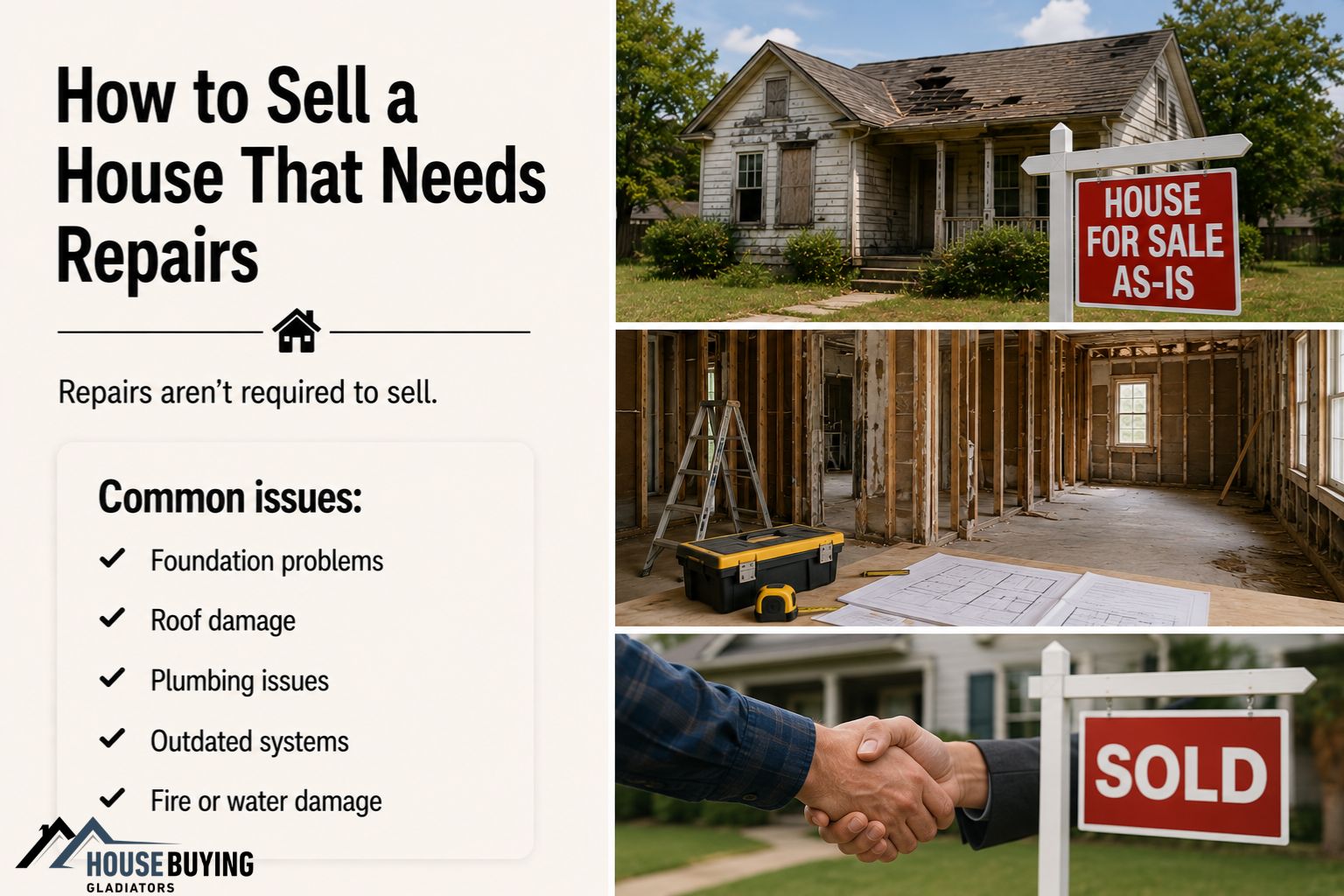
How to sell a house that needs repairs becomes a pressing question when every contractor estimate feels bigger than the last and every unfinished project creates more stress than progress.
Many homeowners reach a point where they no longer want to manage repairs, coordinate contractors, or invest more money into a property that already feels overwhelming.
The good news is that needing repairs does not prevent you from selling a home.
In fact, thousands of homeowners sell properties every year with foundation issues, roof damage, plumbing problems, outdated systems, fire damage, water damage, or unfinished renovations.
The key is understanding your options before spending money that may never be fully recovered.
This guide explains how to sell a house that needs repairs, when repairs make sense, when they don’t, and how to determine the best path forward based on your specific situation.
Can You Sell a House That Needs Repairs?
Yes, you can sell a house that needs repairs. Most homeowners are not required to complete repairs before selling. Depending on the property’s condition, sellers may choose to make improvements, sell as-is on the open market, or sell directly to a buyer willing to purchase the property in its current condition.
Many homeowners assume a house must be in perfect condition before it can be sold.
That simply isn’t true.
Buyers purchase homes with repair needs every day. Some buyers are looking for renovation projects, some are investors, and others are willing to complete repairs themselves after closing.
The best strategy depends on:
- repair costs
- available equity
- local market conditions
- timeline
- financial goals
- stress level
Common Reasons Homeowners Sell Houses That Need Repairs
Every situation is different.
However, certain scenarios appear repeatedly.
Inherited Properties
Many inherited homes have deferred maintenance, outdated systems, or years of accumulated repairs.
For example, a homeowner inherited a property that had been vacant for nearly two years. Between property taxes, insurance premiums, lawn maintenance, and needed repairs, the holding costs continued growing every month.
Rather than invest thousands into renovations, the family chose to sell the property in its existing condition.
Major Structural Issues
Foundation movement, roof damage, plumbing failures, and electrical problems often create repair costs that exceed homeowner expectations.
Additionally, what most homeowners don’t realize is that a single major repair frequently reveals additional hidden issues once work begins. As a result, repair costs and project timelines can increase quickly.
Divorce Situations
Selling a property that needs repairs during a divorce can become especially complicated when both parties disagree about renovation costs, timelines, or pricing strategies.
In many cases, simplifying the process becomes more important than maximizing every possible dollar.
Financial Hardship
Unexpected job loss, medical expenses, rising debt, or other financial challenges can make large repair projects unrealistic.
When resources become limited, preserving financial stability often takes priority over completing renovations.
Vacant Homes
Vacant properties create ongoing expenses while generating no benefit.
Insurance, taxes, utilities, landscaping, maintenance, and security concerns continue regardless of whether anyone is living there.
Should You Repair the House Before Selling?
Not always. Repairs only make sense when the expected increase in value exceeds the total cost, time, stress, and risk involved. Many homeowners discover that extensive repairs produce smaller returns than anticipated.
This is one of the most important decisions sellers face.
Many assume:
More repairs automatically mean more profit.
Unfortunately, real-world results are rarely that simple.
Consider:
- contractor delays
- permit requirements
- financing costs
- holding costs
- unexpected repair discoveries
- market changes during renovations
Every additional month spent repairing a property creates additional carrying costs.
Average Repair Costs Homeowners Often Face
| Repair Type | Typical Cost Range |
|---|---|
| Foundation Repair | $5,000–$20,000+ |
| Roof Replacement | $8,000–$25,000+ |
| HVAC Replacement | $5,000–$12,000+ |
| Plumbing Repairs | $2,000–$15,000+ |
| Electrical Upgrades | $2,000–$10,000+ |
| Water Damage Restoration | $3,000–$20,000+ |
| Mold Remediation | $2,000–$15,000+ |
Actual costs vary significantly based on property size, severity of damage, labor costs, and local market conditions.
Selling Options for a House That Needs Repairs
Homeowners generally have three primary options: repair the property before selling, list it as-is with an agent, or sell directly to a buyer willing to purchase the property in its current condition.
Option 1: Complete Repairs Before Selling
Potential advantages:
- broader buyer pool
- potentially higher list price
- improved presentation
Potential disadvantages:
- significant upfront costs
- project delays
- uncertain return on investment
Option 2: List the House As-Is
An as-is listing allows buyers to understand that repairs will not be completed before closing.
This option often attracts:
- investors
- cash buyers
- renovation-focused purchasers
Option 3: Sell Directly
Some homeowners prioritize speed, certainty, and simplicity.
Direct sales can eliminate many of the traditional steps involved in listing a property, although offers may differ from fully renovated retail market values.
Homeowners exploring direct-sale options sometimes compare companies such as We Buy Ugly Houses, which specializes in purchasing homes that need repairs.
For example, some companies specialize in purchasing homes that need repairs, allowing sellers to compare the potential costs, timelines, and risks of renovation against selling the property in its current condition.
How Long Does It Take to Sell a House That Needs Repairs?
The answer depends on:
- property condition
- pricing strategy
- local demand
- buyer financing
- inspection findings
A fully renovated property may attract more buyers.
However, lengthy repair projects can add months before the home even reaches the market.
In some situations, selling without completing repairs may actually produce a faster overall timeline.
Common Mistakes Homeowners Make
Several mistakes frequently increase financial and emotional pressure.
Waiting Too Long
Many homeowners postpone decisions while hoping circumstances improve.
Meanwhile:
- taxes continue
- insurance continues
- maintenance continues
- deterioration continues
Underestimating Repair Costs
Additionally, initial estimates frequently increase once projects begin.
Hiring Contractors Before Evaluating Alternatives
In some cases, homeowners commit to large repair projects before comparing the financial outcome of selling without repairs.
Focusing Only on Sale Price
Finally, the highest sale price does not always produce the highest net outcome after accounting for repairs, carrying costs, commissions, and delays.
A Simple Decision Framework
If repair costs are manageable and likely to produce a strong return, renovations may make sense.
If repair costs are significant, timelines are uncertain, or financial pressure is increasing, exploring as-is selling options may be the more practical choice.
Ask yourself:
- How much will repairs realistically cost?
- How long will repairs take?
- Can I comfortably afford unexpected overruns?
- What are my monthly holding costs?
- How important is speed?
- How much stress am I willing to take on?
The answers usually reveal the most practical path forward.
Frequently Asked Questions About How to Sell a House That Needs Repairs
Yes. Most houses can be sold even if they need significant repairs. Buyers often factor repair costs into their offers rather than requiring repairs beforehand.
Yes. Buyers can still conduct inspections when purchasing a property. Inspections help identify repair costs and potential issues before closing.
Yes. Homes with foundation issues are sold every day. However, foundation problems can affect property value, financing, and buyer interest.
Yes. Many buyers purchase homes with roof damage or structural issues. However, these problems can affect the property’s value and buyer interest.
Foundation, structural, roofing, plumbing, electrical, and HVAC issues typically matter most to buyers. These problems often have the greatest impact on property value and financing.
Possibly. However, repair costs, holding expenses, and potential delays should also be considered when comparing your options.
It depends. If repairs are likely to increase value, they may be worthwhile. In some cases, selling as-is can be the simpler option.
Selling without completing repairs is often the fastest option. It eliminates renovation delays, contractor scheduling, and additional project timelines.
Possibly. Property taxes, insurance, maintenance costs, and continued deterioration can increase expenses over time.
Delaying decisions is one of the most common mistakes. Repair costs and holding expenses often continue growing while homeowners wait.
Final Thoughts
Selling a house that needs repairs can feel overwhelming, especially when contractor estimates, unexpected issues, and financial pressures continue to add up.
What many homeowners discover is that there is rarely a single “right” solution.
The best choice depends on your timeline, financial situation, property condition, and long-term goals.
Before investing significant money into repairs, take time to compare all available options. Understanding the true cost of repairs, holding expenses, and potential delays can provide valuable clarity about your next step.
If it helps to explore your options, you can Get Your Cash Offer and compare what moving forward could look like without pressure or obligation.