Skip to content
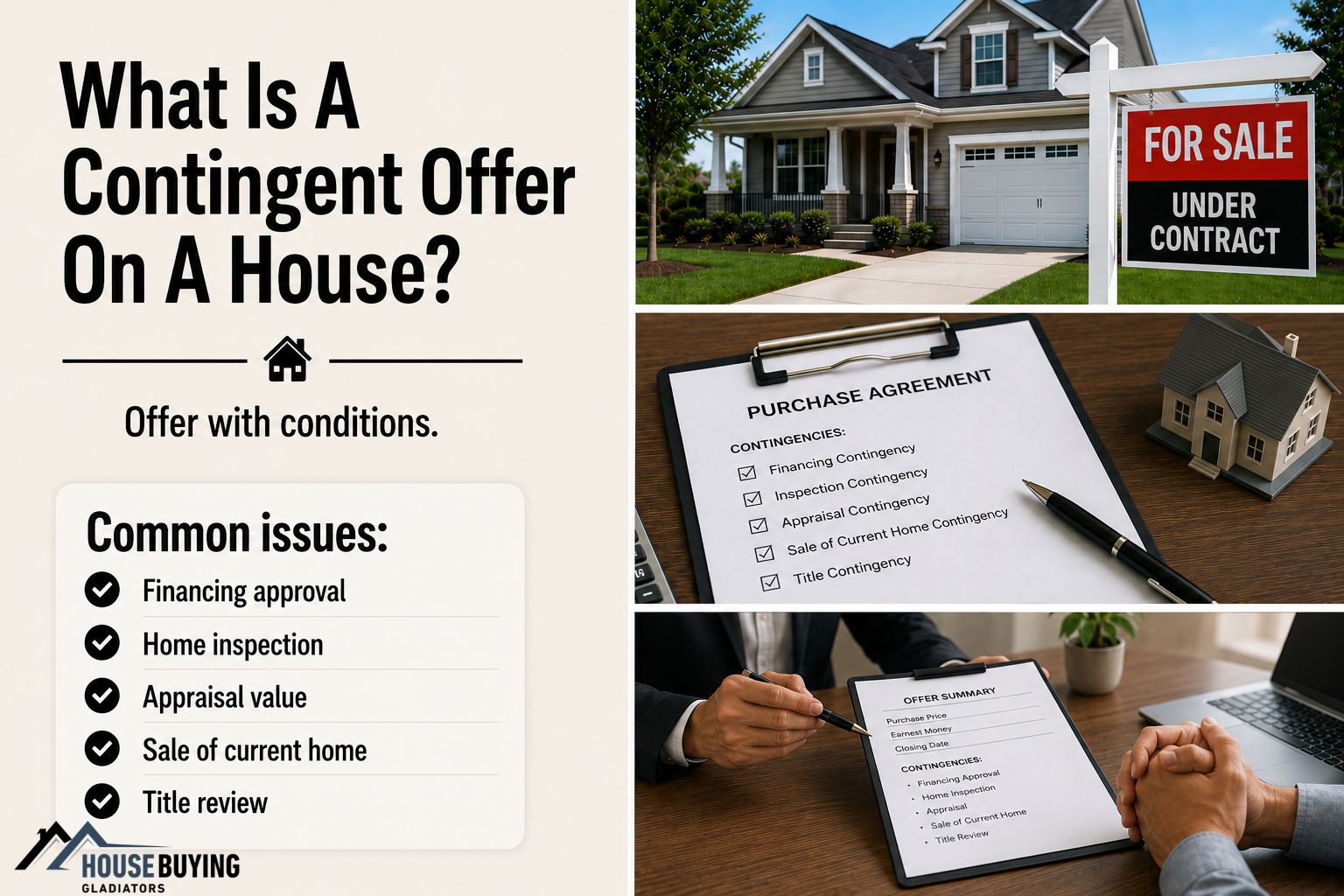
If you are wondering what a contingent offer on a house is, the short answer is that it is an offer a buyer submits with conditions that must be completed before the transaction can move forward.
Many homeowners assume a contingent offer is a weak offer.
That is not always true.
In many real estate transactions, contingencies are completely normal and simply give buyers time to secure financing, complete inspections, verify the home’s value, or satisfy other contractual requirements.
The key for sellers is understanding how these conditions can affect their timeline, closing certainty, and overall risk.
This guide explains how contingent offers work, the most common types of contingencies, and how sellers can confidently evaluate an offer before accepting it.
Contingent Offer Risk-Adjustment Calculator
Contingent Offer Risk-Adjustment Calculator
Why Do Buyers Submit Contingent Offers On A House?
Buyers submit contingent offers to reduce financial risk and verify that the property, financing, and transaction meet their expectations before fully committing to the purchase.
Contingencies are not warning signs. They are protective conditions built into many real estate transactions.
For sellers, understanding these conditions can help you evaluate buyer strength, estimate potential delays, and identify how likely the transaction is to reach closing.
Offer Submitted ➔ Contingencies Reviewed ➔ Requirements Completed ➔ Sale Moves Forward
| Buyer Goal | Why It Matters |
|---|---|
| Secure financing | Confirms loan approval |
| Complete inspections | Identifies major property concerns |
| Verify home value | Protects against overpaying |
| Reduce transaction risk | Creates buyer confidence |
Do not automatically view a contingent offer as a weak offer. In many cases, qualified buyers simply use contingencies to create a safer and more predictable transaction.
If you are evaluating competing buyers, how do multiple offers work when selling a house explains how sellers compare offers beyond the purchase price.
What Are The Most Common Types Of Contingencies In A House Sale?
Most contingent offers include conditions buyers must satisfy before the transaction can move forward. These contingencies help buyers reduce risk, but they can also affect a seller’s timeline and closing certainty.
Not all contingencies create the same level of risk.
Understanding them early can help sellers evaluate offers more confidently.
Contingency Added ➔ Requirement Completed ➔ Transaction Moves Forward ➔ Closing
| Contingency | Why It Matters To Sellers |
|---|---|
| Financing contingency | Buyers need final loan approval |
| Inspection contingency | Repairs or negotiations may arise |
| Appraisal contingency | A low appraisal may delay the sale |
| Home sale contingency | Buyers must sell another property first |
Most contingencies are a normal part of real estate transactions. The key is recognizing how they may affect your timeline, negotiating power, and likelihood of reaching closing. Reviewing common real estate contingency clauses can help sellers evaluate potential risks and make more informed decisions before accepting an offer.
If you are trying to understand the next stage of the transaction, what happens during escrow when selling a house explains how these conditions are completed before closing.
How Does A Contingent Offers Affect Seller?
A contingent offer can affect a seller’s timeline, negotiating flexibility, and closing certainty because buyers must satisfy specific conditions before the transaction can move forward.
However, a contingent offer does not automatically make a buyer risky.
The key is understanding how many contingencies exist, how long they remain active, and whether the buyer has a realistic path to closing.
Offer Accepted ➔ Contingencies Reviewed ➔ Requirements Completed ➔ Closing Moves Forward
| Seller Impact | Why It Matters |
|---|---|
| Longer timelines | Buyers need time to satisfy conditions |
| Additional uncertainty | Some contingencies may delay closing |
| More negotiations | Inspection or financing issues may arise |
| Potential cancellations | Buyers may legally withdraw |
Do not focus only on the purchase price. Focus on the buyer’s ability to satisfy their contingencies and complete the transaction successfully.
If a transaction falls through, what happens if the buyer backs out of the sale explains the options sellers have to recover and move forward.
Can Sellers Accept Other Offers On A Contingent House Sale?
Sometimes. Sellers may be able to accept backup offers while a contingent offer remains active, but the purchase agreement ultimately determines what is allowed.
A backup offer can reduce risk by giving sellers another option if the original buyer cannot satisfy their contingencies.
Contingent Offer Accepted ➔ Backup Offers Evaluated ➔ Buyer Completes Conditions ➔ Sale Moves Forward
| Situation | Seller May Accept Other Offers? |
|---|---|
| Backup offers are permitted | ✅ Often yes |
| Contract limits additional offers | ❌ Sometimes no |
| Contingencies are still active | ✅ Often yes |
| Transaction moves to pending | ❓ It depends |
Do not assume you are locked into one path. Backup offers can help protect your timeline, reduce uncertainty, and keep your sale moving if the first transaction falls apart.
If you want to understand how property value can influence buyer decisions, what is fair market value of a home explains how buyers determine whether a home is priced appropriately before making an offer.
When Can A Contingent Offer On A House Fall Through?
A contingent offer can fall through when buyers cannot satisfy one or more conditions outlined in the purchase agreement before the deadline expires.
Financing issues, inspection concerns, appraisal gaps, and home sale contingencies are some of the most common reasons transactions fail.
The sooner sellers identify potential obstacles, the easier it becomes to reduce delays and protect their timeline.
Contingency Problem ➔ Requirement Not Met ➔ Transaction Delayed ➔ Sale Falls Through
| Common Reason | Why It Happens |
|---|---|
| Financing denial | The buyer cannot secure final loan approval |
| Inspection concerns | Major repair issues are discovered |
| Low appraisal | The property appraises below the agreed price |
| Home sale contingency | The buyer cannot sell their existing home |
Many contingent offers still close successfully. However, reviewing how often contingent offers fall through can help sellers better assess buyer strength, contingency deadlines, and the likelihood of a successful closing before accepting an offer.
If financing obstacles become a concern, can you sell a house with an existing mortgage explains how lenders, loan balances, and mortgage payoffs can affect the transaction.
How Should Sellers Evaluate A Contingent Offer On A House?
Sellers should evaluate the entire offer, not just the purchase price. A strong contingent offer combines qualified buyers, solid financing, realistic deadlines, and manageable contingencies.
The goal is to determine how likely the buyer is to reach closing without creating unnecessary delays.
Review Buyer ➔ Evaluate Contingencies ➔ Assess Risk ➔ Compare Timelines ➔ Make A Decision
| Factor | Why It Matters |
|---|---|
| Financing strength | Reduces loan approval risks |
| Type of contingency | Identifies potential obstacles |
| Contingency deadlines | Impacts your selling timeline |
| Earnest money deposit | Shows buyer commitment |
| Buyer qualifications | Increases closing confidence |
Do not automatically reject a contingent offer. Many successful transactions begin with contingencies because qualified buyers use them to reduce risk while completing important steps in the process.
If you want to understand how deposits strengthen buyer commitment, what is earnest money when selling a house explains how earnest money can influence offer quality and transaction reliability.
FAQs: What Is A Contingent Offer On A House?
A contingent offer is a purchase offer that includes conditions buyers must satisfy before the sale can move forward. These conditions often involve financing, inspections, appraisals, or selling another property before closing.
Not necessarily. Many contingent offers successfully reach closing. The key is evaluating buyer qualifications, financing strength, contingency deadlines, and the overall likelihood that the buyer can complete the purchase.
Financing, inspection, appraisal, and home sale contingencies are the most common. Each one protects buyers but can also affect a seller’s timeline, negotiations, and closing certainty.
Yes. Sellers can reject a contingent offer and accept another buyer if they believe another offer presents less risk or a stronger chance of reaching closing.
Often, yes. Depending on the purchase agreement, sellers may continue accepting backup offers while the original buyer works through their contingencies.
Most contingency periods last several days to a few weeks. The exact timeline depends on financing approvals, inspections, appraisals, and the terms negotiated in the purchase agreement.
Most contingent offers fail because buyers cannot secure financing, inspection issues arise, appraisals come in low, or buyers cannot sell their existing property.
Sometimes. Buyers may need additional time to satisfy their conditions before the transaction can move to the final closing stage.
No. Contingent means conditions still need to be satisfied, while pending usually means most requirements have been completed before closing.
Not always. The strongest offer often combines qualified buyers, solid financing, realistic timelines, and manageable contingencies instead of simply offering the highest price.
Conclusion: What Should Sellers Know About Contingent Offers?
A contingent offer does not automatically make a transaction risky. In many cases, it is simply a structured process that allows qualified buyers to complete important requirements before closing.
The key is not avoiding contingent offers. The key is evaluating the buyer’s financial strength, contingency deadlines, and overall likelihood of completing the purchase.
Offer Submitted ➔ Contingencies Satisfied ➔ Buyer Approved ➔ Successful Closing
Do not focus only on the highest offer. Focus on choosing the buyer with the strongest path to closing and the fewest potential obstacles.
Ready to move forward? Use this guide to confidently evaluate contingent offers and make informed decisions that protect your timeline and final proceeds.