Skip to content
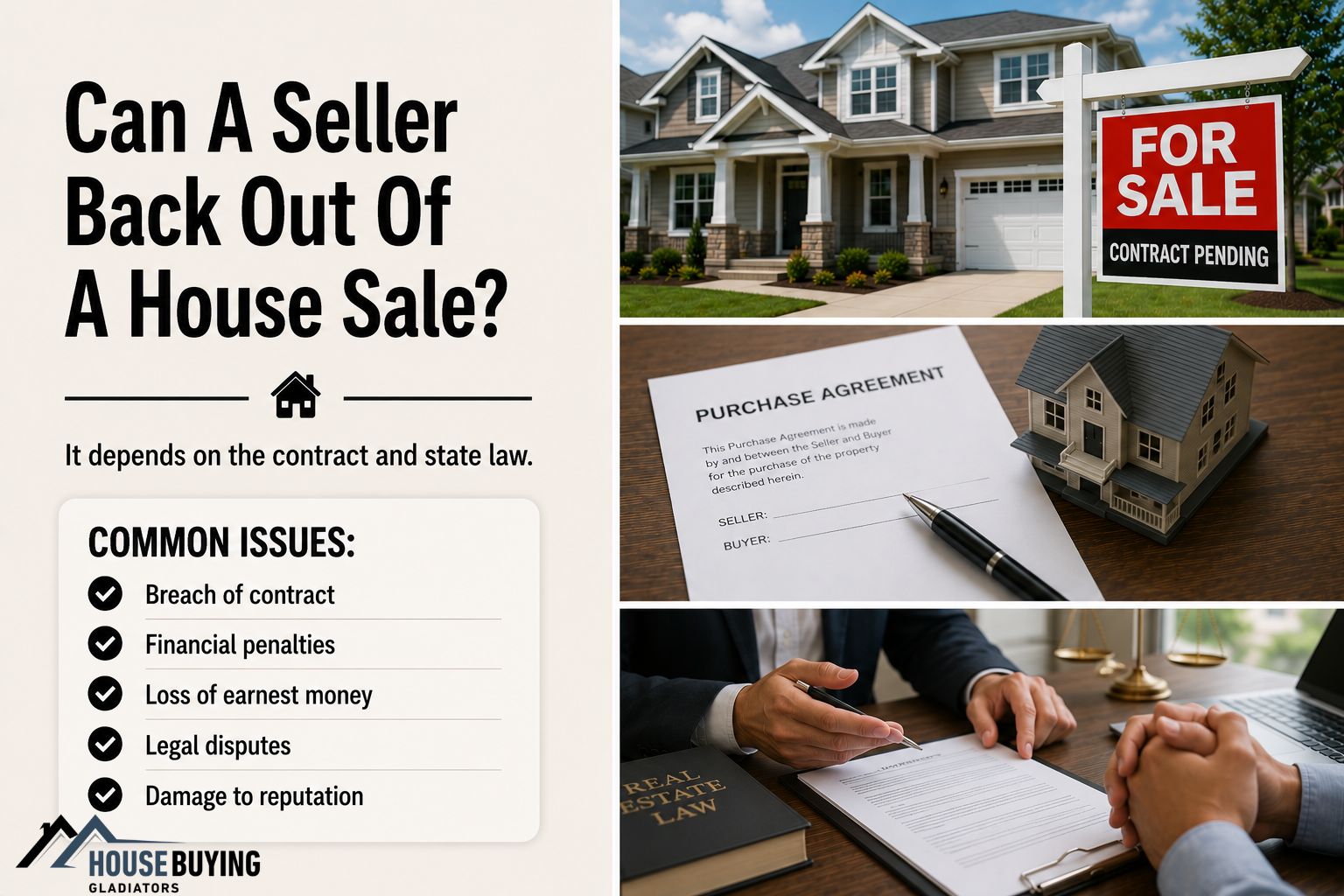
If you are wondering whether a seller can back out of a house sale, the short answer is that it depends on the purchase agreement, the reason for canceling, and applicable state law.
Accepting an offer does not always mean a seller can walk away before closing. Once both parties sign the purchase agreement, the contract is generally legally binding, and canceling without a valid contractual or legal reason may lead to financial liability, legal disputes, or delays.
Understanding when a seller can legally back out of a house sale helps protect your interests, reduce unnecessary risks, and make informed decisions throughout the transaction.
This guide explains when a seller can back out of a house sale, the legal consequences of canceling, buyer rights, and the options available if circumstances change before closing.
Seller Cancellation Risk & Liquid Damages Estimator
Seller Cancellation Risk & Liquid Damages Estimator
Live Liability Audit
When Can A Seller Legally Back Out Of A House Sale?
A seller can legally back out of a house sale only when the purchase agreement, a contractual contingency, mutual agreement, or applicable state law allows the seller to cancel the transaction.
After both parties sign the purchase agreement, they create a legally binding contract. If a seller cancels without a valid legal or contractual reason, the buyer may pursue financial damages, legal remedies, or other actions allowed under the contract.
Purchase Agreement Signed ➔ Contract Reviewed ➔ Legal Grounds Confirmed ➔ Sale Continues Or Ends
| Situation | Seller May Cancel? |
|---|---|
| Contract contingency applies | ✅ Often yes |
| Buyer breaches the agreement | ✅ Often yes |
| Mutual agreement to cancel | ✅ Yes |
| Seller changes their mind | ❌ Usually no |
Before canceling a home sale, review the purchase agreement carefully and understand your legal obligations. Reviewing when a seller can legally back out of a home sale can help homeowners recognize the situations where canceling may be permitted, the contractual requirements involved, and the potential consequences of ending the transaction.
If the buyer fails to complete the transaction instead, what happens if the buyer backs out of the sale explains the options available to sellers after a canceled purchase.
What Happens If A Seller Backs Out Of A House Sale After Signing?
Backing out of a house sale after signing the purchase agreement without a valid legal or contractual reason can expose the seller to financial liability, legal disputes, and delays in completing the transaction.
The outcome depends on the purchase agreement, the reason for cancellation, and applicable state law. In some cases, buyers may negotiate a mutual release, while in others they may pursue legal remedies.
Contract Canceled ➔ Rights Reviewed ➔ Resolution Negotiated ➔ Transaction Outcome
| Possible Outcome | What May Happen |
|---|---|
| Mutual agreement to cancel | Contract ends without further obligations |
| Buyer seeks financial damages | Seller may owe compensation |
| Buyer requests specific performance | A court may be asked to enforce the contract |
| Property returns to the market | Seller relists the home after the dispute is resolved |
Signing a purchase agreement creates legal obligations that do not automatically end if a seller decides to cancel. Reviewing the contract early and understanding your options can help reduce disputes and protect the transaction.
If the sale is already moving through the closing process, what happens during escrow when selling a house explains how contractual obligations continue until the transaction is completed or legally terminated.
Can A Seller Back Out Before Closing?
Sometimes. A seller may be able to back out before closing, but only if the purchase agreement, a contractual contingency, mutual agreement, or applicable state law allows the transaction to end.
Closing is the final step of the sale, but the purchase agreement becomes legally binding much earlier. Simply changing your mind before closing usually does not give you the legal right to cancel.
Purchase Agreement Signed ➔ Contract Obligations Continue ➔ Closing Or Legal Cancellation
| Situation | Seller May Back Out? |
|---|---|
| Contract contingency applies | ✅ Often yes |
| Buyer breaches the agreement | ✅ Often yes |
| Mutual agreement to cancel | ✅ Yes |
| Seller changes their mind | ❌ Usually no |
Before canceling the transaction, review the purchase agreement carefully and understand your contractual obligations. Acting without a valid legal reason can delay the sale, create financial liability, and increase the risk of a legal dispute.
If the transaction is approaching the final stage, what happens at closing when selling a house explains what must occur before ownership officially transfers to the buyer.
What Are The Legal Risks If A Seller Backs Out?
Backing out of a signed purchase agreement without a valid legal or contractual reason can expose a seller to financial liability, legal disputes, and court action.
The specific consequences depend on the purchase agreement, applicable state law, and the circumstances surrounding the cancellation. Understanding these risks before canceling can help sellers avoid costly disputes and protect the transaction.
Seller Cancels ➔ Contract Reviewed ➔ Legal Rights Evaluated ➔ Resolution Reached
| Possible Risk | Why It Matters |
|---|---|
| Financial damages | Buyer may seek compensation for losses |
| Contract dispute | Can delay or complicate the transaction |
| Court action | Buyer may pursue legal remedies, including specific performance where permitted |
| Additional costs | Legal fees and extended holding costs may increase |
Canceling a signed contract is more than a business decision it can create legal obligations. Reviewing the purchase agreement carefully and seeking appropriate guidance before taking action can reduce risk and help prevent unnecessary disputes.
If the transaction includes a buyer’s deposit, what is earnest money when selling a house explains how earnest money may be handled if the purchase agreement is terminated.
Can Buyers Sue A Seller For Backing Out?
Sometimes. Buyers may sue a seller who backs out of a house sale if the seller breaches a legally binding purchase agreement without a valid contractual or legal reason.
The buyer’s available remedies depend on the purchase agreement, applicable state law, and the specific circumstances of the transaction. Many disputes are resolved through negotiation before they reach court.
Seller Cancels ➔ Buyer Reviews Legal Rights ➔ Resolution Negotiated Or Legal Action Taken
| Buyer Option | Possible Result |
|---|---|
| Seek financial damages | Recover certain financial losses |
| Request specific performance | Ask a court to require the seller to complete the sale where permitted |
| Negotiate a settlement | Resolve the dispute without litigation |
| Mutually terminate the agreement | End the transaction by agreement |
Not every contract dispute results in a lawsuit. Reviewing the purchase agreement, understanding your legal obligations, and communicating early often help buyers and sellers resolve disagreements before legal action becomes necessary.
If the contract includes buyer contingencies, what is a contingent offer on a house explains how certain conditions may allow either party to cancel the transaction under the terms of the purchase agreement.
How Can Sellers Avoid Contract Disputes Before Closing?
Sellers can reduce the risk of contract disputes by understanding the purchase agreement, meeting contractual deadlines, communicating promptly, and resolving issues before they affect the transaction.
Proactive communication and careful contract compliance help prevent misunderstandings, reduce legal risk, and keep the home sale moving toward a successful closing.
Review Contract ➔ Meet Deadlines ➔ Resolve Issues ➔ Close Successfully
| Action | Why It Helps |
|---|---|
| Review the purchase agreement | Clarifies legal rights and obligations |
| Meet contractual deadlines | Helps prevent contract breaches |
| Communicate promptly | Resolves concerns before they escalate |
| Keep written records | Documents important agreements and changes |
| Seek professional guidance when needed | Reduces legal and financial risk |
Contract disputes often arise from missed deadlines, unclear communication, or misunderstandings not intentional misconduct. Addressing issues early helps protect your interests, maintain buyer confidence, and improve the likelihood of a smooth closing.
If legal ownership questions arise during the transaction, what is title insurance when selling a house explains how title issues can affect the closing process and how they are resolved.
FAQs: Can A Seller Back Out Of A House Sale?
Sometimes. A seller may back out of a house sale only if the purchase agreement, a contractual contingency, mutual agreement, or applicable state law allows the seller to cancel the transaction.
Not usually. Once both parties sign the purchase agreement, the contract is generally legally binding. Sellers typically need a valid contractual or legal reason to cancel.
Sometimes. Closing has not yet occurred, but the purchase agreement is usually already enforceable. Sellers generally cannot cancel simply because they changed their mind.
The buyer may pursue financial damages, request specific performance where permitted, negotiate a settlement, or seek other legal remedies depending on the purchase agreement and state law.
Yes, in some situations. If a seller breaches a legally binding purchase agreement, the buyer may seek compensation or other legal remedies available under the contract and applicable law.
Often, yes. If the transaction is canceled because the seller cannot complete the sale, the buyer’s earnest money is generally returned, although the purchase agreement determines how the deposit is ultimately handled.
The most significant risks include financial liability, legal disputes, court action, delayed sales, and additional costs associated with resolving the contract.
Usually not. Once a purchase agreement becomes legally binding, sellers generally cannot cancel solely to accept a higher offer unless the contract or applicable law permits it.
Sometimes, but only when the purchase agreement or applicable law provides a valid basis for cancellation. Entering escrow does not automatically give either party the right to terminate the contract.
Review the purchase agreement carefully, meet contractual deadlines, communicate promptly, and resolve concerns early to help protect your interests and keep the transaction moving toward closing.
Conclusion: What Should Sellers Know Before Backing Out Of A House Sale?
A seller can back out of a house sale in certain situations, but the purchase agreement and applicable state law determine whether a seller has the legal right to cancel the transaction.
After both parties sign the purchase agreement, they create a legally binding contract. Sellers should review their contractual obligations, evaluate the potential legal consequences, and communicate early before deciding to cancel the sale.
Purchase Agreement ➔ Contract Obligations ➔ Closing Or Legal Cancellation
Making an informed decision helps sellers avoid unnecessary legal and financial risks. Understanding when a seller can back out of a house sale and when the contract requires the sale to continue—helps homeowners protect their interests, reduce costly disputes, and move through the selling process with greater confidence.
Ready to move forward? Use this guide to understand your legal options, protect your interests, and make informed decisions throughout your home sale.