Skip to content
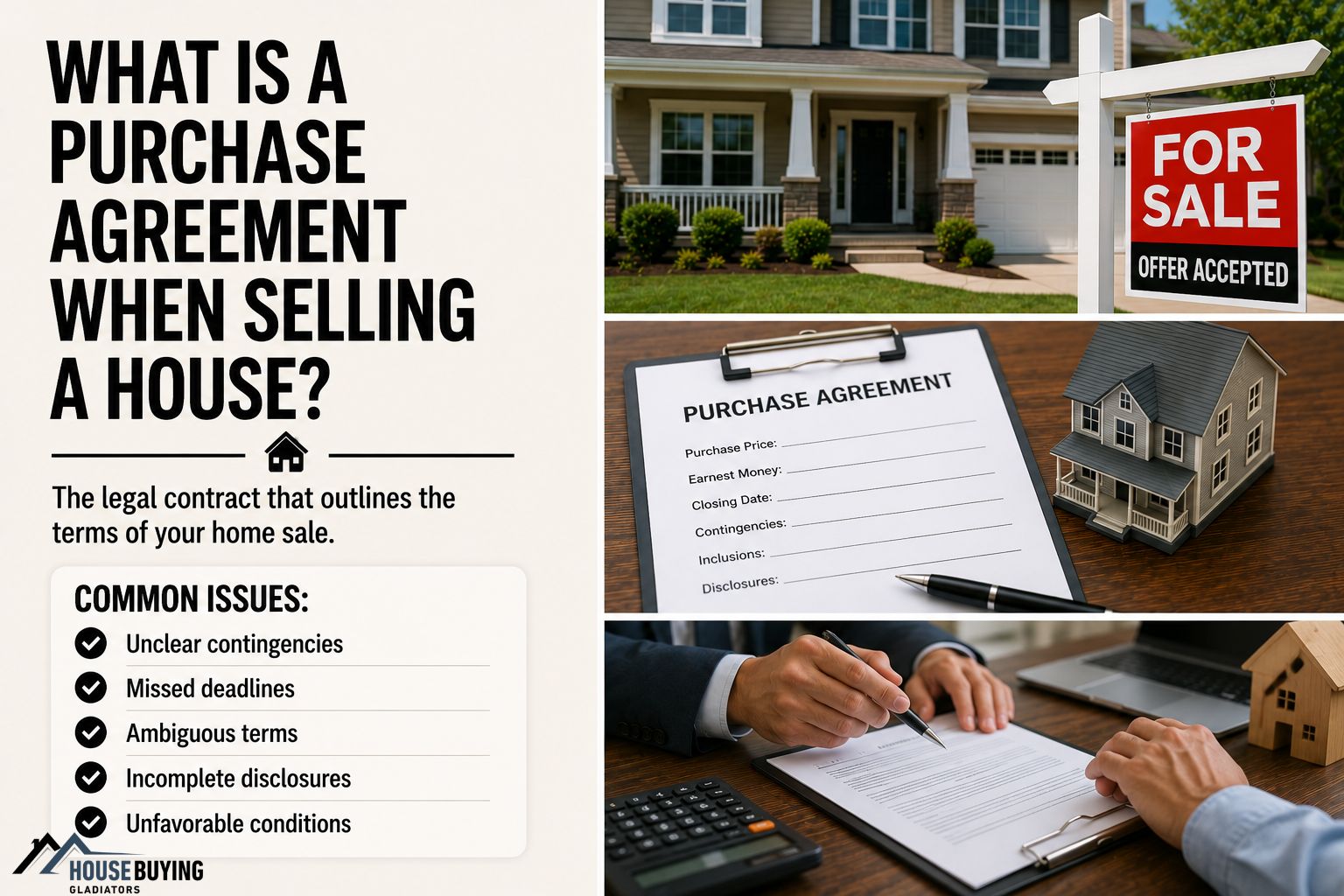
If you are wondering what a purchase agreement is when selling a house, the short answer is that it is the legally binding contract that defines the purchase price, closing timeline, contingencies, and the responsibilities both the buyer and seller must fulfill before ownership transfers.
Many homeowners assume accepting an offer means the sale is final.
In reality, the purchase agreement is what turns an accepted offer into a legally enforceable contract. Once both parties sign, they agree to follow the negotiated terms, meet important deadlines, and satisfy any conditions required before closing.
Understanding the purchase agreement before you sign can help you avoid costly disputes, make informed decisions during negotiations, and keep your home sale on track from contract to closing.
This guide explains what a purchase agreement is when selling a house, what it includes, when it becomes legally binding, and what every seller should review before signing.
Real Estate Contract Timeline & Liability Simulator
Real Estate Contract Timeline & Liability Simulator
Model key milestones and analyze transaction risk elements before signing your home purchase contract.
Why Is A Purchase Agreement Important When Selling A House?
A purchase agreement is important because it creates the legally binding contract that governs the home sale from offer acceptance to closing. It clearly defines the purchase price, deadlines, contingencies, and the responsibilities both the buyer and seller must meet.
For sellers, a well-prepared purchase agreement reduces uncertainty, protects their legal interests, and helps prevent costly disputes before closing.
Offer Accepted ➔ Purchase Agreement Signed ➔ Contract Terms Completed ➔ Closing
| Why It Matters | Seller Benefit |
|---|---|
| Creates a legally binding contract | Protects both parties throughout the sale |
| Defines the agreed terms | Reduces misunderstandings |
| Establishes important deadlines | Keeps the transaction on schedule |
| Outlines contingencies and obligations | Clarifies each party's responsibilities |
A purchase agreement does more than record the purchase price. It serves as the roadmap for the entire transaction, helping buyers and sellers understand what happens next, what each party must do, and how the sale moves toward a successful closing. Reviewing how a real estate sales and purchase agreement works can help sellers recognize the legal purpose of the contract, the obligations it creates, and the importance of reviewing every term before signing.
If you're comparing multiple buyers before signing, how do multiple offers work when selling a house explains how to evaluate competing offers based on financing, contingencies, and the buyer's ability to close not just the highest price.
What Does A Purchase Agreement Include When Selling A House?
A purchase agreement includes the key terms that both the buyer and seller agree to before closing, such as the purchase price, earnest money, contingencies, financing terms, closing date, and each party's legal responsibilities.
Every section of the agreement helps set clear expectations, reduce misunderstandings, and keep the transaction moving toward a successful closing.
Agreement Prepared ➔ Terms Reviewed ➔ Contract Signed ➔ Closing Process Begins
| Agreement Section | Why It Matters |
|---|---|
| Purchase price | Confirms the agreed sale amount |
| Earnest money | Demonstrates the buyer's commitment |
| Contingencies | Defines conditions that must be met before closing |
| Closing date | Establishes the expected timeline |
| Buyer and seller obligations | Clarifies each party's responsibilities |
Before signing, take time to review every section of the purchase agreementnot just the purchase price. Understanding the contract terms helps sellers protect their interests, avoid unexpected surprises, and make confident decisions throughout the home-selling process.
If the agreement includes buyer contingencies, what is a contingent offer on a house explains how those conditions can affect whether the sale moves forward or reaches closing.
When Does A Purchase Agreement Become Legally Binding When Selling A House?
A purchase agreement becomes legally binding after both the buyer and seller sign the contract and satisfy any legal requirements under applicable state law. From that point, both parties must follow the agreed terms unless the contract or the law gives them the right to cancel.
Signing the agreement is a major milestone because it turns an accepted offer into an enforceable contract and moves the sale toward closing.
Offer Accepted ➔ Purchase Agreement Signed ➔ Contract Becomes Legally Binding ➔ Closing Or Legal Cancellation
| Contract Stage | What It Means |
|---|---|
| Offer accepted | Buyer and seller negotiate the terms |
| Purchase agreement signed | The contract becomes legally binding |
| Contingencies remain | Certain conditions must still be satisfied |
| Closing completed | Ownership officially transfers to the buyer |
Before signing, review every term carefully and make sure you understand your responsibilities. Reviewing when a real estate contract becomes legally binding can help sellers understand when contractual obligations begin, what actions make the agreement enforceable, and the potential consequences of canceling after signing.
If your circumstances change after signing, can a seller back out of a house sale explains when sellers may legally cancel a purchase agreement and the potential consequences of doing so.
What Should Sellers Review Before Signing A Purchase Agreement?
Before signing a purchase agreement, sellers should carefully review the purchase price, financing terms, contingencies, earnest money, closing date, deadlines, and every contractual obligation that could affect the sale.
Once both parties sign the agreement, the contract becomes legally binding, so understanding every term before signing helps prevent costly mistakes and unexpected disputes.
Review Terms ➔ Confirm Details ➔ Sign Agreement ➔ Transaction Moves Forward
| Item To Review | Why It Matters |
|---|---|
| Purchase price | Confirms the agreed sale amount |
| Financing terms | Verifies the buyer's ability to complete the purchase |
| Contingencies | Identifies conditions that must be satisfied before closing |
| Earnest money | Demonstrates the buyer's commitment |
| Closing date and deadlines | Keeps the transaction on schedule |
Do not focus only on the purchase price. A strong purchase agreement balances price, buyer qualifications, contingencies, and closing terms. Reviewing every section carefully helps sellers protect their interests, reduce legal risk, and move toward closing with greater confidence.
If you're reviewing the buyer's deposit, what is earnest money when selling a house explains how earnest money strengthens a purchase agreement and demonstrates the buyer's commitment to completing the sale.
Can A Purchase Agreement Be Changed After Signing?
Yes. Buyers and sellers can change a purchase agreement after signing, but both parties must agree to every change in writing before it becomes part of the contract.
Once the purchase agreement becomes legally binding, neither party can change the terms without the other's consent. Written amendments help protect both parties and keep the transaction on track.
Purchase Agreement Signed ➔ Change Requested ➔ Both Parties Agree ➔ Contract Updated
| Situation | What Happens |
|---|---|
| Both parties approve the change | The purchase agreement is amended |
| Only one party requests a change | The original contract remains in effect |
| Contingencies are modified | Both parties must approve the amendment |
| Closing date changes | A written amendment updates the contract |
Changes after signing are common, especially when inspections, financing, or appraisal results affect the transaction. Documenting every change in writing helps prevent misunderstandings, protects both parties, and keeps the home sale moving toward a successful closing.
If the transaction continues after the contract is updated, what happens during escrow when selling a house explains how buyers and sellers complete the remaining requirements before closing.
How Can Sellers Avoid Problems With A Purchase Agreement?
Sellers can avoid purchase agreement problems by reviewing every contract term carefully, meeting important deadlines, communicating promptly, and resolving questions before they become disputes.
Understanding your responsibilities before signing helps protect your interests, reduce legal and financial risks, and keep the transaction moving smoothly toward closing.
Review Purchase Agreement ➔ Meet Deadlines ➔ Resolve Issues Early ➔ Close Successfully
| Action | Why It Helps |
|---|---|
| Review every contract term | Prevents misunderstandings |
| Meet contractual deadlines | Keeps the transaction on schedule |
| Communicate promptly | Resolves issues before they escalate |
| Keep written records | Documents agreed changes and decisions |
| Seek professional guidance when needed | Helps reduce legal and financial risk |
Many purchase agreement problems begin with overlooked details rather than major disputes. Taking time to understand the contract, ask questions, and address concerns early helps sellers avoid unnecessary delays and creates a smoother path to closing.
If ownership issues arise during the transaction, what is title insurance when selling a house explains how title-related problems can affect closing and how they are resolved.
FAQs: What Is A Purchase Agreement When Selling A House?
A purchase agreement is a legally binding contract that defines the purchase price, contingencies, financing terms, closing date, and the responsibilities both the buyer and seller must fulfill before ownership transfers.
A purchase agreement protects both parties by clearly defining the terms of the sale, reducing misunderstandings, establishing important deadlines, and creating a clear path from an accepted offer to closing.
A purchase agreement generally becomes legally binding after both the buyer and seller sign the contract and satisfy any legal requirements under applicable state law.
A purchase agreement typically includes the purchase price, earnest money deposit, financing terms, contingencies, closing timeline, property details, and each party's contractual obligations.
Yes. Buyers and sellers can amend a purchase agreement if both parties agree to the changes in writing. Neither party can change the contract without the other's written consent.
Sometimes. A seller may cancel only if the purchase agreement, a contractual contingency, mutual agreement, or applicable law gives the seller the legal right to terminate the contract.
If a buyer breaches the contract, the seller may negotiate a resolution, retain the earnest money if the agreement allows, or pursue other legal remedies available under the contract.
Yes. Purchase agreements often include financing, inspection, appraisal, title, or home sale contingencies that must be satisfied before the transaction can close.
Sellers should carefully review the purchase price, financing terms, contingencies, earnest money, closing date, deadlines, and every contractual obligation before signing.
Yes. A purchase agreement may expire if the parties fail to satisfy contingencies, meet contractual deadlines, or otherwise comply with the agreement's terms before closing.
Conclusion: What Should Sellers Review In A Purchase Agreement When Selling A House?
A purchase agreement is more than a signed document it is the roadmap that guides your home sale from an accepted offer to closing. Understanding every contract term before you sign helps protect your interests, reduce legal and financial risks, and keep the transaction moving forward.
Offer Accepted ➔ Purchase Agreement Signed ➔ Contract Terms Completed ➔ Closing
Before signing, review the purchase price, contingencies, financing terms, deadlines, and every contractual obligation carefully. A clear understanding of the agreement helps prevent misunderstandings, avoid costly disputes, and gives you greater confidence throughout the selling process.
Ready to move forward? Use this guide to understand what a purchase agreement is when selling a house, review your contract with confidence, and make informed decisions that support a smooth and successful closing.