Skip to content
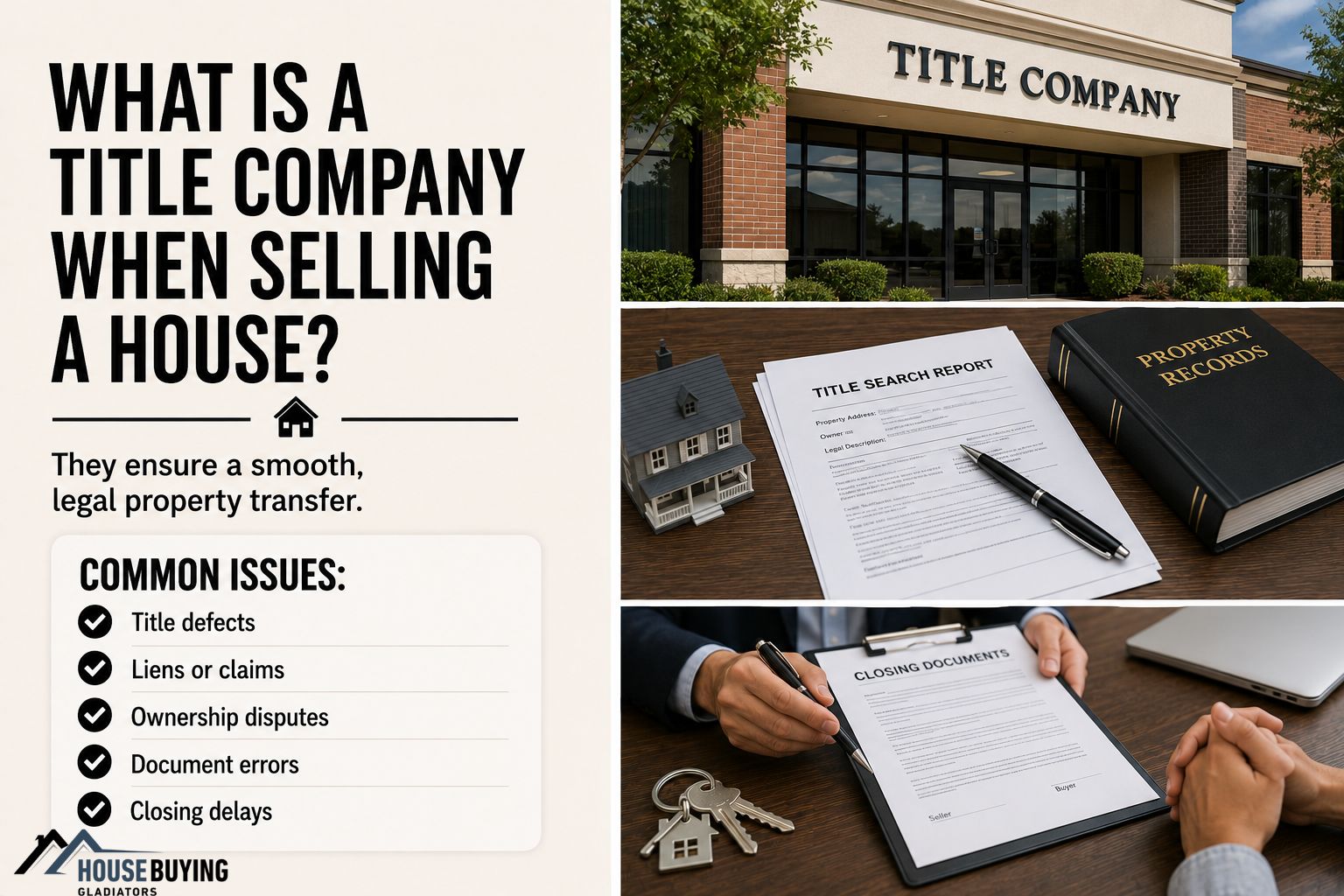
If you’re wondering what is a title company when selling a house, the short answer is that a title company helps verify legal ownership, identify title issues, prepare key closing documents, and facilitate the transfer of your property from seller to buyer.
Many homeowners don’t think about the title company until they’re close to closing.
By then, it has already become one of the most important parties in the transaction.
From conducting a title search to coordinating the closing process, a title company helps reduce delays, resolve ownership issues, and ensure the sale meets the legal requirements for transferring property. Whether you’re selling to a cash buyer or through a traditional real estate transaction, understanding its role helps you prepare for closing with greater confidence.
This guide explains what is a title company when selling a house, what it does during the selling process, why it’s important, and what every seller should know before closing.
Title Clearance & Settlement Cost Estimator
Title Clearance & Settlement Cost Estimator
Analyze settlement fees and legal risk metrics before clearing your property’s deed.
Analyzing your home’s title clearance profile…
What Does A Title Company Do When Selling A House?
A title company helps move a home sale from contract to closing by verifying ownership, identifying title issues, coordinating key closing documents, and facilitating the legal transfer of the property. Its role is to protect both the buyer and seller while helping the transaction proceed smoothly.
Many sellers never interact with a title company until after accepting an offer. Behind the scenes, however, it performs several important tasks that keep the sale on track and reduce the risk of unexpected legal or ownership problems.
Purchase Agreement Signed ➔ Title Reviewed ➔ Closing Prepared ➔ Ownership Transferred
| Responsibility | Why It Matters |
|---|---|
| Verify property ownership | Confirms the seller has the legal right to sell |
| Conduct a title search | Identifies liens, judgments, or ownership issues |
| Coordinate closing documents | Helps prepare paperwork for closing |
| Manage the closing process | Supports an accurate and timely transfer of ownership |
A title company doesn’t negotiate the sale or determine the purchase price. Instead, it focuses on confirming that the property’s title is clear and that all legal requirements are met before ownership changes hands. Reviewing the services a title company provides can help sellers better understand its role in preparing for a smooth closing.
If you’re preparing for the final stage of the transaction, what happens at closing when selling a house explains what sellers can expect on closing day.
Why Is A Title Company Important When Selling A House?
A title company helps protect the transaction by identifying ownership issues before closing. Resolving these problems early reduces delays, protects both parties, and helps ensure the sale can move forward without unexpected legal complications.
A small title issue such as an unpaid lien, recording error, or ownership dispute can delay or even prevent a sale. Identifying those issues before closing gives everyone time to resolve them.
| Why It Matters | Benefit To Sellers |
|---|---|
| Confirms legal ownership | Reduces ownership disputes |
| Identifies title defects | Helps prevent closing delays |
| Coordinates with all parties | Keeps the transaction moving |
| Supports a legal transfer | Provides confidence at closing |
Most transactions close without major title issues, but reviewing the property’s history before closing helps protect everyone involved. Reviewing how a title search helps identify ownership issues before closing can help sellers understand how liens, ownership disputes, recording errors, and other title defects are discovered and resolved before ownership transfers.
If you’re reviewing the legal paperwork before closing, what is a purchase agreement when selling a house explains how the contract guides the remainder of the transaction.
What Does A Seller Need To Provide To A Title Company?
Before closing, sellers typically provide documents that verify ownership, satisfy legal requirements, and allow the title company to complete the transaction. The exact paperwork varies by state and the details of the sale.
Preparing these documents early can help prevent delays and keep the closing process on schedule.
Seller Information Reviewed ➔ Documents Submitted ➔ Closing Prepared ➔ Sale Completed
| Common Documents | Why They’re Needed |
|---|---|
| Government-issued ID | Confirms the seller’s identity |
| Purchase agreement | Outlines the terms of the sale |
| Mortgage payoff information | Calculates the remaining loan balance |
| Property disclosures (where required) | Satisfies legal disclosure requirements |
Every transaction is different, so the title company may request additional documents depending on the property, local laws, or specific circumstances. Responding quickly to document requests helps avoid unnecessary delays before closing.
If you’re preparing your paperwork, what documents do I need to sell my house explains the records sellers commonly need before closing.
What Happens If The Title Company Finds A Title Problem?
If the title company discovers a problem during its review, the issue usually needs to be resolved before the sale can close. Common title issues include unpaid liens, ownership disputes, recording errors, or unresolved legal claims against the property.
Finding a problem doesn’t always mean the sale will fail. In many cases, the issue can be resolved before closing.
Title Search Completed ➔ Issue Identified ➔ Problem Resolved ➔ Closing Continues
| Common Title Issue | Possible Impact |
|---|---|
| Unpaid lien | May need to be paid before closing |
| Ownership dispute | Can delay the transfer of ownership |
| Recording error | May require corrected legal documents |
| Outstanding legal claim | Must often be resolved before closing |
Most title problems have practical solutions, especially when the title company finds them early. Responding quickly to document requests and resolving issues promptly helps keep the transaction moving and reduces the risk of last-minute closing delays.
If you’re estimating your selling expenses before closing, what costs do sellers pay at closing explains the common fees and expenses sellers should expect before completing the sale.
FAQs: What Is A Title Company When Selling A House?
A title company verifies legal ownership, performs a title search, prepares key closing documents, coordinates the closing process, and helps transfer ownership from the seller to the buyer.
It depends on your state’s laws and local closing practices. In many real estate transactions, a title company or closing attorney manages the closing and helps complete the legal transfer of ownership.
A real estate agent markets the property, negotiates offers, and guides the sale. A title company focuses on the legal and administrative side of the transaction, including verifying ownership, preparing closing documents, and facilitating the transfer of title.
Yes. One of the title company’s primary responsibilities is conducting a title search to identify liens, ownership disputes, unpaid taxes, easements, or other issues that could delay or prevent the sale.
The issue usually must be resolved before closing. Depending on the situation, this may involve paying off a lien, correcting public records, or providing additional legal documentation.
In many transactions, yes. The title company coordinates the closing, prepares the required paperwork, collects and distributes funds, records the deed, and helps ensure ownership transfers correctly.
The buyer, seller, lender, or real estate professionals may select the title company, depending on local customs, state regulations, and the terms of the purchase agreement.
The title company often receives and distributes funds as part of the closing process. It pays approved expenses, satisfies existing liens or mortgages, and distributes the remaining sale proceeds according to the settlement statement.
Respond promptly to document requests, provide accurate information, review the settlement statement carefully, and address any title issues as soon as possible. Early preparation helps reduce delays before closing.
In some states, a real estate attorney handles the closing instead of a title company. The exact process depends on state law and local real estate practices.
Conclusion: What Should Sellers Know About Title Companies?
A title company plays an essential role in every successful home sale by helping verify ownership, resolve title issues, prepare closing documents, and facilitate the legal transfer of the property. Although much of its work happens behind the scenes, it helps protect both buyers and sellers throughout the transaction.
Purchase Agreement Signed ➔ Title Cleared ➔ Closing Completed ➔ Ownership Transferred
Working with a reputable title company, responding quickly to document requests, and reviewing your closing paperwork carefully can help prevent delays and create a smoother selling experience. Understanding its role before closing gives you greater confidence and helps ensure your sale reaches the finish line successfully.
By understanding what is a title company when selling a house, sellers can navigate the closing process with greater confidence and fewer surprises.