Skip to content
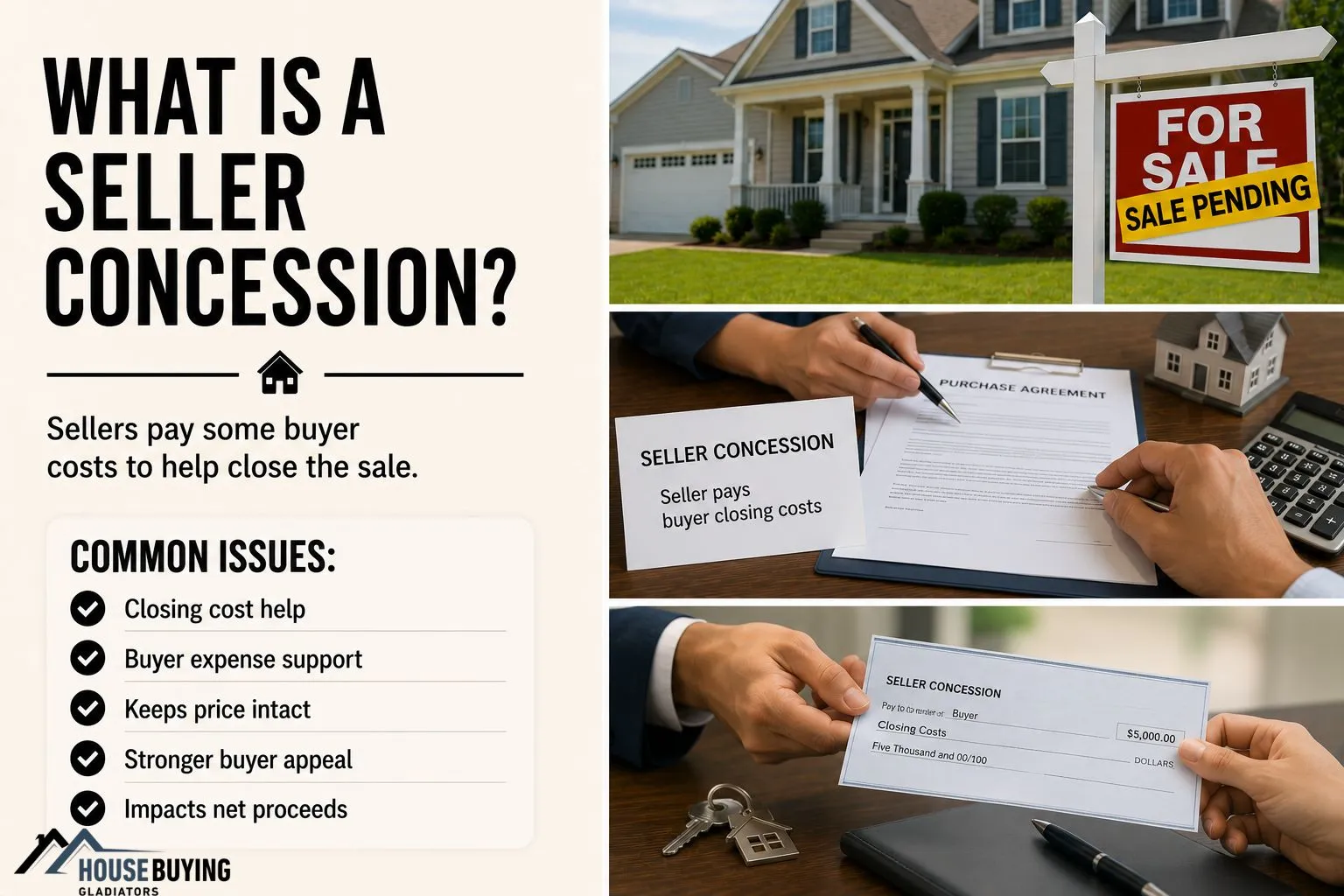
If you’re wondering what is a seller concession, the short answer is that it’s an agreement in which the seller pays some of the buyer’s closing costs or other eligible expenses to help complete the home sale. Rather than reducing the home’s price, a seller concession shifts certain costs from the buyer to the seller as part of the negotiated purchase agreement.
Many homeowners think a seller concession means lowering the sale price.
That’s not the same thing.
A concession keeps the agreed purchase price intact while helping the buyer cover specific closing expenses. In many cases, this can make the transaction more attractive to buyers without requiring a direct price reduction.
Whether you’re selling in a buyer’s market, negotiating multiple offers, or reviewing a purchase agreement, understanding how seller concessions work helps you evaluate offers more accurately, estimate your net proceeds, and negotiate with confidence.
This guide explains what a seller concession is, when sellers offer concessions, how they affect your proceeds, and what homeowners should consider before agreeing to pay buyer expenses.
Interactive Seller Concession Estimator
Interactive Seller Concession Estimator
Simulate net walk-away yields and instantly reference regulatory loan compliance caps on a single dashboard.
Financial Settlement Breakdown
Why Do Sellers Offer Concessions?
Sellers offer concessions to make their home more attractive to buyers, help keep a transaction moving, or resolve issues discovered during the selling process. A concession can help bridge the gap between a buyer’s budget and the total cost of purchasing a home.
Offering a concession doesn’t always mean accepting a weaker deal.
In many cases, it helps both parties reach an agreement without changing the purchase price.
Offer Received ➔ Buyer Requests Assistance ➔ Seller Evaluates Concession ➔ Sale Moves Forward
| Reason | Why Sellers Offer A Concession |
|---|---|
| Help with buyer closing costs | Makes the purchase more affordable |
| Keep the transaction on track | Prevents the deal from falling through |
| Resolve inspection concerns | Addresses issues without reducing the sale price |
| Stay competitive | Attracts buyers in slower markets |
Seller concessions are a negotiation tool not a requirement. Before agreeing to pay any buyer expenses, compare the cost of the concession with the overall strength of the offer. In some situations, accepting a concession may lead to a smoother closing and a better overall outcome.
If you’re evaluating the complete financial impact of an offer, what is net proceeds when selling a house explains how seller concessions can affect the amount you receive at closing.
What Can A Seller Concession Cover?
A seller concession can cover certain buyer closing costs and other eligible expenses agreed to in the purchase contract. The exact costs depend on the buyer’s loan program, lender requirements, and the terms negotiated between both parties.
Not every expense qualifies for a seller concession.
The purchase agreement and financing guidelines determine which costs the seller can pay.
Buyer Requests Concession ➔ Costs Negotiated ➔ Purchase Agreement Updated ➔ Closing Completed
| Common Seller Concession | Why It’s Covered |
|---|---|
| Buyer closing costs | Reduces the buyer’s upfront expenses |
| Loan-related fees | Helps qualified buyers complete financing |
| Title and escrow fees | Supports the closing process when negotiated |
| Prepaid taxes or insurance (when permitted) | Lowers the buyer’s cash needed at closing |
A seller concession doesn’t provide cash directly to the buyer. Instead, it pays approved closing expenses as outlined in the purchase agreement and allowed by the buyer’s loan program. Reviewing what seller concessions can cover can help sellers understand which buyer expenses are commonly eligible and how concessions are applied during closing.
If you’re reviewing the costs involved in the transaction, what costs do sellers pay at closing explains which expenses sellers commonly pay before the sale is finalized.
When Should Sellers Agree To A Seller Concession?
Sellers should consider a concession when it helps complete the sale without significantly reducing their financial outcome. The right decision depends on market conditions, buyer demand, the strength of the offer, and your expected net proceeds.
A concession isn’t automatically a loss.
Sometimes giving a small credit at closing is more beneficial than reducing the purchase price or losing a qualified buyer.
Buyer Requests Concession ➔ Compare Financial Impact ➔ Negotiate Terms ➔ Complete The Sale
| Situation | Why A Concession May Make Sense |
|---|---|
| Buyer’s closing costs are the only obstacle | Helps keep the transaction moving |
| Home has inspection-related concerns | Resolves issues without reducing the sale price |
| Slower housing market | Makes the property more competitive |
| Strong overall offer | May be worth accepting to secure a reliable closing |
Before agreeing to a concession, calculate how it affects your expected proceeds and compare it with the overall strength of the offer. In many cases, a slightly smaller payout is worthwhile if it leads to a smoother, more certain closing. Reviewing common seller concession examples can help homeowners understand when offering concessions makes sense and how they can be used strategically during negotiations.
If you’re comparing the financial impact of different offers, cash offer vs mortgage offer explains how financing, contingencies, and closing certainty can influence your overall outcome.
How Do Seller Concessions Affect Your Net Proceeds?
A seller concession reduces your net proceeds because the agreed amount is deducted from the money you receive at closing. While it may lower your final payout, a concession can also help secure a qualified buyer and keep the transaction on schedule.
The true cost isn’t the concession itself.
It’s how the concession affects your overall financial outcome.
Offer Accepted ➔ Seller Concession Applied ➔ Closing Costs Adjusted ➔ Net Proceeds Calculated
| Seller Concession | Impact On Your Net Proceeds |
|---|---|
| Buyer closing cost credit | Reduces the amount you receive at closing |
| Title or escrow fees | Lowers your final proceeds when you agree to pay them |
| Loan-related costs | Increases your total selling expenses |
| Negotiated repair credit | Reduces your final payout without changing the sale price |
Don’t evaluate a concession on its own. Compare the concession against the purchase price, buyer qualifications, and the likelihood of closing. In some cases, accepting a modest concession can produce a better overall outcome than restarting the selling process with a new buyer.
If you’re negotiating contract terms, what is a purchase agreement when selling a house explains how seller concessions are documented before closing.
FAQs: What Is A Seller Concession?
A seller concession is an agreement in which the seller pays certain buyer closing costs or eligible expenses as part of the purchase agreement. It helps reduce the buyer’s upfront costs without changing the home’s purchase price.
No. A price reduction lowers the home’s sale price, while a seller concession keeps the purchase price the same and instead covers specific buyer expenses at closing.
Depending on the loan program and purchase agreement, a seller concession may cover buyer closing costs, title and escrow fees, loan-related charges, prepaid taxes, insurance, and other eligible closing expenses.
The seller pays the agreed concession at closing. The amount is deducted from the seller’s proceeds and applied to the buyer’s eligible closing costs.
Yes. Buyers and sellers negotiate concessions during the offer process, and both parties must agree before they’re included in the purchase agreement.
Yes. Because the seller pays part of the buyer’s closing costs, concessions reduce the amount the seller receives after closing.
A concession may make sense if it helps secure a qualified buyer, keeps the transaction moving, or produces a better overall financial outcome than rejecting the offer.
Yes. Sellers can accept, reject, or negotiate any concession request based on market conditions, buyer demand, and their financial goals.
Sometimes. Although cash buyers often have fewer financing requirements, they may still request concessions for repairs, closing costs, or other negotiated expenses.
Compare the concession with the purchase price, expected net proceeds, buyer qualifications, and the likelihood of closing. The best decision is the one that delivers the strongest overall financial outcome not simply the highest sale price.
Conclusion: What Should Sellers Know About Seller Concessions?
Seller concessions are a common part of real estate negotiations and can help buyers overcome upfront closing costs without reducing the agreed purchase price. While a concession lowers the amount you receive at closing, it may also strengthen the offer, keep the transaction moving, and increase the likelihood of a successful sale.
Evaluate The Offer ➔ Measure The Financial Impact ➔ Negotiate Confidently ➔ Close Successfully
Before agreeing to any concession, review the complete terms of the offer not just the purchase price. Understanding how concessions affect your net proceeds, closing costs, and overall financial outcome helps you negotiate from a stronger position and make informed decisions throughout the selling process.