Skip to content
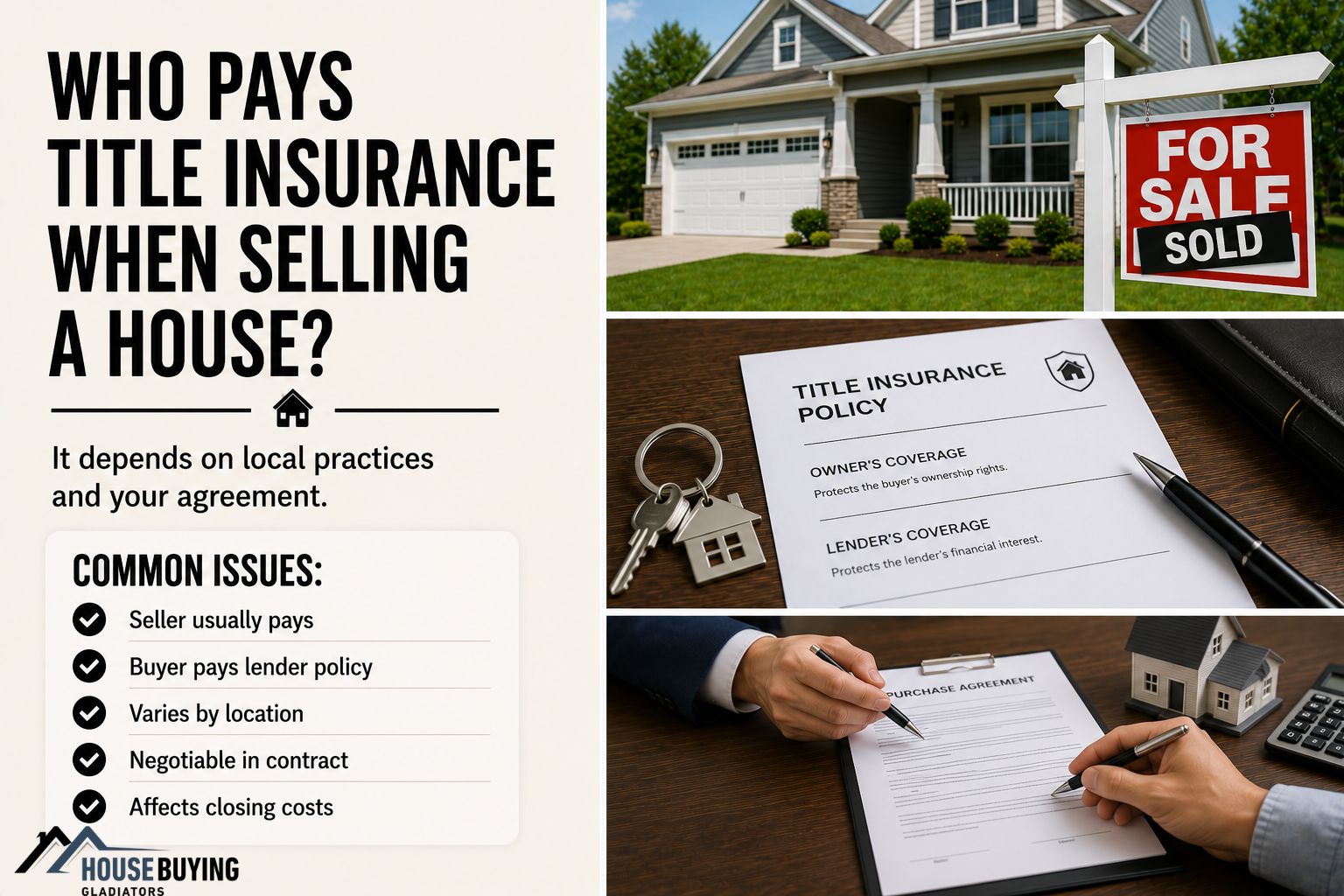
Who pays title insurance when selling a house depends on local real estate practices, the purchase agreement, and the terms negotiated between the buyer and seller. In many markets, sellers commonly pay for the owner’s title insurance policy, while buyers often pay for the lender’s policy when financing a home purchase. Every transaction is different, so responsibility can change based on the agreement both parties sign.
Many homeowners don’t think about title insurance until they’re preparing for closing.
By then, it has already become an important part of the negotiation.
Title insurance helps protect against covered ownership issues discovered after closing, making it one of the key costs buyers and sellers address before transferring ownership. Understanding who typically pays and when that responsibility can shift helps you estimate closing costs, compare offers more effectively, and avoid unexpected expenses before settlement.
In this guide, you’ll learn who usually pays for title insurance, why responsibilities vary from one transaction to another, when the cost is negotiable, and how it can affect your closing costs and final proceeds.
Title Insurance & Customary Fee Estimator
Title Insurance & Customary Fee Estimator
Simulate local title policy allocations, lender requirements, and net seller obligations in real-time.
Closing Settlement Ledger
Who Pays Title Insurance When Selling A House?
No. Sellers do not always pay for title insurance. Responsibility typically depends on local real estate customs, the purchase agreement, and the negotiated terms of the transaction. While sellers often pay for the owner’s title insurance policy in many markets, buyers may pay in others, and either party can agree to a different arrangement during negotiations.
There isn’t a nationwide rule that assigns this cost to one party.
Every purchase agreement has the flexibility to allocate title insurance differently.
Offer Accepted ➔ Closing Costs Negotiated ➔ Title Insurance Responsibility Assigned ➔ Closing Completed
| What Determines Who Pays? | Why It Matters |
|---|---|
| Local real estate customs | Closing practices vary by city, county, and state |
| Purchase agreement | Legally defines each party’s financial responsibilities |
| Buyer and seller negotiations | Either party may agree to pay as part of the overall offer |
| Financing requirements | Some loan programs influence how closing costs are negotiated |
Rather than assuming you’ll pay for title insurance, review the purchase agreement carefully and ask your real estate professional or title company how the cost is typically handled in your local market. Reviewing who typically pays for title insurance in a home sale can help sellers understand how local customs, negotiations, and the purchase agreement determine responsibility for this closing cost.
If you’re reviewing your expected expenses before closing, what costs do sellers pay at closing explains which fees sellers commonly pay and which costs are often negotiable.
Why Do Sellers Often Pay For The Owner’s Title Insurance Policy?
In many real estate transactions, sellers commonly pay for the owner’s title insurance policy because they’re transferring legal ownership of the property. Providing this policy gives buyers confidence that the title has been reviewed and protects them against covered title defects that existed before closing.
Paying for the owner’s policy doesn’t automatically mean the seller pays every title-related expense.
It simply reflects a long-standing practice in many local markets not a legal requirement.
Title Search Completed ➔ Clear Ownership Confirmed ➔ Owner’s Policy Issued ➔ Property Transfers
| Reason Sellers Often Pay | Why It Benefits The Transaction |
|---|---|
| Supports a smooth transfer of ownership | Helps complete the sale with fewer title-related concerns |
| Builds buyer confidence | Confirms the property has undergone a title review |
| Follows local market customs | Aligns with common closing practices in many areas |
| Helps finalize the transaction | Reduces disputes over responsibility before closing |
Before issuing an owner’s title insurance policy, the title company conducts a title search by reviewing public records to identify issues such as unpaid liens, recording errors, ownership disputes, or other title defects that could delay the sale. If problems are discovered, they typically need to be resolved before ownership can transfer successfully.
Although sellers often pay for the owner’s policy, that doesn’t make it the best choice in every transaction. Buyers and sellers can negotiate this expense just like other closing costs, especially in competitive or changing market conditions.
If you’re learning how ownership is verified before closing, what is a title company when selling a house explains how title companies perform title searches, coordinate closing documents, and help facilitate a legally compliant transfer of ownership.
Which Title Insurance Policy Do Sellers Pay When Selling A House?
When sellers pay for title insurance, they most commonly pay for the owner’s title insurance policy. This one-time policy protects the buyer against covered title defects that existed before the property changed ownership. If the buyer is financing the purchase, the lender will usually require a separate lender’s title insurance policy, which is often paid according to local customs or the purchase agreement.
The owner’s and lender’s policies serve different purposes.
Understanding the difference helps sellers estimate closing costs, evaluate offers, and negotiate with greater confidence.
Purchase Agreement Signed ➔ Title Search Completed ➔ Title Insurance Issued ➔ Closing Finalized
| Title Insurance Policy | Protects | Commonly Paid By* | Purpose |
|---|---|---|---|
| Owner’s Title Insurance | Buyer’s ownership rights | Often the seller | Protects against covered title defects that existed before closing |
| Lender’s Title Insurance | Mortgage lender | Often the buyer | Protects the lender’s financial interest until the loan is repaid |
A common misconception is that paying for one policy automatically covers both parties.
It doesn’t.
Each policy protects a different interest, which is why both may appear on the settlement statement in a financed transaction.
Before closing, review your purchase agreement and estimated settlement statement so you know exactly which title-related costs you’re responsible for and how they affect your final proceeds.
If you’re preparing for closing, what happens at closing when selling a house explains how title insurance, closing costs, and other settlement expenses are finalized before ownership transfers to the buyer.
Can Buyers And Sellers Negotiate Who Pays?
Yes. In most home sales, buyers and sellers can negotiate who pays for title insurance just as they negotiate the purchase price, closing date, repair requests, and seller concessions. Local customs provide a starting point, but the signed purchase agreement determines the final responsibility.
There is no universal rule that fits every transaction.
The strongest agreement is the one that works for both parties.
Offer Received ➔ Terms Negotiated ➔ Title Insurance Responsibility Agreed ➔ Closing Scheduled
| Negotiation Factor | How It Can Influence The Decision |
|---|---|
| Local market conditions | Sellers may contribute more in a buyer’s market |
| Strength of the offer | A stronger offer may justify seller-paid title insurance |
| Closing timeline | Faster closings may change negotiating priorities |
| Seller concessions | Title insurance may become part of the overall concession package |
| Multiple offers | Strong competition often increases the seller’s negotiating leverage |
Many homeowners researching who pays title insurance when selling a house are surprised to learn that the responsibility is fully negotiable in many transactions.
Instead of negotiating title insurance as a standalone expense, evaluate the entire offer. A buyer asking the seller to cover title insurance may also offer a higher purchase price, fewer contingencies, or a quicker closing. Looking at the complete transaction not one individual cost helps you identify the strongest overall deal.
Compare The Entire Offer Not Just One Closing Cost
| Compare This | Instead Of Only This |
|---|---|
| Expected net proceeds | Purchase price alone |
| Total closing costs | One individual expense |
| Financing strength | Verbal promises |
| Contract terms | A single concession |
| Likelihood of closing | Speed alone |
Successful negotiations focus on the total financial outcome rather than one line item on the closing statement. In many cases, accepting responsibility for title insurance can still result in a stronger overall transaction if the rest of the offer provides greater value.
If you’re comparing different types of offers, cash offer vs mortgage offer explains how financing, contingencies, and closing certainty can influence the overall value of a home sale.
What Factors Determine Who Pays For Title Insurance?
Several factors determine who pays for title insurance, including local closing practices, market conditions, financing, and the terms agreed upon in the purchase agreement. While local customs often establish expectations, negotiations ultimately determine how the cost is divided.
Every real estate transaction is unique.
Two homes in the same neighborhood can allocate title insurance differently depending on the negotiated contract.
Property Under Contract ➔ Closing Costs Reviewed ➔ Responsibilities Assigned ➔ Ownership Transfers
| Factor | Why It Matters |
|---|---|
| Local closing customs | Establishes common expectations in the area |
| Purchase agreement | Legally assigns responsibility for payment |
| Type of financing | Some loan programs influence closing cost negotiations |
| Market conditions | Buyer or seller leverage can shift responsibility |
| Overall contract value | Higher-value offers may offset additional closing costs |
| Seller concessions | Closing expenses can be redistributed during negotiations |
Review the purchase agreement and ask your title company or real estate professional how your area handles title insurance. Doing this early helps you estimate closing costs and negotiate with confidence.
If you’re reviewing how financial responsibilities are documented, what is a purchase agreement when selling a house explains how closing costs, title insurance, and other negotiated terms become part of the final contract.
Does Paying For Title Insurance Benefit The Seller?
Paying for title insurance can benefit the seller if it strengthens the overall offer, helps resolve negotiations, or increases the likelihood of reaching a successful closing. While it adds to the seller’s closing costs, it may also create a smoother transaction and preserve the agreed purchase price.
A closing cost should never be evaluated in isolation.
The best decision is the one that produces the strongest overall financial outcome.
Buyer Submits Offer ➔ Seller Evaluates Terms ➔ Agreement Reached ➔ Closing Completed
| Potential Benefit | Why It Can Be Valuable |
|---|---|
| Makes the offer more competitive | May encourage buyers to move forward |
| Helps preserve the purchase price | Can avoid a larger price reduction |
| Resolves negotiation gaps | Keeps the transaction progressing |
| Supports a smoother closing | Reduces disputes over closing expenses |
When Paying May Be Worth Considering
| Situation | Why It May Benefit The Seller |
|---|---|
| Competitive buyer’s market | Helps attract qualified buyers |
| Buyer requests limited closing cost assistance | May keep the transaction on track |
| Strong purchase offer | Overall value outweighs the additional expense |
| Minor negotiation differences | Helps both parties reach an agreement faster |
Instead of focusing on the title insurance premium alone, consider how it fits into the complete offer. A buyer requesting seller-paid title insurance may also offer fewer contingencies, stronger financing, or a quicker closing. Looking at the transaction as a whole helps you determine whether the additional cost delivers greater overall value.
If you’re comparing competing buyers, how do multiple offers work when selling a house explains how to evaluate more than just the purchase price when choosing the strongest overall offer.
How Can Sellers Manage Title Insurance Costs?
Although sellers may not always control the cost of title insurance, they can often manage their overall expenses by reviewing the purchase agreement carefully, negotiating closing costs, and understanding local real estate practices before accepting an offer.
The goal isn’t simply to spend less.
It’s to make informed decisions that maximize your final proceeds.
Review Offer ➔ Understand Closing Costs ➔ Negotiate Responsibilities ➔ Complete The Sale
| Strategy | Why It Helps |
|---|---|
| Review the purchase agreement | Confirms who pays each closing expense |
| Compare the complete offer | Measures overall financial value instead of one cost |
| Understand local customs | Sets realistic expectations before negotiations |
| Review the settlement statement | Helps identify unexpected or incorrect charges |
| Calculate expected proceeds | Shows the true financial impact of closing costs |
Evaluate The Entire Transaction
| Focus On | Instead Of |
|---|---|
| Total net proceeds | One individual closing cost |
| Contract terms | A single negotiation point |
| Buyer qualifications | Purchase price alone |
| Closing certainty | Fast closing without context |
| Overall value | One isolated expense |
Many homeowners spend too much time negotiating a single closing cost while overlooking the overall transaction. Reviewing ways to save on title insurance costs can help sellers understand strategies for reducing title-related expenses, comparing providers where possible, and making more informed closing decisions.
If you’re estimating the amount you’ll receive after closing, what is net proceeds when selling a house explains how closing costs and other expenses affect your final payout.
FAQs: Who Pays Title Insurance When Selling A House?
Responsibility depends on the purchase agreement, local real estate customs, and the negotiated terms of the transaction. In many markets, sellers commonly pay for the owner’s title insurance policy, while buyers often pay for the lender’s policy.
Not usually. In most home sales, buyers and sellers negotiate this cost as part of the purchase agreement. Local customs may influence expectations, but they do not automatically determine responsibility.
The owner’s title insurance policy protects the buyer’s ownership rights, while the lender’s title insurance policy protects the lender until the borrower repays the loan.
Yes. Title insurance is a negotiable closing expense. Buyers and sellers can agree on who pays based on market conditions, the strength of the offer, and the overall contract terms.
Yes. Sellers deduct the title insurance premium from their sale proceeds at closing along with any other agreed closing costs.
Sometimes. Cash sales eliminate lender requirements, but buyers and sellers still negotiate responsibility for the owner’s title insurance policy and other closing expenses.
In many markets, it’s a long-standing local practice that helps facilitate the transfer of ownership and provides buyers with protection against covered title defects that existed before closing.
Yes. The purchase agreement can allocate the cost in any way both parties accept, including splitting the premium between the buyer and seller.
If the agreement is unclear, the parties usually negotiate the issue before closing. Your real estate professional or title company can also explain the common practice in your local market.
Conclusion: Who Pays Title Insurance When Selling A House?
Understanding who pays title insurance when selling a house helps sellers estimate closing costs, negotiate stronger offers, and avoid unexpected expenses before closing. While sellers often pay for the owner’s title insurance policy in many markets, the final responsibility depends on local practices, the purchase agreement, and the terms negotiated between the buyer and seller.
Review The Offer ➔ Understand Your Closing Costs ➔ Negotiate Confidently ➔ Complete The Sale
Instead of focusing on a single closing expense, evaluate the transaction as a whole. Consider the purchase price, financing strength, concessions, closing costs, and your expected net proceeds before accepting an offer. A well-balanced agreement often delivers greater value than simply shifting one cost from one party to another.
By understanding how title insurance fits into the closing process, you can negotiate with confidence, avoid unexpected expenses, and make informed decisions that support a smoother and more successful home sale.