Skip to content
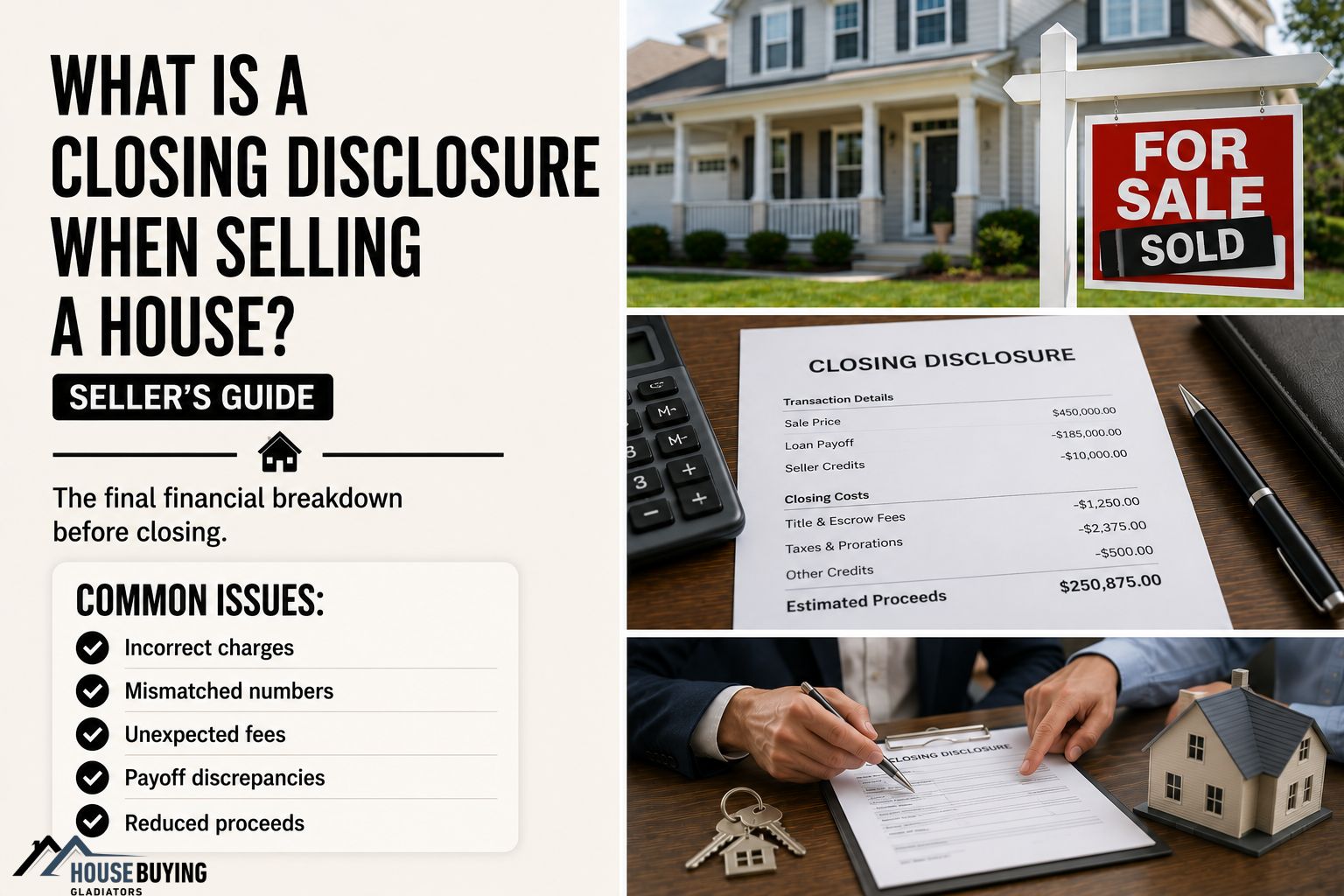
If you’re wondering what is a Closing Disclosure when selling a house, it’s the final document that outlines the financial details of your home sale before closing. It summarizes the purchase price, mortgage payoff, seller credits, closing costs, title charges, taxes, and the estimated proceeds you’ll receive, giving you a final opportunity to review the transaction before signing.
Receiving the Closing Disclosure doesn’t mean you should sign it immediately. Instead, use it to confirm that the numbers match your purchase agreement and to identify any errors before ownership transfers to the buyer.
Unlike earlier estimates, the Closing Disclosure reflects the final financial terms of the transaction. Reviewing it carefully helps you verify your closing costs, understand your expected proceeds, and avoid unexpected surprises on closing day.
In this guide, you’ll learn what a Closing Disclosure is, why sellers receive it, what information it includes, what to review before signing, and how it helps ensure a smooth and accurate closing.
Seller Closing Cost & Proceeds Estimator
Seller Closing Cost & Proceeds Estimator
Simulate real-world Closing Disclosure ledger dynamics and estimate your final net proceeds.
Note: Tax proration values are estimated at a base rate of 0.3% of the sales value. The calculation formula physically restrains mortgage payoff limits from exceeding the property’s transaction sale value.
Why Is The Closing Disclosure Important When Selling A House?
The Closing Disclosure is important because it gives sellers a final opportunity to verify the financial details of the transaction before signing the closing documents. Reviewing it carefully helps confirm that the purchase price, seller credits, mortgage payoff, closing costs, and expected proceeds match the agreed terms of the sale.
The Closing Disclosure isn’t just paperwork.
It’s your final financial review before ownership transfers to the buyer.
What Sellers Should Confirm
| Item To Review | Why It Matters |
|---|---|
| Purchase price | Confirms the agreed sale amount is accurate |
| Mortgage payoff | Verifies the remaining loan balance to be paid at closing |
| Seller credits | Ensures negotiated concessions are recorded correctly |
| Closing costs | Helps identify unexpected fees or charges |
| Estimated proceeds | Shows the amount you should receive after closing |
A small error on the Closing Disclosure can affect your final proceeds or delay closing. Reviewing common seller closing costs can help homeowners better understand the fees that typically appear before closing and verify they’re accurate.
If you’re reviewing the financial side of your transaction, what costs do sellers pay at closing explains the common expenses that appear on a seller’s final closing statement.
What Should Sellers Check On The Closing Disclosure Before Signing?
Before signing the Closing Disclosure, sellers should carefully review the purchase price, mortgage payoff, closing costs, seller credits, title charges, prorated property taxes, and estimated proceeds. Confirming these details before closing helps prevent delays, financial errors, and last-minute disputes.
Small mistakes can have expensive consequences.
Reviewing the document carefully gives you one final opportunity to correct errors before the sale becomes legally binding.
Final Review Checklist
| Verify This | Why It Matters |
|---|---|
| Purchase price | Matches the signed purchase agreement |
| Mortgage payoff | Reflects the correct loan balance |
| Closing costs | Identifies unexpected or incorrect fees |
| Seller credits | Confirms negotiated concessions are accurate |
| Property tax prorations | Ensures taxes are divided correctly between buyer and seller |
| Estimated proceeds | Verifies the amount you’ll receive at closing |
Don’t assume every number is correct simply because the Closing Disclosure comes from the closing professional. Reviewing how to read a Closing Disclosure can help sellers verify key financial details before signing.
If you’re checking the loan payoff listed on your Closing Disclosure, what is a mortgage payoff statement when selling a house explains how lenders calculate the remaining balance before closing.
Can The Closing Disclosure Change Before Selling A House?
Yes. A Closing Disclosure can change before closing if the parties renegotiate the contract, correct an error, adjust prorated expenses, or update certain closing costs. Sellers should always review the most recent version to confirm the final numbers before signing.
Receiving a Closing Disclosure doesn’t always mean the figures are final.
Changes can occur until the transaction is ready to close.
Common Reasons A Closing Disclosure Changes
| Reason For The Change | Possible Impact |
|---|---|
| Contract amendment | Updates the purchase price or seller credits |
| Corrected closing costs | Revises title, escrow, or recording fees |
| Mortgage payoff update | Changes the amount deducted from the seller’s proceeds |
| Property tax or HOA proration | Adjusts shared expenses between buyer and seller |
| Clerical correction | Fixes calculation or document errors before closing |
A revised Closing Disclosure isn’t necessarily a cause for concern. The important step is comparing the updated version with the previous one so you understand exactly what changed and how it affects your proceeds before signing.
If you’re calculating the amount you’ll receive after every adjustment, what is net proceeds when selling a house explains how mortgage payoffs, taxes, seller credits, and closing costs determine your final payout.
How To Correct A Closing Disclosure When Selling A House Before Closing
If you find a mistake on the Closing Disclosure, contact your closing agent, title company, lender, or real estate professional immediately. Correcting errors before signing helps prevent delays, inaccurate payouts, and disputes after closing.
Don’t ignore a number that doesn’t look right.
Even a small error can affect your final proceeds or delay the transaction.
Common Errors Sellers Should Report
| Possible Error | Why It Should Be Corrected |
|---|---|
| Incorrect purchase price | Changes the financial terms of the sale |
| Wrong mortgage payoff | Affects the amount deducted at closing |
| Missing or inaccurate seller credits | May reduce your expected proceeds |
| Incorrect title or escrow fees | Can increase your closing costs unnecessarily |
| Tax or HOA proration errors | May allocate expenses incorrectly between buyer and seller |
Most Closing Disclosure corrections are straightforward when identified before closing. Reviewing the document carefully and asking questions about unfamiliar charges helps ensure the final settlement accurately reflects the agreed terms of the transaction.
If you’re reviewing who coordinates these corrections before closing, what is a title company when selling a house explains how title companies prepare settlement documents, coordinate with the parties involved, and help complete the closing process.
Does Signing The Closing Disclosure Mean The Sale Is Final?
No. Signing the Closing Disclosure doesn’t transfer ownership or complete the home sale. The transaction becomes final only after all required closing documents are signed, funds are transferred, and the deed is recorded according to local closing procedures.
Signing the document is an important milestone.
It isn’t the final step in the transaction.
What Happens After You Sign?
| Next Step | Why It Matters |
|---|---|
| Final documents are signed | Completes the legal paperwork |
| Funds are transferred | Pays the seller, lender, and other parties |
| Deed is recorded | Officially transfers ownership to the buyer |
| Closing is completed | Finalizes the real estate transaction |
Reviewing and signing the Closing Disclosure confirms you’ve had the opportunity to examine the financial details before closing. After that, the remaining legal and financial steps must be completed before the sale officially closes.
If you’re wondering what happens after the paperwork is signed, what happens at closing when selling a house explains the final steps that complete the transfer of ownership.
How Does The Closing Disclosure Protect Sellers?
The Closing Disclosure helps protect sellers by providing a final opportunity to review the financial details of the transaction before ownership transfers. It allows sellers to verify the purchase price, closing costs, mortgage payoff, tax prorations, and expected proceeds so potential errors can be corrected before closing.
The document doesn’t just summarize the transaction.
It helps ensure the final numbers match the agreement you accepted.
Why A Final Review Matters
| Seller Benefit | Why It Matters |
|---|---|
| Confirms agreed financial terms | Helps ensure the purchase agreement is reflected accurately |
| Identifies unexpected charges | Reduces the risk of overpaying fees or credits |
| Verifies final proceeds | Helps sellers understand how much they’ll receive at closing |
| Reduces closing disputes | Allows corrections before ownership officially transfers |
Rather than treating the Closing Disclosure as paperwork to sign quickly, use it as a final verification tool. Comparing the document with your purchase agreement and asking questions about unfamiliar charges helps protect your financial interests and creates a smoother closing experience.
If you’re reviewing the agreement that determines many of these financial terms, what is a purchase agreement when selling a house explains how the contract establishes the obligations reflected on the Closing Disclosure.
FAQs: What Is A Closing Disclosure When Selling A House?
A Closing Disclosure is the final document that outlines the financial details of a real estate transaction. It shows the purchase price, closing costs, mortgage payoff, seller credits, taxes, and the estimated amount the seller will receive at closing.
Sellers typically receive the Closing Disclosure shortly before closing. The exact timing varies by transaction, but receiving it before signing gives sellers time to review the financial details and ask questions.
The Closing Disclosure reflects the final financial terms of the transaction, but signing it alone doesn’t complete the sale. Ownership transfers only after all closing documents are signed, funds are distributed, and the deed is recorded according to local requirements.
Yes. The Closing Disclosure may change if the parties negotiate new terms, correct errors, adjust prorated expenses, or update closing costs before the transaction is finalized.
Sellers should verify the purchase price, mortgage payoff, seller credits, closing costs, title charges, tax prorations, and estimated proceeds. Reviewing these details helps identify mistakes before closing.
Notify your closing agent, title company, lender, or real estate professional immediately. Correcting errors before closing helps prevent delays and ensures the settlement reflects the agreed terms.
Most financed transactions include a Closing Disclosure because federal lending rules require it. Cash transactions may use a settlement statement or other closing documents depending on local practices and the professionals handling the closing.
Yes. The document includes an estimate of the seller’s proceeds after deducting the mortgage payoff, closing costs, taxes, and other agreed expenses.
No. Review the document carefully before signing. If any amount or charge appears incorrect, ask your closing professional for clarification so issues can be resolved before the transaction is completed.
Conclusion: What Is A Closing Disclosure When Selling A House?
A Closing Disclosure is more than a final closing document it’s your last opportunity to verify the financial details of the transaction before ownership transfers. Reviewing it carefully helps confirm that the purchase price, mortgage payoff, seller credits, closing costs, and estimated proceeds accurately reflect the terms you agreed to.
Review The Numbers ➔ Confirm The Details ➔ Resolve Any Errors ➔ Close With Confidence
Rather than signing the Closing Disclosure without reviewing it, take the time to compare it with your purchase agreement and ask questions about any unfamiliar charges. A careful review helps protect your financial interests, reduces the risk of last-minute surprises, and supports a smoother closing experience.
Whether you’re selling your first home or completing another real estate transaction, understanding the Closing Disclosure allows you to approach closing with greater confidence and make informed decisions before the sale becomes final.