Skip to content
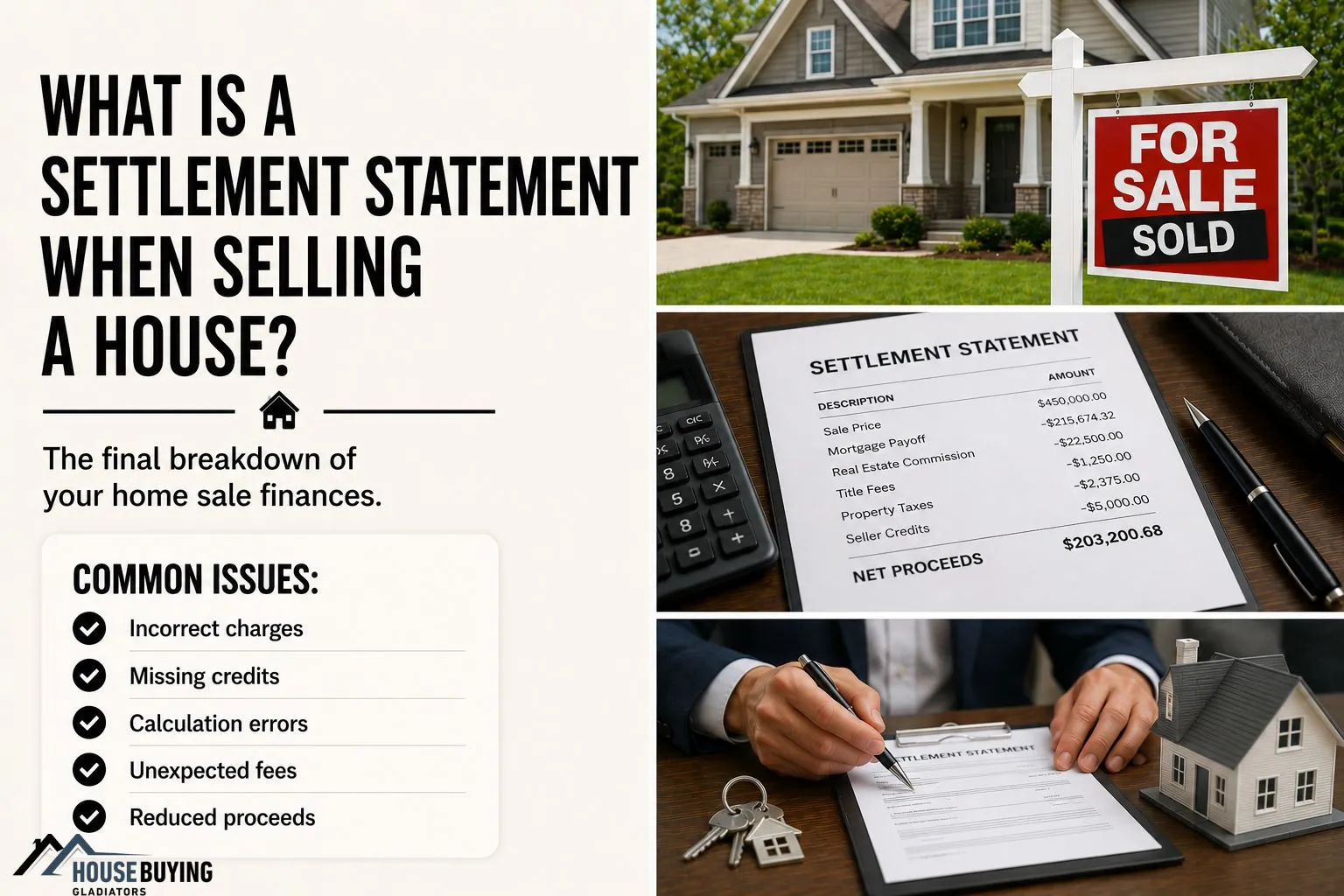
If you’re wondering what is a settlement statement when selling a house, it’s the final financial document that shows how the title company distributes every dollar before your home sale closes. It summarizes the purchase price, mortgage payoff, closing costs, taxes, commissions, seller credits, and your final proceeds, giving you a complete picture of the transaction before the buyer takes ownership.
The settlement statement doesn’t create the terms of the sale it confirms the final financial outcome. By reviewing it before closing, sellers can verify every credit, deduction, and payment, identify unexpected charges, and ask the title company to correct any discrepancies before it distributes the closing funds.
Unlike a purchase agreement, which outlines what the buyer and seller agreed to, the settlement statement reflects the final financial calculations used to complete the transaction. That makes it one of the most important documents you’ll review before closing.
In this guide, you’ll learn what a settlement statement is, who prepares it, what information it includes, how it differs from a Closing Disclosure, and what sellers should review before signing.
Sellers Settlement Statement Estimator
Sellers Settlement Statement Estimator
Estimate your final net proceeds based on custom credits, broker commissions, and closing fees.
Note: This is a mathematical projection. Final numbers will be calculated by your settlement agent or title company using actual prorated local taxes and utility parameters on your final ALTA statement.
Why Is A Settlement Statement Important When Selling A House?
A settlement statement is important because it provides the final financial record of the home sale. It shows where every dollar goes before closing, helping sellers verify the mortgage payoff, commissions, taxes, closing costs, credits, and the proceeds they’ll receive.
The settlement statement isn’t just a receipt.
It’s the document that confirms the financial outcome of your home sale.
What Sellers Should Verify
| Financial Detail | Why It Matters |
|---|---|
| Purchase price | Confirms the agreed sale amount |
| Mortgage payoff | Verifies the loan balance deducted at closing |
| Real estate commission | Ensures commission matches the listing agreement |
| Closing costs | Identifies fees charged to the seller |
| Seller proceeds | Confirms the final amount you’ll receive |
For additional background on how a settlement statement works, Investopedia provides a helpful overview of the document and its role in real estate transactions.
If you’re reviewing the expenses deducted from your proceeds, what costs do sellers pay at closing explains the common fees that appear before you receive your final payment.
Who Prepares The Settlement Statement When Selling A House?
The title company, closing attorney, or escrow company typically prepares the settlement statement using information from the purchase agreement, lender, and both parties involved in the transaction. Before closing, everyone reviews the document to confirm the financial details are accurate.
Sellers don’t prepare the settlement statement themselves.
Closing professionals compile the information, coordinate the final calculations, and complete the transaction on closing day.
Who Contributes To The Settlement Statement?
| Party | Primary Responsibility |
|---|---|
| Title company or closing attorney | Prepares the settlement statement |
| Lender | Provides the mortgage payoff amount |
| Real estate agents | Confirm commissions and negotiated credits |
| Buyer and seller | Review the document for accuracy before signing |
Although closing professionals prepare the settlement statement, sellers should still review every charge carefully. Identifying an error before closing is much easier than correcting it after the transaction has been completed.
If you’re wondering who coordinates the entire closing process, what is a title company when selling a house explains how title companies prepare documents, manage settlement, and facilitate the transfer of ownership.
Settlement Statement Vs. Closing Disclosure: What’s The Difference?
A settlement statement and a Closing Disclosure both summarize the financial details of a real estate transaction, but they serve different purposes. Federal regulations require a Closing Disclosure for many mortgage-financed transactions, while the title company prepares a settlement statement to document the final distribution of funds at closing, including many cash sales.
The documents often contain similar financial information.
Their purpose and use can differ depending on the type of transaction.
Key Differences
| Settlement Statement | Closing Disclosure |
|---|---|
| Summarizes the final distribution of funds | Explains the final loan and closing terms |
| Commonly used in cash and financed transactions | Primarily used in mortgage-financed transactions |
| Records all credits, debits, and payments | Helps borrowers review loan costs before closing |
| Prepared as part of the final settlement process | Required under federal lending regulations for many loans |
Rather than comparing the documents line by line, focus on their purpose. Reviewing the difference between a settlement statement and a Closing Disclosure can help sellers understand when each document is used and how they work together during closing.
If you’re learning about the lender’s required closing documents, what is a Closing Disclosure when selling a house explains when sellers receive it, what to review, and how it supports the closing process.
When Should Sellers Review The Settlement Statement When Selling A House?
Sellers should review the settlement statement as soon as they receive it before closing. Checking the document early provides time to verify the financial details, ask questions, and correct any errors before the transaction is finalized.
Don’t wait until you’re sitting at the closing table.
Reviewing the settlement statement in advance makes it easier to resolve discrepancies and avoid last-minute surprises.
Settlement Statement Review Checklist
| Review Item | Why It Matters |
|---|---|
| Purchase price | Confirms the agreed sale amount |
| Mortgage payoff | Verifies the loan payoff is accurate |
| Seller credits | Ensures negotiated credits are recorded correctly |
| Closing costs | Identifies unexpected fees or deductions |
| Estimated proceeds | Confirms the amount you’ll receive after closing |
Reviewing the settlement statement before signing helps protect your financial interests and gives the closing team enough time to correct mistakes before the title company distributes the closing funds.
If you’re estimating the amount you’ll receive after every deduction, what is net proceeds when selling a house explains how mortgage payoffs, taxes, commissions, and closing costs affect your final payout.
How To Correct A Settlement Statement When Selling A House
If you find a mistake on the settlement statement, contact your title company, closing attorney, escrow officer, or real estate professional immediately. Correcting errors before closing helps prevent funding delays, inaccurate payouts, and disputes after the transaction is complete.
A settlement statement should reflect the final agreement not introduce unexpected surprises.
Reviewing it carefully before signing gives everyone time to resolve issues while the transaction is still pending.
Common Settlement Statement Errors
| Possible Error | Why It Should Be Corrected |
|---|---|
| Incorrect purchase price | Changes the financial terms of the sale |
| Wrong mortgage payoff | Reduces or overstates seller proceeds |
| Incorrect commission | Creates inaccurate payment distributions |
| Missing seller credits | Changes the final settlement amount |
| Unexpected closing fees | May increase the seller’s costs unnecessarily |
Finding an error doesn’t automatically delay closing. Most issues can be resolved quickly when they’re reported before funds are distributed and the closing documents are finalized.
If you’re reviewing one of the largest deductions on your settlement statement, what is a mortgage payoff statement when selling a house explains how lenders calculate the exact amount needed to satisfy your mortgage before closing.
FAQs: What Is A Settlement Statement When Selling A House?
A settlement statement is a closing document that provides a complete financial summary of the home sale, including the purchase price, seller credits, closing costs, mortgage payoff, taxes, and final proceeds.
No. A settlement statement records the final distribution of funds, while a Closing Disclosure explains the final loan terms and closing costs for many mortgage-financed transactions.
The title company, escrow company, or closing attorney usually prepares the settlement statement using information from the purchase agreement, lender, and both parties before closing.
Sellers typically receive the settlement statement shortly before closing. Reviewing it promptly gives them time to verify the financial details and resolve any discrepancies before signing.
A settlement statement generally includes the purchase price, mortgage payoff, commissions, taxes, closing costs, seller credits, prorations, and the seller’s estimated proceeds from the transaction.
Yes. The settlement statement may change if closing costs, prorations, mortgage payoff amounts, or negotiated terms change before the transaction is finalized.
Sellers should verify the purchase price, mortgage payoff, commissions, seller credits, taxes, closing costs, and estimated proceeds to confirm every financial detail matches the agreed transaction.
Report any errors immediately to the title company, escrow officer, or closing attorney. Correcting mistakes before closing helps prevent funding delays and inaccurate financial distributions.
Most home sales include a settlement statement or a similar settlement document that records the financial details of the transaction, although the exact form may vary by location and closing process.
The settlement statement creates the final financial record of the transaction. It helps sellers verify every credit, deduction, and payment before closing and understand exactly how their proceeds were calculated.
Conclusion: What Is A Settlement Statement When Selling A House?
A settlement statement brings every financial detail of your home sale together in one place. It outlines the purchase price, mortgage payoff, commissions, taxes, credits, closing costs, and final proceeds, helping sellers verify every financial detail before the title company distributes funds and transfers ownership to the buyer.
Review Every Charge ➔ Confirm The Final Numbers ➔ Resolve Any Errors ➔ Close With Confidence
Taking time to review the settlement statement before signing helps protect your financial interests, reduces the risk of costly mistakes, and supports a smoother closing. Understanding how this document works also makes it easier to evaluate your final proceeds and complete your home sale with confidence.