Skip to content
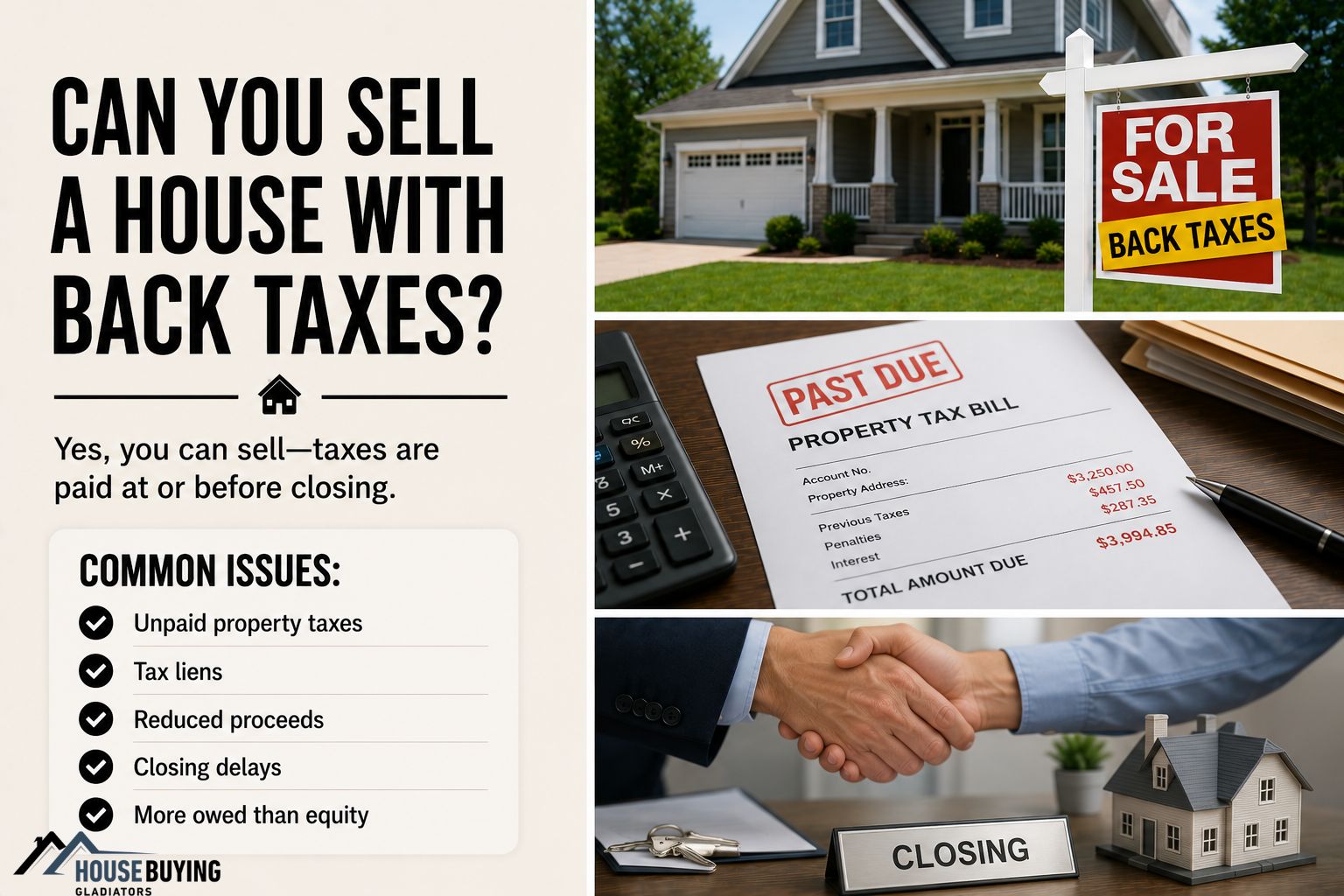
Yes, you can sell a house with back taxes. In most cases, unpaid property taxes don’t prevent a sale, but they usually must be paid before or during closing so the buyer receives clear title. If you’re wondering can you sell a house with back taxes, the answer depends on your available equity, the amount owed, and how the outstanding taxes are resolved during the transaction.
Many homeowners assume back taxes make a property impossible to sell. In reality, they create a financial obligation not necessarily a barrier to closing. The bigger concern is understanding how unpaid property taxes affect your net proceeds, closing timeline, and selling options.
Whether you’re selling through a real estate agent or accepting a cash offer, knowing how back taxes are handled helps you prepare for closing, avoid unexpected delays, and make informed financial decisions.
In this guide, you’ll learn how selling a house with back taxes works, when unpaid taxes must be paid, how they affect your proceeds, and the options available if you owe more than you can comfortably pay.
Back Taxes & Net Proceeds Estimator
Back Taxes & Net Proceeds Estimator
Simulate how your outstanding tax liabilities, penalties, and traditional costs impact your cash-out at closing.
Note: Calculations dynamically adjust real estate commissions and hold remaining mortgage balance caps up to the property’s estimated sales value to protect transactional viability.
What Happens If You Sell A House With Back Taxes?
Selling a house doesn’t erase unpaid property taxes. Instead, the outstanding tax balance typically becomes part of the closing process. Before ownership transfers, the title company or closing attorney calculates the amount owed and arranges for eligible tax liens or delinquent property taxes to be paid from the seller’s proceeds.
Unpaid property taxes usually follow the property not the homeowner.
That’s why resolving them is often necessary before the buyer receives clear title.
Home Under Contract ➔ Title Search Reveals Back Taxes ➔ Taxes Paid At Closing ➔ Ownership Transfers
| What Happens | Why It Matters |
|---|---|
| Back taxes are identified | Prevents unexpected issues before closing |
| Payoff amount is calculated | Confirms the total owed, including eligible penalties or interest |
| Taxes are paid from proceeds | Helps clear the title before ownership transfers |
| Remaining proceeds go to the seller | Reflects the balance after eligible closing costs and taxes |
Most sellers don’t write a separate check for delinquent property taxes. When the sale generates enough proceeds, the closing agent typically deducts the amount owed before distributing the remaining funds. Reviewing how selling a house with back taxes works can help homeowners better understand how unpaid property taxes are typically handled during closing.
To understand how unpaid property taxes, mortgages, and other selling expenses affect your final payout, what is net proceeds when selling a house explains how these costs influence the amount you receive at settlement.
Can Back Taxes Delay Or Prevent A Home Sale?
Yes, back taxes can delay a home sale if they create a tax lien or another issue that prevents the seller from delivering clear title. In many cases, however, resolving the unpaid taxes during closing allows the transaction to move forward without cancelling the sale.
The taxes themselves usually aren’t the problem.
The problem is whether they prevent the buyer from receiving clear ownership.
When Back Taxes May Affect Closing
| Situation | Possible Outcome |
|---|---|
| Taxes are paid at closing | Sale usually proceeds as planned |
| Tax lien remains unpaid | Closing may pause until it’s is resolved |
| Sale proceeds cover the debt | Title can often be cleared before ownership transfers |
| Sale proceeds don’t cover the debt | The parties may need another resolution before closing |
Most sales involving back taxes still close successfully. The key is identifying the balance early, understanding how it affects the transaction, and working with the title company or closing professional to resolve the obligation before the scheduled closing date.
If unpaid taxes have already become a lien against the property, can you sell a house with a lien explains how different types of liens affect the sale process and what options sellers have before closing.
What If You Can’t Afford To Pay Back Taxes Before Selling Your House?
If you can’t afford to pay your back taxes before closing, you may still have options. Many sellers use the proceeds from the sale to satisfy the tax debt at closing. If the sale won’t generate enough money to cover the balance, you may need to negotiate with the taxing authority, contribute additional funds, or explore other solutions before the transaction can close.
A tax bill doesn’t always end the sale.
The important question is whether the transaction generates enough funds to clear the debt.
Your Options May Include
- Using the sale proceeds to pay the outstanding taxes.
- Negotiating a payoff or payment arrangement if available.
- Bringing additional funds to closing if necessary.
- Exploring alternatives such as a short sale or other loss-mitigation options if the property’s value won’t cover all secured debts.
Decision Guide
| Your Situation | Possible Next Step |
|---|---|
| Sale proceeds cover the taxes | Taxes are typically paid at closing |
| Taxes exceed available proceeds | Review payoff options before closing |
| Property has multiple debts | Compare all secured obligations before accepting an offer |
| Tax foreclosure is approaching | Act quickly to preserve selling options |
The earlier you identify the tax balance, the more flexibility you’ll have to evaluate your options. Waiting until the final stages of closing can limit your choices and increase the risk of delays.
If you’re negotiating the financial terms of your sale, what is a seller concession explains how negotiated closing costs and credits can affect the overall transaction.
Should You Sell A House Before Paying Back Taxes?
In many situations, selling before paying your back taxes makes financial sense because the closing process often provides a way to satisfy the debt using the sale proceeds. Waiting to pay the taxes first isn’t always necessary and may delay your ability to move, avoid additional penalties, or preserve your equity.
Timing can affect more than your tax balance.
It can also influence your selling costs, available equity, and the risk of further collection action.
Compare Your Options
| Option | Best When |
|---|---|
| Sell before paying the taxes | The property has enough equity to satisfy the tax debt at closing |
| Pay the taxes before listing | You want to remove the lien before marketing the property |
| Seek professional guidance first | The tax balance is large or multiple liens exist |
Before making a decision, calculate your expected equity, mortgage payoff, unpaid property taxes, and estimated closing costs. Looking at the complete financial picture helps determine whether selling now or waiting will produce the stronger outcome.
If you’re evaluating how much equity remains after paying your obligations, what is home equity when selling a house explains how to calculate the value you may keep after the sale.
Does Selling Quickly Help If You Owe Back Taxes?
Selling sooner can give homeowners more options. Every taxing authority follows its own collection process, but delaying a sale may allow additional interest, penalties, or enforcement actions to accumulate. Listing the property early gives you more time to evaluate offers, calculate your proceeds, and resolve the tax debt before closing.
Waiting rarely makes unpaid property taxes less expensive.
Acting early often provides greater flexibility and more control over the outcome.
Why Timing Matters
| Acting Earlier | Waiting Too Long |
|---|---|
| More time to compare offers | Interest and penalties may continue to grow |
| Greater flexibility during negotiations | Fewer options if enforcement actions begin |
| Better opportunity to estimate net proceeds | Increased pressure to sell quickly |
| More time to coordinate closing | Higher risk of transaction delays |
Selling early doesn’t guarantee a better financial result, but it often gives homeowners more choices. Understanding your tax balance, remaining equity, and local collection timeline can help you decide the best time to put your home on the market.
If you’re trying to avoid losing your home because of unpaid property taxes, how to stop a tax foreclosure by selling your house explains the options that may be available before the foreclosure process is complete.
How Do Cash Buyers Handle Houses With Back Taxes?
Cash buyers can often purchase homes with back taxes, but the unpaid taxes usually need to be resolved before or during closing. Instead of requiring the seller to clear the balance in advance, the title company typically calculates the amount owed and deducts eligible taxes from the seller’s proceeds if the sale generates sufficient funds.
A property with back taxes isn’t automatically unsellable.
The key is whether the transaction provides a clear path to satisfy the outstanding tax obligation.
Why Some Sellers Choose A Cash Sale
| Situation | Why A Cash Sale May Help |
|---|---|
| Tax debt continues to grow | A faster closing may help reduce additional penalties and interest |
| Property needs repairs | Buyers often purchase the home in its current condition |
| Time-sensitive sale | Fewer financing-related delays may simplify the transaction |
| Complex financial situation | Closing professionals can coordinate mortgage payoffs, tax balances, and other liens together |
Every transaction is different. Before accepting an offer, compare the purchase price, estimated net proceeds, closing timeline, and outstanding obligations not just the speed of the sale. The strongest offer is the one that best supports your overall financial goals.
If you’re evaluating different selling options, cash offer vs. mortgage offer explains how financing, contingencies, and closing timelines can affect the overall value of an offer.
What Should You Do First If You Owe Back Property Taxes?
Before listing your home, confirm exactly how much you owe and determine whether the property has enough equity to cover the unpaid taxes, your mortgage balance, and estimated closing costs. Knowing these numbers early helps you price the home realistically and avoid delays later in the transaction.
The sooner you understand your financial position, the more options you’ll have.
Many closing delays happen because sellers discover outstanding tax obligations only after accepting an offer.
Before Listing Your Home, Ask Yourself:
- Do I know my current property tax balance?
- Have I requested my mortgage payoff amount?
- How much home equity do I have?
- Have I estimated my closing costs?
- Have I discussed any tax liens or title issues with my title company or real estate professional?
Taking these steps before listing your property helps you negotiate with confidence, evaluate offers more accurately, and prepare for a smoother closing.
If you’re reviewing everything needed before putting your home on the market, what documents do I need to sell my house explains the key paperwork that can help keep your transaction on schedule.
Can You Avoid Losing Your House Because Of Back Taxes?
Yes many homeowners can avoid losing their house by selling before the taxing authority completes the tax foreclosure process. Acting early may preserve your equity, provide more selling options, and give you greater control over the transaction.
Time matters when property taxes remain unpaid.
The longer the debt remains unresolved, the fewer options homeowners may have.
Why Acting Early Can Make A Difference
| Acting Before Tax Foreclosure | Waiting Until Tax Foreclosure |
|---|---|
| More control over the sale | Fewer selling options may remain |
| Opportunity to preserve equity | Equity may decrease as penalties and costs grow |
| More time to compare offers | Decisions may become time-sensitive |
| Greater flexibility during closing | Additional legal or administrative steps may apply |
Selling before tax foreclosure doesn’t guarantee the highest financial outcome, but it often gives homeowners more flexibility. Reviewing how tax lien foreclosure works can help homeowners understand why acting early matters.
If you’re facing a potential tax foreclosure, speaking with a qualified real estate professional or attorney as early as possible can help you understand the options available in your area before important deadlines pass.
FAQs: Can You Sell A House With Back Taxes?
Yes. In most cases, you can legally sell a house with back taxes. However, unpaid property taxes or tax liens usually need to be resolved before the buyer receives clear title and the sale can close.
Not always. Many sellers pay outstanding property taxes from their sale proceeds at closing. Whether this is possible depends on the property’s value, available equity, and the total amount owed.
Yes. Any unpaid property taxes, interest, penalties, or tax liens paid at closing reduce your net proceeds because they’re deducted before you receive the remaining funds.
Often, yes. A tax lien doesn’t automatically prevent a sale, but it usually must be satisfied before ownership transfers to the buyer. The title company coordinates this process during closing.
Yes. Cash buyers frequently purchase homes with back taxes. If the sale proceeds are sufficient, the unpaid taxes are often paid during closing before the remaining funds are distributed.
If the proceeds won’t cover the outstanding taxes and other secured debts, the sale may require additional negotiations or another resolution before closing can move forward.
Yes. If property taxes remain unpaid for an extended period, the taxing authority may begin a tax foreclosure process. The exact timeline and legal procedures vary by state and local law.
You can usually obtain your current property tax balance from your county tax collector, county treasurer, or local taxing authority. Your title company may also identify unpaid taxes during the title search.
Not necessarily. In many situations, selling first allows the unpaid taxes to be paid from the sale proceeds. The best approach depends on your equity, financial situation, and local tax rules.
Yes. Back taxes can delay closing if they create a tax lien or other title issue that prevents the seller from delivering clear title. Identifying and resolving the balance early helps reduce the risk of delays.
Conclusion: Can You Sell A House With Back Taxes?
Owing back property taxes doesn’t automatically prevent you from selling your home. In many cases, sellers resolve the unpaid taxes during closing by using the sale proceeds to satisfy the outstanding balance before ownership transfers to the buyer.
Review Tax Balance ➔ Estimate Net Proceeds ➔ Resolve Outstanding Taxes ➔ Close With Confidence
The key is to understand your financial position before listing the property. Reviewing your tax balance, mortgage payoff, available equity, and expected closing costs helps you evaluate your options and avoid surprises during the transaction. Acting early also gives you more flexibility if penalties continue to grow or tax foreclosure becomes a concern.
Whether you’re selling through a traditional listing or accepting a cash offer, understanding how back taxes affect the closing process allows you to make informed decisions and move toward a successful sale with greater confidence.