Skip to content
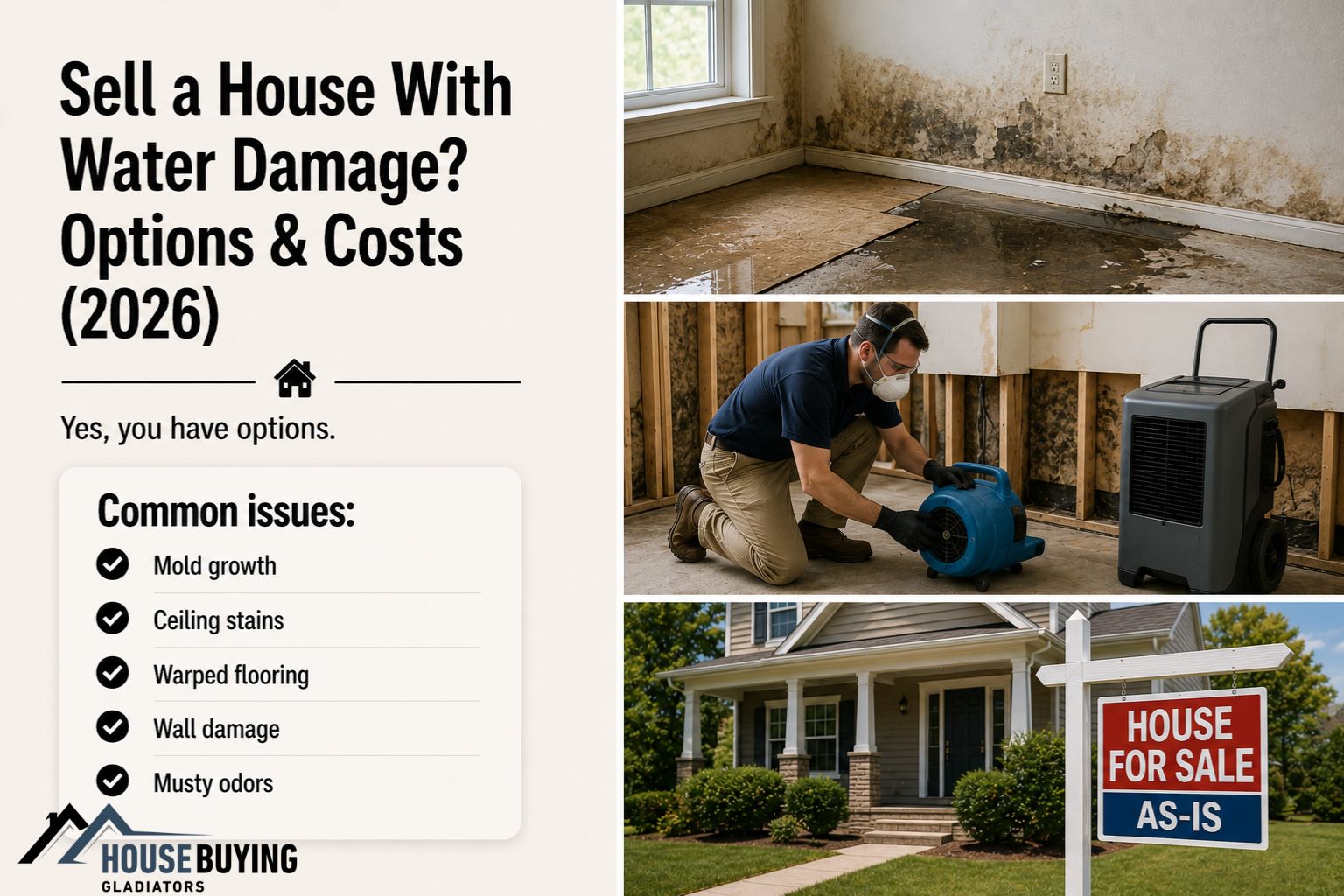
Can You Sell a House With Water Damage?
Yes, homeowners can sell a house with water damage. Properties with active damage, repaired damage, or a history of water-related issues can still attract buyers. However, the extent of the damage, repair status, disclosure requirements, financing eligibility, and buyer confidence often influence the sale price and overall selling process.
For many homeowners, the biggest concern is not whether the property can be sold it’s whether they need to spend thousands of dollars on repairs, disclose the damage to buyers, or accept a lower sale price. Others worry that mold, financing issues, or inspection findings will make the home difficult to sell.
The good news is that water damage does not automatically make a property unsellable. The best approach depends on the severity of the issue, the condition of the home, repair costs, local market conditions, and your selling goals.
In this guide, you’ll learn how water damage affects a home sale, when repairs may make sense, whether selling as-is is an option, and how different buyers evaluate water-damaged properties.
What Homeowners Should Know Before Selling a Water-Damaged House
Yes, homeowners can sell a house with water damage, whether the damage is active, recently repaired, or occurred in the past. However, water damage can influence buyer demand, financing eligibility, negotiations, and the final sale price.
Many people assume buyers will automatically reject a property with water-related issues.
In reality, buyers purchase homes with water damage every day.
The more important question is:
What is the best way to sell it?
Your Main Selling Options
Most homeowners have three primary options:
- Repair the damage before listing.
- Sell the property with full disclosure.
- Sell the property as-is without making repairs.
Each strategy comes with different costs, timelines, risks, and potential returns.
Common Misconception About Buyer Reactions
Many sellers assume all water damage is treated the same.
It isn’t.
Buyers react very differently to:
- A repaired leak from several years ago.
- Active water intrusion.
- Flood damage.
- Water damage that led to mold growth.
- Cosmetic water stains with no ongoing issues.
The source, severity, and current condition often matter more than the fact that water damage occurred.
Real-World Example
Imagine a homeowner discovers water damage beneath a bathroom floor after a leaking pipe.
The repair estimate is $8,000.
The homeowner now faces several choices:
- Complete repairs before listing.
- Reduce the asking price.
- Offer repair credits to buyers.
- Sell the property in its current condition.
The best option depends on repair costs, market conditions, and the seller’s financial situation.
Key Takeaway
Water damage does not automatically prevent a home sale. However, it can influence pricing, financing, buyer confidence, and negotiations. Understanding the nature of the damage is the first step toward choosing the right selling strategy.
Active Water Damage vs. Previous Water Damage
Buyers, appraisers, and lenders often view active water damage very differently from previous water damage that has been professionally repaired.
This distinction is one of the most important factors affecting a property’s marketability.
Active Water Damage
Active water damage means the underlying problem still exists.
Examples include:
- Ongoing roof leaks
- Plumbing leaks
- Foundation water intrusion
- Flooding issues
- Drainage problems
Active issues create uncertainty because buyers may not know how extensive the damage has become.
Previous Water Damage
Previous water damage refers to problems that have already been addressed.
Examples may include:
- Repaired plumbing leaks
- Resolved roof damage
- Corrected drainage issues
- Restored flood damage
When sellers can provide documentation showing repairs were completed properly, buyers often feel more comfortable moving forward.
Comparison: Active vs. Previous Water Damage
| Active Water Damage | Previous Water Damage |
|---|---|
| Higher buyer concern | Lower buyer concern |
| Financing challenges more common | Financing often easier |
| Greater uncertainty | More predictable condition |
| May require immediate repairs | Repairs already completed |
| Often affects value more heavily | Usually affects value less |
Practical Insight
Many buyers are not afraid of a property’s history.
They are afraid of uncertainty.
Providing repair records, contractor invoices, and inspection reports often reduces concerns and improves buyer confidence.
Key Takeaway
The existence of past water damage is not always the problem. Ongoing water intrusion and unresolved issues are usually what create the greatest obstacles during a sale.
What Causes Water Damage in Homes?
Water damage can result from plumbing failures, roof leaks, storms, flooding, drainage problems, appliance malfunctions, and foundation-related moisture intrusion.
Understanding the source matters because buyers often want to know whether the problem is likely to return.
Common Causes of Water Damage
- Burst or leaking pipes
- Roof leaks
- Storm damage
- Flooding
- Appliance failures
- HVAC system leaks
- Sewer backups
- Poor drainage around the home
- Foundation moisture intrusion
Different causes create different levels of buyer concern.
For example, a repaired pipe leak may create less concern than repeated flooding caused by poor drainage.
Why Buyers Care About the Cause
The cause often influences:
- Future repair risk
- Insurance considerations
- Maintenance requirements
- Financing eligibility
- Long-term property value
Buyers want reassurance that the underlying problem has been identified and addressed.
Key Takeaway
The source of the damage often matters just as much as the damage itself. Buyers and lenders typically want to know whether the issue is resolved or likely to return.
How Water Damage Affects Home Value
Water damage can reduce a property’s market value, but the impact depends on the severity of the damage, repair status, buyer demand, and whether mold or structural issues are present.
Not all water-related issues affect value equally.
A minor leak repaired years ago may have little impact.
Extensive damage involving mold, flooring, drywall, or structural components can have a much greater effect.
Factors That Influence Value
- Severity of the damage
- Whether repairs were completed
- Documentation of repairs
- Presence of mold
- Structural concerns
- Insurance history
- Local market conditions
Where Most Sellers Miscalculate
Many sellers assume value decreases by the exact amount of repair costs.
In reality, buyers often consider:
- Repair expenses
- Risk
- Inconvenience
- Future maintenance concerns
As a result, buyer discounts sometimes exceed the estimated repair cost.
Key Takeaway
The effect on value depends on more than the repair estimate. Buyer confidence, documentation, and the likelihood of future problems often play a major role in pricing decisions.
Do You Have to Disclose Water Damage When Selling a House?
In most situations, homeowners must disclose known water damage and related defects to potential buyers. Disclosure requirements vary by state, but sellers generally cannot intentionally hide known issues that could affect a property’s value or condition.
Water damage is often considered a material defect because it may impact the home’s structure, safety, habitability, or future maintenance costs.
What Must Be Disclosed?
Depending on your state and circumstances, disclosures may include:
- Previous water damage
- Active leaks
- Flooding history
- Roof leaks
- Plumbing failures
- Drainage problems
- Mold issues
- Insurance claims related to water damage
What Many Sellers Assume And Why It’s Risky
Many sellers believe that repaired water damage no longer needs to be mentioned.
In many situations, buyers still expect information about past issues, especially if repairs involved major systems or structural components.
Transparency often creates fewer problems than surprises discovered during inspections.
Real-World Example
A homeowner repaired a roof leak two years ago and replaced damaged drywall.
Although the problem no longer exists, a buyer’s inspector may still identify evidence of prior repairs. Providing documentation upfront often builds trust and prevents confusion during negotiations.
Key Takeaway
Disclosing known water-related issues helps buyers make informed decisions and can reduce the risk of disputes later in the transaction.
Water Damage, Insurance Claims, and What Buyers May Ask
One question buyers and lenders frequently raise during the purchase of a water-damaged home is whether an insurance claim was ever filed and whether the property remains insurable.
What buyers typically want to know:
- Was an insurance claim filed for the damage?
- Was the claim paid out and the work completed?
- Is the property currently insurable?
- Has the home been flagged in the CLUE report (Comprehensive Loss Underwriting Exchange)?
What is a CLUE report?
A CLUE report is a record of insurance claims filed on a property, typically covering the past seven years. Buyers and their insurers can request this report and may use it to evaluate risk and determine coverage eligibility. A property with multiple water-related claims may face higher insurance premiums or limited coverage options.
What this means for sellers
If you filed an insurance claim for water damage, keep documentation showing the work was completed and the issue was resolved. This is one of the most reassuring things you can provide to a buyer.
Homeowners insurance typically covers sudden and accidental water damage such as a burst pipe but does not cover damage caused by neglect, gradual leaks, or flooding without a separate flood insurance policy. According to MoneyGeek’s 2026 homeowners insurance guide, flood damage specifically requires a separate flood insurance policy and is not covered under standard homeowners policies.
Key Takeaway
Insurance history is part of the conversation in most water damage home sales. Being prepared with documentation and claim records reduces buyer uncertainty and keeps transactions moving forward.
Water Damage Disclosure Requirements: How They Vary by State
While most states require sellers to disclose known water damage, the specific rules, forms, and legal consequences vary considerably depending on where the property is located.
States with strict written disclosure requirements
Disclosure requirements vary significantly by state. For example, California requires sellers to complete a Transfer Disclosure Statement that specifically asks about water intrusion, roof leaks, and past flooding.
Similarly, Texas requires sellers to disclose known water damage, previous repairs, and certain property-condition issues. Meanwhile, Florida law generally requires sellers to disclose known defects that could materially affect a buyer’s decision, even when written disclosure is not always mandated.
In New Jersey, failing to disclose major issues such as flooding, mold, or significant water damage can expose sellers to fraud or misrepresentation claims. Therefore, homeowners should review their state’s disclosure requirements carefully before selling a property with current or previous water damage.
States with limited requirements
A small number of states follow caveat emptor (buyer beware) principles, placing more responsibility on buyers to investigate the property. However, intentionally concealing known water damage can still result in legal liability in virtually every state.
What this means for sellers
Regardless of your state, the safest approach is to disclose any known water damage in writing before accepting an offer. This protects you legally and creates a more transparent transaction. Request your state’s standard seller disclosure form from a local real estate attorney or your state’s real estate commission website before listing.
What About Mold?
Water damage and mold often go hand in hand. When moisture remains trapped inside walls, flooring, ceilings, or crawl spaces, mold can develop and create additional concerns for buyers and lenders.
Mold is often one of the first things buyers worry about when they hear the words “water damage.”
Why Mold Creates Concern
Buyers may worry about:
- Indoor air quality
- Cleanup costs
- Hidden damage
- Future moisture problems
- Potential health concerns
Signs Mold May Be Present
Common warning signs include:
- Musty odors
- Visible discoloration
- Water stains
- Persistent moisture
- Past flooding events
What Most Homeowners Get Wrong
Many people assume visible mold is the biggest concern.
In reality, hidden moisture behind walls, beneath flooring, or inside crawl spaces often creates the greatest uncertainty for buyers.
Practical Insight
If mold is present or suspected, professional evaluations and remediation documentation can help reduce buyer concerns.
According to Angi, professional mold remediation typically costs between $1,125 and $3,350, with a national average of around $2,400 though whole-house remediation involving structural components can reach significantly higher. Visit Angi’s mold remediation cost guide for a full breakdown by location and severity.
Key Takeaway
Mold does not automatically prevent a sale, but unresolved moisture issues often create additional obstacles during negotiations and financing reviews.
How Much Does Water Damage Cost to Repair?
Water damage repair costs vary significantly depending on the source of the problem, the affected materials, the extent of the damage, and whether mold remediation is required.
Some repairs may be relatively minor, while others involve extensive restoration work.
According to Angi’s 2026 water damage restoration data, the average cost for water damage restoration is $3,864, with costs potentially ranging from $450 for minor surface damage up to $16,000 or more depending on the source and extent of the damage.
For homeowners who need to sell a house with water damage, understanding potential repair costs is often the first step in deciding whether repairs are financially worthwhile or whether selling as-is makes more sense.
Factors That Influence Repair Costs
Common variables include:
- Source of the water
- Size of the affected area
- Flooring damage
- Drywall replacement
- Electrical damage
- Structural repairs
- Mold remediation
- Restoration requirements
Hidden Costs Many Sellers Overlook
Repair estimates often do not include:
- Temporary housing
- Storage expenses
- Permit fees
- Follow-up inspections
- Additional repairs discovered during restoration
These costs can significantly increase the overall financial commitment.
Real-World Example
A homeowner initially receives a $4,000 estimate to repair a leaking pipe and damaged drywall.
After opening the wall, contractors discover hidden mold and additional moisture damage, increasing the project’s cost substantially.
Key Takeaway
Before committing to repairs, evaluate the full financial picture rather than focusing only on the initial estimate.
Should You Repair Water Damage Before Selling?
Many homeowners who need to sell a house with water damage struggle to determine whether repairs will increase their final proceeds or simply add more expenses.
Not always. In some situations, repairing water damage before listing may increase buyer confidence and marketability. However, in other cases, selling the property in its current condition may provide a better financial outcome.
The right decision depends on several factors, including:
- Repair costs
- Available funds
- Timeline
- Market conditions
- Severity of the damage
- Buyer demand
Situations Where Repairs May Make Sense
Repairing before listing may be worth considering when:
- The damage is relatively minor.
- Repairs are affordable.
- Documentation can demonstrate the issue was resolved.
- Financing concerns may limit buyers.
- Local buyers strongly prefer move-in-ready homes.
Situations Where Selling As-Is May Make Sense
Selling without repairs may be practical when:
- Repair costs are substantial.
- Time is limited.
- Multiple property issues exist.
- The owner wants to avoid restoration work.
- Financial resources are limited.
For a deeper look at the as-is selling process, see our guide on selling a house without repairs.
The Question Most Sellers Ask Wrong
Many sellers focus exclusively on maximizing sale price.
The better question is:
Which option leaves you with the best overall financial result?
A higher sale price does not always outweigh repair costs, holding expenses, and project delays.
Repair First vs. Sell As-Is
| Repair First | Sell As-Is |
|---|---|
| Higher upfront costs | Lower upfront costs |
| Longer preparation time | Faster timeline |
| Larger buyer pool | Smaller buyer pool |
| Potentially higher sale price | Often lower sale price |
| More project management | Greater convenience |
| Reduced buyer concerns | More negotiation activity |
Key Takeaway
The highest sale price is not always the most profitable outcome. Repair costs, time, stress, and holding expenses should all factor into the decision.
Can Buyers Get Financing on a House With Water Damage?
Sometimes. Financing eligibility depends on the severity of the damage, lender requirements, appraisal findings, and whether the property meets minimum condition standards.
This is one reason unresolved water damage can affect buyer demand.
Why Lenders Care
Mortgage lenders want to protect their investment.
Significant property condition issues may increase the risk associated with the loan.
Lenders often evaluate:
- Structural concerns
- Active leaks
- Mold issues
- Safety hazards
- Appraisal findings
FHA and Government-Backed Loans
Properties financed through government-backed programs often face stricter property condition requirements.
Major unresolved water damage may create underwriting challenges.
Conventional Financing
Conventional lenders sometimes offer more flexibility, but significant issues can still affect approval decisions.
Cash Buyers Face Fewer Restrictions
Because cash buyers do not rely on mortgage approval, they often have more flexibility when evaluating properties with water-related issues.
Key Takeaway
Financing challenges are often tied to unresolved problems rather than a property’s history. Documentation and completed repairs frequently improve financing opportunities.
What Buyers Actually Care About
Most buyers are less concerned about the fact that water damage occurred and more concerned about whether the problem has been resolved.
Buyers typically want answers to questions such as:
- What caused the damage?
- Has the issue been fixed?
- Could it happen again?
- Are repair records available?
- Is mold present?
- Will financing be possible?
Information Reduces Uncertainty
The more documentation sellers can provide, the easier it becomes for buyers to evaluate the property.
Helpful documents may include:
- Repair invoices
- Contractor reports
- Insurance records
- Mold remediation reports
- Inspection reports
Where Sellers Focus vs. Where Buyers Focus
Many sellers focus on explaining the damage.
Buyers often care more about the solution.
Clear documentation and transparency frequently have a greater impact than lengthy explanations.
Key Takeaway
Buyers rarely expect a perfect property. They typically want confidence that they understand the condition of the home and the risks involved.
Can You Sell a House As-Is With Water Damage?
Yes, homeowners can sell a house as-is with water damage. Selling as-is means the seller does not agree to complete repairs before closing, although disclosure requirements still apply.
Many homeowners choose this route when repair costs are significant, time is limited, or the property has multiple issues that make renovations impractical.
What Does Selling As-Is Mean?
An as-is sale generally means:
- The seller does not agree to make repairs.
- The buyer accepts the property’s current condition.
- Inspections may still occur.
- Disclosure obligations still apply.
- Buyers may negotiate based on their findings.
Selling as-is does not eliminate buyer due diligence. It simply means the seller is not promising to fix identified issues before closing.
If your water-damaged property also has foundation concerns, our guide on selling a house with foundation problems covers additional considerations that may apply.
Advantages of Selling As-Is
Some homeowners prefer selling as-is because it can:
- Eliminate repair expenses
- Reduce preparation time
- Avoid construction delays
- Simplify the transaction
- Allow for a faster sale
Potential Trade-Offs
Selling as-is may also result in:
- Lower offers
- A smaller buyer pool
- Increased negotiation activity
- Financing challenges for some buyers
Real-World Example
A homeowner discovers extensive water damage behind several walls after a plumbing failure.
Repair estimates exceed $20,000, and additional damage may be hidden from view.
Rather than investing significant money into repairs, the homeowner decides to sell the property in its current condition and price it accordingly.
Key Takeaway
Selling as-is can be a practical option when repair costs, uncertainty, or time constraints make extensive restoration difficult or undesirable.
Dealing With Water Damage and Want to Skip the Repairs?
If your home has water damage whether it’s a repaired leak, active moisture issues, or mold-related damage a traditional listing can be complicated. Financing challenges, buyer hesitation, and repair negotiations can slow everything down when you’re already dealing with enough.
House Buying Gladiators buys water-damaged homes directly for cash — as-is, in any condition, with no repairs required, no fees, and no obligation.
We work with homeowners across the United States who need to sell quickly without investing more money into a property. No inspections to pass, no lender requirements to satisfy, no contractor estimates to negotiate over.
Who Buys Houses With Water Damage?
Several types of buyers purchase homes with water damage, including investors, cash buyers, landlords, house flippers, and some owner-occupants willing to complete repairs.
Not every buyer views water damage the same way.
Different buyer groups evaluate risk, repair costs, and investment potential differently.
Traditional Homebuyers
Many traditional buyers prefer homes that require minimal work.
Because water damage can create uncertainty, some buyers may focus on properties without repair concerns.
However, documented repairs and transparency can help maintain buyer interest.
Real Estate Investors
Investors often purchase homes with repair needs because they evaluate opportunities based on potential return rather than current condition.
Many investors expect:
- Renovation costs
- Negotiations
- Repair projects
- Risk management
Cash Buyers
Cash buyers frequently purchase homes with water damage because financing requirements are less likely to affect the transaction.
Without lender restrictions, cash transactions can often move more efficiently.
House Flippers
House flippers regularly purchase properties that require significant repairs.
For experienced renovators, water damage often becomes one component of a larger improvement project.
Landlords
Some rental property investors may purchase homes with water damage if repair costs align with their investment goals.
Learn more about how our cash home buying process works and what to expect from start to finish.
Key Takeaway
Water damage may reduce the number of interested buyers, but it rarely eliminates buyer demand entirely.
Common Mistakes Homeowners Make When Selling a Water-Damaged House
The most common mistakes include delaying action, hiding known issues, underestimating repair costs, and focusing only on sale price rather than overall financial outcomes.
Mistake #1: Waiting Too Long to Address the Problem
Water-related issues often become more expensive over time.
Delaying repairs or decisions may allow damage to spread to:
- Flooring
- Drywall
- Insulation
- Structural components
The longer moisture remains, the greater the potential costs.
Mistake #2: Assuming the Property Cannot Be Sold
Many homeowners immediately believe water damage makes a home unsellable.
This is rarely the case.
Properties with water-related issues sell every day under a variety of market conditions.
Mistake #3: Hiding Known Damage
Attempting to conceal known issues often creates larger problems later.
Buyers frequently uncover water damage during inspections, which can damage trust and complicate negotiations.
Mistake #4: Underestimating Holding Costs
Waiting to make a decision can become expensive.
Holding costs may include:
- Mortgage payments
- Property taxes
- Insurance
- Utilities
- Maintenance
These expenses continue regardless of whether the property is occupied.
Mistake #5: Looking Only at the Sale Price
A higher offer does not always mean a better outcome.
Repair costs, carrying expenses, closing timelines, and transaction risks can significantly affect the final financial result.
Key Takeaway
The best strategy depends on your goals, financial situation, timeline, and the overall condition of the property.
Frequently Asked Questions
Yes. Homeowners can legally sell a house with water damage, although disclosure requirements generally apply to known issues.
No. Many homeowners sell properties with water damage without completing repairs. Whether repairs make sense depends on costs, market conditions, and financial goals.
Often, yes. The impact depends on the severity of the damage, whether repairs were completed, the presence of mold, and buyer demand.
In many situations, yes. However, mold concerns may affect buyer interest, negotiations, financing, and disclosure requirements.
Yes. Investors, cash buyers, landlords, flippers, and some traditional buyers may still make offers depending on the condition of the property.
Sometimes. Financing eligibility depends on the extent of the damage, lender requirements, and whether the property meets minimum condition standards.
For some homeowners, yes. Selling as-is can eliminate repair costs and reduce preparation time, although it may also result in lower offers.
Many homeowners benefit from obtaining an inspection because it helps identify the extent of the damage and provides useful information for pricing and negotiations.
Ready to Sell Your Water-Damaged House?
You don’t have to spend thousands on restoration before you can move forward. Whether the damage is minor or extensive, House Buying Gladiators can make you a fair cash offer on your home as-is, anywhere in the United States.
Skip costly repairs, avoid agent commissions, and eliminate financing delays. Instead, receive a straightforward cash offer and choose a closing timeline that works for your situation.
[Get Your Free Cash Offer Today →]
Conclusion
Yes, you can sell a house with water damage. While water-related issues can affect buyer demand, financing options, negotiations, and property value, they do not automatically prevent a successful sale.
The right approach depends on the severity of the damage, whether mold is present, estimated repair costs, your financial situation, and your timeline. Some homeowners choose to complete restoration before listing to attract a wider buyer pool and stronger financing options. Others find that selling as-is to a cash buyer provides a faster, more practical outcome especially when repair costs are high, time is limited, or the damage is more extensive than initially expected.
Before making a decision, consider the full financial picture including repair expenses, mold remediation costs, insurance history, holding costs, and potential buyer demand. Understanding all of your options, not just the repair path, is the best way to choose a strategy that actually works for your situation.