Skip to content
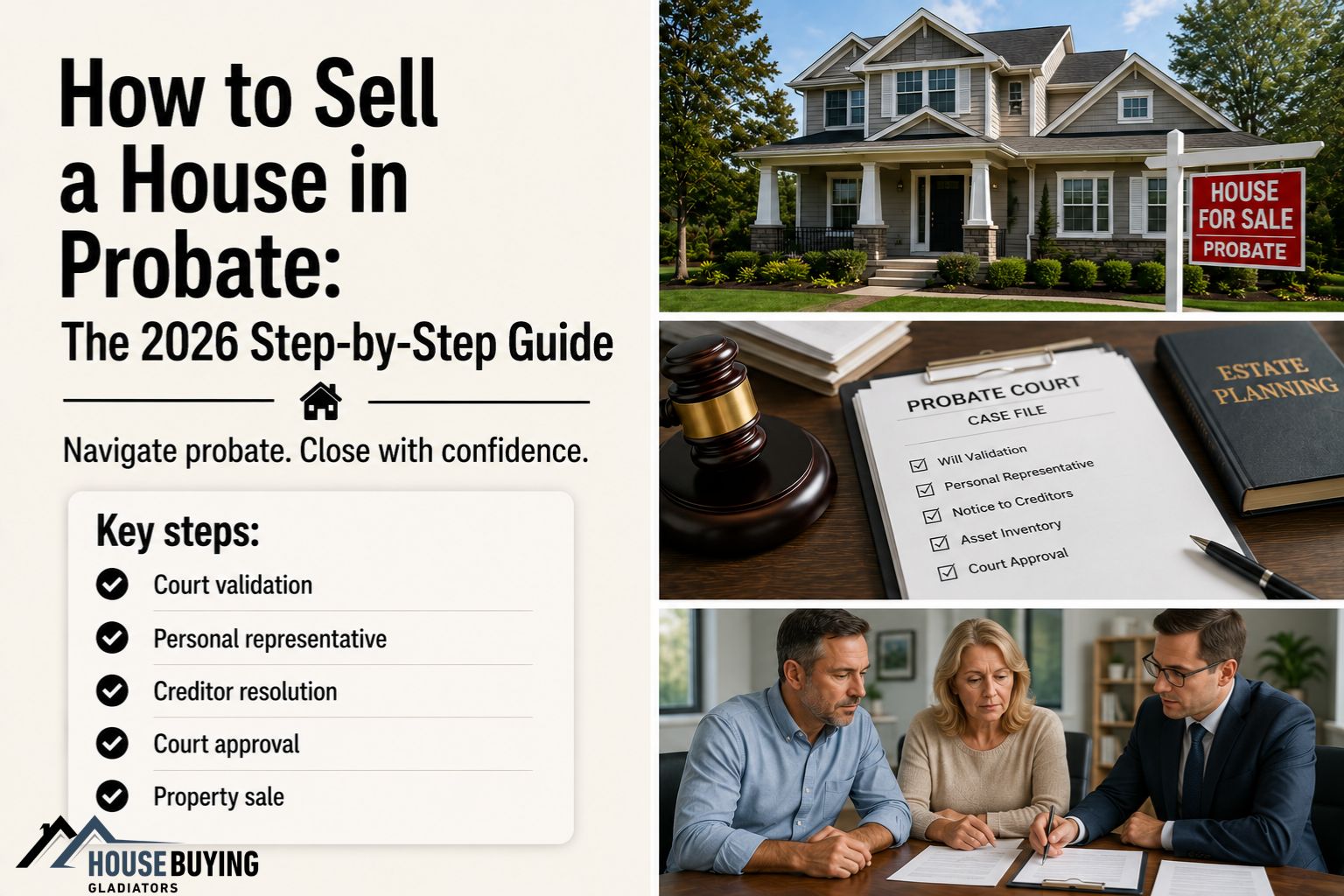
If you are trying to understand how to sell a house in probate, the process often feels like a challenging balancing act between strict judicial requirements and standard real estate transactions. Specifically, many family members assume that inheriting a home automatically grants them the immediate legal authority to list it on the open market.
However, that is rarely the case under state estate laws.
Before any transaction can occur, a designated court must formally verify the decedent’s will, appoint a personal representative, resolve outstanding creditors, and greenlight the liquidation. Ultimately, handling these steps systematically is essential to safeguard your family’s equity from expensive delays.
Because probate proceedings can directly affect your final payout, homeowners who understand how much will I make selling my house can also better estimate their potential proceeds before beginning the probate process.
Probate Sale Path Finder & Cost Calculator
Probate Sale Path Finder & Cost Calculator
How to Sell a House in Probate: Understanding the Court Timeline
In most cases, selling a home inside a probate court proceeding follows a highly structured, legally mandated pathway. For this reason, personal representatives must adhere to the following sequence:
Petition Probate Court ➔ Assign Executor/Administrator ➔ Publish Creditor Notice ➔ Appraise Home ➔ Sell Asset
| Probate Transaction Milestone | Average Time Frame | Key Governing Rule | Impact on Your Estate Equity |
|---|---|---|---|
| Petition Filing | Weeks 1 to 4 | Requires certified death certificate | Initiates the official legal file |
| Letters Issuance | Weeks 4 to 8 | Court officially appoints the representative | Grants legal authority to sign contracts |
| Creditor Notice Window | Months 2 to 6 | Mandates local newspaper publication | Protects estate from late claims |
| Property Valuation | Month 3 to 4 | Probate referee must appraise the home | Sets the baseline listing price |
| Court Confirmation | Months 4 to 9 | Required for supervised estates | Mandates overbid courtroom auctions |
As a result, this rigid legal framework dictates when and how you can accept buyer offers. Families who understand how long does it take to sell a house can also better compare traditional selling timelines against probate timelines and set realistic expectations from the beginning. If you need to verify the paperwork required to prove your authority to a title company, read this master breakdown on how to obtain letters testamentary.
Who Has Legal Authority When Learning How to Sell a House in Probate?
Contrary to popular belief, being named as the primary beneficiary in a will does not grant you the immediate right to sell real estate. Instead, you must wait for the county surrogate judge to officially grant you the title of personal representative.
Validate Will ➔ Evaluate Sibling Objections ➔ Issue Court Orders ➔ Certify Executor Sign-off Power
Navigating Executor vs. Administrator Roles in Probate Sales
First, if the deceased individual left behind a valid last will and testament, they likely designated an executor to manage the estate. Specifically, the court will issue Letters Testamentary to confirm this person’s authority to sell the real estate.
Conversely, if the individual passed away intestate (without a will), the court must assign an administrator. Therefore, this administrator receives Letters of Administration to execute property sales.
Handling Supervised vs. Independent Probate Administration Laws
In addition, the level of authority granted by the court heavily influences your transaction timeline. For instance, independent administration allows executors to list and sell the home without constant court permission.
On the other hand, supervised administration mandates that the judge confirm the final sale. This confirmation process often requires a public overbid auction in the courtroom. If a sibling disputes this process, see this guide on legal steps to remove an uncooperative executor.
What Documents Are Required to Sell a House in Probate?
Before listing the property on the market, your real estate title company will require a highly specific checklist of documents. Consequently, keeping these items organized is critical to avoiding transaction delays:
- Certified Death Certificate: Formally confirms the decedent’s passing.
- Certified Letters Testamentary/Administration: Proves your legal power to act on behalf of the estate.
- Probate Referee Appraisal: Validates the baseline value of the property for court records.
- Certified Will Documents: If applicable, outlines inheritance directives.
- Original Property Deed: Proves the estate officially holds the title.
Furthermore, any outstanding municipal encumbrances or historical claims must be cleared before the transaction closes. Homeowners who understand what is fair market value of a home can also better understand how unresolved obligations may influence pricing decisions during the selling process.
Separately, to ensure there are no hidden issues attached to the property record, review this guide on resolving unrecorded easements on home titles.
What Debts Must Be Paid When You Sell a House in Probate?
Ultimately, an inherited home cannot officially transfer ownership until all outstanding financial liabilities are fully satisfied. Specifically, mortgage lenders and local taxing authorities hold primary collection rights over your equity.
Publish Local Creditor Notice ➔ File Estate Claims ➔ Pay Mortgages & Tax Liens ➔ Distribute Net Proceeds
Because of this, executors must notify potential creditors by publishing a notice in local newspapers. Consequently, creditors typically have three to four months to file claims against the estate’s cash assets.
Therefore, if the home carries a reverse mortgage that requires immediate payoff, review this tutorial on how to manage inherited reverse mortgages.
Choosing the Best Sales Strategy: Traditional MLS Listing vs. Cash Investor Sale
In many cases, understanding how to sell a house in probate also means weighing the trade-offs between making expensive physical improvements and selling the property quickly in its current condition. Consequently, the right path depends on your available cash and the court’s timeline.
Analyze System Integrity ➔ Balance Holding Costs ➔ Choose MLS Staging OR Immediate Cash Payout
When a Traditional Real Estate Agent Listing Makes Sense
If the estate has plenty of cash reserves and the home is in decent physical condition, listing traditionally with a local agent is often the most lucrative option. Without a doubt, this strategy maximizes open-market buyer exposure.
However, you will remain fully responsible for recurring property taxes, utility bills, and lawn maintenance while the home is on the market. For this reason, many executors prefer to understand what is a comparative market analysis (CMA) before selecting an accurate and competitive listing price.
In addition, understanding what is a home appraisal can help families see the difference between lender-driven property valuations and probate-related valuation requirements before accepting an offer.
When Bypassing the Market with an As-Is Cash Sale is Best
Conversely, if the house has years of deferred maintenance, selling as-is to a cash buyer offers a faster, simpler alternative. Specifically, this path eliminates appraisal contingencies, contractor delays, and extensive cleanout duties.
Therefore, this approach minimizes holding costs and simplifies sibling payouts. If you are debating whether renovations are worth the investment, our guide on sell as-is vs fixing up a house explains how different strategies can affect your final proceeds.
Additionally, selling an estate property you have never occupied may create unique disclosure obligations. To better understand these requirements, read this checklist on as-is real estate disclosure forms.
Frequently Asked Questions on Sell a House in Probate
To put it simply, you must petition the court, secure Letters Testamentary, resolve creditor claims, appraise the property, and choose between a traditional MLS listing or a quick cash sale.
Yes, indeed. Specifically, if the court grants independent authority, the executor can list and close the sale before the entire probate case officially wraps up.
Only the court-appointed executor, successor trustee, or administrator has the legal right to sign listing agreements and deeds for a property in probate.
No, actually. While court-supervised estates require a judge to confirm the sale, estates with independent administration can close without court confirmation.
Generally, the estate must continue paying mortgage balances, property taxes, homeowner’s insurance, utilities, and basic property maintenance to protect the asset.
Yes, absolutely. In fact, outstanding loan balances do not disappear. Consequently, the mortgage must be paid off at the closing table before any remaining cash is split among heirs.
Specifically, valid claims must be paid out of the estate’s liquid cash. Therefore, the executor typically pays these debts using funds from the home sale before distributing proceeds to heirs.
It depends. Specifically, if the estate is short on cash, making major repairs can be a costly mistake. Selling the property as-is is often more practical.
Generally, supervised sales require a public court auction. Specifically, a new buyer must outbid the original offer by a set statutory percentage to win the property.
Typically, funds are held in the estate’s bank account until probate concludes. Therefore, final distribution happens once the court approves the executor’s final accounting.
Conclusion: Safeguard Your Estate Equity with Strategic Pre-Listing Preparations
Ultimately, learning how to sell a house in probate requires balancing court rules with practical real estate decisions. Therefore, taking the time to verify legal authority, track holding costs, and choose the right sales strategy ensures you protect your family’s equity.
For example, are you ready to estimate your holding costs and see if court confirmation is required for your sale? If so, scroll to the top of this guide to run your numbers through our interactive probate path finder. In addition, to make sure your pricing strategy aligns with current court standards, review this guide on how to request a formal court-approved real estate valuation.