Skip to content
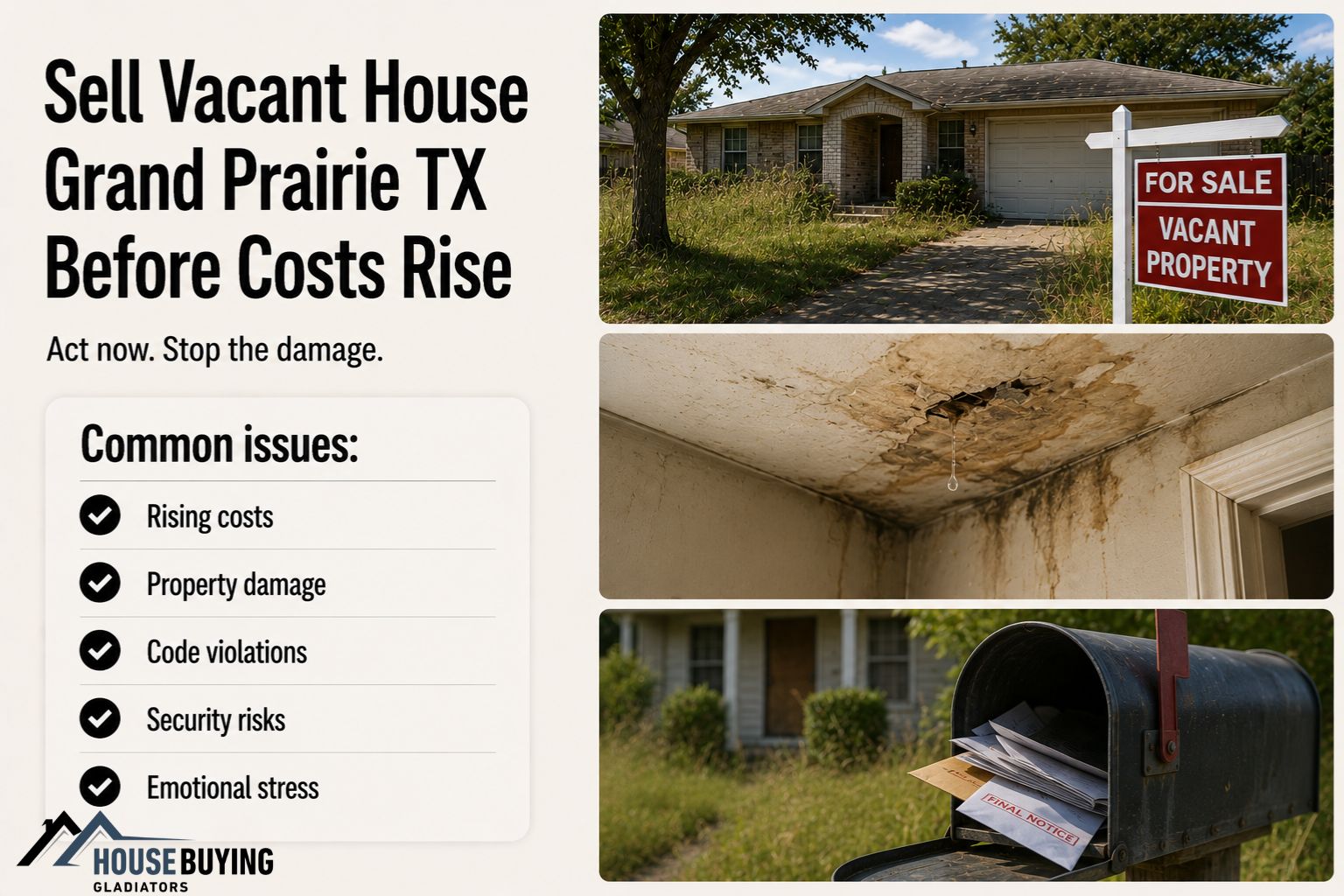
Sell Vacant House Grand Prairie TX Before the Situation Quietly Gets Worse
Sell vacant house Grand Prairie TX situations often become emotionally exhausting long before homeowners realize how quickly empty properties can spiral financially and structurally.
At first, the house may not seem urgent.
The utilities still work.
Nothing appears seriously damaged.
You assume you will handle it next month.
However, months pass faster than expected.
The lawn grows taller.
Leaks spread quietly.
Mail piles up.
Neighbors begin noticing.
And eventually, the property becomes a constant source of pressure sitting in the background of daily life.
Because of this, many Grand Prairie homeowners realize the biggest issue is no longer the property itself.
It is the growing stress, uncertainty, and financial pressure vacancy quietly creates over time.
Why Homeowners Need to Sell Vacant House Grand Prairie TX Properties
Most vacant houses do not happen randomly.
Usually, another difficult life situation already exists behind the scenes.
In Grand Prairie, vacant properties frequently follow:
- inherited property situations
- probate delays
- divorce transitions
- job relocation
- nursing home moves
- financial hardship
- tenant damage
- major repair exposure
Because of this, many property owners already feel emotionally overwhelmed before vacancy problems even begin escalating.
For example, a homeowner near Belt Line Road relocated unexpectedly for work and planned to return later to manage the property. However, several months of vacancy eventually led to plumbing damage, code concerns, and mounting maintenance costs.
That situation is far more common than most homeowners initially expect.
Vacant Houses in Grand Prairie TX Deteriorate Faster Than Occupied Homes
This surprises many homeowners.
People often assume empty houses stay preserved because nobody is actively damaging them.
Usually, the opposite happens.
Vacant properties often deteriorate faster because smaller problems remain unnoticed much longer.
Especially during Texas storms, heat, and seasonal weather swings.
Common vacancy-related problems include:
- plumbing leaks
- roof deterioration
- mold growth
- HVAC failure
- pest infestations
- water intrusion
- foundation movement
And unfortunately, damage frequently spreads for weeks or months before discovery.
For example, a vacant property near Westchester appeared structurally stable from outside. However, hidden plumbing leaks eventually caused major flooring and drywall damage after going unnoticed during summer humidity.
That pattern happens constantly throughout older Grand Prairie neighborhoods.
Vacant houses in Grand Prairie often deteriorate quickly because weather exposure, unnoticed maintenance issues, and delayed repairs allow damage to spread.
Older Grand Prairie Vacant Homes Often Hide Expensive Repairs
Many vacant homes throughout Grand Prairie were owned for decades before becoming empty.
Especially in areas near:
- older South Grand Prairie neighborhoods
- Dalworth Park
- Main Street corridors
- mature Belt Line Road subdivisions
- longtime family-owned neighborhoods
As a result, vacant homes frequently contain:
- aging plumbing
- outdated electrical systems
- roof lifespan concerns
- deferred maintenance
- foundation movement
- older HVAC systems
And once inspections begin, additional hidden problems often appear.
For example, one homeowner near Central Grand Prairie initially believed the property needed only cosmetic cleanup. However, inspections later revealed electrical hazards and significant sewer line deterioration beneath the home.
That type of repair exposure quickly changes the financial picture for many owners.
Empty Houses Quietly Become Expensive to Hold
One of the most frustrating realities of vacant ownership is that expenses continue even while the house sits empty.
That often includes:
- property taxes
- insurance premiums
- lawn maintenance
- utility bills
- HOA dues
- repair costs
- security expenses
And unfortunately, many owners underestimate how quickly those costs accumulate month after month.
Especially while the property itself continues deteriorating in the background.
Because of this, vacancy often becomes financially draining far sooner than expected.
Vacant homes continue generating expenses through taxes, utilities, insurance, maintenance, repairs, and security-related costs.
Vacant Grand Prairie Properties Often Attract Serious Problems
This is where many situations begin escalating rapidly.
Especially once the property starts looking visibly neglected.
Vacant homes frequently attract:
- vandalism
- trespassing
- theft
- illegal dumping
- copper stripping
- broken windows
- squatting
And once neighbors or trespassers recognize the property as empty, those risks usually increase significantly.
For example, a homeowner near Pioneer Parkway left a property vacant during probate delays. However, within months, the HVAC system had been stripped and exterior vandalism had appeared.
The repair costs increased dramatically afterward.
Unfortunately, that pattern is extremely common with long-vacant homes.
Code Violations Frequently Follow Long-Term Vacant Houses in Grand Prairie TX

Many homeowners underestimate how quickly code enforcement complaints begin.
Especially once visible exterior neglect appears.
Common issues include:
- high grass
- debris accumulation
- unsecured entry points
- stagnant pools
- exterior deterioration
- visible neglect
And because neighbors often report visibly vacant homes, city attention frequently follows quickly afterward.
For example, a homeowner near South Grand Prairie received repeated code notices after landscaping and exterior conditions declined during an extended vacancy period.
That additional pressure becomes emotionally exhausting for already overwhelmed property owners.
Vacant houses frequently receive code violations because visible neglect, exterior deterioration, and maintenance issues attract city enforcement attention.
Insurance Gets More Complicated With Long-Term Vacancy
This catches many homeowners completely off guard.
Standard homeowner insurance policies may change once a property remains vacant for extended periods.
That becomes especially important if:
- water damage occurs
- vandalism develops
- theft happens
- fire damage appears
Some insurance carriers require specialized vacant-property policies after certain vacancy periods.
And unfortunately, those policies often cost more while covering less.
Because of this, long-term vacancy may increase both insurance costs and financial exposure simultaneously.
Long-Distance Ownership Makes Vacant Houses Harder to Manage
This is extremely common throughout DFW.
Many vacant property owners now live:
- elsewhere in Texas
- in another DFW city
- out of state entirely
Trying to coordinate:
- contractors
- inspections
- lawn care
- repairs
- city notices
- insurance matters
From a distance quickly becomes emotionally exhausting.
Especially while balancing work, children, finances, and other responsibilities simultaneously.
For many owners, the emotional fatigue eventually becomes heavier than the house itself.
Traditional Listings Often Become Frustrating for Vacant Homes
Retail buyers usually expect homes to feel:
- clean
- updated
- safe
- move-in ready
However, many vacant Grand Prairie properties contain:
- deferred maintenance
- visible wear
- outdated systems
- repair exposure
- inspection concerns
Because of this, traditional listings often lead to:
- repair negotiations
- delayed closings
- financing problems
- buyer hesitation
- contractor coordination
Especially if the property has remained empty for an extended period.
Traditional listings for vacant homes in Grand Prairie TX often involve inspections, repairs, financing delays, and extended timelines that increase stress significantly.
Vacancy Often Turns Into Emotional Avoidance
This part rarely gets discussed openly.
Many homeowners eventually stop wanting to visit the property entirely.
Calls get delayed.
Mail piles up unopened.
Decisions keep getting postponed.
Not because homeowners do not care.
Instead, because the house becomes emotionally exhausting every time it enters their mind.
In situations like this, some homeowners also explore options through Fast Cash Home Buyers, which works with sellers managing vacant and difficult properties by simplifying timelines and reducing repair and maintenance burdens.
That emotional avoidance cycle happens constantly with long-vacant homes.
Especially when owners are simultaneously managing:
- divorce situations
- inherited property complications
- relocation deadlines
- financial hardship
- major repairs
Eventually, many owners stop asking:
“How much can I get for the property?”
And begin asking:
“How do I stop this situation from getting worse?”
That emotional shift changes the decision-making process completely.
Vacant Properties Often Overlap With Other Distressed Grand Prairie Situations
Throughout Grand Prairie, vacant houses frequently overlap with:
- inherited property complications
- probate delays
- hoarder conditions
- code violations
- fire damage
- abandoned property issues
- major repairs
Because of this, vacant property situations are often much more complex than generic real estate advice acknowledges.
Additional Grand Prairie resources commonly connected to vacant property situations include:
- inherited house options
- probate property solutions
- major repair property concerns
- abandoned house challenges
Sometimes Simplicity Creates More Relief Than Waiting

This becomes the emotional turning point for many owners.
Not everyone wants to manage:
- contractors
- inspections
- repairs
- insurance complications
- vacancy risks
- ongoing holding costs
Especially when the property already feels emotionally draining.
For some homeowners, repairing and holding the house still makes financial sense.
However, others eventually realize simplifying the situation creates more clarity, stability, and emotional relief long term.
And honestly, that realization often reduces enormous pressure immediately.
FAQs About Selling a Vacant House Grand Prairie TX
Yes. Many vacant homes are sold despite repairs, deferred maintenance, or long-term vacancy concerns.
Usually yes. Problems often worsen because nobody regularly monitors the property.
Yes. High grass, visible neglect, and exterior deterioration frequently trigger code complaints.
Often yes. Taxes, utilities, insurance, maintenance, and repairs continue even while the property sits empty.
Sometimes. Long-term vacancy may require specialized vacant-property insurance coverage.
Unfortunately yes. Vacant properties often attract theft, vandalism, trespassing, and squatting.
Common reasons include inheritance, divorce, relocation, probate, financial hardship, or major repair situations.
Yes. Moisture, leaks, and humidity frequently create mold growth inside vacant properties.
Often yes, especially if repairs, inspections, or financing concerns exist.
Selling as-is is often fastest because it may reduce repair demands, preparation costs, and extended listing timelines.
Not always. Some homeowners discover repair costs, holding expenses, and vacancy risks outweigh the financial benefit of full renovation.
Experienced homeowners usually compare repair exposure, vacancy costs, emotional stress, timeline risk, and final net proceeds together.
Usually yes. Vacancy deterioration, code issues, vandalism risks, and repair costs often increase significantly over time.
Avoid delaying inspections, underestimating repair costs, ignoring code notices, or emotionally over-investing in uncertain renovation projects.
Final Thoughts
Trying to sell vacant house Grand Prairie TX homeowners are dealing with is rarely only about an empty property itself.
Usually, the situation also involves:
- delayed decisions
- emotional fatigue
- repair pressure
- financial stress
- uncertainty
- ongoing maintenance exposure
And unfortunately, vacant houses rarely become easier to manage over time.
Some owners decide investing in repairs still makes sense.
Others realize simplifying the situation creates more peace, stability, and emotional relief long term.
If it helps to better understand your options, you can Get Your Cash Offer and privately evaluate realistic repair exposure, timelines, and what path forward could reduce pressure instead of extending it further without obligation or added stress.
At House Buying Gladiators, the focus is simple:
help Grand Prairie property owners move from uncertainty and ongoing burden → toward clarity, stability, and a more manageable next step forward.