Skip to content
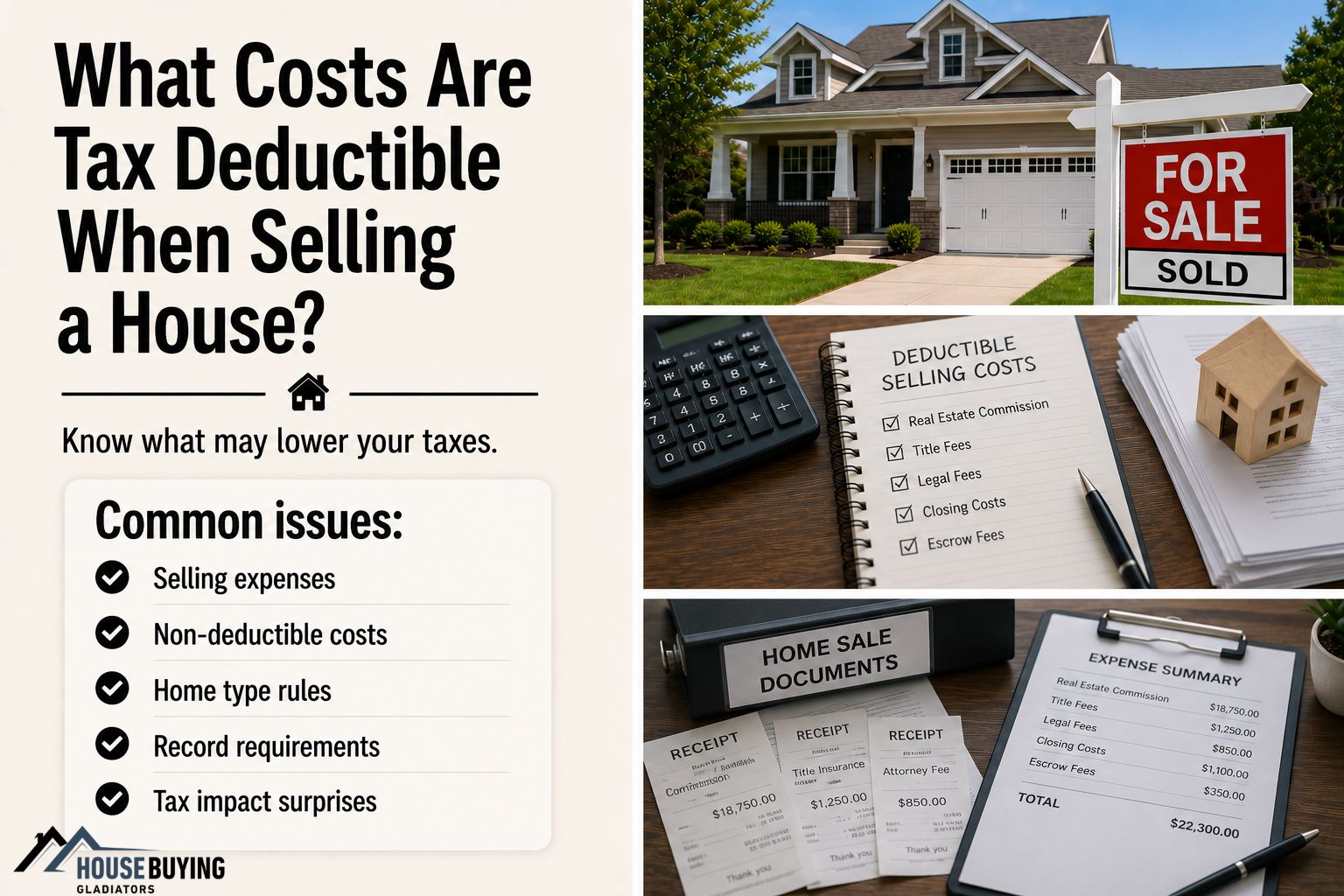
If you are wondering what costs are tax deductible when selling a house, the short answer is that some expenses may help reduce your taxable gain, but many common homeownership costs do not qualify.
Many homeowners assume they can deduct every expense associated with selling their house.
That is one of the biggest misconceptions sellers have.
While certain selling expenses, such as real estate commissions, title fees, legal fees, and some closing costs, may help reduce your taxable gain, expenses like routine maintenance, mortgage payments, utilities, and most personal costs usually do not qualify.
The rules can also vary depending on whether you are selling a primary residence, a rental property, an inherited home, or an investment property.
Understanding the difference before closing can help you organize your records, estimate your potential tax impact, and avoid unnecessary surprises later.
This guide explains which costs may qualify, which expenses usually do not, and what documents homeowners should keep before selling a house.
Cost Basis & Capital Gains Estimator
Cost Basis & Capital Gains Estimator
What Costs Are Tax Deductible When Selling a House?
Some expenses associated with selling a house may help reduce your taxable gain, but not every cost automatically creates a tax benefit.
In general, expenses directly related to completing the sale are more likely to qualify than everyday homeownership expenses.
The exact treatment depends on factors such as how long you owned the property, how you used it, and whether you qualify for any capital gains exclusions.
Sell House ➔ Track Qualified Expenses ➔ Reduce Taxable Gain ➔ Estimate Tax Impact ➔ Determine Potential Tax Liability
| Expense Category | Typical Settlement Cost | May Help Reduce Taxable Gain? | Underwriting Documentation Needed |
|---|---|---|---|
| Real Estate Commission | 5% to 6% of sale price | ✅ Yes (Direct selling cost) | Settlement statement (ALTA) |
| Title & Escrow Fees | 1% to 2% of transaction | ✅ Yes (Direct selling cost) | Closing settlement ledger |
| Routine Maintenance | Home repairs and cleaning | ❌ No (Everyday ownership cost) | Standard cleaning receipts |
| Capital Upgrades | New roof or HVAC install | ✅ Yes (Increases cost basis) | Invoices and building permits |
| Personal Moving Costs | Hiring moving vans | ❌ No (Non-qualified personal cost) | Moving company contracts |
Many homeowners mistakenly use the terms tax deductions and closing costs interchangeably.
They are not always the same thing.
Some expenses simply reduce the amount of money you take home from the sale, while others may help lower the amount of profit that could be subject to taxes.
This distinction becomes especially important when estimating your final proceeds and preparing your records before closing.
If you want to understand how expenses are distributed during the transaction, what happens at closing when selling a house explains the entire process.
Which Home Selling Expenses Are Usually Tax Deductible?
Expenses directly connected to completing the sale are often the expenses most likely to help reduce your taxable gain. In general, transaction-related costs are more likely to qualify than personal homeownership expenses.
These expenses typically exist because you are selling the property, not because you own the property.
The exact treatment can vary depending on your situation, but these are some of the most common expenses homeowners track.
Prepare Home ➔ Complete The Sale ➔ Track Qualified Expenses ➔ Reduce Taxable Gain ➔ Organize Tax Records
| Expense | Why It May Qualify |
|---|---|
| Real estate commissions | Directly connected to selling the property |
| Title insurance fees | Help complete the ownership transfer |
| Escrow fees | Facilitate the closing transaction |
| Attorney fees | Support legal aspects of the sale |
| Advertising and marketing costs | Promote the property to potential buyers |
Many homeowners miss potential tax benefits because they fail to keep detailed records throughout the selling process.
Saving invoices, receipts, and closing statements can make organizing your documents much easier later.
The goal is not to track every dollar you spend. The goal is to separate qualified selling expenses from everyday ownership costs.
If you want to estimate how selling expenses may affect your final payout, how much will I make selling my house can help you calculate your net proceeds.
Which Expenses Are Usually NOT Tax Deductible When Selling a House?
Many homeowners are surprised to learn that most everyday homeownership expenses do not qualify for tax benefits when selling a house.
In general, personal expenses, routine maintenance, and ongoing ownership costs usually do not help reduce your taxable gain.
This is one of the most common misconceptions homeowners have before selling.
Simply paying an expense does not automatically make it tax deductible.
Own Home ➔ Pay Ongoing Expenses ➔ Identify Non-Qualified Costs ➔ Separate Tax Benefits ➔ Estimate Your True Proceeds
| Expense | Usually Qualifies For A Tax Benefit? |
|---|---|
| Routine maintenance | ❌ Usually no |
| Utility bills | ❌ Usually no |
| HOA dues | ❌ Usually no |
| Mortgage payments | ❌ Usually no |
| Homeowners insurance | ❌ Usually no |
| Personal moving expenses | ❌ Usually no |
Many of these expenses continue throughout homeownership regardless of whether you sell the property.
That is one reason they generally do not qualify as selling-related tax benefits.
Homeowners often confuse ownership expenses with transaction-related expenses, but they are two completely different categories.
Understanding this distinction can help you estimate your finances more accurately and avoid unrealistic expectations before closing.
Do Repairs Qualify As Tax Deductions When Selling a House?
Usually not. Standard repairs generally do not qualify as tax deductions when selling a house because they restore the property’s existing condition rather than add long-term value.
This is one of the most common areas of confusion for homeowners.
Many sellers spend money preparing their house for the market and assume those expenses automatically create a tax benefit.
That is not always the case.
In general, repairs fix existing problems, while improvements add value, extend the life of the property, or upgrade the home.
Complete Repairs ➔ Prepare Home For Sale ➔ Improve Buyer Appeal ➔ Usually No Direct Tax Benefit
| Repair Expense | Usually Creates A Tax Benefit? |
|---|---|
| Interior painting | ❌ Usually no |
| Fixing leaks | ❌ Usually no |
| Replacing broken fixtures | ❌ Usually no |
| Carpet cleaning | ❌ Usually no |
| Minor landscaping | ❌ Usually no |
Many homeowners still complete these projects because they can improve the home’s appearance, build buyer confidence, and help attract stronger offers.
However, improving marketability is different from creating a tax benefit.
If your house requires significant work, it may also be worth comparing whether repairing the property or selling it in its current condition makes more sense.
If you are debating whether to make repairs before listing, can you sell a house as-is explains another option homeowners frequently consider.
Can Home Improvements Reduce Capital Gains Taxes?
Sometimes. Certain home improvements may help reduce your taxable gain because they can increase your cost basis when you sell your house.
Unlike repairs, home improvements generally add long-term value, extend the life of the property, or significantly upgrade part of the home.
This distinction is important because many homeowners mistakenly group repairs and improvements together.
They are not always treated the same way.
Purchase Home ➔ Complete Qualified Improvements ➔ Increase Cost Basis ➔ Potentially Reduce Taxable Gain
| Home Improvement | May Help Increase Cost Basis? |
|---|---|
| New roof | ✅ Often yes |
| Kitchen remodel | ✅ Often yes |
| Bathroom renovation | ✅ Often yes |
| New HVAC system | ✅ Often yes |
| Room addition | ✅ Often yes |
Keeping organized records is extremely important.
Invoices, receipts, contracts, and before-and-after project documentation can help support these expenses later if needed.
Many homeowners overlook this step and struggle to prove improvement costs after the sale is complete.
The exact rules can vary depending on whether the property is a primary residence, inherited home, rental property, or investment property.
If your situation is more complex, consulting a qualified tax professional can help you understand how these rules may apply to your circumstances.
Homeowners who want additional information about home sale tax rules can also review IRS Publication 523 (Selling Your Home), which explains topics such as capital gains exclusions, cost basis, and recordkeeping requirements.
What Records Should You Keep For Tax Purposes When Selling a House?
Keeping organized records before and after selling your house can make future tax reporting much easier. Many homeowners only save their closing paperwork, but several other documents may also become important later.
Good recordkeeping can help support qualified selling expenses, home improvements, and other information that may affect your taxable gain.
Buy Home ➔ Save Improvement Records ➔ Track Selling Expenses ➔ Keep Closing Documents ➔ Organize Tax Records
Gather and keep these records:
| Document | Why It Matters |
|---|---|
| Purchase documents | Help establish your original cost basis |
| Home improvement receipts | Help support qualified improvements |
| Closing statement | Summarizes the final transaction |
| Real estate commission records | Documents selling-related expenses |
| Title and escrow statements | Verifies closing costs |
| Property tax records | Helps organize your financial records |
Many homeowners throw away paperwork too soon.
That can create unnecessary stress later if you need to verify expenses, improvements, or transaction details.
The goal is not to save every piece of paper forever. The goal is to keep organized records that help support your financial information after the sale is complete.
If you want to understand the paperwork involved throughout the process, what documents do I need to sell my house explains which records sellers commonly need.
FAQs: What Costs Are Tax Deductible When Selling a House?
Some expenses directly related to selling your house may help reduce your taxable gain. Real estate commissions, title fees, escrow fees, certain legal expenses, and some marketing costs may qualify, while personal expenses and routine ownership costs usually do not.
Sometimes. Certain closing costs may help reduce your taxable gain, but not every closing expense automatically qualifies. The exact treatment depends on the type of expense, how the property was used, and your individual situation.
Often, yes. Real estate commissions are commonly considered selling-related expenses and may help reduce your taxable gain. Many homeowners mistakenly view them as traditional tax deductions, but they often affect the transaction differently.
Usually not. Standard repairs, such as painting, fixing leaks, replacing broken fixtures, and cleaning carpets, generally restore the home’s existing condition rather than increase its value or create a tax benefit.
Sometimes. Qualified improvements that add value, extend the life of the property, or significantly upgrade the home may increase your cost basis and potentially reduce your taxable gain when selling.
No. Mortgage payments are considered ongoing ownership expenses and generally do not qualify as selling-related tax benefits. They may affect your monthly finances, but they usually do not reduce your taxable gain.
Yes. Saving receipts, invoices, contracts, and closing statements can help support home improvements, selling expenses, and transaction details if questions arise after the sale is complete.
Yes. Inherited properties often follow different tax rules, including stepped-up basis calculations. The exact impact depends on factors such as inheritance dates, ownership structure, and how the property was used.
Sometimes. Eligible homeowners may qualify for a capital gains exclusion when selling a primary residence. Qualification requirements vary based on ownership history, occupancy, and other factors.
It can be a smart idea, especially if you own rental properties, inherited homes, investment properties, or completed major improvements before selling. Complex situations often require individualized guidance.
Conclusion: Understand Which Costs May Reduce Your Tax Burden Before You Sell
Knowing what costs are tax deductible when selling a house can help you avoid confusion, stay organized, and better prepare for the financial side of your sale.
Many homeowners assume every expense associated with selling a house automatically creates a tax benefit.
That is one of the most common misconceptions sellers have.
Some expenses may help reduce your taxable gain, while others simply reduce the amount of money you receive from the sale.
Understanding the difference before closing can help you set realistic expectations and avoid unnecessary surprises later.
Track Expenses ➔ Organize Documentation ➔ Identify Qualified Costs ➔ Estimate Tax Impact ➔ Prepare For Closing
The earlier you organize your records, the easier it becomes to navigate the selling process with confidence.
Remember, every property is different. Primary residences, inherited homes, rental properties, and investment properties may all follow different tax rules.
Ready to prepare for your sale? Scroll back to the top of this guide and identify which expenses, improvements, and records may apply to your situation before moving forward.