Skip to content
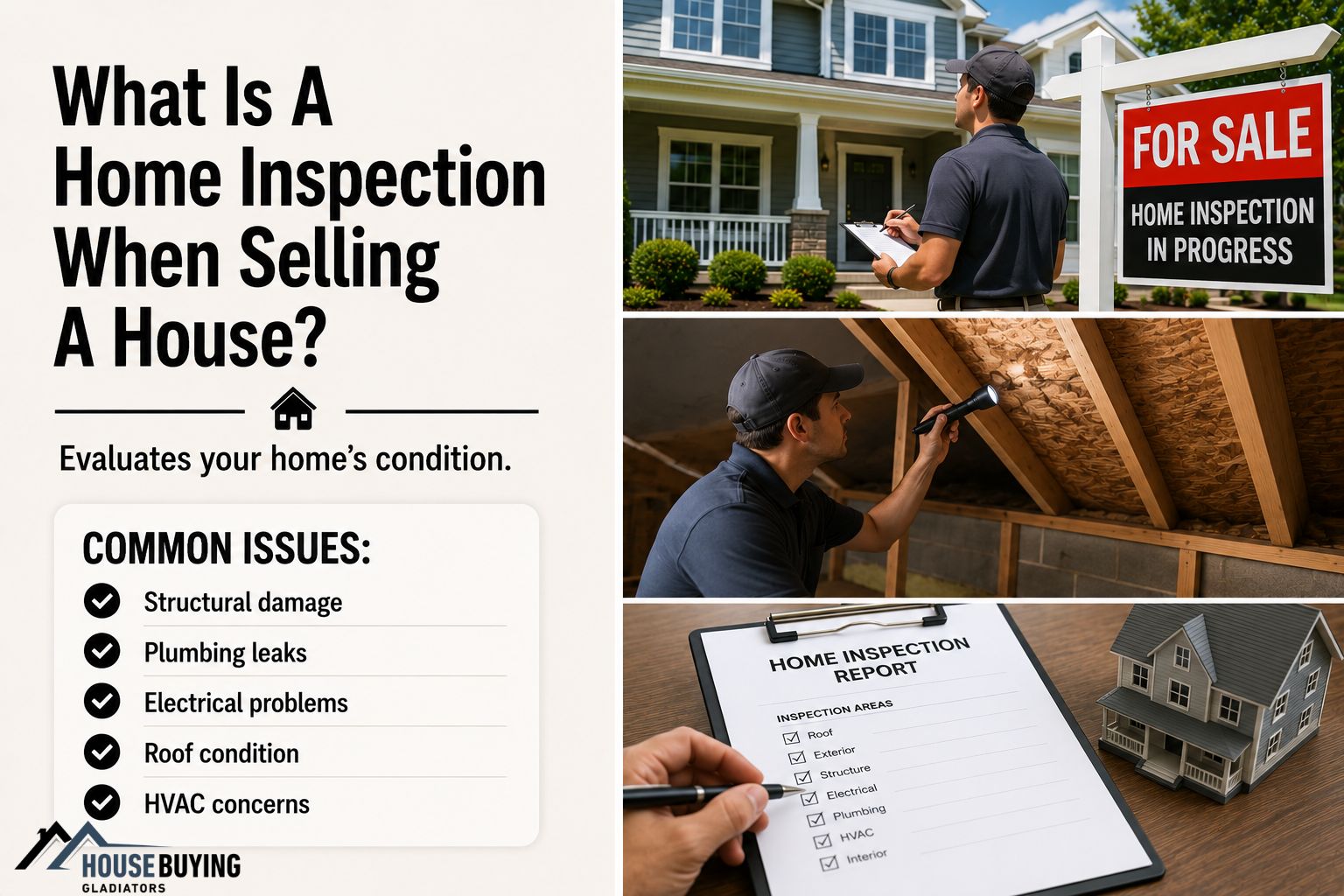
If you are wondering what a home inspection is when selling a house, the short answer is that it is a professional evaluation of a property’s visible condition, typically completed after a buyer’s offer is accepted.
Accepting an offer does not guarantee the sale will close. A home inspection can uncover maintenance issues, safety concerns, or repair needs that may lead to negotiations before closing.
Unlike a home appraisal, a home inspection focuses on the property’s condition rather than its market value. Inspection findings may result in repair requests, seller credits, or contract changes, but they do not automatically cancel the transaction.
Understanding how the home inspection process works can help sellers prepare their property, respond confidently to inspection findings, and reduce unexpected delays before closing.
This guide explains what a home inspection is when selling a house, why it matters, what inspectors evaluate, who pays for the inspection, and how sellers can navigate repair negotiations with confidence.
Home Inspection Negotiation & Equity Modeler
Home Inspection Negotiation & Equity Modeler
1. Core Sale Parameters
Step 12. Inspection Defect Checklist
Step 2Live Negotiation Audit
Why Does A Home Inspection Matter Before Closing?
A home inspection matters because it helps buyers understand the property’s condition before closing, allowing both parties to identify significant issues, negotiate repairs, and reduce unexpected delays.
For sellers, a successful home inspection builds buyer confidence, supports smoother negotiations, and improves the likelihood of reaching closing on schedule.
Offer Accepted ➔ Home Inspection ➔ Findings Reviewed ➔ Negotiations Completed ➔ Closing
| Why It Matters | Seller Benefit |
|---|---|
| Identifies visible defects | Reduces last-minute surprises |
| Supports informed negotiations | Helps resolve repair requests early |
| Increases buyer confidence | Strengthens the transaction |
| Clarifies the home’s condition | Keeps the sale moving toward closing |
Most home inspections uncover routine maintenance items rather than major structural defects. Addressing reasonable concerns promptly helps reduce contract delays and increases the chances of a successful closing.
If your sale also requires a lender’s valuation, what is a home appraisal when selling a house explains how an appraisal measures market value while a home inspection evaluates the property’s condition.
Who Pays For A Home Inspection When Selling A House?
In most home sales, the buyer pays for the home inspection because it helps them evaluate the property’s condition before completing the purchase and finalizing their decision.
Although sellers rarely pay the inspection fee, they may choose to complete repairs, offer seller credits, or renegotiate the purchase agreement if the inspection identifies significant issues.
Inspection Scheduled ➔ Property Evaluated ➔ Inspection Report Delivered ➔ Negotiations Begin
| Responsibility | Typical Party |
|---|---|
| Orders the home inspection | Buyer |
| Pays the inspection fee | Buyer |
| Performs the inspection | Licensed home inspector |
| Reviews the inspection report | Buyer and seller |
A home inspector works as an independent third party and provides an objective assessment of the property’s visible condition. The inspection report helps buyers make informed decisions and gives both parties an opportunity to resolve concerns before closing.
If inspection findings lead to repair negotiations, can a seller back out of a house sale explains what options sellers may have if contract issues arise before closing.
How Does A Home Inspection Work When Selling A House?
A home inspection works by having a licensed home inspector evaluate the property’s visible condition, examine major systems, and prepare a detailed report that helps buyers make informed decisions before closing.
Unlike a home appraisal, a home inspection focuses on the property’s condition rather than its market value. The inspection report may lead to repair requests, seller credits, or negotiations, but it does not automatically determine whether the sale will close.
Inspection Scheduled ➔ Property Evaluated ➔ Inspection Report Completed ➔ Buyer Reviews Findings
| Inspection Area | What Is Evaluated |
|---|---|
| Roof | Visible damage and overall condition |
| Structure | Foundation, walls, ceilings, and framing |
| Plumbing | Pipes, fixtures, leaks, and water flow |
| Electrical | Panels, outlets, wiring, and safety concerns |
| HVAC | Heating, cooling, and ventilation systems |
Most inspections are completed within a few hours, and buyers typically receive the inspection report within several days. Reviewing how the home inspection process works can help sellers understand what inspectors evaluate, how inspection reports are prepared, and how the findings may influence repair negotiations before closing.
If ownership verification is also part of your transaction, what is title insurance when selling a house explains how title issues differ from a home’s physical condition.
What Problems Can A Home Inspection Reveal During A House Sale?
A home inspection can reveal visible defects, safety concerns, and maintenance issues that may influence repair negotiations, buyer confidence, and the closing timeline.
Most inspection findings are routine maintenance items rather than major structural problems. However, significant issues may require repairs, seller credits, or additional evaluations before the transaction can move forward.
Inspection Completed ➔ Issues Identified ➔ Negotiations Begin ➔ Transaction Continues
| Common Finding | Possible Impact |
|---|---|
| Roof damage | Repair or replacement negotiations |
| Plumbing leaks | Maintenance or repair requests |
| Electrical hazards | Safety repairs before closing |
| HVAC problems | Service or replacement discussions |
| Foundation concerns | Additional structural evaluation |
Not every inspection finding threatens the sale. Sellers should focus on issues that affect safety, financing, or the buyer’s ability to complete the purchase, while addressing routine maintenance through reasonable negotiations whenever appropriate. Reviewing common issues found during home inspections can help sellers identify potential concerns early, prioritize necessary repairs, and reduce the likelihood of unexpected negotiations before closing.
If inspection findings extend the transaction timeline, what happens during escrow when selling a house explains how buyers and sellers work through outstanding requirements before closing.
Can Sellers Refuse Home Inspection Repairs?
Yes. Sellers can refuse home inspection repair requests, but buyers may negotiate, request a seller credit, accept the property as-is, or cancel the contract if an inspection contingency gives them that right.
The best response depends on the repair costs, local market conditions, the buyer’s position, and the likelihood of reaching a successful closing.
Repair Request ➔ Seller Responds ➔ Negotiation ➔ Agreement Or Contract Decision
| Seller Option | Possible Outcome |
|---|---|
| Complete repairs | Helps keep the transaction moving |
| Offer a seller credit | Buyer completes repairs after closing |
| Negotiate selected repairs | Both parties reach a compromise |
| Decline all repairs | Buyer decides whether to proceed or cancel |
Not every repair request requires a “yes” or “no” decision. Many successful home sales close because buyers and sellers negotiate practical solutions that protect both parties’ interests while keeping the transaction on track.
If inspection negotiations change the terms of the contract, what happens if the buyer backs out of the sale explains what sellers can expect if the buyer decides not to move forward.
How Can Sellers Prepare For A Home Inspection Before Closing?
Sellers can prepare for a home inspection by completing minor repairs, maintaining the property, documenting recent maintenance, and providing easy access to all major systems.
Preparation cannot guarantee a perfect inspection report, but it helps reduce avoidable concerns, supports smoother negotiations, and keeps the transaction moving toward closing.
Prepare Property ➔ Home Inspection ➔ Findings Reviewed ➔ Concerns Resolved ➔ Closing Continues
| Action | Why It Helps |
|---|---|
| Complete minor repairs | Reduces avoidable inspection findings |
| Clean and maintain the property | Demonstrates the home has been well cared for |
| Provide access to major systems | Helps the inspection proceed efficiently |
| Replace simple maintenance items | Eliminates unnecessary concerns |
| Gather maintenance records | Supports the home’s upkeep history |
Focus on addressing legitimate maintenance issues instead of trying to hide defects. A well-prepared property helps buyers evaluate the home with greater confidence and often reduces repair negotiations before closing.
If you are organizing paperwork before the sale is finalized, what documents do I need to sell my house explains which records can help support a smoother closing process.
FAQs: What Is A Home Inspection When Selling A House?
A home inspection is a professional evaluation of a property’s visible condition after a buyer accepts an offer. It helps identify defects, maintenance concerns, and safety issues before closing.
A home inspection helps buyers make informed decisions while giving buyers and sellers an opportunity to resolve significant issues before closing, reducing the risk of unexpected delays.
Major inspection findings may lead to repair requests, seller credits, price negotiations, or additional evaluations. Most transactions continue when both parties reach a reasonable agreement.
Sometimes. If the purchase agreement includes an inspection contingency and both parties cannot resolve significant issues, the buyer may have the right to cancel the transaction.
Yes. Sellers can complete repairs, offer a credit, negotiate specific items, or decline the requests. The buyer then decides whether to proceed under the terms of the purchase agreement.
Roof damage, plumbing leaks, electrical hazards, HVAC issues, foundation concerns, moisture intrusion, and deferred maintenance are among the most common inspection findings.
No. A home inspection evaluates the property’s condition, while a home appraisal estimates its market value for the buyer’s lender.
No. Sellers should prioritize legitimate maintenance and safety issues rather than cosmetic imperfections. Addressing significant concerns early often leads to smoother negotiations.
Yes. Buyers commonly request repairs, seller credits, or price adjustments based on the inspection report. Many negotiations end with a mutually acceptable agreement.
Complete minor repairs, maintain the property, organize maintenance records, and provide easy access to major systems so the inspector can perform a thorough evaluation.
Conclusion: What Should Sellers Know About Home Inspections?
A home inspection is a key step between accepting an offer and closing because it gives buyers a clear understanding of the property’s condition and provides both parties an opportunity to resolve concerns before the sale is finalized.
While inspection findings may lead to repair requests or negotiations, most transactions move forward when buyers and sellers work together to reach a practical agreement.
Offer Accepted ➔ Home Inspection ➔ Findings Reviewed ➔ Negotiations Completed ➔ Closing
Preparation is the best strategy. Completing minor repairs, maintaining the property, and responding reasonably to inspection findings can reduce delays, strengthen buyer confidence, and improve the likelihood of a successful closing.
Ready to move forward? Use this guide to understand what a home inspection is when selling a house, prepare your property with confidence, and navigate the inspection process from offer acceptance to closing.