Skip to content
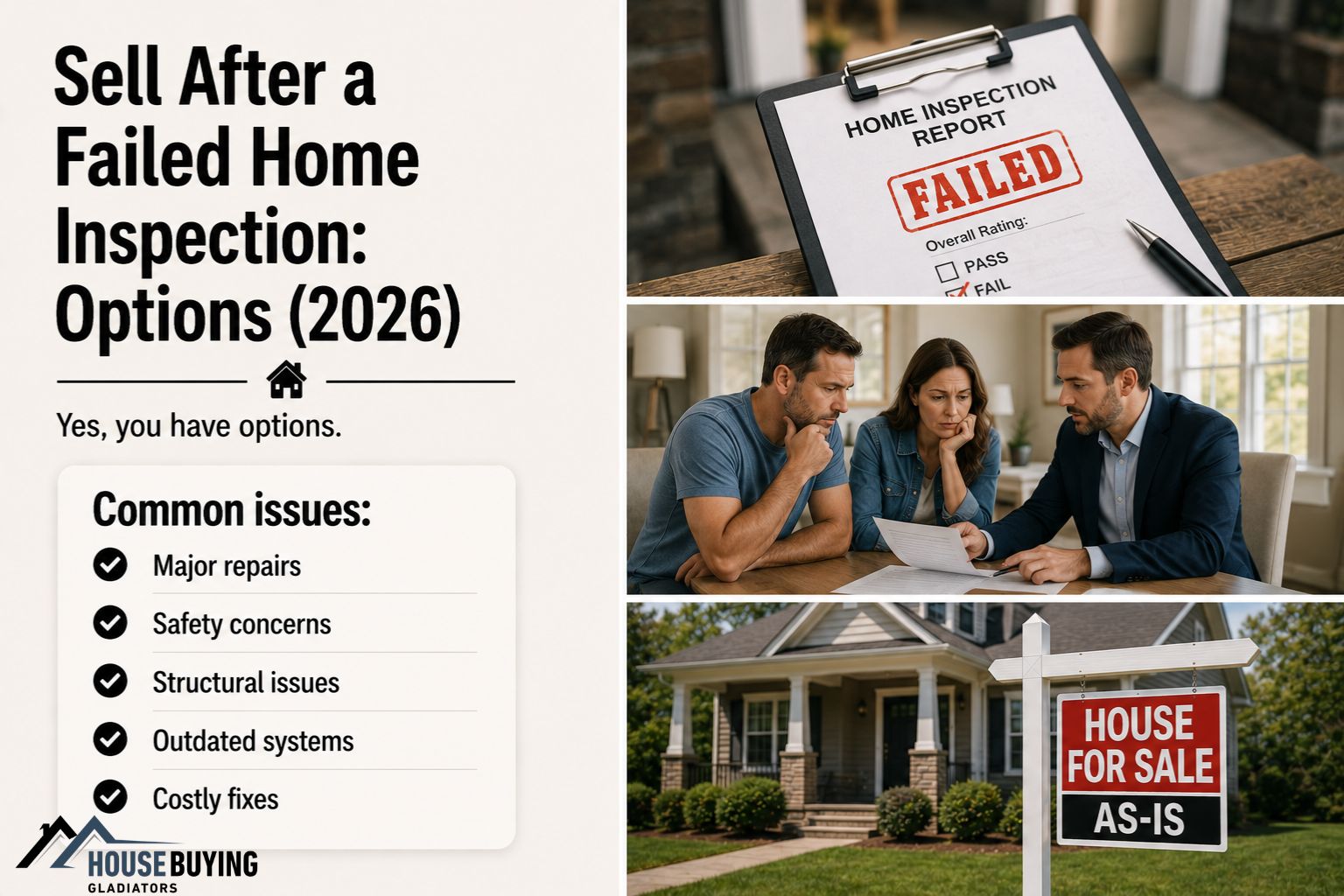
Yes, you can sell a house after a failed home inspection. A failed inspection does not automatically kill a sale, and many homeowners successfully sell their properties even after buyers discover significant issues.
However, a failed inspection can affect negotiations, financing, buyer confidence, repair requests, and the final sale price. Whether the problems involve foundation damage, water intrusion, mold, roofing issues, electrical defects, or multiple repair concerns, the way you respond often has a greater impact than the inspection report itself.
Many sellers assume a failed inspection means the buyer will walk away. In reality, buyers are often willing to move forward when they understand the costs, risks, and available solutions. The biggest obstacle is usually uncertainty not the defect itself.
This guide explains what happens after a failed inspection, why buyers sometimes cancel, when repairs make sense, whether selling as-is is an option, and how to choose the strategy that best fits your situation.
What Does It Mean When a House Fails a Home Inspection?
A house does not technically “fail” a home inspection. Instead, the inspection identifies defects, safety concerns, maintenance issues, or structural problems that may influence the buyer’s decision to move forward.
Many homeowners assume a failed inspection means the sale is over. In reality, inspection reports are negotiation tools. Buyers use them to better understand the property’s condition and determine whether repairs, credits, or pricing adjustments are necessary before closing.
According to Angi’s 2026 home inspection data, the average cost of a home inspection is $343, with prices ranging from $296 to $424 depending on home size, location, and property condition. See Angi’s full home inspection cost guide for a breakdown by location and home size.
According to the American Society of Home Inspectors, inspections commonly identify issues requiring $5,000 to $15,000 in repairs making the inspection one of the most financially significant steps in any real estate transaction.
Why Inspection Results Matter
Inspection findings can influence:
- Buyer confidence
- Repair negotiations
- Financing approvals
- Insurance requirements
- Property value perceptions
- Closing timelines
The more significant the issues, the more likely the buyer will seek concessions.
Common Problems Found During Home Inspections
Common issues that influence inspection outcomes include roofing problems with full roof replacement averaging $25,000 as well as foundation cracks, bowing walls, water damage, mold growth, and electrical hazards. According to Angi’s guide to common home inspection failures, these are among the most costly and frequently flagged issues in residential inspections.
| Common Issue | Typical Repair Cost Range |
|---|---|
| Roof replacement | $8,000 — $25,000 |
| Foundation problems | $2,200 — $20,000+ |
| Water damage | $1,500 — $9,000 |
| Electrical hazards | $150 — $800+ |
| HVAC replacement | $4,000 — $6,000 |
| Termite damage | $1,000 — $10,000+ |
Home Inspection Relationship
Property Condition → Inspection Findings → Buyer Concerns → Negotiation Requests → Transaction Outcome
Why Buyers Walk Away After a Failed Inspection
Buyers rarely walk away because a property has problems. More often, they walk away because the cost, risk, or uncertainty associated with those problems exceeds their comfort level.
The Real Issue Is Usually Risk
Most buyers expect a home inspection to uncover some defects. However, concerns tend to increase when:
- Repair costs appear substantial
- Structural issues are discovered
- Multiple systems need attention
- Safety hazards are present
- Future expenses are difficult to estimate
Uncertainty often creates more concern than the defect itself.
Buyer Concerns vs. Seller Assumptions
| What Sellers Often Think | What Buyers Often Think |
|---|---|
| The issue is minor | What else might be wrong? |
| Repairs won’t cost much | How much could this actually cost? |
| Another buyer will overlook it | Future buyers may have the same concern |
| The report is overly cautious | The report identifies real risk |
Why Financing Can Complicate Matters
Some buyers may still want the property after the inspection. However, lenders sometimes impose requirements when inspections uncover structural defects, major roof problems, active water intrusion, safety hazards, or significant property-condition issues. As a result, financing challenges can become just as important as buyer concerns.
When Repairs Become Non-Negotiable
Major structural defects, active mold growth, severe water intrusion, significant safety hazards, or certain habitability concerns may prevent lenders from approving the loan until repairs are completed. Offering a repair credit or reducing the purchase price may not solve the problem the underlying issue may need to be corrected before financing can move forward.
Key Takeaway
A failed inspection does not automatically end a transaction. Instead, it creates a new phase of negotiation where buyers and sellers determine how the identified issues will be handled.
Should You Make Repairs Before Selling?
Not always. In some situations, completing repairs before relisting can increase buyer confidence and help preserve your asking price. However, in other cases, selling the property in its current condition may produce a better overall financial outcome.
The right decision depends on repair costs, available funds, time constraints, local market conditions, buyer demand, and the severity of the inspection findings.
When Repairs May Make Sense
Repairs often make the most sense when:
- The issues are relatively affordable to fix
- Financing problems are likely without repairs
- The property is in a competitive market
- The repairs could significantly improve value
- The seller has sufficient time and resources
When Selling As-Is May Be the Better Option
This approach is common when:
- Repair costs are substantial
- Multiple major issues exist
- The seller needs to move quickly
- The property requires extensive updates
- The owner lacks funds for repairs
Repair Decision Relationship
Inspection Findings → Estimated Repair Costs → Potential Value Increase → Seller Resources → Repair or Sell As-Is
Need to Sell a House After a Failed Home Inspection Without Repairs?
If your home has significant inspection findings and repairs aren’t the right move for your situation, a traditional listing can be complicated. Financing challenges, buyer hesitation, and repair negotiations can slow everything down when you’re already dealing with enough uncertainty.
House Buying Gladiators buys homes directly for cash — as-is, regardless of inspection findings, with no repairs required, no fees, and no obligation.
We work with homeowners across the United States who need to sell quickly without investing more money into a property. No lender requirements to satisfy, no repair contingencies to negotiate over, no buyer financing to wait for.
Repair Credits vs. Price Reductions
When inspection issues arise, sellers often respond by either offering repair credits or reducing the purchase price. Both approaches can help keep a transaction moving forward, but each affects the deal differently.
What Is a Repair Credit?
A repair credit gives the buyer money at closing to address specific issues after taking ownership. Benefits may include faster negotiations, greater flexibility, no need to manage contractors, and reduced delays before closing.
What Is a Price Reduction?
A price reduction lowers the property’s purchase price instead of providing funds for repairs. This may simplify negotiations and reduce disputes over repair quality. However, price reductions can sometimes affect appraisals and financing calculations.
Which Option Do Buyers Prefer?
The answer depends on the situation. Some buyers prefer repair credits because they maintain control over the work. Others prefer price reductions because they immediately reduce the amount they’re paying.
Example
An inspection identifies $8,000 worth of needed repairs. The seller may choose to:
- Complete the repairs
- Offer an $8,000 repair credit
- Reduce the purchase price by $8,000
- Negotiate a combination of both
How Buyers Evaluate Inspection Problems
Most buyers do not evaluate inspection findings based solely on the defect itself. Instead, they evaluate the total risk associated with owning the property after closing.
When reviewing an inspection report, buyers often consider repair costs, future maintenance expenses, safety concerns, financing challenges, time required to address issues, and uncertainty about hidden problems.
Why Documentation Matters
Documentation may include inspection reports, contractor estimates, repair invoices, engineering reports, specialist evaluations, and warranty information. The more information buyers receive, the easier it becomes for them to evaluate the property’s condition with confidence.
Which Inspection Issues Create the Biggest Challenges?
Issues That Often Raise the Most Concern
Buyers tend to pay close attention to foundation problems, structural damage, active water intrusion, mold growth, roof failure, major electrical hazards, sewer line issues, termite damage, and HVAC system failure. These issues frequently involve higher repair costs and greater uncertainty.
Issues That Are Often Easier to Resolve
Less severe findings may include minor plumbing repairs, cosmetic damage, missing handrails, worn fixtures, small maintenance items, and routine wear and tear. While buyers may still negotiate over these concerns, they rarely derail a transaction on their own.
Important Perspective
Many homeowners focus on the number of issues listed in the report. However, buyers often focus more on severity than quantity. A report containing twenty minor maintenance items may create fewer concerns than a single major structural defect.
What Happens If the Buyer Cancels After the Inspection?
A buyer can often cancel a purchase agreement after a failed inspection if the contract includes an inspection contingency. However, the exact rights of both parties depend on the purchase agreement and applicable state laws.
Why Buyers Cancel
Buyers may decide to walk away when repair costs exceed expectations, structural problems are discovered, financing becomes difficult, safety concerns arise, or multiple major defects are identified.
What Sellers Should Remember
A canceled contract does not necessarily mean the property cannot be sold. The inspection often provides valuable information that can help the seller address issues before relisting, adjust pricing expectations, improve disclosures, and prepare documentation for future buyers.
What Sellers Must Disclose After a Failed Inspection
In many states, sellers must disclose known material defects to future buyers, even if a previous transaction falls through after an inspection.
Once an inspection report identifies significant issues, sellers often become aware of defects that may need to be disclosed in future transactions. Although disclosure laws vary by state, failing to disclose known problems can create legal liability and increase the risk of disputes after closing.
State Disclosure Variation
Most states require sellers to complete a formal property disclosure statement. In California, Texas, and Florida, disclosure requirements are among the most comprehensive covering structural defects, water damage history, pest infestations, and any known material issues discovered during inspections or prior transactions. In caveat emptor states, buyers bear more responsibility for investigation, but sellers who knowingly conceal discovered defects can still face legal consequences. For a full state-by-state breakdown, see DocJacket’s 2026 seller disclosure requirements guide.
Key Takeaway
A failed inspection can affect more than the current transaction. It may also influence future disclosures, negotiations, and buyer expectations.
Can You Sell a House After a Failed Home Inspection?
Yes. Many homeowners sell a house after a failed home inspection. The inspection findings may affect pricing, negotiations, or buyer demand, but they do not automatically prevent a successful sale.
Your Main Options
| Option | Upfront Cost | Time Required | Potential Buyer Appeal |
|---|---|---|---|
| Complete Repairs | High | Longer | Highest |
| Offer Repair Credits | Moderate | Moderate | High |
| Reduce Asking Price | Low | Fast | Moderate |
| Sell As-Is | Lowest | Fastest | Varies |
Many homeowners who need to sell a house after a failed home inspection find that the as-is route whether through price reduction or a direct cash sale produces the fastest and most predictable outcome.
For homeowners who need to sell quickly, see our guides on selling a house with foundation problems, selling a house with water damage, and selling a house with mold for situation-specific guidance.
Common Mistakes Sellers Make After a Failed Inspection
Waiting Too Long to Respond
Some sellers delay making decisions after receiving inspection feedback. As a result, opportunities to negotiate, gather estimates, or preserve buyer interest may be lost.
Focusing Only on the Purchase Price
The highest offer is not always the strongest offer. A slightly lower offer with fewer contingencies and stronger financing may produce a smoother transaction.
Ignoring Documentation
Without contractor estimates, specialist evaluations, or repair records, buyers may assume greater risk than actually exists.
Underestimating Future Buyer Concerns
If one buyer discovers a problem, future buyers are likely to discover it as well. Addressing concerns proactively creates more flexibility later.
Key Takeaway
Preparation often creates more options. Sellers who understand the inspection findings and gather supporting information are usually better positioned during negotiations.
Frequently Asked Questions
Not technically. Home inspections identify defects and concerns, but inspectors do not issue pass-or-fail grades. Buyers use the findings to determine whether they want to proceed with the purchase.
Major repair costs, structural problems, water damage, mold, roof issues, financing concerns, and safety hazards are among the most common reasons buyers cancel after inspections.
Not necessarily. Many reports contain both major and minor issues. Sellers often focus on addressing significant concerns while negotiating around less critical maintenance items.
Yes. Many homeowners choose to sell as-is rather than complete repairs. However, buyers may adjust their offers to reflect the property’s condition and anticipated repair costs.
Often, yes. Although reports may vary slightly, significant defects usually appear during future inspections as well.
Sometimes. Financing challenges typically arise when inspection findings reveal structural defects, safety hazards, severe property-condition problems, or issues that affect habitability.
For many homeowners, selling as-is to a cash buyer is the fastest option because it eliminates many repair requirements and financing-related delays.
In many situations, yes. Repair estimates help buyers understand potential costs and often reduce uncertainty during negotiations.
It depends. The impact varies based on the severity of the issues, estimated repair costs, market conditions, financing concerns, and buyer demand.
Understanding the scope of the problems, evaluating your available options, and choosing the strategy that aligns with your financial goals and timeline are usually the most important factors.
Ready to Sell Your House After a Failed Inspection?
You don’t have to spend thousands fixing every issue an inspector finds before you can move forward. Whether the findings are minor or significant, House Buying Gladiators can make you a fair cash offer on your home as-is, anywhere in the United States.
Skip the repairs, avoid agent commissions, and eliminate financing delays. Instead, receive a straightforward cash offer and choose a closing timeline that works for you.
Get Your Free Cash Offer Today →
Conclusion
Yes, you can sell a house after a failed home inspection. While inspection findings can affect negotiations, financing, repair requests, and buyer confidence, they rarely make a property unsellable.
What often matters most is not the defect itself it is how buyers perceive the risk, cost, and uncertainty associated with the problem. Sellers who understand the inspection findings, gather documentation, obtain repair estimates when appropriate, and evaluate all available options are usually in a stronger position to negotiate.
Whether you choose to make repairs, offer credits, adjust the asking price, or sell as-is, the goal is the same: reduce uncertainty and create a path forward that aligns with your timeline and financial goals. Understanding your full range of options not just the repair path is the best way to choose a strategy that actually works for your situation.