Skip to content
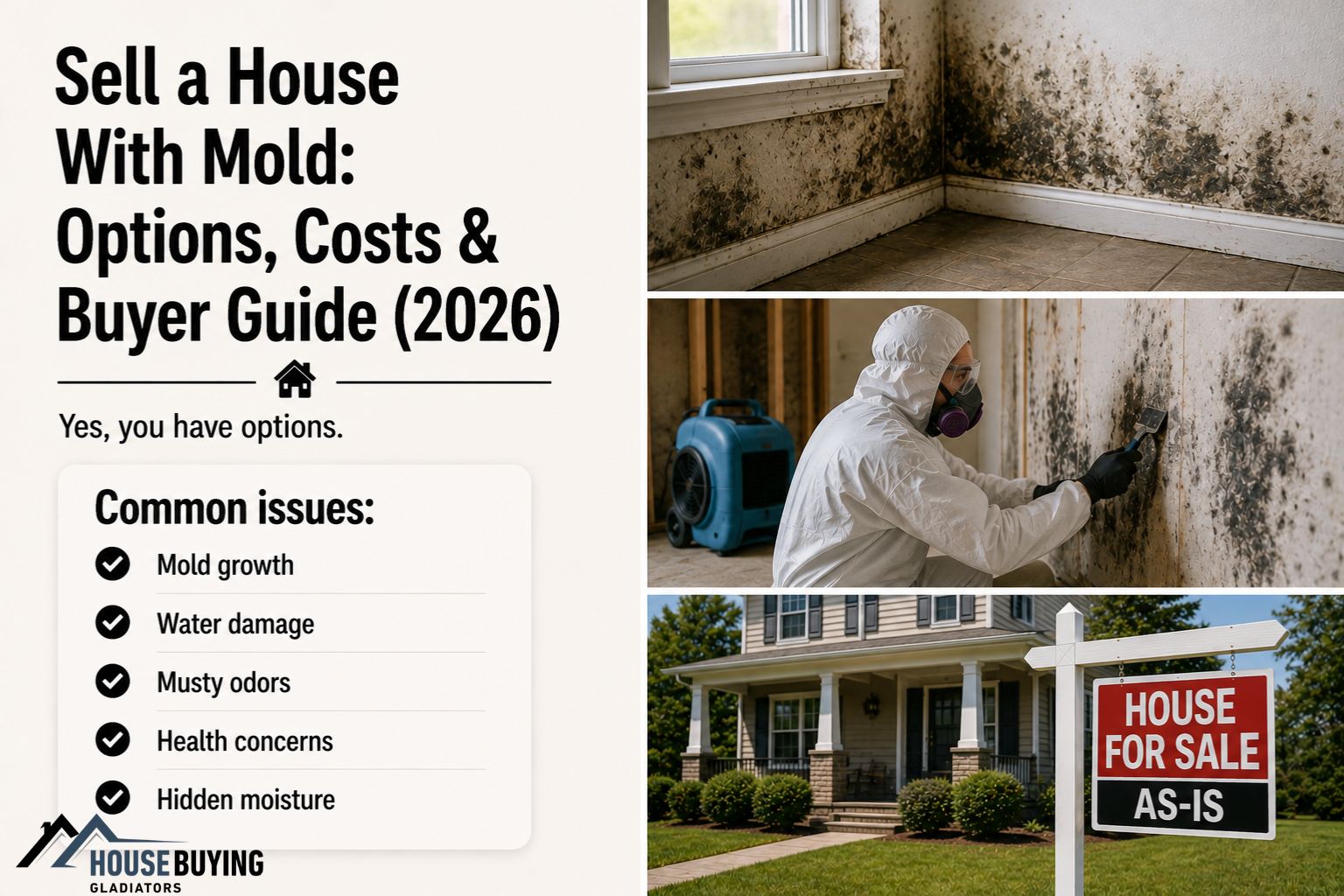
Yes, you can sell a house with mold. Many homeowners successfully sell properties with mold issues every year. However, mold can affect buyer confidence, financing options, repair costs, negotiations, and the property’s market value.
For many homeowners, the biggest concern is not whether the property can be sold it’s whether they need to spend thousands of dollars on remediation, disclose the problem to buyers, or accept a lower sale price. Others worry that inspections, lender requirements, or health concerns will make the home difficult to sell.
The good news is that mold does not automatically make a property unsellable. The best path forward depends on the extent of the problem, the source of the moisture, local market conditions, repair costs, and your overall selling goals.
In this guide, you’ll learn how mold affects a home sale, when remediation may make sense, whether selling as-is is an option, and what buyers actually care about when evaluating a property with mold.
Can You Sell a House With Mold Without Removing It?
Homeowners can sell a house with mold, but the condition of the property, the cause of the mold, disclosure requirements, financing considerations, and buyer perceptions often influence the selling process.
Many sellers assume mold automatically prevents a successful sale. In reality, properties with mold issues sell every day.
The more important question is:
what is the most practical and financially beneficial way to sell the property?
For homeowners asking, “can you sell a house with mold,” the answer is usually yes, but the best selling strategy depends on the extent of the problem and the condition of the property.
Your Main Selling Options
Most homeowners have three primary choices:
- Remediate the mold before listing.
- Sell the property with full disclosure.
- Sell the property as-is without remediation.
Each option involves different costs, risks, timelines, and potential returns.
Why Not All Mold Situations Are Equal
Buyers often react very differently depending on the specifics:
- A small area of mold caused by a previous, resolved leak
- Active mold growth from ongoing moisture intrusion
- Mold discovered during a home inspection
- Mold that has been professionally remediated with documentation
- Widespread mold affecting multiple areas of the home
The source of the moisture, the severity of the problem, and whether it has been properly addressed often matter more than the presence of mold itself.
Real-World Example
A homeowner discovers mold in a basement after years of poor drainage around the foundation. A remediation company estimates the cleanup will cost $9,000. The homeowner now faces several options: pay for remediation before listing, adjust the asking price, offer buyer credits, or sell the property in its current condition. The best choice depends on local demand, available funds, and how quickly the homeowner wants to sell.
Key Takeaway: Mold does not automatically prevent a home sale. However, it can affect pricing, financing, negotiations, and buyer confidence. Understanding the nature of the problem is the first step toward making an informed decision., it can affect pricing, financing, negotiations, and buyer confidence. Understanding the nature of the problem is the first step toward making an informed decision.
What Causes Mold in a House?
Mold develops when moisture remains trapped in an area long enough for spores to grow. Water intrusion, humidity, poor ventilation, and unresolved leaks are among the most common causes.
Understanding what caused the mold matters because buyers want reassurance that the underlying issue has been identified and corrected not just that the visible mold has been cleaned up.
Common causes of mold growth include:
- Roof leaks
- Plumbing leaks
- Flooding and water damage
- Poor ventilation
- High indoor humidity
- Crawl space or basement moisture intrusion
- HVAC system condensation
Mold and Water Damage: Understanding the Connection
Water damage and mold are closely related, but they are not the same thing. Water damage can occur without mold, and mold can develop from long-term humidity issues even without a major flooding event.
The relationship: Water Intrusion → Moisture Buildup → Mold Growth → Buyer Concerns
Many buyers are less concerned about the mold they can see and more concerned about the moisture problem they cannot see. This is why documentation showing the source of the issue has been corrected is so valuable during a sale.
Key Takeaway: Mold is often a symptom rather than the primary problem. Buyers, inspectors, and lenders frequently focus on the source of the moisture as much as the mold itself.
Visible Mold vs. Hidden Mold
Visible mold is easier to identify and evaluate, while hidden mold often creates greater uncertainty because buyers may not know how extensive the problem is.
Growth may appear on walls, ceilings, flooring, windows, bathroom surfaces, and basement areas. Although buyers may find visible contamination concerning, its scope is usually easier to assess and document.
Hidden contamination, on the other hand, may develop behind drywall, beneath flooring, inside insulation, within crawl spaces, behind cabinets, or inside HVAC systems. Because these areas often require additional investigation, uncertainty tends to be much higher.
| Factor | Visible Mold | Hidden Mold |
|---|---|---|
| Detection | Easier to identify | More difficult to detect |
| Scope | Often easier to evaluate | Extent may be unknown |
| Repair estimates | More accurate | Additional investigation required |
| Buyer reaction | Creates concern | Creates uncertainty |
| Documentation | Often easier to provide | Frequently discovered during inspections |
Many sellers focus on visible mold growth, but buyers often worry more about the possibility of hidden moisture damage behind walls, beneath flooring, or inside structural components. Reducing that uncertainty through professional inspection and testing helps buyers evaluate the property with greater confidence.
Mold and Health Concerns: What Sellers Should Know
One of the most common questions buyers ask when mold is disclosed is: “Is this home safe?”
According to the U.S. Environmental Protection Agency (EPA), mold exposure can cause health effects in some people, particularly those with allergies, asthma, or compromised immune systems. Common symptoms associated with mold exposure include nasal congestion, throat irritation, coughing, and eye irritation.
What this means for sellers:
- Buyers asking about health implications are raising a legitimate concern, not trying to renegotiate unfairly.
- Providing professional remediation documentation including post-remediation air quality testing is the most effective way to address health concerns.
- The EPA recommends addressing any moisture problem promptly, as mold can begin growing on wet surfaces within 24 to 48 hours.
Not all mold carries the same health risk. Surface mold caused by condensation in a bathroom is very different from widespread growth inside wall cavities. A qualified industrial hygienist or certified mold inspector can assess the type and concentration of mold present if there is concern about health implications.
Key Takeaway: Addressing health concerns transparently with inspection reports, remediation documentation, and post-clearance testing builds buyer confidence and reduces the risk of deals falling apart over fear of the unknown.
How Mold Affects Property Value
Mold can reduce a property’s market value, but the impact depends on the severity of the issue, remediation costs, buyer demand, financing considerations, and whether the underlying moisture problem has been resolved.
A small, professionally remediated problem with full documentation may have minimal impact on value. Widespread mold growth associated with ongoing moisture issues often creates greater challenges.
Factors that influence value reduction:
- Size of the affected area
- Cause of the mold
- Remediation status and documentation
- Buyer demand in the local market
- Financing availability
- Local market conditions
Many homeowners assume the value reduction equals the remediation cost. In practice, buyers often factor in future risk, inconvenience, uncertainty about hidden damage, and the hassle of managing a repair project after purchase. As a result, buyer discounts sometimes exceed the estimated remediation expense.
Key Takeaway: The impact on value depends on more than cleanup costs. Buyer confidence, documentation, and confidence in the property’s overall condition all play a major role.
Do You Have to Disclose Mold When Selling a House?
Many homeowners wondering “can I sell a house with mold” are also concerned about disclosure requirements and whether buyers must be informed about known issues.
In most situations, homeowners must disclose known mold problems and related moisture issues to potential buyers. Disclosure requirements vary by state, but sellers generally cannot intentionally conceal known material defects that may affect a property’s value or condition.
Disclosures may include:
- Known mold growth
- Previous mold remediation
- Water damage history
- Flooding incidents
- Roof or plumbing leaks
- Moisture intrusion issues
- Environmental reports
State-by-State Disclosure Variation
Mold disclosure laws vary significantly across the country. Here is a brief overview of four high-population states:
California: California requires sellers to disclose any known material defects, which includes mold. The Transfer Disclosure Statement (TDS) must be completed for most residential transactions.
Florida: Florida law requires disclosure of all known facts that materially affect the value of the property and that are not readily observable. Active mold clearly falls under this standard.
New York: New York’s Property Condition Disclosure Act requires sellers to disclose known conditions including moisture infiltration and water damage. Sellers who do not complete the disclosure must give buyers a $500 credit.
Texas: Texas requires sellers to complete a Seller’s Disclosure Notice that specifically asks about prior flooding, water penetration, and moisture damage. Failing to disclose known mold issues can expose sellers to liability.
Consult a local real estate attorney for guidance specific to your state and situation, as requirements and enforcement vary.
What Buyers Want to Know Beyond Basic Disclosure
Many sellers assume that if mold has been cleaned up, it no longer matters. In reality, buyers commonly ask:
- What caused the mold?
- Was the source of moisture corrected?
- Was remediation completed professionally?
- Is documentation available?
Providing clear answers to these questions often builds confidence and prevents surprises during inspections.
Key Takeaway: Disclosure is not just about reporting a problem it is an opportunity to demonstrate that the issue was identified, addressed, and documented properly.
What Happens During a Mold Inspection?
Many homeowners consider getting a mold inspection before listing, but are unsure what the process involves. Understanding it helps you prepare and helps buyers feel more confident in the property.
Who Performs Mold Inspections?
Mold inspections are typically performed by certified industrial hygienists (CIHs), certified mold inspectors (CMIs), or licensed home inspectors with mold certification. It is generally advisable to hire an inspector who does not also perform remediation, to avoid a conflict of interest.
What a Mold Inspection Typically Includes
Visual assessment: The inspector examines the property for visible mold growth, water stains, moisture damage, and conditions that could promote mold growth including poor ventilation, condensation, and signs of past leaks.
Moisture readings: Inspectors use moisture meters and thermal imaging cameras to identify areas with elevated moisture levels, even behind walls or under flooring.
Air sampling: Air samples may be collected from inside the home and outside (as a baseline). These samples are analyzed by a laboratory to identify mold species and spore counts. Elevated indoor counts relative to outdoor counts can indicate an active mold problem.
Surface sampling: Tape lifts or swabs from visible growth can identify the specific type of mold present.
Written report: A professional inspector provides a report documenting findings, moisture readings, any samples taken, and often recommendations for remediation or follow-up.
How Long Does It Take?
A basic inspection typically takes 2 to 4 hours for an average-sized home. Laboratory results for air or surface samples generally take 3 to 5 business days.
How Much Does a Mold Inspection Cost?
A basic visual mold inspection typically costs $300 to $500. Inspections that include air sampling and laboratory analysis often run $500 to $900 or more depending on the number of samples collected and the size of the property.
Why Getting an Inspection Before Listing Can Help
Sellers who obtain a professional mold inspection before listing gain several advantages: they know the full extent of the problem, they can price accordingly, they have documentation ready for buyers, and they reduce the risk of unexpected findings during a buyer’s inspection derailing the sale.
Key Takeaway: A pre-listing mold inspection removes uncertainty for both sellers and buyers, and the documentation it provides is one of the most effective tools for maintaining buyer confidence during a sale.
Mold Remediation vs. Mold Removal: What’s the Difference?
Mold remediation focuses on identifying, containing, and correcting mold problems while addressing the source of moisture. By contrast, mold removal generally refers to physically removing contaminated materials or visible mold growth. Many homeowners use these terms interchangeably, but buyers and remediation professionals often view them differently.
Mold removal typically involves removing contaminated materials, cleaning affected surfaces, and disposing of damaged materials. It focuses primarily on the visible problem.
Mold remediation is more comprehensive. It typically includes:
- Identifying the moisture source
- Containment procedures to prevent spread
- Air filtration (HEPA filtration and negative air pressure)
- Removal of contaminated materials
- Cleaning and antimicrobial treatment
- Verification testing (clearance testing)
- Moisture control measures to prevent recurrence
| Factor | Mold Removal | Mold Remediation |
|---|---|---|
| Focus | Removing visible mold | Solving the underlying issue |
| Scope | Often narrower | Usually more comprehensive |
| Recurrence | May not prevent it | Designed to reduce future risk |
| Documentation | Basic receipts | Full report with clearance testing |
Buyers care less about the terminology and more about whether the underlying moisture problem has been resolved and whether they have documentation to prove it.
How Much Does Mold Remediation Cost?
Mold remediation costs vary significantly depending on the size of the affected area, the source of the moisture, the materials involved, and the extent of contamination.
According to Angi, the average cost of mold remediation is approximately $2,347, with most homeowners spending between $1,373 and $3,325. However, costs can range from as low as $500 for a small bathroom surface treatment to $30,000 or more for extensive contamination involving structural materials or multiple areas of the home.
Typical cost ranges by scope:
| Situation | Estimated Cost Range |
|---|---|
| Small surface mold (bathroom, single room) | $500 – $1,500 |
| Moderate mold (crawl space, attic, or 1–2 rooms) | $2,000 – $6,000 |
| Extensive mold (multiple areas, structural materials) | $6,000 – $30,000+ |
| Full house remediation (severe/widespread) | $10,000 – $30,000+ |
Factors that affect cost:
- Size of the affected area
- Location and accessibility (crawl spaces cost more)
- Moisture source and whether it has been corrected
- Structural damage requiring material replacement
- Testing and clearance verification requirements
Hidden Costs Many Homeowners Overlook
Cleanup expenses are often not the only costs involved. Additional expenses can include water damage repairs, drywall or flooring replacement, roof or plumbing repairs, temporary accommodations during work, and follow-up testing to confirm clearance. A remediation estimate for one area can grow substantially once contractors uncover the full extent of moisture damage.
Key Takeaway: Before deciding whether to remediate, evaluate the full cost of correcting both the mold and the underlying cause not just the initial estimate.
Should You Remediate Mold Before Selling?
Not always. In some situations, remediation before listing may increase buyer confidence and improve marketability. In others, selling in the property’s current condition makes more financial sense.
Remediation may make sense when:
- The affected area is relatively small and costs are manageable
- The moisture source has already been corrected
- Financing concerns may limit your buyer pool
- Local buyers strongly prefer move-in-ready homes
Selling as-is may make more sense when:
- Cleanup costs are substantial
- Multiple property issues exist beyond just mold
- Time is limited
- Financial resources are constrained
The Question That Actually Matters
Many sellers focus only on achieving the highest sale price. A more useful question is: which option produces the best overall financial outcome?
Remediation costs, holding expenses, project delays, and the risk of cost overruns all affect the final net proceeds. A higher gross sale price does not always result in more money in your pocket.
| Factor | Remediate First | Sell As-Is |
|---|---|---|
| Upfront costs | Higher | Lower |
| Timeline | Longer preparation period | Faster |
| Buyer pool | Larger | Smaller |
| Sale price | Potentially higher | Often lower |
| Stress/effort | More project management | Greater convenience |
| Net outcome | Depends on costs and delays | Depends on discount accepted |
Can Buyers Get Financing on a House With Mold?
Sometimes. Financing eligibility often depends on the severity of the mold problem, lender requirements, appraisal findings, and whether the property meets minimum condition standards.
Why lenders pay attention: Mortgage lenders want to ensure the property serves as suitable collateral for the loan. Significant mold issues may raise concerns about property condition, habitability, structural damage, and ongoing moisture intrusion.
Government-backed loan programs (FHA, VA, USDA) tend to have stricter minimum property condition requirements. Substantial unresolved mold problems can create underwriting challenges for buyers using these programs.
Conventional financing may offer greater flexibility in some situations, but significant mold issues can still affect appraisal values and lender decisions.
Many sellers assume mold itself causes financing problems. Often, lenders are more concerned about the underlying moisture issue, overall property condition, and potential structural damage not the word “mold” itself.
Key Takeaway: Financing challenges frequently stem from unresolved property conditions rather than the existence of mold alone.
Does Homeowners Insurance Cover Mold?
Sometimes. Coverage often depends on what caused the mold and the specific terms of the insurance policy.
Coverage often depends on the cause:
- Sudden pipe failure → often covered
- Storm damage → often covered
- Long-term moisture buildup or maintenance neglect → typically not covered
- Flooding (separate flood policy required) → may be covered with a flood policy
Insurance companies focus on why the mold exists, not just that it exists. The cause of the damage frequently determines whether coverage applies.
Homeowners should review their policy details and consult their insurance provider before making assumptions about coverage especially before paying for remediation out of pocket.
Can You Sell a House As-Is With Mold?
Yes. Selling as-is means the seller does not agree to complete remediation or repairs before closing, although disclosure requirements still apply.
What “as-is” actually means:
- The seller does not agree to make repairs before closing
- The buyer accepts the property’s current condition
- Inspections may still occur
- Disclosure obligations still apply
- Buyers may still negotiate based on inspection findings
Selling as-is does not prevent buyers from requesting concessions or adjusting their offers based on what they find.
Advantages of selling as-is: Eliminates remediation expenses, reduces preparation time, avoids construction delays, simplifies the process, and allows for a faster transaction.
Potential trade-offs: Lower offers, a smaller pool of traditional buyers, financing limitations for some buyers, and increased negotiation activity.
Real-World Example
A homeowner discovers extensive mold growth caused by years of moisture intrusion in a crawl space. Remediation estimates exceed $15,000, and additional repairs may be needed once work begins. Instead of investing significant money into an uncertain project, the homeowner sells as-is, prices the home to reflect the condition, and closes within 18 days to a cash buyer avoiding $15,000+ in remediation costs and months of project management.
Ready to sell without the stress of remediation? House Buying Gladiators buys homes as-is in any condition. No repairs, no staging, no open houses. Request your free cash offer today →
What Buyers Actually Care About
Most buyers are less concerned about the word “mold” and more concerned about whether the underlying problem has been resolved. This is one of the most misunderstood aspects of selling a house with mold.
Questions buyers commonly ask:
- What caused the mold?
- Is the moisture problem still active?
- Was remediation completed properly?
- Is documentation available?
- Could the problem return?
- Will financing be possible?
The more confidently these questions can be answered, the easier it becomes for buyers to evaluate the property.
What Sellers Get Wrong
Many sellers focus on explaining the mold itself. Buyers are often more concerned about future moisture problems, hidden damage, long-term repair costs, and indoor air quality risks. Uncertainty creates more concern than mold itself.
Documentation Can Change the Dynamic
Helpful records that build buyer confidence include:
- Pre- and post-remediation inspection reports
- Contractor invoices for the moisture source repair
- Clearance testing results
- Moisture meter readings
- Before/after photographs
Buyers rarely expect a perfect property. They typically want transparency, documentation, and confidence that they understand what they are buying.
Common Mistakes Homeowners Make When Selling a House With Mold
Mistake #1: Assuming the house cannot be sold. Homes with mold issues sell every year in a wide range of market conditions.
Mistake #2: Focusing only on the mold and not the moisture source. Mold is often a symptom. Failing to identify the moisture source creates ongoing issues and additional buyer concerns.
Mistake #3: Hiding known problems. Attempting to conceal mold frequently creates larger problems later. Buyers often discover signs of moisture damage during inspections, which can damage trust and derail negotiations or worse, expose you to legal liability after closing.
Mistake #4: Ignoring holding costs. Waiting too long to act is expensive. Mortgage payments, property taxes, insurance, utilities, and maintenance expenses continue whether the property is occupied or vacant.
Mistake #5: Focusing only on sale price. A higher sale price does not always result in a better financial outcome. Remediation costs, carrying expenses, project delays, and transaction risks all affect net proceeds.
Frequently Asked Questions
Yes. Homeowners can legally sell a house with mold, although disclosure requirements generally apply to known issues. Disclosure laws vary by state, so consulting a local real estate attorney is advisable.
No. Many homeowners sell properties with mold without completing remediation. Whether remediation makes financial sense depends on costs, market conditions, and your overall goals.
Often, yes. The impact depends on the severity of the problem, remediation status, buyer demand, financing considerations, and market conditions.
Sometimes. Financing eligibility depends on lender requirements, the extent of the issue, the property’s overall condition, and the type of loan (government-backed programs tend to be stricter).
Coverage varies. Insurance policies typically evaluate the cause of the mold rather than the mold itself. Sudden, accidental causes are more likely to be covered than long-term moisture buildup.
Yes. Many homeowners sell properties as-is when remediation costs are substantial or when they prefer to avoid major repair projects.
Yes. Investors, cash buyers, landlords, house flippers, and some traditional buyers may still consider properties with mold issues.
Many homeowners benefit from a professional evaluation before listing. It provides clarity on the extent of the problem, supports pricing decisions, and gives you documentation ready for prospective buyers.
According to Angi, the average cost is approximately $2,347, with most projects falling between $1,373 and $3,325. Costs can be much higher for widespread contamination or cases requiring structural repairs.
Yes. Homeowners can sell a house with mold without completing remediation, although disclosure requirements, buyer concerns, and financing considerations may affect the transaction.
Conclusion
Yes, you can sell a house with mold. While mold can affect buyer confidence, financing eligibility, negotiations, and property value, it does not automatically prevent a successful sale.
The right approach depends on the extent of the mold, the source of the moisture, remediation costs, your timeline, and your financial goals. Some homeowners choose to remediate before listing. Others determine that selling as-is to a buyer who understands the property’s condition produces a better overall outcome.
Before making a decision, consider the full financial picture: remediation expenses, holding costs, market conditions, financing considerations, and buyer demand. And remember the highest gross sale price is not always the best outcome.
If you want to skip the remediation process entirely and sell your home fast and as-is, House Buying Gladiators can make you a fair cash offer with no repairs required. Contact us today to get started →