Skip to content
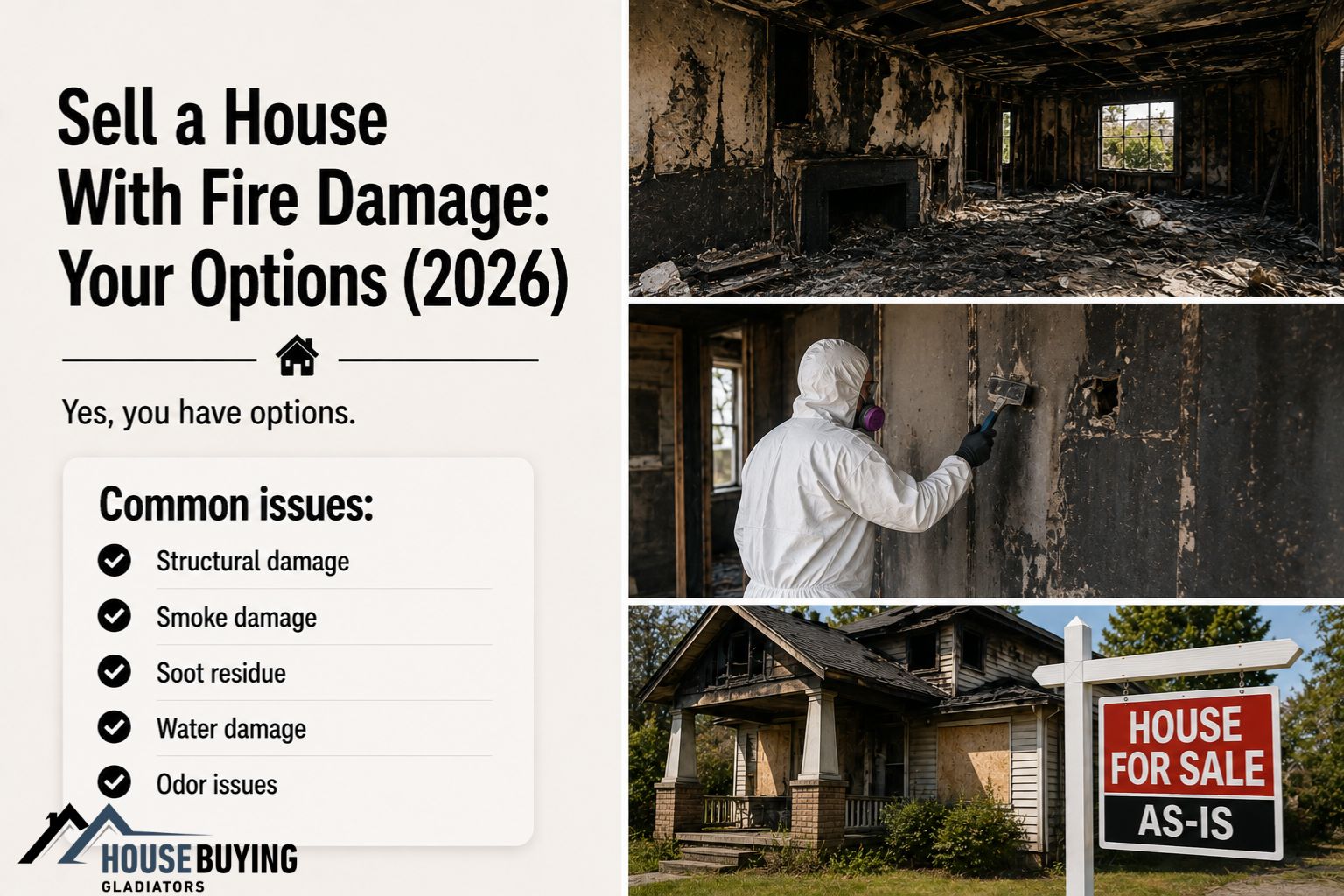
Yes, you can sell a house with fire damage. Many homeowners successfully sell fire-damaged properties every year, even when damage is significant. However, repair costs, insurance considerations, financing requirements, and buyer confidence can all influence how quickly the property sells and how much buyers are willing to pay.
A house fire can leave homeowners facing difficult decisions. Should you repair the damage before listing? Will buyers still be interested? How much will the fire affect your property’s value? And if restoration costs are substantial, does selling as-is make more financial sense?
What many homeowners discover is that the biggest challenge is not the fire itself. Instead, buyers often focus on uncertainty. They want to know how extensive the damage is, whether hidden problems exist, what repairs may be required, and how much risk they are taking on.
Even with significant damage, fire-damaged properties can attract investors, cash buyers, renovation specialists, and, in some situations, traditional buyers. The best strategy depends on the severity of the damage, estimated repair costs, financing considerations, and your overall selling goals.
This guide explains how fire damage affects property value, when repairs may be worthwhile, how buyers evaluate risk, whether selling as-is is a viable option, and how to choose the path that best fits your situation.
Your Main Selling Options
Most homeowners who need to sell a house with fire damage have four primary options:
- Complete repairs before listing
- Partially repair the property
- Sell the property as-is
- Sell directly to a cash buyer
Each approach comes with different costs, timelines, risks, and potential returns.
Not All Fire Damage Creates the Same Challenges
Fire damage can affect far more than the area touched by flames. Depending on the location and severity of the fire, homeowners may face structural concerns, smoke contamination, water damage from firefighting efforts, electrical problems, HVAC contamination, and mold growth. As a result, buyers often evaluate both visible damage and potential hidden issues before making an offer.
Structural Damage
Structural fire damage may affect:
- Roof framing
- Support beams
- Floor systems
- Load-bearing walls
- Attic structures
Because structural concerns can influence both safety and financing, buyers often pay close attention to engineering reports, contractor estimates, and repair documentation.
Smoke and Soot Contamination
Even when flames remain limited to one area, smoke can spread throughout the property.
Potential concerns include:
- Persistent odors
- Staining
- Air quality issues
- HVAC contamination
Consequently, smoke damage sometimes requires extensive remediation despite relatively limited fire damage.
Water Damage Following Fire Suppression
Many homeowners focus on the fire itself. However, the water used to extinguish the fire can create a separate set of challenges.
Potential issues include:
- Mold growth
- Damaged drywall
- Flooring deterioration
- Structural moisture concerns
Therefore, buyers often evaluate both fire-related and water-related damage when assessing risk.
Cosmetic vs. Major Damage
Some homes experience relatively minor cosmetic damage, such as smoke-stained walls, damaged cabinetry, surface charring, or localized interior damage.
By contrast, extensive structural damage, electrical system failures, or widespread smoke contamination often require more significant restoration efforts and may create financing obstacles.
What Many Homeowners Overlook
The visible damage is not always the most expensive problem. In many situations, hidden smoke contamination, electrical issues, structural concerns, or moisture trapped behind walls can significantly increase restoration costs and influence buyer decisions.
If the fire also caused water intrusion or moisture damage, our guide on selling a house with water damage covers additional considerations that may apply.
How Buyers Evaluate Risk After a Fire
Most buyers do not evaluate fire damage based solely on what they can see. Instead, they assess the total risk associated with the property, including repair costs, hidden damage, financing challenges, insurance concerns, and future resale potential.
What Buyers Are Really Calculating
When reviewing a fire-damaged property, buyers often consider:
- Repair costs
- Potential hidden damage
- Insurance concerns
- Financing eligibility
- Future maintenance expenses
- Resale value
Consequently, two homes with similar fire damage may receive very different offers depending on the level of uncertainty involved.
Buyer Risk Framework
Fire Damage
↓
Repair Estimates
↓
Hidden Risk Assessment
↓
Financing & Insurance Review
↓
Offer Adjustment
Repair First or Sell As-Is?
When deciding how to sell a house with fire damage, repairing before listing may increase buyer confidence and expand the pool of potential buyers. However, repairs do not always produce a higher net return. The right decision depends on restoration costs, available resources, market conditions, financing considerations, and your timeline.
When Repairs May Be Worthwhile
Repairs often make sense when:
- Damage is relatively limited
- Financing obstacles can be resolved
- Market demand is strong
- Restoration costs are manageable
- The seller has adequate financial resources
In these situations, repairs may improve marketability and strengthen negotiating leverage.
When Selling As-Is May Be the Better Option
Selling as-is allows homeowners to transfer the property without completing repairs. This approach is often attractive when:
- Damage is extensive
- Restoration costs are difficult to estimate
- Multiple systems require repair
- Time is limited
- Financial resources are constrained
- Insurance claim complications exist
Rather than investing additional money into the property, some homeowners choose to let the next owner manage the renovation process.
According to Angi’s 2026 fire damage restoration data, professional fire restoration costs average $27,200, with most homeowners paying between $3,100 and $51,200 depending on the severity of the fire and the size of the home. Minor smoke damage from a contained fire can cost as little as $800 to remediate, while major structural fires involving roof framing, electrical systems, and load-bearing walls can exceed $100,000. See Angi’s full fire damage restoration cost guide for a detailed breakdown by damage type.
Damage Type Estimated Restoration Cost Minor smoke damage (contained fire) $800 — $3,000 Moderate damage (one room) $3,000 — $15,000 Major damage (multiple rooms) $15,000 — $50,000 Severe structural damage $50,000 — $180,000+ Full restoration (average) ~$27,200
Want to Sell a House With Fire Damage Without the Hassle of Repairs?
If fire damage has made the traditional listing process feel overwhelming or if restoration costs, insurance complications, and financing requirements are creating too many obstacles there is a simpler path forward.
House Buying Gladiators buys fire-damaged homes directly for cash — as-is, in any condition, with no repairs required, no fees, and no obligation.
We work with homeowners across the United States who need to sell quickly without investing more money into a damaged property. No lender requirements to satisfy, no restoration projects to manage, no contractor estimates to negotiate over.
Who Typically Buys Fire-Damaged Properties?
Potential buyers may include:
- Real estate investors
- Cash buyers
- Renovation specialists
- House flippers
- Landlords
- Builders
These buyers often have experience evaluating damaged properties, estimating repair costs, and managing restoration projects.
Learn more about how our cash home buying process works and what to expect from start to finish.
Comparison Table: Repair First vs. Sell As-Is
| Factor | Repair First | Sell As-Is |
|---|---|---|
| Upfront Cost | Higher | Lower |
| Time Required | Longer | Faster |
| Buyer Pool | Larger | Smaller |
| Financing Flexibility | Greater | More Limited |
| Project Management | Required | Minimal |
| Potential Sale Price | Higher | Usually Lower |
| Financial Risk | Higher | Lower |
What Many Homeowners Discover
The highest sale price does not always produce the highest net proceeds. Before investing in repairs, it is important to evaluate restoration costs, holding costs, market conditions, and the amount of risk involved. In many situations, a faster as-is sale can produce a better overall outcome than a lengthy and expensive renovation project.
Insurance and Financing Challenges After a Fire
Fire damage affects more than the property itself. Insurance history and financing requirements can influence buyer confidence, eligibility, closing timelines, and the overall pool of potential purchasers.
Why Insurance History Matters
A previous fire insurance claim does not automatically prevent a sale. However, buyers often want to understand:
- What caused the fire
- The extent of the damage
- Whether repairs were completed properly
- Whether insurance covered restoration costs
- If future insurance challenges may exist
Consequently, documented repairs and restoration records can significantly reduce uncertainty and improve buyer confidence.
Documentation That Builds Trust
Helpful records may include:
- Insurance claim summaries
- Contractor invoices
- Restoration reports
- Building permits
- Inspection approvals
- Warranty information
The more transparent the documentation, the easier it becomes for buyers to evaluate the property’s condition and history.
How a Previous Fire Claim Affects the CLUE Report
When buyers purchase homeowners insurance on a property, their insurer will typically request a CLUE report a Comprehensive Loss Underwriting Exchange report that details insurance claims filed on the property over the past seven years.
A previous fire claim will appear on this report. This does not automatically prevent the buyer from obtaining insurance, but it may influence:
- Insurance premium rates for the new owner
- Coverage availability in high-risk areas
- The insurer’s requirements for documentation of completed repairs
What sellers can do:
Having complete documentation of all fire-related repairs, permits, inspections, and restoration certifications readily available helps buyers present accurate information to their insurer. Properties where repairs were properly documented and permitted typically face fewer insurance obstacles than those where restoration records are incomplete or missing.
Key Takeaway: A fire claim on a CLUE report is not a dealbreaker but incomplete repair documentation often creates more insurance friction than the claim itself.
Why Financing Can Become More Complicated
Mortgage lenders want to ensure the property serves as suitable collateral for the loan. As a result, significant fire damage may create financing obstacles even when a buyer wants to move forward.
Potential lender concerns include:
- Structural damage
- Electrical hazards
- Unsafe living conditions
- Incomplete repairs
- Significant smoke contamination
- Active water damage
When Repairs Become Non-Negotiable
In certain situations, lenders may require repairs before approving financing.
Examples may include:
- Severe structural defects
- Unsafe electrical systems
- Major roof damage
- Habitability concerns
Consequently, price reductions or repair credits may not solve the problem if lender requirements remain unmet.
Why Cash Buyers Often Evaluate Properties Differently
Unlike traditional buyers, cash buyers are not dependent on mortgage approval.
Therefore, they typically focus more heavily on:
- Repair costs
- Investment potential
- Renovation timelines
- After-repair value
- Market opportunities
For this reason, properties that struggle to qualify for conventional financing may still attract interest from experienced investors and cash buyers.
Key Consideration
Many homeowners assume buyer interest is the biggest obstacle after a fire. However, insurance requirements and financing restrictions often have an equal or even greater impact on the outcome of a sale.
States with strict fire disclosure requirements:
California requires sellers to complete a Transfer Disclosure Statement detailing known defects, including fire history and related repairs and the state’s disclosure requirements are among the most comprehensive in the country. Fire damage, even if fully repaired, typically requires disclosure. As of January 1, 2026, California’s requirements now include new mandates for electrical system safety inspections as part of the disclosure process. Angi
In Texas, sellers must disclose known fire damage on the state’s standard Seller’s Disclosure Notice. In Florida, disclosure requirements extend to any known material defects that could affect a buyer’s decision including fire history and related structural concerns.
What sellers must typically disclose:
- When the fire occurred
- Which areas of the home were affected
- What restoration or repairs were completed
- Whether insurance claims were filed
- Any remaining damage or concerns
What happens if you don’t disclose: There is no law preventing you from selling a property that has sustained fire damage. However, you are legally required to disclose known fire damage to potential buyers in most states and failing to do so creates legal exposure that can follow you long after closing. HomeGuide
Key Takeaway: Disclosure is not just a legal requirement it is also your best protection. Document every repair, permit, inspection, and restoration invoice and provide them to buyers upfront.
How Fire Damage Can Affect Your Financial Outcome
Choosing to sell a house with fire damage affects your financial outcome in ways that go beyond the repair estimate alone. The impact varies significantly depending on the severity of the damage, repair requirements, market conditions, financing limitations, and buyer demand.
What Influences Value the Most?
Potential factors include:
- Structural damage
- Smoke contamination
- Repair estimates
- Insurance history
- Financing restrictions
- Local market conditions
Minor damage may have a relatively small impact on value, while extensive structural issues often lead to larger pricing adjustments.
What Buyers Are Really Discounting
Many homeowners assume buyers only subtract the estimated cost of repairs.
However, buyers often account for:
- Repair uncertainty
- Project management time
- Financing challenges
- Unexpected expenses
- Opportunity costs
As a result, buyer discounts sometimes exceed the actual repair estimate.
Why Similar Properties Can Receive Different Offers
Two properties with similar fire damage may receive very different offers depending on how much risk buyers perceive.
Well-documented repairs, contractor estimates, engineering reports, and restoration records often help reduce uncertainty and improve buyer confidence.
Decision Framework
The best strategy depends on the severity of the damage, estimated restoration costs, available resources, financing considerations, and your timeline.
| Situation | Potential Best Option |
|---|---|
| Minor damage with affordable repairs | Repair before listing |
| Moderate damage with uncertain costs | Compare repair costs against potential value increases |
| Extensive damage and limited funds | Sell as-is |
| Need to sell quickly | Consider a direct cash sale |
| Financing obstacles are likely | Explore cash-buyer options |
What Many Homeowners Discover
The decision is not always about achieving the highest sale price.
Instead, the goal is often maximizing net proceeds after accounting for restoration costs, holding expenses, closing costs, and the risk of unexpected repairs.
For example, a fully renovated property may sell for more money. However, the additional repair costs, carrying expenses, and project delays can sometimes reduce the seller’s overall profit.
For that reason, the best solution is usually the one that balances potential proceeds, financial risk, and timeline rather than focusing solely on the final sale price.
If your property also has structural concerns beyond fire damage, our guide on selling a house with foundation problems may be helpful.
Mistakes That Often Cost Sellers Money
Waiting Too Long to Assess the Damage
Some homeowners postpone inspections and contractor evaluations after a fire.
Unfortunately, delays often increase uncertainty and make it harder to plan an effective selling strategy.
Assuming Repairs Guarantee Higher Proceeds
Repairs do not automatically increase profits.
In some situations, restoration costs exceed the additional value created by the improvements.
Focusing Only on the Highest Offer
The highest offer is not always the strongest offer.
Financing strength, contingencies, inspection requirements, and closing timelines can all affect the final outcome.
Failing to Gather Documentation
Missing records often increase buyer concerns.
Without supporting documentation, buyers may assume greater risk and adjust their offers accordingly.
Overlooking Secondary Damage
Many homeowners focus on burned areas while overlooking smoke damage, water damage, or electrical issues.
Consequently, unexpected problems may surface during inspections and create additional negotiation challenges.
Frequently Asked Questions
Not necessarily. Many homeowners sell fire-damaged properties without completing repairs. The best approach depends on repair costs, financing concerns, buyer demand, and your overall goals.
Yes. In most situations, homeowners can legally sell a house with fire damage. However, disclosure requirements vary by state, and sellers generally must disclose known material defects.
Often, yes. The impact depends on the severity of the damage, restoration costs, financing limitations, and buyer perceptions of risk.
Sometimes. Financing eligibility often depends on the property’s condition, lender requirements, and whether repairs are needed to meet safety or habitability standards.
Properties with completed repairs can still be sold successfully. Buyers may request documentation showing the repairs were properly completed and inspected.
In many situations, yes. Disclosure requirements vary by state, but sellers are often required to disclose known material events and defects that could influence a buyer’s decision.
Investors, cash buyers, landlords, renovation specialists, and some traditional buyers may all show interest depending on the property’s condition and potential.
For many homeowners, selling as-is to a cash buyer is often the fastest option because it eliminates many financing-related delays and repair requirements.
Often, yes. Repair estimates can help buyers understand the scope of the work and may reduce uncertainty during negotiations.
Understanding the true extent of the damage, gathering documentation, evaluating repair costs, and choosing the right selling strategy are often the most important factors.
Often, yes. Buyers may discover previous fire damage through disclosures, insurance records, permit records, inspection reports, or restoration documentation. For that reason, transparency is usually the best approach.
Ready to Sell Your Fire-Damaged House?
Whether your property has minor smoke damage or significant structural concerns, you don’t have to spend tens of thousands on restoration before you can move forward.
House Buying Gladiators buys fire-damaged homes directly for cash, anywhere in the United States. No repairs, no agent fees, no waiting for buyer financing to clear.
Get Your Free Cash Offer Today →
Conclusion
Yes, you can sell a house with fire damage. While fire-related issues can affect buyer confidence, financing eligibility, insurance history, and property value, they do not automatically prevent a successful transaction.
What matters most is not the fire damage itself it is the uncertainty surrounding it. Buyers who have clear documentation, accurate repair records, and transparent disclosure are far more confident than buyers left to estimate risk on their own.
The right approach depends on the severity of the damage, estimated restoration costs, your financial situation, insurance considerations, and your timeline. Some homeowners achieve better outcomes by completing repairs before listing. Others find that selling as-is to a cash buyer provides a faster, more practical solution especially when restoration costs are high, financing is uncertain, or time is limited.
Before making a decision, consider the full financial picture: restoration costs, holding expenses, insurance implications, financing challenges, and potential buyer demand. Understanding all of your options not just the repair path is the best way to choose a strategy that actually works for your situation.