Skip to content
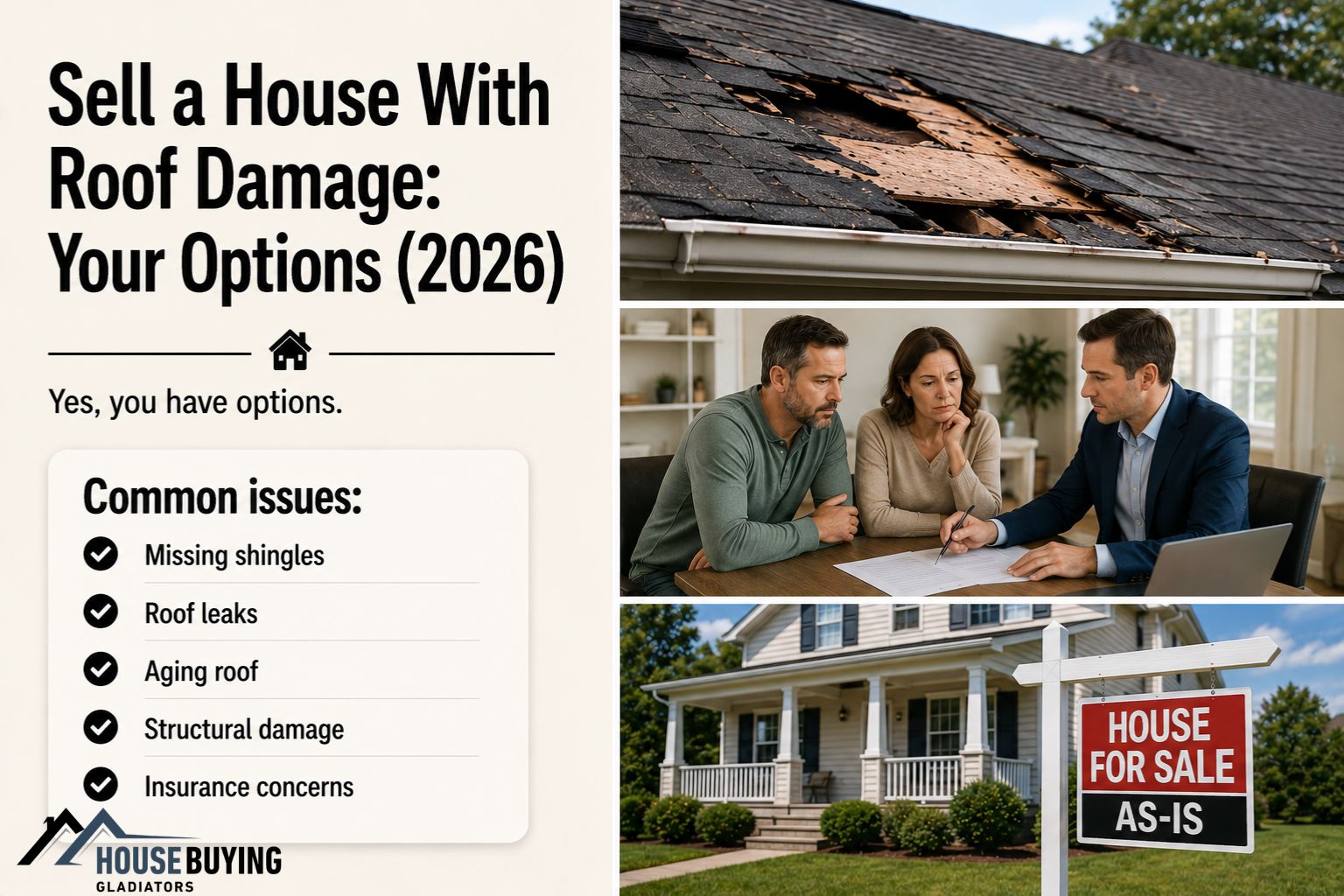
Yes, you can sell a house with roof damage. Many homeowners successfully sell properties with roofing issues every year, even when damage is significant. However, the extent of the damage, repair costs, financing requirements, insurance concerns, and buyer confidence can all influence the outcome.
For many sellers, the biggest concern is not whether the property can be sold it’s whether roof repairs are worth the investment, how much the damage will affect property value, and whether buyers will still make competitive offers.
The good news is that roof damage exists on a spectrum. A few missing shingles creates a very different situation than a roof nearing the end of its lifespan or one with active leaks and structural concerns. Understanding where your property falls on that spectrum is often the first step toward choosing the right selling strategy.
This guide explains how buyers evaluate roof damage, when repairs may make sense, how financing can become a factor, and how to determine the best path forward based on your specific situation.
What Roof Damage Means for Your Sale
Roof damage does not automatically stop a home sale. However, it can affect buyer demand, financing eligibility, insurance availability, repair negotiations, and overall marketability.
Many homeowners assume buyers immediately walk away when they hear the words “roof damage.” In reality, buyers evaluate risk. Their decision often depends on three questions:
- How severe is the problem?
- How much will it cost to fix?
- What other issues might exist beneath the roof?
Consequently, two homes with similar roofing problems may receive very different offers depending on the level of uncertainty involved.
Why Roof Issues Carry More Weight Than Many Other Defects
The roof protects nearly every major component of the property. Potential consequences of roof failure include interior water damage, mold growth, insulation damage, structural deterioration, electrical concerns, and ceiling damage. As a result, buyers often view roof problems as a potential gateway to larger expenses.
Not Every Roofing Problem Creates the Same Level of Risk
The severity of roof damage often matters more than the existence of roof damage itself.
Minor Roofing Concerns — missing shingles, minor flashing issues, small isolated leaks, cosmetic wear, limited storm damage. These may still require repairs but often create fewer obstacles during a sale.
Moderate Roofing Problems — multiple active leaks, widespread shingle deterioration, damaged underlayment, poor drainage, aging roofing materials. These situations often trigger additional inspections and buyer negotiations.
Major Roofing Defects — significant structural damage, extensive water intrusion, roof sagging, failed roofing systems, severe storm damage. Financing challenges and insurance concerns become more common at this level.
What Many Homeowners Overlook
Visible roof damage is not always the most expensive problem. In many situations, the largest expenses come from water intrusion that has already affected insulation, drywall, framing, or other hidden areas of the property.
How Much Does Roof Repair or Replacement Cost?
According to Angi’s 2026 data, roof repairs cost $394 to $1,962 on average, while full roof replacement costs $5,900 to $12,900 for most homes. Professional roof replacement costs $9,601 on average, with prices ranging from a low of $5,900 to a high of $46,000 depending on roof size, material choice, pitch, and location.
| Roof Issue | Estimated Cost |
|---|---|
| Minor repairs (patches, flashing) | $394 — $1,962 |
| Moderate repair (partial replacement) | $1,500 — $5,000 |
| Full roof replacement (asphalt) | $5,900 — $12,900 |
| Full replacement (premium materials) | $15,000 — $46,000 |
| Average full replacement | ~$9,601 |
Source: Angi 2026 Roof Replacement Cost Guide | Angi 2026 Roof Repair Cost Guide
Before deciding whether to repair or sell as-is, it helps to understand where your roof falls in this range. A documented contractor estimate is one of the most valuable things you can provide to buyers it converts an unknown cost into a known one, which directly reduces buyer risk perception.
How Buyers Determine Whether a Roof Problem Is a Deal Breaker
Most buyers do not evaluate roof damage in isolation. Instead, they assess the total financial exposure associated with the property.
What Buyers Are Really Calculating
When evaluating a property with roof damage, buyers often consider repair costs, remaining roof lifespan, potential hidden damage, insurance requirements, financing eligibility, future maintenance expenses, and resale considerations. The actual concern is rarely the roof itself the concern is uncertainty.
Why Documentation Changes Everything
Helpful records may include roofing inspections, contractor estimates, insurance reports, repair invoices, warranty documentation, and maintenance records. The more information available, the easier it becomes for buyers to evaluate the opportunity confidently. A documented $8,000 repair estimate may concern buyers less than an undefined problem that could cost anywhere from $5,000 to $25,000.
The Hidden Costs Many Homeowners Don’t Expect
Roof damage often involves more than repairing the roof itself. Secondary damage can significantly increase costs and influence both buyer interest and final offers.
Water Damage Beneath the Surface
Even relatively small leaks can create larger problems over time. Potential concerns include damaged drywall, ceiling stains, insulation deterioration, wood rot, flooring damage, and mold growth. As a result, a roof issue that appears minor from the outside can sometimes require far more extensive repairs.
For properties where roof leaks have caused water intrusion, our guide on selling a house with water damage covers additional considerations that may apply.
Mold and Moisture Concerns
When moisture remains trapped inside walls, ceilings, or attic spaces, mold growth may develop creating air quality concerns, remediation costs, additional inspections, and buyer hesitation. For properties with visible mold, see our guide on selling a house with mold.
Attic and Ventilation Problems
Roof damage can also affect attic ventilation, energy efficiency, insulation performance, and temperature regulation. Because these issues are less visible, many sellers do not discover them until inspections occur.
Why Hidden Damage Creates Pricing Pressure
Buyers often discount properties based on uncertainty. Unknown repair costs can sometimes reduce offers more than known repair costs which is exactly why obtaining a professional inspection and contractor estimates before listing is one of the most effective steps a seller can take.
Do You Have to Disclose Roof Damage When Selling?
In most states, sellers must disclose known roof damage, previous leaks, and related repairs to potential buyers. Disclosure requirements vary by state, but most states require sellers to disclose structural issues with the foundation or roof, damage from water and pests, and problems with major systems.
California requires sellers to disclose foundational shifts, roof leaks, failing HVAC systems, and, as of January 1, 2026, additional electrical system safety inspection requirements. Texas also requires sellers to report known problems involving the foundation, roof, walls, ceilings, and floors, including leaks that have already been repaired.
Meanwhile, Arizona and many other states require sellers to honestly disclose known defects that could affect a buyer’s decision. Even when a standardized disclosure form is not required, homeowners who intentionally conceal known issues may face claims for fraud or misrepresentation.
For a full state-by-state breakdown of disclosure requirements, see DocJacket’s 2026 seller disclosure requirements guide.
Key Takeaway
Disclosure is not only a legal requirement it is also your best protection. Document every repair, permit, inspection, and contractor invoice and provide them to buyers upfront. Transparency consistently produces smoother transactions than surprises discovered during inspections.
Repair First or Sell As-Is?
Repairing roof damage before listing may increase buyer confidence and expand the pool of potential buyers. However, repairs do not always produce a higher financial return. The right decision depends on repair costs, available resources, market conditions, financing considerations, and your timeline.
When Repairs May Be Worthwhile
Repairs often make sense when damage is relatively limited, repair costs are manageable, financing concerns can be resolved, the roof has substantial remaining life, and market conditions favor move-in-ready homes.
When Selling As-Is May Be Smarter
Selling as-is may make more sense when damage is extensive, multiple systems are affected, funds for repairs are limited, time is a priority, or additional hidden damage may exist.
Repair First vs. Sell As-Is Comparison
| Factor | Repair First | Sell As-Is |
|---|---|---|
| Upfront Cost | Higher | Lower |
| Time Required | Longer | Faster |
| Buyer Pool | Larger | Smaller |
| Financing Flexibility | Greater | More Limited |
| Project Management | Required | Minimal |
| Potential Sale Price | Higher | Usually Lower |
| Financial Risk | Higher | Lower |
What Many Homeowners Discover
The highest sale price does not always produce the highest net proceeds. Before investing in repairs, evaluate roofing costs, holding costs, market conditions, and the risk of unexpected expenses. In some situations, a faster as-is sale may produce a better overall financial outcome than a lengthy repair project.
Need to Sell a House With Roof Damage Without Making Repairs?
If roof damage has made the traditional listing process complicated or if repair costs, insurance requirements, and financing obstacles feel overwhelming there is a simpler path forward.
House Buying Gladiators buys houses with roof damage directly for cash — as-is, in any condition, with no repairs required, no fees, and no obligation.
We work with homeowners across the United States who need to sell quickly without investing more money into a damaged property. No lender requirements to satisfy, no contractor estimates to negotiate, no financing delays to wait out.
Insurance and Financing Challenges Roof Damage Can Create
Roof damage can affect both insurance coverage and financing eligibility making these factors just as important as buyer interest.
Why Insurance Matters
Insurance companies often evaluate roof age, condition, previous claims, storm damage history, and remaining useful life. In some situations, buyers may struggle to obtain affordable coverage if the roof is nearing failure which directly affects buyer demand and negotiations. This is particularly significant in Florida, where a damaged or aging roof can make a home difficult or impossible to insure, which eliminates most conventional buyers from the buyer pool.
Why Lenders Pay Close Attention to Roof Condition
Mortgage lenders want to ensure the property provides suitable collateral for the loan. Potential lender concerns may include active leaks, structural deterioration, significant storm damage, habitability concerns, and water intrusion. Financing challenges can sometimes become a larger obstacle than the roof damage itself.
When Repairs Become Non-Negotiable
Certain loan programs may require repairs before financing can be approved including active water intrusion, major structural concerns, significant roof failure, and safety-related issues. Price reductions alone may not solve the problem if lender requirements remain unmet.
Why Cash Buyers Often Evaluate Properties Differently
Unlike traditional buyers, cash buyers are not dependent on mortgage approval. They typically focus on repair costs, investment potential, renovation timelines, after-repair value, and market opportunity. Properties that struggle to qualify for conventional financing may still attract strong interest from experienced investors and cash buyers.
How Roof Damage Can Affect Your Financial Outcome
Roof damage can affect property value, but the impact varies significantly depending on severity, repair requirements, financing limitations, market conditions, and buyer demand.
What Influences Value the Most?
Key factors include roof age, remaining roof lifespan, active leaks, structural concerns, water damage, repair estimates, insurance availability, and local market conditions. Minor roofing issues may have a relatively small impact on value, while major roof failures often lead to larger pricing adjustments.
What Buyers Are Really Discounting
Many homeowners assume buyers only subtract the estimated repair cost from their offer. However, buyers often account for repair uncertainty, project management time, financing challenges, unexpected expenses, opportunity costs, and delays before move-in. As a result, buyer discounts sometimes exceed the actual roofing estimate.
Decision Framework
| Situation | Potential Best Option |
|---|---|
| Minor damage with affordable repairs | Repair before listing |
| Moderate damage with uncertain costs | Compare repair costs against potential value increases |
| Extensive damage and limited funds | Sell as-is |
| Need to sell quickly | Consider a direct cash sale |
| Financing obstacles are likely | Explore cash-buyer options |
Mistakes That Often Cost Sellers Money
Waiting Too Long to Address the Issue
Some homeowners postpone inspections or delay obtaining repair estimates. Delays often increase uncertainty and make it more difficult to evaluate available options.
Assuming Repairs Always Increase Profit
Repairs do not automatically produce a better financial outcome. In some situations, repair costs exceed the additional value created by the improvements.
Focusing Only on the Highest Offer
The highest offer is not always the strongest offer. Financing strength, contingencies, inspection requirements, and closing timelines can all affect the final outcome.
Ignoring Potential Secondary Damage
Many sellers focus on roofing repairs while overlooking water intrusion, mold concerns, insulation damage, and structural deterioration. Additional problems discovered during inspections can create unexpected negotiation challenges.
Failing to Gather Documentation
Missing records often increase buyer uncertainty. Without inspections, repair estimates, warranties, or maintenance records, buyers may assume greater risk and adjust their offers accordingly.
Frequently Asked Questions
Yes. Many homeowners successfully sell properties with roof damage every year. However, the severity of the issue, financing requirements, repair costs, and buyer confidence can all influence the outcome.
Not necessarily. Whether replacement makes sense depends on the roof’s condition, expected costs, local market conditions, financing concerns, and your overall goals.
Often, yes. The impact depends on the severity of the damage, remaining roof lifespan, repair costs, insurance considerations, and buyer perceptions of risk.
Sometimes. Financing eligibility often depends on the extent of the damage, lender requirements, and whether the property meets minimum condition standards.
An aging roof does not automatically prevent a sale. However, buyers may consider remaining lifespan, potential replacement costs, and future maintenance requirements during negotiations.
Often, yes. A professional inspection can help identify issues early, reduce uncertainty, and provide documentation that buyers may find valuable.
For many homeowners, selling as-is to a cash buyer is often the fastest option because it reduces financing-related delays and repair requirements.
Yes. Difficulty obtaining insurance or concerns about roof condition may influence buyer demand, financing eligibility, and overall marketability.
It depends. Minor damage with manageable repair costs may justify repairs, while extensive damage, limited funds, or urgent timelines often make an as-is sale more practical.
Understanding the severity of the problem, obtaining repair estimates, evaluating financing implications, and choosing the right selling strategy are often the most important factors.
Ready to Sell Your House With Roof Damage?
Whether your property has minor shingle damage or significant structural concerns, you don’t have to spend thousands on repairs before you can move forward.
House Buying Gladiators buys houses with roof damage directly for cash, anywhere in the United States. No repairs, no agent fees, no waiting for buyer financing to clear.
Get Your Free Cash Offer Today →
Conclusion
Yes, you can sell a house with roof damage. While roofing problems can affect buyer confidence, financing eligibility, insurance considerations, repair costs, and property value, they do not automatically make a property unsellable.
What often matters most is not the roof damage itself it is the uncertainty surrounding it. Buyers want to understand the extent of the problem, the estimated repair costs, potential secondary damage, and the level of risk involved.
Whether you choose to repair the roof, sell as-is, negotiate with buyers, or pursue a direct cash sale, the key is evaluating your options based on your financial goals, available resources, and timeline. The more prepared you are when you sell a house with roof damage, the easier it becomes to evaluate offers, negotiate confidently, and choose the strategy that best fits your situation.