Skip to content
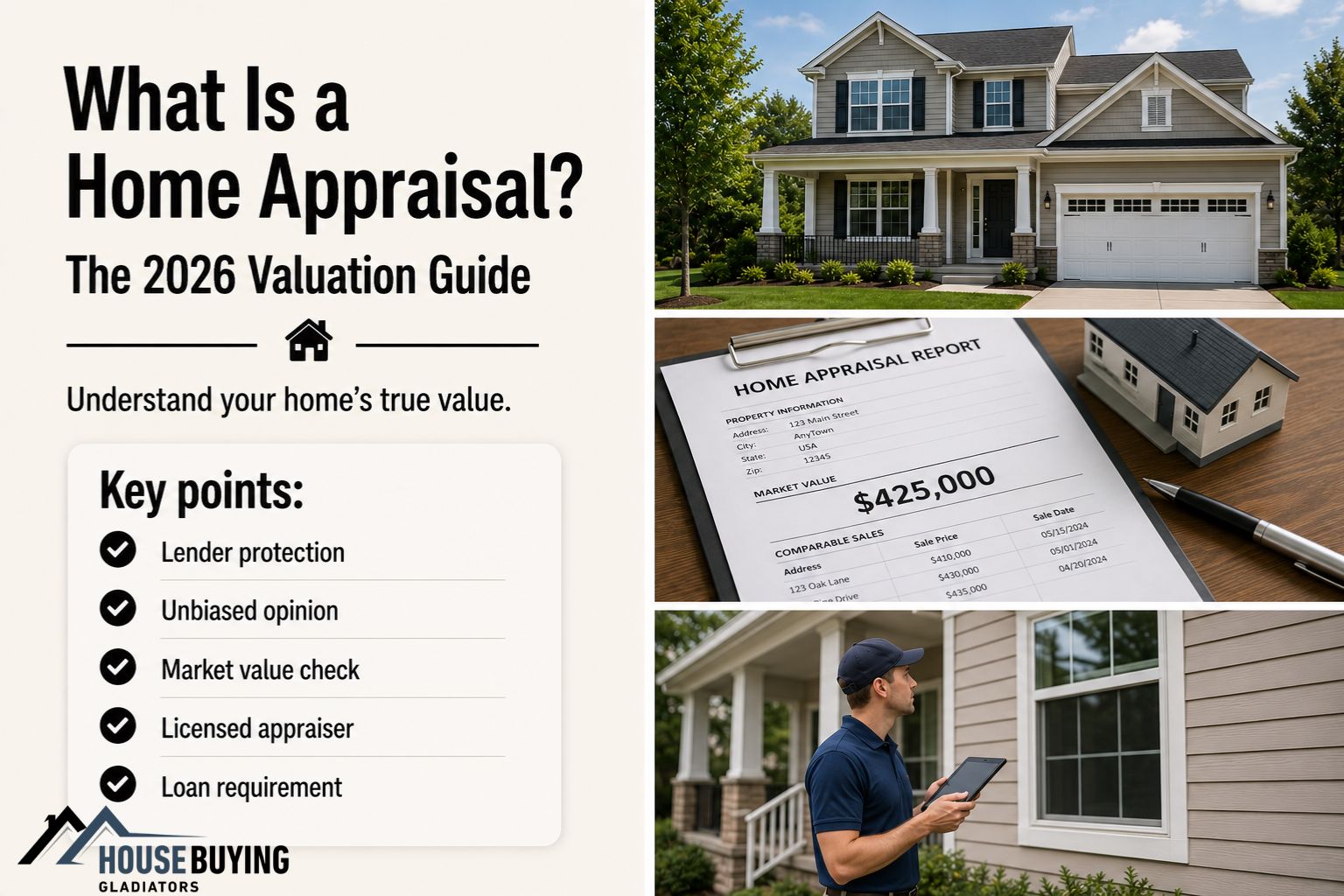
If you are trying to understand what is a home appraisal, the short answer is that a home appraisal is an unbiased, professional opinion of a property’s market value conducted by a licensed appraiser. Specifically, many homeowners assume that this report is designed to help sellers determine their ideal listing price.
However, a mortgage appraisal primarily exists to protect bank lenders from over-financing a property.
Because the property serves as collateral for the buyer’s home loan, banks must verify that the home’s true worth actually supports the borrowed mortgage amount. Homeowners who are still estimating their property’s worth before financing begins may also benefit from learning how to determine home value, since many of the same factors influence appraisal outcomes.
Ultimately, understanding this dynamic is key to keeping your transaction on track during the closing phase.
Appraisal Gap & Financing Risk Estimator
Appraisal Gap & Risk Estimator
Check how valuation shortages alter buyer down payments and financing caps
The Lender Protection Rule: Why Mortgage Valuations Differ from Market Listings
Sellers often fail to realize that an appraisal serves a very different financial purpose than a listing price or online estimate.
List Price (Seller Request) ➔ Contract Price (Mutual Agreement) ➔ Appraised Value (Lender Risk Evaluation)
| Property Valuation Attribute | The Asking / List Price | The Contract Sale Price | The Certified Appraisal Value |
| Determined By | The seller and their real estate agent | Mutual agreement of buyer and seller | A state-licensed independent appraiser |
| Primary Base Metric | Neighborhood hopes and active competitors | Emotional negotiation and offer competition | Hard, closed historic neighborhood comps |
| Financial Goal | Starting a high-stakes open market bid | Establishing contract intent to purchase | Validating maximum bank loan collateral caps |
| Underwriting Impact | None | Establishes the buyer’s purchase targets | Directly dictates mortgage lending approvals |
As a result, this comparison proves that the bank’s assessment of property value is often more conservative than the buyer’s. Homeowners who want a broader understanding of market-based pricing can also read our guide on what is fair market value of a home.
Many homeowners also confuse appraisals with inspections, even though they evaluate completely different aspects of a property. To clarify the distinction, review this guide on appraisal vs. inspection differences.
What Licensed Appraisers Look For in a Home Appraisal
Contrary to popular belief, appraisers do not focus on your home’s staging or interior decor. Instead, they look closely at structural integrity, permanent systems, and historical neighborhood data. In fact, many of the factors appraisers evaluate are the same improvements discussed in our guide on what adds value to a house, including roof condition, updated systems, and overall property functionality.
Inspect Foundation & Roof ➔ Map Square Footage ➔ Assess Mechanical Wear ➔ Adjust for Local Neighborhood Sales
Verifying Structural Integrity and Core Building Systems
First, the physical valuation process begins with a detailed walk-through of the home. Specifically, appraisers inspect the age and stability of your foundation, the roof’s remaining lifespan, and the functionality of major mechanical systems like your HVAC, plumbing, and electrical panel.
Furthermore, if your transaction is running through a government-backed loan program with strict safety requirements, review our detailed guide on FHA appraisal safety guidelines.
Calculating Livable Square Footage and Property Condition
In addition, your appraiser will measure the exterior dimensions of your home to confirm the exact gross living area (GLA). However, basements, garages, and unheated sunrooms are typically excluded from this calculation.
Consequently, appraisers look closely at deferred maintenance such as wood rot or water damage because these issues can reduce a home’s value. If you’re unsure which problems have the biggest impact, our guide on what lowers property value explains them in greater detail.
Similarly, homeowners preparing for refinancing should organize records of major upgrades and improvements ahead of the appraisal. If you are preparing your home for a refinance and need to showcase your interior upgrades, see this walkthrough on refinance appraisal equity prep.
Why Your Home Appraisal Value Might Come In Low
A low valuation, or appraisal gap, occurs when the certified appraiser values your property below the agreed contract price. This is one of the most stressful moments in a real estate transaction.
Contract Bid: $420,000 + Low Valuation: $400,000 = $20,000 Appraisal Shortfall
An appraisal gap usually occurs when recent comparable sales cannot support a rapid increase in home prices. Understanding what is a comparative market analysis (CMA) can help homeowners better understand how professionals evaluate nearby sales data and establish realistic value ranges.
Because banks only finance loans based on the appraised value rather than the contract price, buyers may need to contribute additional cash or negotiate a lower purchase price with the seller.
If you find yourself facing a low valuation, read this strategy guide on negotiating appraisal gaps.
How to Formally Challenge a Low Home Appraisal Report
Fortunately, you do not have to accept a flawed valuation report. Instead, sellers can work with their agents to submit a formal request for reconsideration.
Review Appraiser’s Comps ➔ Locate Fact Mistakes ➔ Submit Newer Neighborhood Sales ➔ Ask for Valuation Review
To do this, you must find factual mistakes. For example, this includes incorrect square footage, missing bathroom counts, or overlooked high-end upgrades.
In addition, you can submit newer neighborhood sales that the appraiser missed. Therefore, to build a strong, evidence-based appeal for your lender, review our detailed blueprint on filing a reconsideration of value.
Frequently Asked Questions About What Is a Home Appraisal
A home appraisal is an independent, professional estimate of a property’s market value. Lenders require this report to verify that the home supports the buyer’s mortgage loan amount.
The buyer is typically responsible for paying the appraisal fee at closing. However, the mortgage lender is the party that actually orders and controls the report.
The physical property walk-through usually takes between 30 and 90 minutes. The appraiser will take photos, measure the home’s exterior, and check the property’s overall condition.
If the appraisal comes in low, the transaction stalls. The buyer must either cover the cash difference, the seller must drop the price, or both parties must renegotiate terms.
No. An appraiser estimates the home’s overall market value for the lender. An inspector checks the property’s systems and structure to identify minor and major repairs for the buyer.
Appraisers compare your property to similar homes that recently sold nearby. They then adjust the valuation based on differences in size, condition, age, and location.
Yes. Appraisers often exclude unpermitted spaces from your livable square footage calculations. This can lower your home’s appraised value below your target listing price.
The complete valuation report is typically delivered to the lender within 5 to 10 business days after the physical on-site property inspection is finished.
Most mortgage lenders consider an appraisal report reliable for 90 to 180 days. If your transaction delays past this window, the bank will require an update.
Yes, but doing so will instantly stop the buyer’s mortgage approval process. Sellers must allow the appraiser inside to complete the transaction.
Conclusion: Secure Your Home’s Value with Proper Pre-Appraisal Steps
Understanding what is a home appraisal helps sellers prepare for this critical step with confidence. Homeowners who understand how to determine home value, what is fair market value of a home, and what is a comparative market analysis (CMA) are often better prepared for appraisal outcomes and negotiations.
Addressing deferred maintenance and organizing your home improvement records ensures you protect your equity at closing.
Ready to see how a low appraisal could impact your transaction? Scroll back to the top of this guide to run your property numbers through our interactive appraisal gap estimator. To make sure your home’s interior shows beautifully before the appraiser arrives, read our master prep list on readying your home for the appraiser.