Skip to content
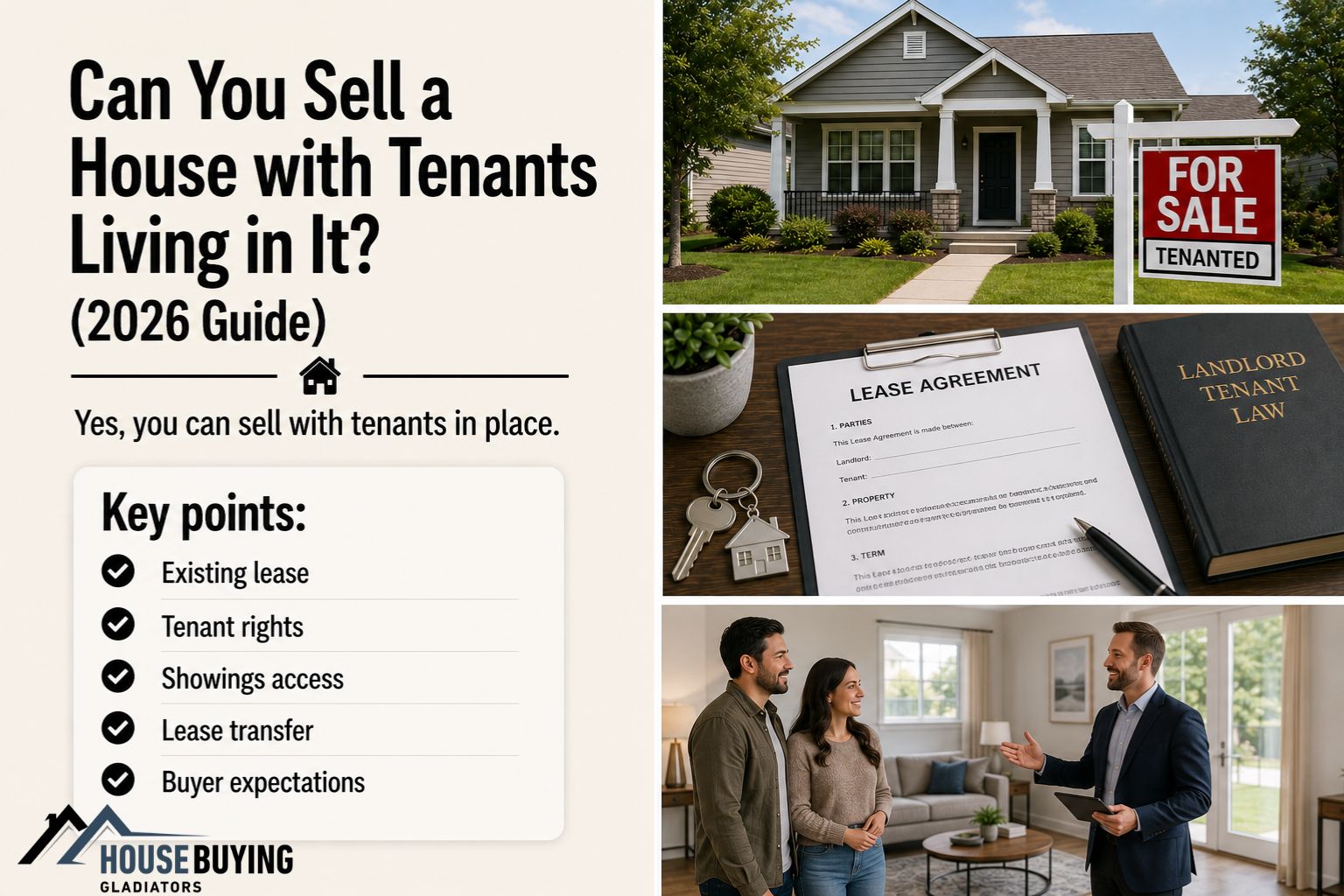
Yes. You can legally sell a house with tenants living in the property. However, the lease agreement, tenant rights, and local landlord-tenant laws will influence how the transaction unfolds.
If you are trying to understand whether tenants prevent you from selling your home, the answer is usually no. Many landlords mistakenly believe they must wait for tenants to move out before listing the property.
However, that is rarely true.
Because lease agreements are legally binding contracts, they often transfer to the new owner when the property is sold. As a result, sellers must balance tenant protections with their overall selling strategy.
Some homeowners choose to sell the property vacant to attract owner-occupant buyers. Others sell with tenants in place to appeal to investors seeking immediate rental income.
Understanding these options early can help you avoid delays, protect your equity, and choose the strategy that best fits your financial goals.
Additionally, homeowners who understand how much will I make selling my house can better estimate their final proceeds before deciding whether to sell the property vacant or occupied.
Tenant-Occupied Home Sale Calculator
Tenant-Occupied Sale Strategy Calculator
Landlord-Tenant Laws to Know When You Sell a House With Tenants
In many cases, selling a tenant-occupied property requires a structured transaction sequence coordinated under your state’s strict rental housing regulations.
Review Active Lease ➔ Issue Legal Disclosures ➔ Structure Showings ➔ Transfer Security Deposit ➔ Complete Deed Transfer
| Settlement Step | Primary Responsible Party | Financial Impact | Outcome |
|---|---|---|---|
| Lease Audit | Seller / Landlord | Avoids contract violations | Identifies lease expiration timeline |
| Tenant Notice | Landlord / Listing Agent | Prevents local housing penalties | Establishes legal entry parameters for showings |
| Estoppel Collection | Active Tenant | Confirms rental terms under oath | Protects buyer from post-closing disputes |
| Deposit Transfer | Escrow Officer | Paid directly from seller proceeds | Relieves seller of future deposit liabilities |
As a result, this legal framework protects the tenant’s possessory rights while allowing you to sell the property. Understanding how long does it take to sell a house can also help landlords build realistic timelines before putting a tenant-occupied property on the market.
How Existing Lease Agreements Affect Selling a House With Tenants
Contrary to popular belief, the terms of your current lease agreement dictate exactly who you can sell your property to. Before listing the home, you must evaluate the structure of your active rental contract and identify the types of buyers your property is most likely to attract.
Understanding what is fair market value of a home can also help landlords price tenant-occupied properties more accurately and set realistic expectations before entering the market.
Identify Lease Type ➔ Month-to-Month (Flexibility) OR Fixed-Term (Limits Buyer Pool to Investors)
Selling a Tenant-Occupied Home with Month-to-Month Agreements
First, month-to-month tenancy agreements provide the highest level of flexibility for selling landlords. Specifically, if your buyer is a traditional owner-occupant who wants to live in the home, you can typically terminate the tenancy by providing a standard 30 to 90-day written notice, depending on your state and local laws.
Consequently, this allows you to deliver the property vacant at closing, expanding your buyer pool to standard retail home shoppers.
If you are evaluating multiple pricing strategies before listing, understanding what is a comparative market analysis (CMA) can help you establish a competitive asking price.
Additionally, notice requirements vary significantly by jurisdiction. Therefore, before delivering a termination notice, review this guide on ending a month-to-month rental agreement to better understand the notice requirements that may apply in your area.
Navigating Fixed-Term Leases During an Active Property Sale
On the other hand, if your tenant is locked into a fixed-term lease, the buyer must legally honor the remainder of that contract. Consequently, your buyer pool is often limited to real estate investors who are seeking immediate rental income.
Therefore, these buyers will typically verify all active lease terms during their due diligence period. To better understand the documents used to confirm lease obligations, review this guide on tenant estoppel certificates during real estate transactions.
Do Tenants Have to Move Out When Selling a House?
Without a doubt, the single biggest misconception among landlords is that selling a house automatically terminates an active tenancy. Fortunately, tenant protections ensure that the sale itself does not invalidate their housing rights.
Evaluate Transition Options ➔ Offer Relocation Incentive (Cash-for-Keys) OR Transfer Lease to New LandlordIf your goal is to sell your home to a retail buyer for top market value, you may need the tenant to vacate. If renovations are also part of your plan, our guide on should I repair my house before selling can help you decide where to invest your money.
For example, you can wait for the fixed-term lease to expire naturally or negotiate a cash-for-keys relocation incentive to secure a voluntary move-out.
Typically, during a cash-for-keys agreement, the landlord pays the tenant a lump sum in exchange for signing a voluntary lease surrender agreement.
Managing House Showings and Property Access with Active Tenants
In many cases, coordinating property viewings while a tenant is actively living in the home is one of the most challenging parts of a sale. Specifically, you cannot simply show up with a buyer whenever you wish.
Provide 24-Hour Notice ➔ Coordinate Showing Schedule ➔ Offer Tenant Cooperation Bonuses ➔ Secure Offers
Most states require landlords to provide a minimum of 24 to 48 hours of official written notice before entering the property for showings. Furthermore, if a tenant is angry or uncooperative, they can make the home show poorly, which directly hurts your property valuation.
Learning what adds value to a house can also help landlords prioritize simple improvements that make the property more appealing to prospective buyers before listing.
Additionally, prolonged showing schedules can extend your overall transaction timeline. If tenant cooperation starts affecting buyer demand, learning how to determine home value can help you make pricing adjustments that keep the property competitive.
Choosing Your Buyer Pool: Selling to Real Estate Investors vs. Retail Buyers
Ultimately, deciding whether to sell your house vacant or with tenants in place depends on your timeline, financial resources, and target buyers.
Tenant Occupied ➔ Lower Upfront Costs + Immediate Rental Cash Flow = Best for Real Estate Investors
Delivered Vacant ➔ Higher Upfront Repair Costs + Vacancy Loss = Best for Owner-Occupant Homebuyers
Targeting the Retail Market by Delivering the Property Vacant
If you want to capture top-of-market valuation, delivering the property vacant is usually the best strategy. Without a doubt, this allows you to complete cosmetic touch-ups, make necessary structural repairs, and market the home to owner-occupant buyers who are using conventional financing.
However, you will have to pay the home’s mortgage, taxes, utilities, and carrying costs out of pocket while the property sits vacant. Understanding how much does it cost to sell a house can also help you build a realistic budget before choosing this approach.
Additionally, vacancy periods can extend longer than many landlords expect, especially if tenant move-out timelines create scheduling delays. For this reason, many sellers prefer to review how fast can I sell my house to set realistic expectations before listing.
Listing with the Tenant to Attract Institutional Real Estate Investors
Conversely, if you want to avoid contractor delays, painting expenses, and rental income loss, selling the house with the tenant in place can be a smart strategy. Real estate investors actively look for turnkey properties with reliable, cash-flowing tenants already in place.
Therefore, when considering can you sell a house with tenants to institutional buyers, remember that an occupied unit is often a major selling point.
Additionally, many landlords choose this approach because it minimizes vacancy periods and reduces carrying costs. It also eliminates the need to prepare the property for owner-occupant buyers.
FAQs About How to Sell a Tenant-Occupied House
To put it simply, yes. Ultimately, the property can change ownership, but the buyer must legally honor the active lease agreement unless the tenant agrees to vacate voluntarily.
Specifically, yes. While laws vary by state, you should provide written notice of your intent to sell and outline the legal showing coordination rules to prevent future entry disputes.
Generally, you must follow your lease’s landlord entry clauses and state laws. Alternatively, offering a small financial incentive or scheduling group showings usually resolves tenant cooperation barriers quickly.
In short, no. Specifically, if the tenant is on a fixed-term lease and is paying rent, you cannot evict them early just to sell. You must wait for the lease to expire.
Typically, the security deposit does not belong to the seller. Consequently, the escrow officer will transfer the full deposit amount to the buyer at closing, who is then responsible for it.
Specifically, this is a legal document signed by the tenant confirming their current rent amount, deposit details, and lease terms under oath. Lenders require this to prevent post-closing landlord-tenant disputes.
Not necessarily. While owner-occupants may pass on the home, real estate investors value active rental streams, which can make cash-flowing properties highly competitive in popular rental markets.
Specifically, you can still sell, but you must disclose the delinquency. Alternatively, you can start legal eviction proceedings before listing to ensure you deliver the property free of non-paying occupants.
Only if the active lease includes a “sale clause” allowing termination upon transfer. Otherwise, the buyer must wait until the fixed-term lease expires before moving in.
Yes, indeed. Because investors expect to make repairs themselves, you can sell the property without making improvements. To learn more, see our guide on how to sell a house as-is.
Conclusion: Build a Compliant and Profitable Landlord Sales Plan
Ultimately, knowing can you sell a house with tenants allows you to navigate your transaction with confidence and protect your investment equity. Therefore, coordinating early with your tenants, reviewing your active lease, and setting a realistic sales strategy ensures a smoother transaction.
Ready to calculate your estimated net proceeds and compare selling an occupied property versus a vacant one? Scroll back to the top of this guide to run your numbers through our interactive tenant sale calculator and determine which strategy best aligns with your financial goals and timeline