Skip to content
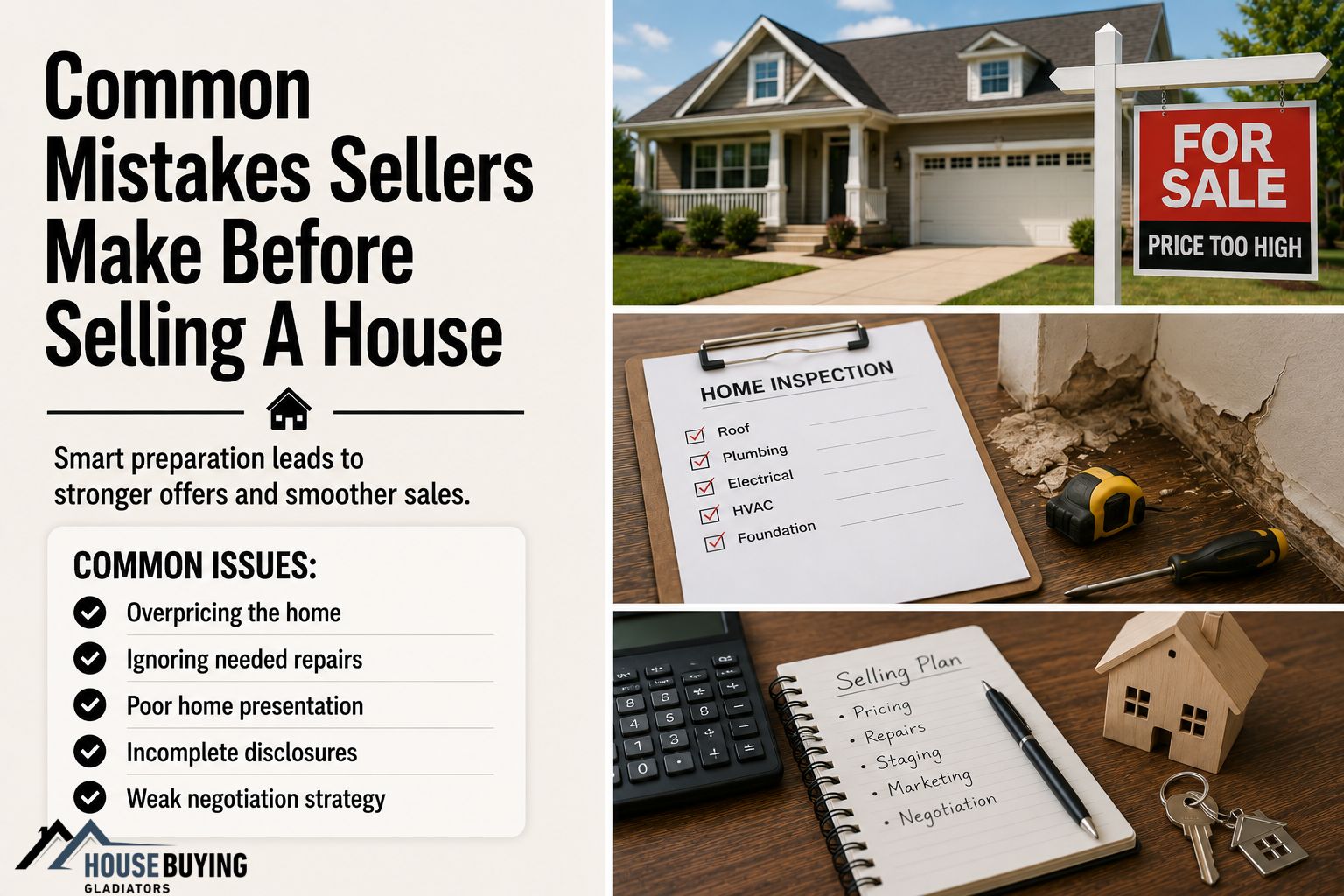
If you are wondering about the common mistakes sellers make before selling a house, the short answer is that poor preparation, unrealistic pricing, overlooked repairs, incomplete disclosures, and weak negotiation decisions can reduce buyer interest, delay closing, and lower your final profit.
Many homeowners believe listing the property is the most important step.
In reality, the decisions you make before your home reaches the market often determine how quickly it sells, how much buyers are willing to pay, and how smoothly the transaction progresses.
Avoiding common seller mistakes early helps reduce costly setbacks, strengthen buyer confidence, and improve your chances of receiving stronger offers with fewer complications.
This guide explains the common mistakes sellers make before selling a house, why they matter, and the practical steps you can take to achieve a faster, smoother, and more successful home sale.
Pre-Listing Profit Margin Calculator
Pre-Listing Profit Margin Calculator
See how strategic updates, structural issues, and pricing targets alter your real net proceeds at settlement.
Why Do Sellers Make Mistakes Before Listing A House?
Most sellers make mistakes before listing a house because they underestimate the preparation required, misjudge market conditions, or make decisions without understanding how each step affects the sale.
Planning ahead helps sellers attract qualified buyers, reduce negotiations, avoid unnecessary delays, and improve the chances of a successful closing.
Prepare Home ➔ Avoid Common Mistakes ➔ Attract Qualified Buyers ➔ Close Successfully
| Why Sellers Make Mistakes | Why It Matters |
|---|---|
| Limited knowledge of the selling process | Leads to costly decisions |
| Unrealistic pricing expectations | Reduces buyer interest |
| Inadequate property preparation | Creates inspection and negotiation issues |
| Overlooking legal requirements | Increases transaction risk |
Most selling problems begin long before an offer arrives. Understanding the selling process, preparing the property, and making informed decisions before listing can help sellers avoid expensive mistakes and create a smoother transaction from listing to closing.
If you’re setting your asking price, what is fair market value of a home explains how buyers and professionals determine a property’s market value.
What Are The Most Common Mistakes Sellers Make Before Selling A House?
The most common mistakes sellers make before selling a house include overpricing the property, delaying essential repairs, overlooking seller disclosures, failing to prepare important documents, and accepting an offer without evaluating the buyer’s overall qualifications.
Most of these mistakes are avoidable with proper planning before the home goes on the market.
Prepare Home ➔ Avoid Common Mistakes ➔ Attract Qualified Buyers ➔ Close Successfully
| Common Mistake | Potential Impact |
|---|---|
| Overpricing the home | Fewer showings and longer time on market |
| Delaying important repairs | More inspection negotiations |
| Incomplete seller disclosures | Greater legal and financial risk |
| Poor property presentation | Lower buyer interest |
| Choosing an offer based only on price | Increased risk of a failed closing |
Successful sellers prepare well before listing rather than reacting to problems later. Avoiding these common mistakes helps attract stronger buyers, reduce transaction delays, strengthen negotiations, and improve the likelihood of a smooth, successful closing.
If you’re deciding which improvements are worth making before listing, should I fix my house before selling explains how to prioritize repairs that add the most value.
How Can Sellers Avoid Common Pricing Mistakes Before Selling A House?
Sellers can avoid common pricing mistakes by setting a listing price based on comparable sales, current market conditions, and the property’s condition instead of emotional attachment or unrealistic expectations.
A competitive asking price attracts more qualified buyers, generates stronger offers, and increases the likelihood of a faster, more successful sale.
Research Market ➔ Set Competitive Price ➔ Attract Qualified Buyers ➔ Receive Stronger Offers
| Best Practice | Why It Helps |
|---|---|
| Review comparable sales | Reflects current market value |
| Analyze local market trends | Supports accurate pricing |
| Consider the home’s condition | Aligns price with buyer expectations |
| Price competitively from day one | Increases buyer interest and showings |
One of the biggest pricing mistakes sellers make before selling a house is setting an asking price that exceeds current market value. Pricing your home correctly from the start helps attract serious buyers, reduces the need for future price reductions, and improves your chances of reaching closing without unnecessary delays.
If you want to understand how professionals estimate property value, what is a comparative market analysis (CMA) when selling a house explains how comparable sales help determine a competitive listing price.
Should Sellers Complete Repairs Before Listing?
Yes, sellers should complete important repairs before listing whenever they improve safety, resolve major maintenance issues, or reduce buyer concerns during inspections and negotiations.
Not every repair increases a home’s value, but fixing significant problems before listing often strengthens buyer confidence, attracts better offers, and helps prevent delays later in the selling process.
Inspect Property ➔ Complete Key Repairs ➔ List Home ➔ Attract Stronger Offers
| Repair Type | Potential Benefit |
|---|---|
| Safety hazards | Reduces buyer concerns and legal risk |
| Major maintenance issues | Minimizes inspection negotiations |
| Minor cosmetic repairs | Improves first impressions |
| Deferred maintenance | Increases buyer confidence |
One of the most common mistakes sellers make before selling a house is ignoring repairs that buyers are likely to discover during inspections. Reviewing which home repairs are worth making before selling can help homeowners prioritize the improvements that strengthen buyer confidence, reduce inspection concerns, and avoid spending money on projects with limited return on investment.
If buyers identify additional issues after listing, what is a home inspection when selling a house explains how inspection findings can influence repair negotiations and the path to closing.
Why Is Preparing Documents Before Selling Important?
Preparing important documents before selling helps homeowners respond to buyer requests quickly, reduce transaction delays, and keep the home sale moving smoothly from listing to closing.
Well-organized records also strengthen buyer confidence, simplify negotiations, and reduce the risk of last-minute complications.
Gather Documents ➔ List Property ➔ Buyer Reviews Information ➔ Transaction Moves Forward
| Document | Why It Matters |
|---|---|
| Property ownership records | Confirms legal ownership |
| Repair and maintenance records | Documents completed improvements |
| Warranty information | Supports major home systems and appliances |
| Seller disclosure forms | Provides required property information |
One of the most common mistakes sellers make before selling a house is waiting until they receive an offer to organize important paperwork. Preparing your documents before listing helps answer buyer questions faster, supports a smoother transaction, and reduces unnecessary delays before closing.
If you’re organizing your paperwork, what documents do I need to sell my house explains which records homeowners should gather before listing and completing the sale.
How Can Sellers Avoid Offer And Negotiation Mistakes?
Sellers can avoid offer and negotiation mistakes by evaluating the complete offer not just the purchase price. Buyer financing, contingencies, earnest money, closing timelines, and the buyer’s ability to close all affect the strength of an offer.
The strongest offer is the one most likely to reach a successful closing, not necessarily the one with the highest price.
Review Offers ➔ Compare Terms ➔ Select The Strongest Offer ➔ Close Successfully
| Factor | Why It Matters |
|---|---|
| Buyer financing | Reduces the risk of a failed closing |
| Contingencies | Affects transaction certainty and timing |
| Closing timeline | Aligns with the seller’s goals |
| Earnest money deposit | Demonstrates buyer commitment |
| Overall offer terms | Helps determine the strongest offer |
One of the most common mistakes sellers make before selling a house is choosing an offer based solely on price. Reviewing how to compare multiple offers on your home can help sellers weigh financing strength, contingencies, buyer qualifications, and closing certainty to make a more informed decision.
If you’re reviewing multiple buyers, how do multiple offers work when selling a house explains how to compare offers beyond the purchase price and choose the one with the strongest path to closing.
FAQs: Common Mistakes Sellers Make Before Selling A House
Overpricing the home is one of the most common mistakes sellers make before selling a house. A price that exceeds market value can reduce buyer interest, increase time on the market, and lead to price reductions later.
Plan ahead, price the home competitively, complete important repairs, organize required documents, provide accurate seller disclosures, and evaluate offers based on more than just price.
Yes. Addressing major maintenance and safety issues before listing often improves buyer confidence, reduces inspection negotiations, and helps keep the transaction on schedule.
Yes. An overpriced home may receive fewer showings, fewer offers, and remain on the market longer, which can ultimately reduce the final selling price.
Sellers should organize property ownership records, repair and maintenance records, warranty information, and seller disclosure forms before putting the home on the market.
Seller disclosures inform buyers about known material defects or property conditions. Accurate disclosures promote transparency, reduce legal risk, and help prevent disputes after closing.
Not always. The strongest offer considers financing, contingencies, earnest money, buyer qualifications, and closing timelines not just the purchase price.
Yes. Missing documents, unresolved repairs, inaccurate disclosures, pricing mistakes, and contract issues can delay negotiations, inspections, financing, or closing.
Research the local market, prepare the property, organize important documents, complete required disclosures, and develop a realistic pricing strategy before listing.
Prepare the home thoroughly, avoid common selling mistakes, price the property competitively, communicate promptly throughout the transaction, and respond quickly to buyer requests to help achieve a smoother closing.
Conclusion: What Should Sellers Know Before Selling A House?
Preparing before listing is one of the most effective ways to avoid common mistakes sellers make before selling a house. Pricing your home correctly, completing important repairs, organizing key documents, and reviewing every offer carefully can reduce delays, strengthen buyer confidence, and improve your final outcome.
Prepare Home ➔ Avoid Common Mistakes ➔ Attract Qualified Buyers ➔ Close Successfully
A successful home sale starts long before you accept an offer. Making informed decisions early helps reduce negotiation challenges, minimize legal and financial risks, and create a smoother path from listing to closing.
Ready to sell with confidence? Use this guide to avoid common mistakes sellers make before selling a house, make smarter decisions, and position your home for a faster, more successful sale.