Skip to content
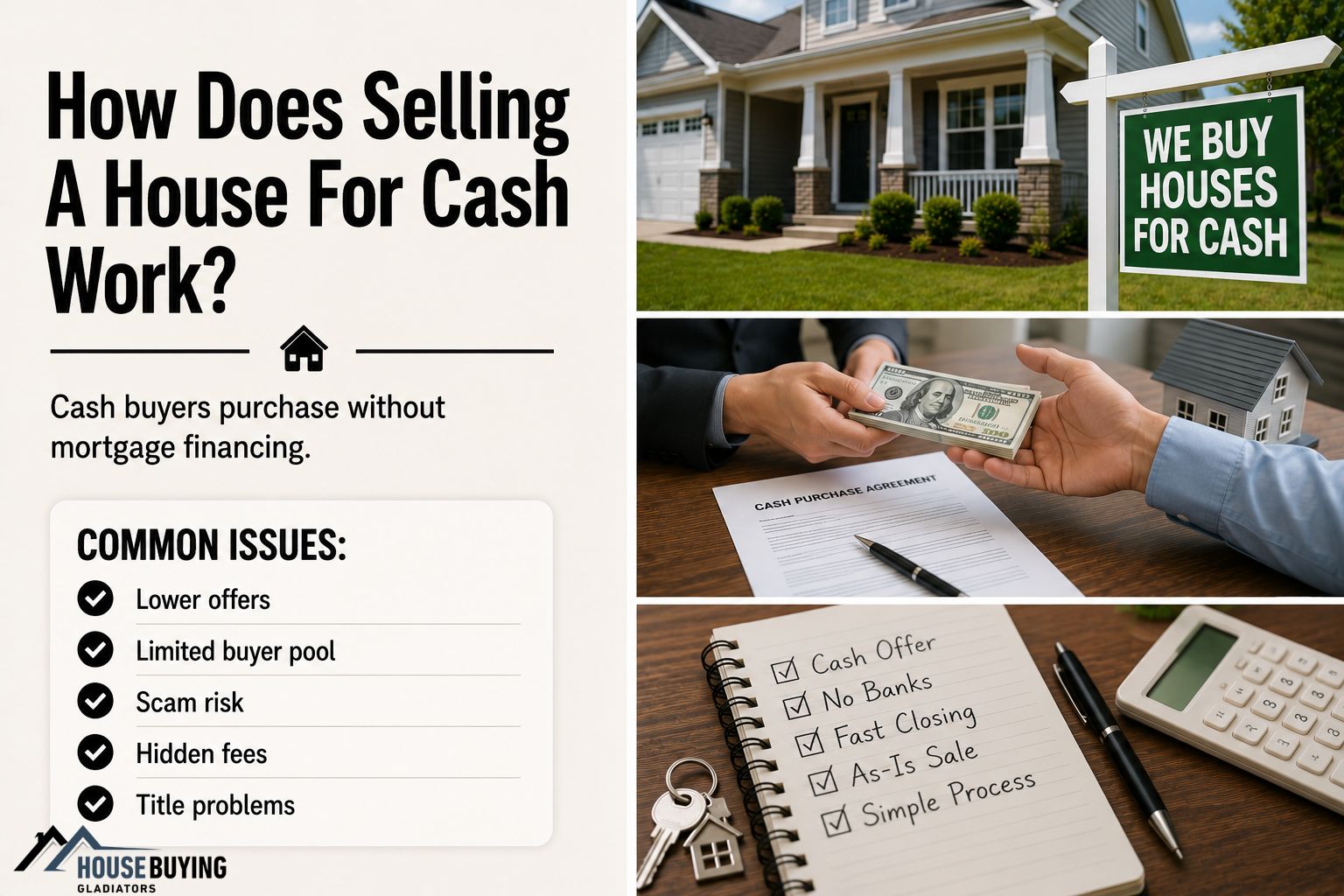
If you are wondering how does selling a house for cash work, the short answer is that a cash buyer purchases your home without relying on mortgage financing, allowing the transaction to close faster and with fewer lender-related delays.
Many homeowners believe selling a house for cash means accepting less than market value.
That is not always the case.
A legitimate cash buyer may offer speed, convenience, and greater certainty by removing many of the financing hurdles that can delay a traditional home sale. Depending on the buyer and your property, you may also face fewer contingencies and a simpler closing process.
Understanding how does selling a house for cash work helps you compare cash offers, evaluate your selling options, and decide whether a cash sale aligns with your timeline, financial goals, and the condition of your property.
This guide explains how selling a house for cash works, who cash buyers are, how cash sales differ from traditional transactions, and what every seller should know before accepting a cash offer.
Cash vs. Traditional Sale Proceeds Simulator
Cash vs. Traditional Sale Proceeds Simulator
Calculate your true net proceeds. Adjust pricing parameters, commissions, holding costs, and repair budgets to compare cash buyers against traditional listings.
Calculating final values…
Why Do Homeowners Choose Selling A House For Cash?
Homeowners choose selling a house for cash because it can provide a faster, simpler, and more predictable selling experience than a traditional home sale. Without mortgage financing, cash transactions often involve fewer contingencies, fewer delays, and a quicker path to closing.
For sellers who need certainty, flexibility, or a faster timeline, selling a house for cash can be a practical solution.
Request Cash Offer ➔ Review Terms ➔ Accept Offer ➔ Close Sale
| Reason | Why It Matters |
|---|---|
| Faster closing | Reduces lender-related delays |
| No mortgage financing | Improves closing certainty |
| Fewer contingencies | Simplifies the transaction |
| Sell the home as-is | May reduce repair requirements |
Many homeowners choose selling a house for cash when relocating, inheriting a property, facing financial hardship, going through a divorce, or selling a home that needs repairs. Understanding your priorities and comparing all available options helps determine whether a cash sale is the right fit for your situation.
If your property needs repairs before selling, can you sell a house as-is explains how homeowners can sell without completing renovations first.
Who Buys Houses For Cash?
Cash buyers include individual homebuyers, real estate investors, house buying companies, landlords, and house flippers who have the funds to purchase a property without mortgage financing.
Although their goals differ, every cash buyer offers the same key advantage greater certainty by eliminating the lender approval process.
Cash Buyer Identified ➔ Property Evaluated ➔ Cash Offer Made ➔ Closing
| Cash Buyer | Typical Goal |
|---|---|
| Individual homebuyer | Purchase a primary or second home |
| Real estate investor | Generate rental income or long-term appreciation |
| House buying company | Purchase homes quickly for investment |
| House flipper | Renovate and resell the property |
Not all cash buyers offer the same price, terms, or closing timeline. Comparing multiple cash offers, verifying proof of funds, and reviewing the buyer’s reputation can help you identify the offer that provides the best overall value not just the fastest closing.
If you’re comparing several buyers, how do multiple offers work when selling a house explains how to evaluate offers based on price, contingencies, financing strength, and the likelihood of a successful closing.
How Is A Cash Home Sale Different From A Traditional Sale?
A cash home sale differs from a traditional sale because the buyer purchases the property without mortgage financing. Without a lender involved, cash sales often close faster, involve fewer contingencies, and carry a lower risk of financing delays.
While every transaction follows a purchase agreement and closing process, a cash sale is typically simpler and more predictable than a financed home sale.
Cash Offer Accepted ➔ No Mortgage Approval ➔ Closing ➔ Ownership Transfers
| Cash Home Sale | Traditional Sale |
|---|---|
| No mortgage financing | Buyer obtains a home loan |
| Fewer financing delays | Loan approval can delay closing |
| Often fewer contingencies | More lender and appraisal requirements |
| Faster closing in many cases | Closing depends on financing approval |
A cash home sale can save time, but sellers should still verify the buyer’s proof of funds, review the purchase agreement carefully, and compare the overall offer not just the closing speed. Reviewing the financial differences between a cash home sale and a traditional listing can help sellers compare timelines, selling costs, potential proceeds, and overall value before deciding which option best fits their goals.
If you’re reviewing the legal terms before accepting an offer, what is a purchase agreement when selling a house explains the rights, responsibilities, and conditions buyers and sellers agree to before closing.
Should You Accept A Cash Offer For Your House?
A cash offer can be an excellent choice if it provides a competitive price, comes from a reputable buyer, and aligns with your timeline and selling goals. The strongest offer is the one that offers the best combination of value, certainty, and a successful closing.
Cash buyers often remove financing uncertainty, but sellers should evaluate the complete offer before making a decision.
Review Cash Offer ➔ Verify Proof Of Funds ➔ Compare Terms ➔ Accept Or Negotiate
| Factor To Review | Why It Matters |
|---|---|
| Purchase price | Determines your expected proceeds |
| Proof of funds | Confirms the buyer can complete the purchase |
| Closing timeline | Ensures it matches your schedule |
| Contingencies | Affects the likelihood of a smooth closing |
Do not judge a cash offer by price alone. A reliable buyer with verified funds, reasonable terms, and a realistic closing timeline may provide greater overall value than a higher offer with more risk. Reviewing how to choose the best offer on your house can help sellers compare price, contingencies, closing timelines, and buyer qualifications before accepting an offer.
If you’re weighing multiple offers, should you accept the first offer on your house explains how to compare buyers and choose the offer that best fits your goals..
What Should Sellers Know Before Selling A House For Cash?
Before selling a house for cash, sellers should verify the buyer’s proof of funds, review the purchase agreement, compare multiple cash offers, and understand every contract term before accepting an offer.
A cash sale can close faster than a traditional sale. However, speed should never replace careful review. Evaluating the entire offer helps protect your interests and reduces the risk of unexpected issues before closing.
Review Cash Offer ➔ Verify Proof Of Funds ➔ Compare Offers ➔ Accept Offer ➔ Closing
| What To Review | Why It Matters |
|---|---|
| Proof of funds | Confirms the buyer has the funds to close |
| Purchase agreement | Defines your legal rights and obligations |
| Closing timeline | Ensures it aligns with your plans |
| Contingencies | Identifies conditions that may affect closing |
Selling a house for cash can simplify the transaction. However, every offer deserves careful evaluation. Compare buyers, verify proof of funds, and review every contract term before making a decision. These steps help you choose the strongest offer and move toward a smooth, confident closing.
If you’re evaluating whether a cash sale fits your situation, are cash home buyers legit explains how to identify reputable buyers and avoid common scams.
FAQs: How Does Selling A House For Cash Work?
Selling a house for cash means a buyer purchases your property without mortgage financing. After both parties agree on the terms, they sign the purchase agreement, complete any required inspections or title work, and proceed to closing.
Yes, in many cases. Because cash buyers do not need loan approval, cash sales often involve fewer delays and can close faster than financed transactions.
Cash buyers include individual homebuyers, real estate investors, house buying companies, landlords, and other buyers with available funds to purchase a property outright.
Yes. Many cash buyers purchase homes as-is, allowing sellers to avoid making repairs or renovations before closing.
Sometimes. Although cash buyers are not required to satisfy lender inspection requirements, many still order a home inspection to evaluate the property’s condition before completing the purchase.
Not always. Since there is no mortgage lender involved, many cash buyers do not require a lender appraisal, although some may obtain one to help determine the property’s value.
Sellers should verify proof of funds, review the buyer’s reputation, carefully examine the purchase agreement, and confirm the buyer has the financial ability to complete the transaction.
Not necessarily. Compare multiple offers, evaluate the purchase price, review the contract terms, verify proof of funds, and consider the proposed closing timeline before making a decision.
Most cash home sales require the purchase agreement, seller disclosures, title documents, identification, and other closing paperwork required by state law.
Conclusion: What Should Sellers Know About Selling A House For Cash?
Selling a house for cash can be a smart option for homeowners who want a faster, more predictable sale without the delays of mortgage financing. While every cash offer is different, understanding how the process works helps you make confident decisions and avoid unnecessary risks.
Cash Offer Received ➔ Review Offer ➔ Closing Completed ➔ Funds Received
Before accepting a cash offer, compare your options carefully, verify the buyer’s proof of funds, and review the purchase agreement in detail. Looking beyond the purchase price and evaluating the overall terms can help you choose the offer that best supports your timeline, financial goals, and peace of mind.
Ready to move forward? Use this guide to understand how does selling a house for cash work, evaluate cash offers with confidence, and choose the selling solution that best fits your needs.