Skip to content
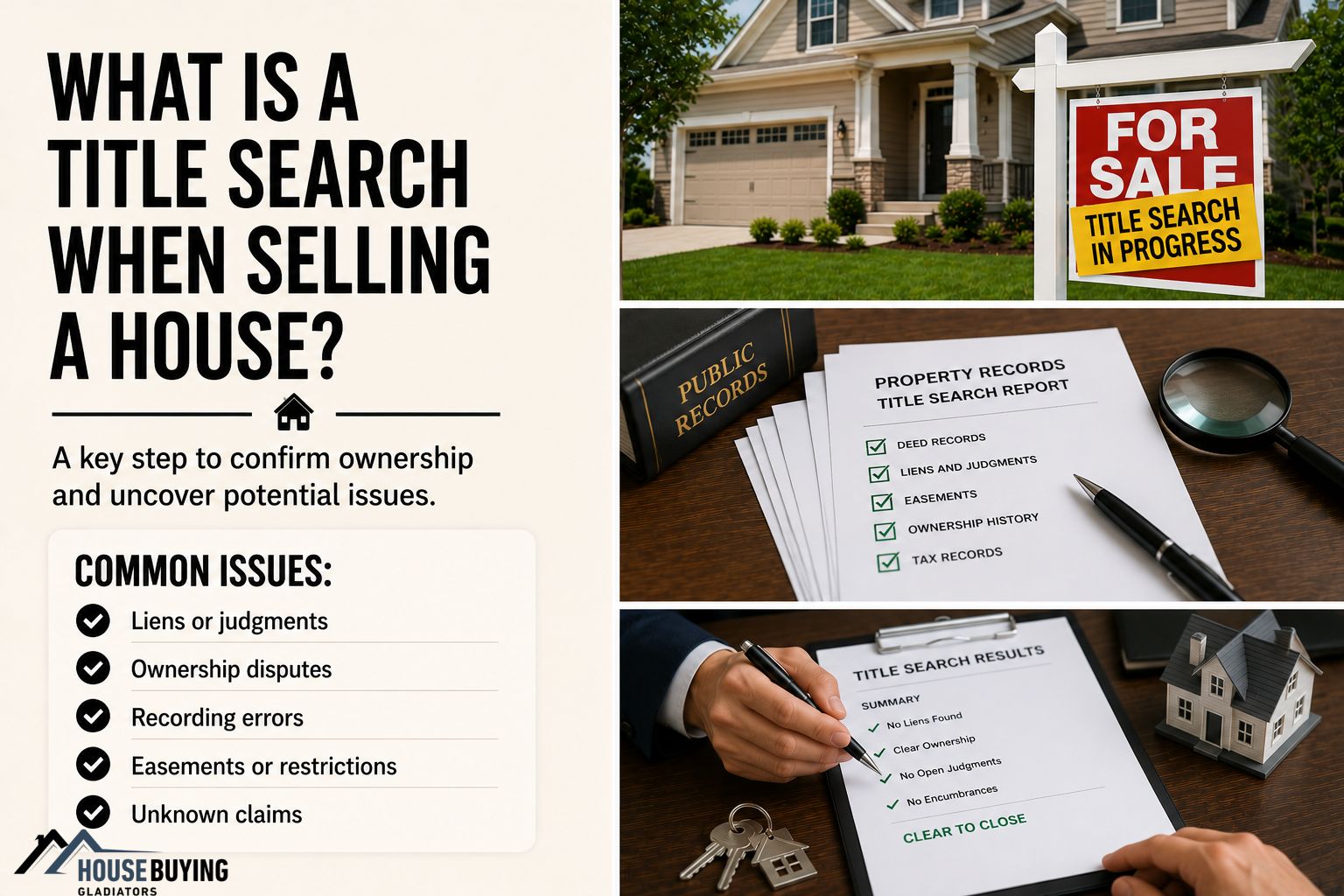
A title search is a legal review of public records that confirms a seller has the right to transfer property ownership and identifies issues that could delay or prevent a home sale. If you’re wondering what is a title search when selling a house, it’s one of the most important steps before closing because it helps uncover liens, ownership disputes, recording errors, easements, and other title defects before ownership changes hands.
Most sellers don’t think about a title search until they’re preparing for closing.
By then, resolving title issues becomes essential to keeping the sale on schedule.
A thorough title search protects both buyers and sellers by identifying potential legal or financial claims before closing. Addressing these issues early reduces the risk of delays, failed transactions, and unexpected costs while giving everyone greater confidence that ownership can transfer without complications.
In this guide, you’ll learn how a title search works, what professionals review, the most common title issues it uncovers, and how the results can affect your closing timeline and overall home sale.
Title Search Risk & Timeline Estimator
Title Search Risk & Timeline Estimator
Assess your property’s profile to predict potential closing delays and risk scores.
Title Complexity Profile
Est. Search & Clearance Window
Recommended Action Steps:
- Your profile looks standard. Gather your prior owner’s title policy to speed up processing.
Why Is A Title Search Important When Selling A House?
A title search helps confirm that you have the legal right to sell your property and identifies issues that could delay or prevent the sale. By reviewing public records before closing, it gives buyers, sellers, lenders, and title companies confidence that ownership can transfer without unexpected legal complications.
A smooth closing starts with a clear title.
Without one, even a qualified buyer may not be able to complete the purchase.
Purchase Agreement Signed ➔ Title Search Performed ➔ Title Reviewed ➔ Closing Moves Forward
| Why A Title Search Matters | How It Helps Sellers |
|---|---|
| Confirms legal ownership | Verifies you have the right to transfer the property |
| Identifies title defects | Uncovers liens, ownership disputes, and recording errors |
| Reduces closing delays | Resolves problems before the scheduled closing date |
| Protects the transaction | Helps prevent legal issues after ownership transfers |
| Supports title insurance | Provides the information needed before issuing a title insurance policy |
What Can Happen Without A Title Search?
| Potential Issue | Possible Impact On The Sale |
|---|---|
| Undiscovered lien | Closing may pause until the debt is resolved |
| Ownership dispute | Legal claims can delay or stop the transaction |
| Recording error | Documents may need correction before closing |
| Unknown easement | May affect the buyer’s future use of the property |
A title search protects more than the buyer it also protects the seller from last-minute surprises that could delay closing or force the transaction back into negotiations. Reviewing how a title search helps identify ownership issues before closing can help sellers understand how liens, ownership disputes, easements, and recording errors are discovered before the property changes hands.
What Does A Title Search Look For When Selling A House?
A title search examines public records to verify property ownership and uncover legal or financial issues that could affect the sale. The goal is to confirm the seller can transfer a clear title and identify any problems before closing.
A title search does more than verify who owns the property.
It also reveals claims, restrictions, and recording issues that could delay or prevent a successful transfer of ownership.
Public Records Reviewed ➔ Potential Issues Identified ➔ Title Cleared ➔ Closing Continues
| Title Search Review | Why It Matters |
|---|---|
| Ownership history (Chain of Title) | Confirms the legal ownership history of the property |
| Liens | Identifies unpaid debts secured against the property |
| Easements | Reveals rights that allow others to use part of the property |
| Recording errors | Detects mistakes in public records that require correction |
| Boundary or legal description issues | Helps verify the property’s legal description |
| Pending legal claims (Lis Pendens) | Identifies lawsuits that may affect ownership |
Common Title Issues A Search Can Reveal
| Issue Found | Possible Effect On The Sale |
|---|---|
| Unpaid property tax lien | May require payment before closing |
| Contractor’s (Mechanic’s) lien | Can delay ownership transfer until resolved |
| Ownership dispute | May prevent the sale from closing |
| Clerical recording error | May require updated legal documents |
| Undisclosed easement | Could affect the buyer’s future use of the property |
Most title searches uncover routine issues that professionals can resolve before closing. Reviewing public records early gives buyers and sellers time to address problems, helping reduce delays and improve the likelihood of a smooth transaction.
If you’re wondering how these issues affect the closing process, what happens at closing when selling a house explains the final steps required before ownership officially transfers to the buyer.
What Happens If A Title Search Finds A Problem Before Closing?
Finding a title issue doesn’t mean your home sale will fail. In most cases, the title company works with the seller, buyer, attorneys, lenders, or government offices to resolve the problem before closing. The sooner a title issue is discovered, the easier it is to fix without delaying the transaction.
Most title defects have a solution.
The key is identifying them before ownership transfers to the buyer.
Title Search Completed ➔ Title Issue Identified ➔ Curative Action Taken ➔ Closing Resumes
| Common Title Problem | How It’s Typically Resolved |
|---|---|
| Unpaid mortgage lien | Pay off the balance before closing |
| Property tax lien | Satisfy the outstanding taxes |
| Mechanic’s lien | Obtain a lien release or settle the claim |
| Recording error | Correct the public records with updated documents |
| Ownership dispute | Resolve the legal claim before transferring ownership |
| Missing heir or probate issue | Complete the required legal or probate process |
How Title Companies Resolve Common Issues
| Curative Action | Purpose |
|---|---|
| Lien release | Removes a paid debt from the property’s title |
| Corrective deed | Fixes errors in ownership documents |
| Affidavit of correction | Resolves minor recording mistakes |
| Probate documentation | Confirms legal authority to transfer inherited property |
| Quiet title action* | Establishes clear ownership through a court order when necessary |
Most title issues never reach a courtroom. Reviewing common title issues that can delay closing can help sellers understand potential obstacles before ownership transfers.
Responding quickly to requests from your title company helps prevent unnecessary delays and keeps your transaction moving toward a successful closing.
If you’re preparing for the final steps of the sale, who pays title insurance when selling a house explains how title insurance helps protect buyers after title issues have been resolved.
How Long Does A Title Search Take When Selling A House?
A title search typically takes a few days, although the exact timeline depends on the property’s ownership history, the availability of public records, and whether the search uncovers title issues that require additional review.
A clean title often moves through the process quickly.
Complex ownership records or unresolved legal claims can extend the timeline before closing.
Title Search Ordered ➔ Public Records Reviewed ➔ Title Report Prepared ➔ Closing Continues
| Factor | How It Can Affect The Timeline |
|---|---|
| Property ownership history | Multiple past owners may require additional research |
| Public record availability | Older or incomplete records can slow the search |
| Liens or legal claims | Require investigation before closing |
| Recording errors | May need correction before ownership transfers |
| Probate or inherited property | Often requires additional legal documentation |
What Can Delay A Title Search?
| Potential Delay | Why It Happens |
|---|---|
| Unreleased mortgage lien | Public records still show an outstanding lien |
| Ownership discrepancy | Records don’t clearly establish legal ownership |
| Probate matters | Estate documents require verification |
| Boundary or survey issue | Legal property descriptions need clarification |
| Court action (Lis Pendens) | Pending litigation affects the property’s title |
Most title searches finish without significant delays. Ordering the search early and responding quickly to requests for documents helps keep the transaction on schedule and reduces the risk of postponing closing.
If you’re planning your sale timeline, how long does it take to sell a house explains how inspections, appraisals, title work, and closing all affect the overall selling process.
How Can Sellers Prepare For A Title Search When Selling A House?
Sellers can help speed up the title search by gathering important documents, resolving known title issues early, and responding quickly to requests from the title company. Preparing in advance reduces the risk of delays and helps keep the closing process on schedule.
A title search doesn’t begin with paperwork.
It begins with preparation.
Taking a few simple steps before listing your home can save time, reduce stress, and prevent unexpected title problems from delaying your sale.
Prepare Documents ➔ Title Search Begins ➔ Issues Resolved Early ➔ Closing Stays On Schedule
| Seller Preparation | Why It Matters |
|---|---|
| Gather ownership documents | Confirms important property information |
| Disclose known liens or legal claims | Helps resolve issues before closing |
| Respond quickly to title requests | Prevents unnecessary delays |
| Verify names on legal documents | Reduces recording and ownership errors |
| Resolve outstanding property matters | Improves the likelihood of a smooth closing |
Seller Preparation Checklist
| Before The Title Search | Benefit |
|---|---|
| Confirm ownership information | Helps verify the legal owner |
| Pay known liens when possible | Reduces title-related obstacles |
| Locate prior closing documents | Speeds up document verification |
| Review estate or probate paperwork | Helps if the property was inherited |
| Keep communication open with the title company | Allows issues to be resolved faster |
Many title issues aren’t difficult to fix they’re simply discovered too late. Preparing early gives the title company more time to verify ownership, clear title defects, and complete the closing process without unnecessary interruptions.
If you’re selling an inherited property, how do you sell an inherited house explains the additional documents and legal steps that may affect the title search and closing process.
Does Every Home Sale Require A Title Search?
Most home sales include a title search because buyers, lenders, and title companies want to verify that the seller can transfer clear ownership. While legal requirements vary by location and transaction type, a title search is a standard part of most real estate closings.
Skipping a title search can increase risk.
Without verifying the property’s ownership history, buyers may inherit unresolved title issues that could affect their ownership rights after closing.
Property Under Contract ➔ Title Search Ordered ➔ Ownership Verified ➔ Closing Approved
| Transaction Type | Is A Title Search Usually Performed? | Why It Matters |
|---|---|---|
| Traditional financed sale | Yes | Lenders typically require a clear title before funding the loan |
| Cash sale | Usually | Buyers often request a title search to verify ownership and identify title defects |
| Inherited property | Yes | Helps confirm legal ownership and probate requirements |
| Investment property | Usually | Reduces the risk of hidden liens or ownership disputes |
Why Buyers And Lenders Want A Title Search
| Benefit | Why It Protects The Transaction |
|---|---|
| Confirms legal ownership | Verifies the seller has the right to transfer the property |
| Identifies title defects | Reveals liens, easements, judgments, and ownership claims |
| Supports title insurance | Provides the information needed before issuing a policy |
| Reduces legal risk | Helps prevent ownership disputes after closing |
Although requirements differ from one transaction to another, completing a title search remains one of the most effective ways to protect everyone involved in the sale. Verifying ownership before closing reduces uncertainty and helps create a smoother transfer of property.
If you’re selling a property with ownership complications, can you sell a house with a lien explains how liens can affect the title search, closing process, and transfer of ownership.
How Does A Title Search Affect The Closing Process?
A title search plays a critical role in the closing process because it confirms the seller can legally transfer ownership before the transaction is finalized. A clear title helps the sale move forward, while unresolved title issues can delay closing until the parties resolve them.
A successful closing starts long before the signing appointment.
It starts with confirming the property’s legal ownership and resolving any issues that could interrupt the transfer.
Title Search Completed ➔ Title Cleared ➔ Closing Documents Prepared ➔ Ownership Transfers
| Title Search Result | Effect On Closing |
|---|---|
| Clear title | Closing proceeds as scheduled |
| Minor title issue | Professionals resolve the issue before closing |
| Outstanding lien | Closing may pause until the lien is satisfied |
| Ownership dispute | Legal resolution may be required before the sale continues |
| Recording error | Corrected documents help prevent closing delays |
How A Clear Title Supports A Smooth Closing
| Benefit | Why It Matters |
|---|---|
| Verifies ownership | Confirms the seller has legal authority to sell |
| Supports title insurance | Allows the title company to issue the appropriate policy |
| Reduces legal risk | Helps prevent ownership disputes after closing |
| Keeps the transaction on schedule | Minimizes unexpected delays before settlement |
| Increases buyer confidence | Reassures buyers that the property’s ownership is clear |
A title search does more than uncover potential problems it helps prevent them from disrupting the transaction. By identifying title defects before closing, buyers, sellers, lenders, and title companies have time to resolve outstanding issues, complete the required documentation, and transfer ownership with confidence.
If you’re comparing properties with title issues, can you sell a house as-is explains how existing property conditions and legal issues can affect the selling process.
FAQs: What Is A Title Search When Selling A House?
A title search reviews public records to verify property ownership and identify issues such as liens, ownership disputes, easements, or recording errors that could affect the sale. Completing the search helps ensure the seller can transfer clear ownership before closing.
A title company or real estate attorney typically performs the title search by reviewing public records, legal documents, and the property’s ownership history before closing.
A title search may reveal unpaid liens, ownership disputes, probate issues, easements, judgment liens, recording errors, boundary disputes, or other title defects that could delay or prevent the transfer of ownership.
Sometimes, but most title issues must be resolved before closing. The title company usually works with the parties involved to clear defects so ownership can transfer without legal complications.
Most title searches take a few business days. However, older properties, inherited homes, or properties with complex ownership histories may require additional time.
Although cash buyers aren’t subject to lender requirements, many still request a title search to confirm ownership and identify title defects before completing the purchase.
No. A title search significantly reduces risk by reviewing available public records, but it cannot guarantee that every hidden claim or undiscovered ownership issue will surface. That’s why many buyers also purchase title insurance.
A title search identifies potential ownership issues before closing, while title insurance provides financial protection against certain covered title defects discovered after the transaction is complete.
A title search confirms the seller’s legal authority to transfer ownership and helps identify problems before closing. Resolving title issues early reduces delays, protects both parties, and supports a smoother real estate transaction.
Conclusion: What Is A Title Search When Selling A House?
A title search is one of the most important steps in selling a home because it verifies ownership, uncovers potential title issues, and helps ensure the property can transfer to the buyer without legal complications. Although most searches uncover only routine issues, identifying them early keeps the transaction on schedule and reduces the risk of unexpected delays before closing.
Review Public Records ➔ Resolve Title Issues ➔ Confirm Clear Ownership ➔ Close With Confidence
Rather than viewing a title search as just another closing requirement, think of it as a safeguard for your transaction. Understanding what the search reveals, how professionals resolve title defects, and why clear ownership matters allows you to prepare for closing with greater confidence and avoid costly surprises.