Skip to content
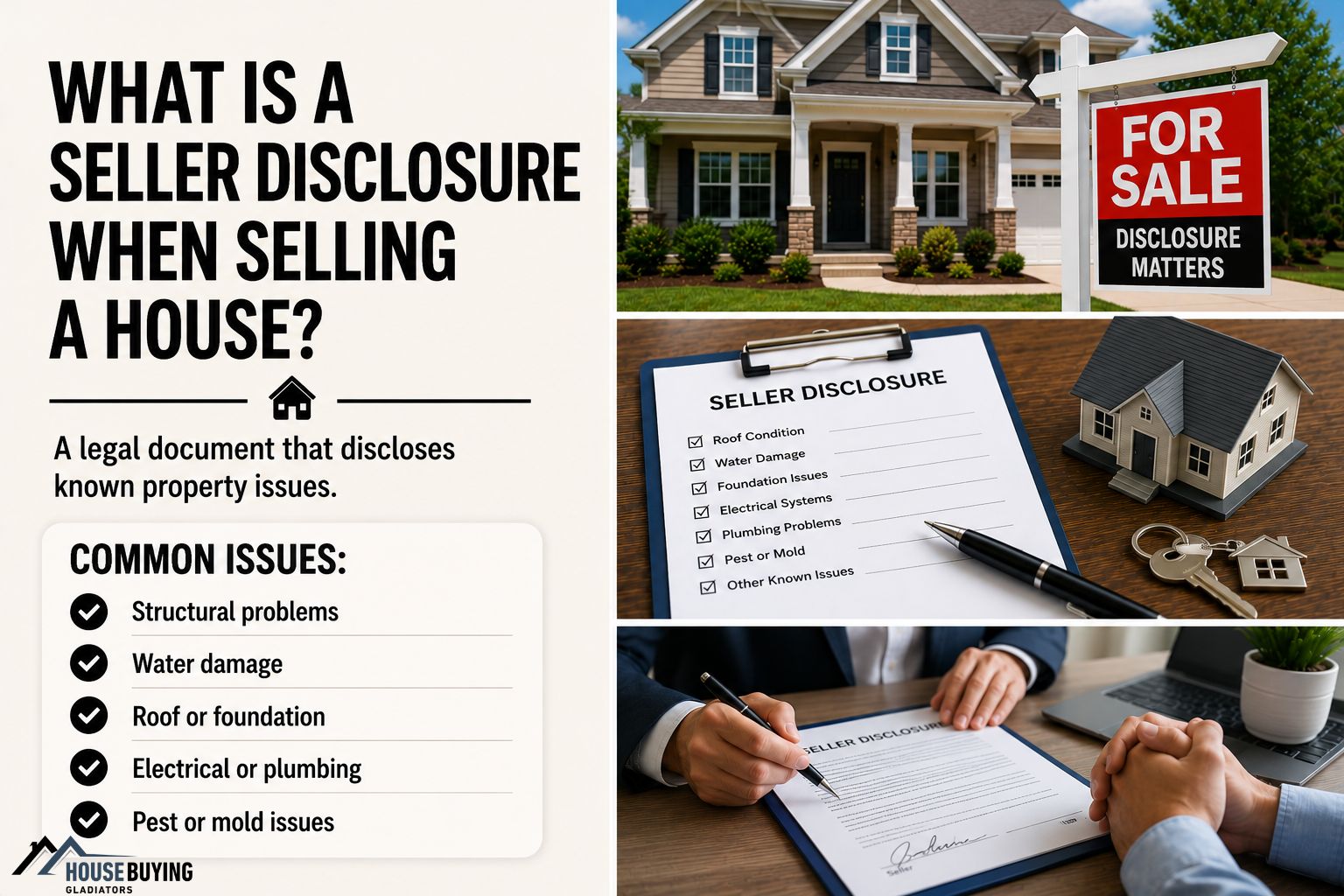
If you are wondering what a seller disclosure is when selling a house, the short answer is that it is a legal document in which sellers disclose known material defects or property conditions that could affect a buyer’s decision or the home’s value.
Many homeowners assume a home inspection will uncover every problem.
In reality, inspections identify visible issues, while seller disclosures communicate problems the seller already knows about. Providing complete and accurate disclosures helps buyers make informed decisions, builds trust, reduces the risk of legal disputes, and keeps the transaction moving toward closing.
Understanding your disclosure responsibilities before listing your home can help you avoid unexpected complications and protect both you and the buyer throughout the sale.
This guide explains what a seller disclosure is when selling a house, what sellers typically must disclose, when disclosures are required, and how accurate disclosures support a smoother, more confident home-selling experience.
Property Disclosure Liability & Risk Assessment Tool
Property Disclosure Liability & Risk Assessment Tool
Calculate transaction vulnerability levels and track post-sale litigation exposure scores before listing your home.
Disclosing properties fully protects equity and deters buyer lawsuits.
Why Are Seller Disclosures Important When Selling A House?
Seller disclosures are important because they give buyers accurate information about known property defects or conditions before closing. Honest disclosures promote transparency, help buyers make informed decisions, and reduce the risk of disputes after the sale.
For sellers, providing complete and accurate disclosures builds buyer confidence, supports smoother negotiations, and helps keep the transaction on track.
Property Listed ➔ Seller Disclosure Provided ➔ Buyer Reviews Information ➔ Closing
| Why It Matters | Seller Benefit |
|---|---|
| Discloses known property conditions | Builds buyer trust |
| Promotes transparency | Reduces misunderstandings |
| Supports informed buyer decisions | Lowers legal risk |
| Helps identify issues early | Keeps the sale moving toward closing |
Seller disclosures do more than meet legal requirements they help create clear expectations before ownership changes hands. Being honest about known property conditions can prevent unexpected conflicts, strengthen buyer confidence, and contribute to a smoother, more successful home sale.
If the buyer schedules an evaluation of the property's condition, what is a home inspection when selling a house explains how a home inspection differs from a seller disclosure and why both are important during the selling process.
What Should A Seller Disclosure Include When Selling A House?
A seller disclosure should include any known material defects or property conditions that could reasonably affect the home's value, safety, habitability, or a buyer's decision to purchase.
While disclosure requirements vary by state, sellers generally disclose what they know not every possible issue or future problem.
Review Property ➔ Identify Known Issues ➔ Complete Seller Disclosure ➔ Buyer Reviews Information
| Common Disclosure | Why It Matters |
|---|---|
| Roof or structural damage | May affect safety, value, and future repair costs |
| Plumbing or electrical issues | Identifies known system defects |
| Water damage or flooding | Alerts buyers to previous or existing moisture problems |
| Pest or termite damage | Reveals known infestations or past treatments |
| Environmental hazards | Helps buyers understand potential health or safety concerns |
One of the most important responsibilities when selling a house is providing honest and complete seller disclosures. Reviewing what sellers typically need to disclose to homebuyers can help homeowners identify the types of property conditions commonly disclosed, meet their legal obligations, and create a more transparent transaction.
If ownership or legal records are also being reviewed, what is title insurance when selling a house explains how title issues differ from physical property disclosures and why both matter before closing.
When Should Sellers Provide A Seller Disclosure?
Sellers should provide a seller disclosure as early as state law or the purchase process requires, giving buyers enough time to review known property conditions before closing.
Providing accurate disclosures early promotes transparency, supports informed decisions, and helps prevent delays, renegotiations, or contract disputes later in the transaction.
Property Listed ➔ Seller Disclosure Delivered ➔ Buyer Reviews Information ➔ Transaction Moves Forward
| Disclosure Stage | Why It Matters |
|---|---|
| Property listed | Seller prepares disclosure documents |
| Disclosure provided | Buyers receive important property information |
| Buyer reviews disclosure | Supports informed purchase decisions |
| Transaction continues | Reduces delays and unexpected disputes |
Waiting until the last minute to provide a seller disclosure can create unnecessary complications. Reviewing when sellers should provide a seller disclosure can help homeowners understand the appropriate timing, give buyers sufficient time to evaluate known property conditions, and reduce the likelihood of delays or contract disputes before closing.
If disclosure information affects the terms of the sale, what is a purchase agreement when selling a house explains how buyers and sellers can address those conditions within the purchase contract.
What Happens If A Seller Does Not Disclose Known Problems?
Failing to disclose known material defects can delay the sale, create contract disputes, and expose sellers to financial liability or legal action after closing.
Buyers rely on seller disclosures to make informed decisions. Withholding known property issues can damage buyer trust, complicate the transaction, and increase the risk of costly claims.
Known Issue Not Disclosed ➔ Buyer Discovers Problem ➔ Dispute Arises ➔ Resolution Required
| Possible Outcome | Why It Matters |
|---|---|
| Contract disputes | May delay or disrupt the transaction |
| Financial liability | Sellers may owe compensation for undisclosed defects |
| Legal action | Buyers may pursue remedies allowed under the law |
| Loss of buyer confidence | Can jeopardize negotiations or closing |
Seller disclosures are about honesty, not perfection. Disclosing known material defects early helps buyers make informed decisions, reduces legal and financial risk, and creates a smoother, more transparent home-selling process.
If a dispute affects the purchase contract, can a seller back out of a house sale explains how contractual rights and obligations may affect both buyers and sellers after a signed agreement.
Can Sellers Update A Seller Disclosure After Listing?
Yes. Sellers should update a seller disclosure if they discover a new material defect or if the property's condition changes before closing. Keeping the disclosure current helps buyers make informed decisions and reduces the risk of disputes later.
A seller disclosure is not a one-time document. If new information becomes available during the transaction, sellers should disclose it promptly and in writing.
New Issue Discovered ➔ Seller Updates Disclosure ➔ Buyer Reviews Changes ➔ Transaction Continues
| Situation | Recommended Action |
|---|---|
| New material defect discovered | Update the seller disclosure promptly |
| Property condition changes | Notify the buyer in writing |
| Repairs are completed | Document the repairs and provide supporting information |
| New relevant information becomes available | Revise the disclosure before closing |
Updating a seller disclosure demonstrates transparency and good faith throughout the transaction. Providing accurate information as circumstances change helps build buyer confidence, reduces legal risk, and keeps the home sale moving smoothly toward closing.
If you're preparing the required paperwork, what documents do I need to sell my house explains which records sellers should organize before closing.
How Can Sellers Complete A Seller Disclosure When Selling A House?
Sellers can complete a seller disclosure accurately by reporting all known material defects, answering every question truthfully, and updating the disclosure if new information becomes available before closing.
The purpose of a seller disclosure is to share known property conditions not to guarantee the home's future performance or identify problems the seller does not know about.
Review Property ➔ Complete Seller Disclosure ➔ Update If Needed ➔ Closing Continues
| Action | Why It Helps |
|---|---|
| Answer every question honestly | Reduces legal and financial risk |
| Disclose all known material defects | Builds buyer confidence and transparency |
| Keep records of repairs and improvements | Supports the information provided |
| Update new material issues promptly | Maintains an accurate disclosure |
| Review the disclosure before signing | Helps prevent omissions and errors |
Completing a seller disclosure carefully is one of the simplest ways to protect yourself during a home sale. Honest and accurate disclosures help buyers make informed decisions, reduce misunderstandings, and create a smoother path from listing to closing.
If the transaction continues after the disclosure is complete, what happens during escrow when selling a house explains the remaining steps before ownership officially transfers to the buyer.
FAQs: What Is A Seller Disclosure When Selling A House?
A seller disclosure is a legal document that informs buyers about known material defects or property conditions that could affect the home's value, safety, or desirability before closing.
A seller disclosure promotes transparency, helps buyers make informed decisions, reduces the risk of legal disputes, and supports a smoother home-selling transaction.
Requirements vary by state, but sellers generally disclose known material defects, structural problems, water damage, plumbing or electrical issues, environmental hazards, pest damage, and other significant property conditions they know about.
Sellers typically provide a seller disclosure after accepting an offer or as required by state law, giving buyers time to review the property's condition before closing.
Yes. If sellers discover a new material defect or the property's condition changes before closing, they should promptly update the seller disclosure and notify the buyer.
Failing to disclose known material defects can result in contract disputes, delayed closings, financial liability, or legal action if buyers discover undisclosed issues after the sale.
No. A seller disclosure reports known property conditions, while a home inspection identifies visible issues through an independent evaluation. Both provide different but important information to buyers.
Sometimes. Depending on the purchase agreement, state law, and the disclosed issues, buyers may negotiate repairs, request credits, or exercise contractual rights before closing.
Generally, no. Sellers typically disclose known material defects that could influence a buyer's decision rather than minor cosmetic imperfections or normal wear and tear.
Complete the seller disclosure honestly, disclose all known material defects, keep records of repairs, update new information promptly, and answer every question accurately before closing.
Conclusion: What Should Sellers Know About Seller Disclosures When Selling A House?
A seller disclosure is one of the most important documents in a home sale because it helps buyers understand the property's known condition before closing. Providing complete, accurate, and timely disclosures builds trust, supports informed decisions, and reduces the risk of costly disputes after the sale.
Property Listed ➔ Seller Disclosure Provided ➔ Buyer Reviews Information ➔ Closing
Before completing your seller disclosure, review the property carefully, disclose all known material defects, and update the information if new issues arise before closing. Honest disclosures help protect both buyers and sellers while creating a smoother, more transparent transaction from listing to closing.
Ready to move forward? Use this guide to understand what a seller disclosure is when selling a house, complete your disclosure with confidence, and help keep your home sale on track for a successful closing.