Skip to content
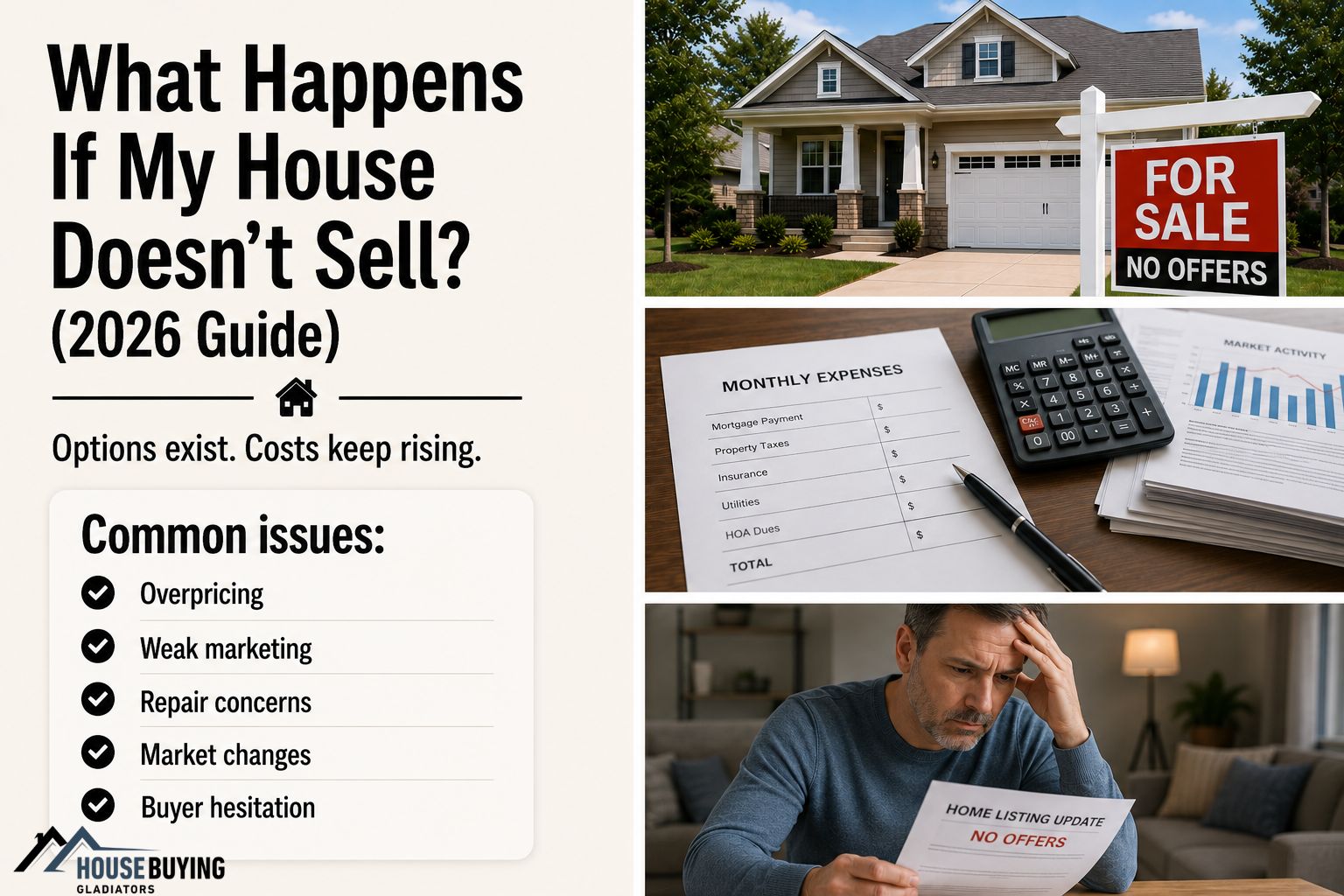
If you are wondering what happens if your house doesn’t sell, the short answer is that you still have several options. However, every extra week your house stays on the market can increase expenses, reduce buyer interest, and make it harder to negotiate on your terms.
Many homeowners immediately assume something is wrong with their property.
That is rarely the real problem.
In most cases, an unsold house signals that one or more obstacles are preventing buyers from moving forward.
Overpricing, weak marketing, repair concerns, changing market conditions, and buyer hesitation are some of the most common reasons homes remain unsold.
Meanwhile, mortgage payments, property taxes, insurance premiums, utilities, and HOA dues can continue to accumulate every month the property remains on the market.
The good news is that an unsold house is usually a strategy problem, not a property problem.
The sooner you identify the obstacle, the easier it becomes to adjust your approach, attract qualified buyers, and protect your final proceeds.
This guide explains why houses stay on the market, what changes homeowners should make, and when it may be time to consider a different selling strategy.
Unsold Home Carrying Cost Calculator
Unsold Home Carrying Cost Calculator
What Happens If My House Doesn’t Sell and What Should I Do Next?
If your house does not sell, you are not stuck. Most homeowners simply need to adjust their pricing, marketing, property condition, or overall selling strategy before attracting buyers.
An unsold house does not automatically mean there is something wrong with your property.
In many cases, buyers are encountering obstacles that prevent them from making an offer.
The key is identifying those obstacles before ongoing expenses begin to reduce your final proceeds.
House Doesn’t Sell ➔ Identify Obstacles ➔ Adjust Your Strategy ➔ Increase Buyer Interest ➔ Complete The Sale
| Option | What It Can Help You Accomplish |
|---|---|
| Keep the home listed | Continue attracting new buyers |
| Adjust the asking price | Increase buyer interest |
| Improve the home’s condition | Build buyer confidence |
| Strengthen your marketing strategy | Expand buyer visibility |
| Explore alternative selling options | Shorten your timeline |
Many homeowners successfully sell after making one or two strategic adjustments.
The longer a property remains on the market, the more carrying costs can accumulate. Mortgage payments, property taxes, insurance premiums, utilities, and HOA dues can gradually reduce the amount of money you ultimately keep.
Do not focus on waiting longer.
Focus on identifying the obstacle that is preventing buyers from moving forward.
If you are trying to understand your overall timeline, how long does it take to sell a house explains each stage of the process.
Why Does My House Not Sell and Sit on the Market Too Long?
Most houses do not sit on the market because there is something wrong with the property. In many cases, buyers believe other homes offer a better combination of price, condition, location, or value.
Overpricing is often the biggest reason homes struggle to sell. However, poor marketing, outdated listing photos, repair concerns, and changing market conditions can also reduce buyer activity. Understanding why some sellers struggle even during a housing shortage can help homeowners adjust their expectations and selling strategy based on local market trends rather than national headlines.
The longer a property remains on the market, the more buyers may begin to hesitate before scheduling a showing.
Overpricing ➔ Reduced Buyer Interest ➔ Fewer Showings ➔ Longer Market Time ➔ More Pressure To Adjust Your Approach
| Common Reason | Why It Prevents A Sale |
|---|---|
| Overpricing | Buyers compare lower-priced competing homes |
| Needed repairs | Buyers anticipate additional expenses |
| Poor listing photos | Fewer buyers schedule showings |
| Weak marketing | The property reaches fewer potential buyers |
| Changing market conditions | Buyer demand decreases |
Many homeowners believe they simply need more time.
That is not always true.
A longer timeline does not automatically create more buyer interest.
Instead, focus on identifying why buyers are choosing competing properties over yours.
Every additional month can increase mortgage payments, property taxes, insurance premiums, utilities, and HOA dues, which can gradually reduce your final proceeds.
If you are unsure whether pricing is the issue, what is fair market value of a home can help you understand how buyers evaluate property values.
How Long Should You Wait If Your House Doesn’t Sell?
Most homeowners should reevaluate their selling strategy after two to four weeks if their house is generating very few showings, inquiries, or offers. Waiting too long can increase expenses, weaken buyer momentum, and make your listing less competitive over time.
Do not assume more time will automatically solve the problem.
In many cases, small adjustments made early can prevent bigger problems later.
List Home ➔ Track Performance ➔ Evaluate Buyer Activity ➔ Make Adjustments ➔ Improve Results
| Timeline | What You Should Review |
|---|---|
| 1 to 2 weeks | Online views, buyer inquiries, and showing requests |
| 2 to 4 weeks | Showing activity, buyer feedback, and market competition |
| 30+ days | Pricing, marketing, and property presentation |
| 60+ days | Consider changing your overall selling approach |
Many homeowners wait too long because they expect the market to eventually deliver a buyer.
That rarely happens without adjustments.
Every additional month can add mortgage payments, property taxes, insurance premiums, utilities, and HOA dues to your expenses.
Instead of waiting longer, focus on the data your listing is already giving you. Buyer feedback, showing activity, and competing homes often reveal exactly where changes are needed.
What happens if my house doesn’t sell often depends on how quickly you respond to low buyer activity.
What Should You Change First If Your House Is Not Selling?
Do not change everything at once. Focus on the area creating the biggest barrier between your home and potential buyers before making expensive or unnecessary adjustments.
Many homeowners immediately lower the price.
That is not always the right first step.
Sometimes the issue is weak marketing, outdated listing photos, poor presentation, or a home that needs small improvements.
Making one targeted change often works better than changing everything at the same time.
Review Performance ➔ Identify The Weakest Area ➔ Make Improvements ➔ Increase Buyer Confidence ➔ Generate Offers
| Area To Review | Why It Matters |
|---|---|
| Listing price | Buyers compare competing homes in your market |
| Listing photos | Strong visuals increase online engagement |
| Property condition | Minor improvements can build buyer confidence |
| Marketing strategy | Better exposure reaches more potential buyers |
| Home description | Clear information highlights the home’s value |
Many successful sales happen after one or two strategic adjustments.
Before making changes, review buyer feedback, showing activity, online engagement, and competing properties in your area.
The goal is not to overhaul everything. The goal is to identify the one factor preventing buyers from moving forward.
If repairs are preventing buyers from making offers, can you sell a house as-is explains another option homeowners frequently consider.
When Should You Lower The Price?
You should consider lowering the price if your house receives very few showings, no offers, or repeated feedback that buyers believe the property is overpriced.
However, price is not always the problem.
Before making a price reduction, determine whether buyers are reacting to your asking price, your marketing, your home’s condition, or competing properties in your area.
Even a well-maintained home can struggle to sell if buyers believe they can find better value elsewhere.
High Price ➔ Reduced Buyer Activity ➔ Fewer Showings ➔ Longer Market Time ➔ Strategic Price Adjustment
Common warning signs include:
| Sign | What It May Mean |
|---|---|
| Very few showings | Buyers see more competitive alternatives |
| No offers after several weeks | The asking price may be too aggressive |
| Repeated pricing feedback | Buyers believe the home is overpriced |
| Similar homes are selling faster | Your pricing strategy may need adjustment |
| Declining online engagement | Buyers may be skipping your listing |
Many homeowners avoid lowering the price because they view it as a setback.
That is not always true.
A strategic price adjustment can help your home attract new buyers, increase showing activity, and improve your chances of receiving an offer. According to current pricing trends, understanding how to price your home to sell in 2025 can help homeowners align their asking price with market conditions rather than waiting for buyer interest to improve on its own.
The goal is not to continuously lower the price. The goal is to align your asking price with current market conditions, buyer expectations, and competing properties in your area.
Should You Change Your Selling Strategy If Your House Is Not Selling?
Sometimes, yes. If your house has been sitting on the market for several weeks without consistent showings, offers, or meaningful buyer activity, changing your selling approach may be more effective than making endless small adjustments.
Many homeowners continue doing the same things and hope time will eventually solve the problem.
That rarely works.
Instead of waiting longer, evaluate where your current approach is breaking down and decide whether a different path makes more sense.
Long Market Time ➔ Rising Expenses ➔ Declining Momentum ➔ Selling Approach Adjustment ➔ Better Outcome
| Situation | What To Consider |
|---|---|
| Few showings | Improve marketing, listing photos, and online visibility |
| Negative pricing feedback | Reevaluate your asking price |
| Major repairs needed | Consider selling as-is |
| Tight timeline | Explore faster selling options |
| Financial pressure | Reduce ongoing carrying costs |
Keeping an ineffective plan in place can become expensive over time.
Mortgage payments, property taxes, insurance premiums, utilities, and HOA dues continue to accumulate every month your property remains unsold.
Do not focus only on keeping your home listed longer. Focus on identifying the approach that best matches your timeline, financial situation, and selling goals.
Sometimes a small adjustment is enough. In other situations, a completely different selling path can produce a better outcome.
If you are exploring alternative selling methods, sell house fast vs list with a Realtor can help you compare both options.
When Does Selling to a Cash Buyer Make Sense?
Selling to a cash buyer may make sense when the cost of waiting begins to outweigh the potential benefit of holding out for a higher offer.
Cash buyers can help homeowners reduce delays, avoid major repairs, and create a more predictable selling timeline.
However, a cash sale is not the right solution for every situation.
It often becomes worth considering when traditional selling obstacles continue to delay your progress.
Extended Market Time ➔ Rising Monthly Expenses ➔ Increased Financial Pressure ➔ Alternative Selling Option ➔ Faster Resolution
| Situation | Why A Cash Sale May Make Sense |
|---|---|
| The house needs major repairs | Eliminates the need for costly renovations |
| You need to relocate quickly | Shortens the selling timeline |
| Monthly expenses are becoming difficult to manage | Reduces ongoing carrying costs |
| You inherited a property | Simplifies the selling process |
| You have a flexible timeline | A traditional sale may still maximize your proceeds |
Many homeowners wait too long before exploring all of their options.
Meanwhile, mortgage payments, property taxes, insurance premiums, utilities, HOA dues, and maintenance costs continue to accumulate every month the property remains unsold.
The goal is not to sell as quickly as possible. The goal is to choose the path that best protects your timeline, financial situation, and final proceeds.
If you are comparing both approaches, should I accept a cash offer on my house explains how homeowners evaluate cash offers before making a decision.
FAQs: What Happens If My House Doesn’t Sell?
Nothing automatically happens if your house does not sell after 30 days. However, low buyer activity often signals that something in your strategy needs attention. Pricing, marketing, listing photos, repairs, or changing market conditions may be preventing buyers from making offers.
Sometimes. The longer a house stays on the market, the more buyers may begin to question why it has not sold. This can reduce urgency and make buyers more likely to negotiate aggressively before submitting an offer.
Possibly. If your home receives very few showings, no offers, or repeated pricing feedback, a strategic price adjustment may help. However, always identify the actual problem before lowering the price unnecessarily.
Most homeowners should review their strategy after two to four weeks if buyer activity remains low. Waiting several months before making adjustments can increase holding costs and reduce your final proceeds over time.
Overpricing is one of the most common reasons homes sit on the market. However, poor marketing, outdated listing photos, repair concerns, changing market conditions, and weak buyer demand can also affect sales activity.
Yes. Many homeowners successfully sell after adjusting their pricing strategy, improving marketing, or making targeted improvements. An unsold house is usually a strategy problem rather than a property problem.
Many homeowners consider cash buyers when timelines become urgent, repairs become expensive, or monthly holding costs continue to increase. A cash sale can simplify the process and shorten the overall timeline.
Conclusion: What Should You Do If Your House Is Not Selling?
If you are still wondering what happens if my house doesn’t sell, do not assume something is wrong with your property.
In most cases, an unsold home points to a pricing, marketing, presentation, or timing issue rather than a problem with the house itself.
The key is to identify what is preventing buyers from moving forward before additional time on the market begins to work against you.
The longer a property remains unsold, the more mortgage payments, property taxes, insurance premiums, utilities, HOA dues, and other holding costs can reduce your final proceeds.
Do not focus on simply waiting for the right buyer to appear.
Focus on making informed adjustments that align your home with current buyer expectations and market conditions.
Price ➔ Presentation ➔ Buyer Activity ➔ Better Positioning ➔ Successful Sale
Many homeowners successfully sell after making one or two strategic changes.
Remember, what happens if my house doesn’t sell is rarely determined by the property itself. In most situations, making strategic adjustments can get your sale moving again.
Ready to take the next step? Scroll back to the top of this guide and identify the adjustment that could help your home attract more qualified buyers and get your sale back on track.